
Yeast Overgrowth: The Silent Driver of Feline Ear Infections
Yeast can naturally live on a cat’s skin and around the ears in small amounts, but when the ear environment becomes warm, irritated, moist, or unbalanced, yeast may contribute to discomfort, odor, discharge, scratching, and head shaking. Feline ear infections and ear irritation should always be evaluated by a veterinarian, but daily wellness support can still play a helpful role in the bigger routine. GCP Purrbiotics, GCP Cat L-Lysine, and GCP Flea & Tick Natural Defense support gut health, normal immune wellness, and skin barrier awareness as part of a thoughtful whole-body approach to feline comfort.
Why Feline Ear Discomfort Is More Than an Ear Problem
When a cat starts scratching at their ears or shaking their head, it is easy to assume the issue begins and ends inside the ear canal. Many pet parents immediately think of ear mites, bacteria, wax buildup, or a simple irritation from grooming. Those can all be part of the picture, but feline ear discomfort often deserves a wider look. The ears are connected to skin health, immune wellness, environmental exposure, grooming habits, and even the body’s internal balance.
Yeast is one of the factors that may be involved when the ear environment becomes disrupted. Yeast naturally exists in small amounts on the skin, including areas near the ears. In a balanced state, it may not cause visible problems. But when the skin barrier is irritated, the immune system is under stress, moisture builds up, or scratching damages the skin, yeast may become more noticeable and contribute to discomfort.
This does not mean every cat with itchy ears has yeast overgrowth, and it does not mean supplements can treat ear infections. Ear symptoms in cats should be checked by a veterinarian because the causes can vary. A cat may have mites, bacteria, yeast, allergies, polyps, foreign material, wounds, or another health issue. Guessing at the cause can delay the right care, especially if the ear is painful or inflamed.
Still, pet parents can support the larger wellness foundation that helps cats feel more comfortable day to day. A cat wellness routine that supports digestive balance, normal immune function, skin and coat health, and pest awareness can be especially helpful for cats who are sensitive to seasonal changes, environmental irritants, or routine stress. This is where whole-body care becomes important: the ear may show the symptom, but the rest of the body often shapes the environment around it.
How Yeast Can Affect Your Cat’s Ear Comfort
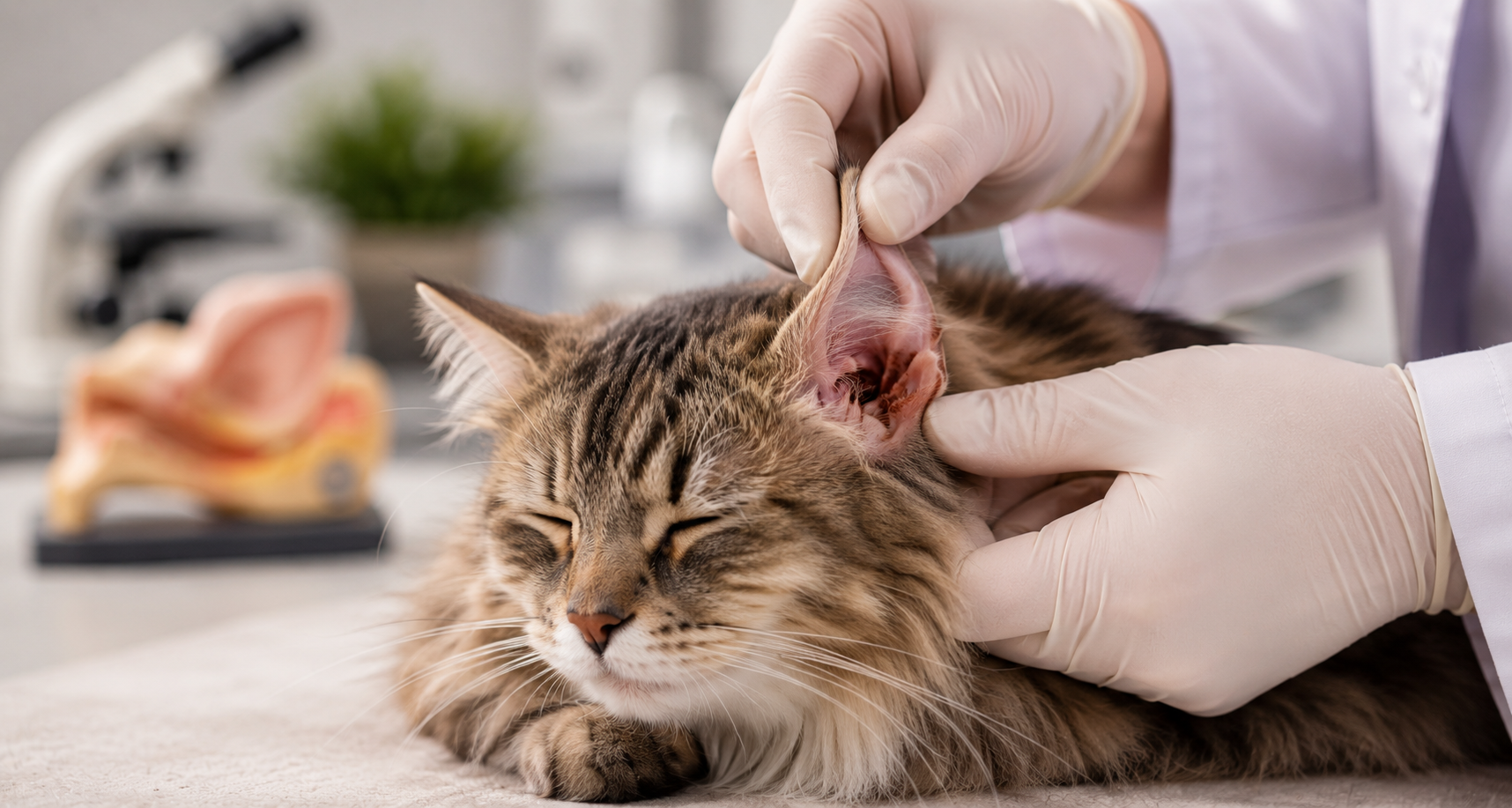
Yeast tends to thrive in warm, moist, irritated areas. The ear canal can become a favorable environment when normal balance is disrupted. For some cats, this may happen after repeated scratching, skin irritation, excess wax, allergies, pests, stress, or a shift in overall wellness. Once the ear feels uncomfortable, the cat may scratch more, rub against furniture, or shake their head, which can create even more irritation.
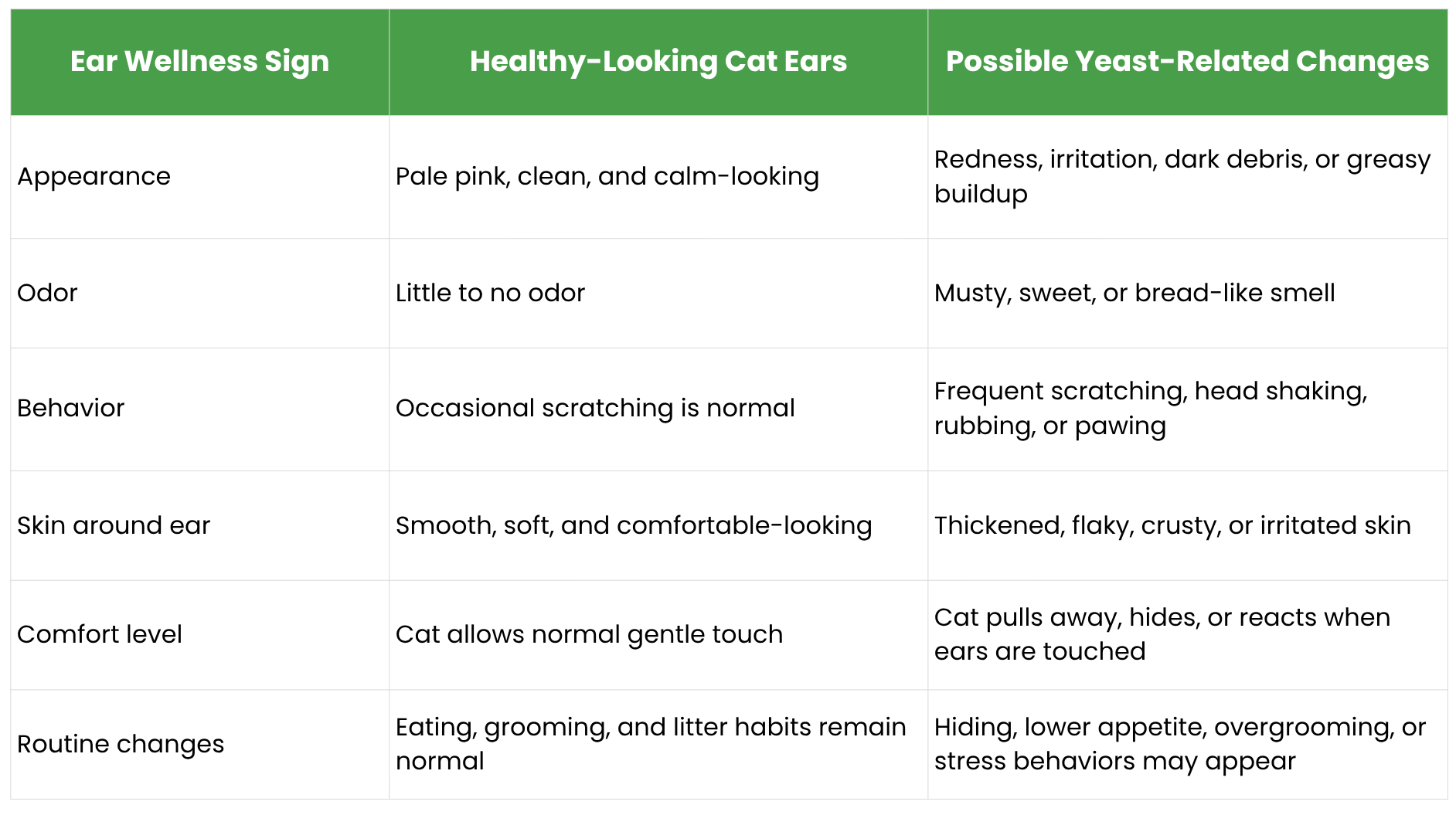
A yeast-related ear issue may have a musty or sweet odor, dark discharge, redness, or a greasy feeling around the ear. Some cats become sensitive when their ears are touched. Others may hide, become less social, or groom more around the head and neck. Because cats are good at hiding discomfort, small behavior changes can matter.
The challenge is that yeast-related signs can overlap with other ear problems. Ear mites can also cause dark debris and scratching. Bacterial infections can cause odor, redness, and discharge. Allergies can cause itching and inflammation. This is why a vet exam matters. Your veterinarian can look inside the ear, check the discharge, and recommend the right care based on what is actually present.
At home, the safest role for pet parents is observation and prevention-minded support. Watch for scratching, head shaking, odor, redness, discharge, crusting, or sensitivity. Keep grooming gentle, avoid putting random products into the ear, and do not use human ear cleaners or essential oils. Cats can be sensitive to ingredients that seem harmless to people.
A daily wellness routine can then support the systems that help the body stay more balanced. Gut health, immune wellness, and skin barrier support do not replace ear care, but they can help create a more complete approach.
Healthy Cat Ears vs. Yeast-Related Ear Changes
Why Gut Health, Immunity, and Skin Barrier Support Matter
The gut, skin, and immune system are closely connected in daily wellness. A cat’s digestive tract helps process nutrients that support skin and coat condition. The gut microbiome also plays a role in normal immune function. When the gut is supported, the body has a better foundation for everyday balance.
A study in healthy adult cats found that probiotic supplementation influenced fecal microbial populations and some immune-related markers. This does not mean probiotics treat ear infections or control yeast in the ears, and it should not be used to make a cure claim. What it does support is a broader wellness idea: the feline microbiome can respond to probiotic support, which is one reason gut health is worth including in whole-body cat care.
Immune wellness matters because the body constantly manages normal microbes on the skin and in the environment. When a cat is stressed, poorly hydrated, nutritionally under-supported, or dealing with another irritation, their comfort may shift. Supporting normal immune function does not guarantee a cat will avoid ear issues, but it can be part of a responsible care plan.
The skin barrier is another important piece. Fleas, ticks, scratching, grooming irritation, and environmental exposure can all affect the skin. When the skin barrier is disrupted, cats may scratch more, and irritated skin can become more vulnerable to secondary problems. For ear wellness, this matters because the skin around the ear and head is part of the same protective system.
That is why a whole-body routine may include gut support, immune support, pest awareness, regular coat checks, and prompt veterinary care when symptoms appear.
A Whole-Body Routine for Feline Ear Wellness
A better feline ear wellness routine starts with simple observation. Once or twice a week, look at your cat’s ears during calm moments. You do not need to dig into the ear canal or clean aggressively. Just notice whether the ear flap looks clean, whether there is odor, whether your cat reacts to touch, and whether scratching has become more frequent.
Next, support the skin and coat. Regular brushing helps you notice fleas, flea dirt, scabs, flakes, or irritation near the head, neck, and ears. Cats who scratch because of pests or skin discomfort may damage the skin around the ears, which can create more irritation. Keeping up with pest awareness is especially important in multi-pet homes or homes with dogs that go outdoors.
Gut health should also be part of the plan. A cat’s digestion can be sensitive to food changes, stress, antibiotics, travel, visitors, or seasonal shifts. Probiotic and prebiotic support can help maintain digestive balance and stool quality as part of a daily routine. This supports whole-body wellness without claiming to directly treat ear problems.
Immune support adds another layer. Cats may face seasonal stress, household changes, boarding, travel, or environmental exposure that affects their normal routine. A daily immune-support product can help pet parents stay consistent, especially for cats who benefit from steady wellness habits.
Finally, know when to call the vet. Any strong odor, discharge, swelling, pain, repeated head shaking, balance issues, or sudden behavior change should be evaluated. Ear problems can become painful quickly, and cats often hide discomfort until it is more serious.
Supporting Your Cat With GCP Purrbiotics, Cat L-Lysine, and Flea & Tick Natural Defense
Once a cat’s ear symptoms have been properly evaluated by a veterinarian, daily wellness support can help pet parents care for the bigger picture. GCP Purrbiotics supports digestive health, gut microbiome balance, immune wellness, and healthier skin and coat with probiotics and prebiotics. For cats whose comfort seems connected to stress, digestion, or routine changes, it can be a helpful part of everyday care.
GCP Cat L-Lysine supports normal immune wellness in cats. It is not a treatment for ear infections or respiratory illness, but it can fit into a daily routine for cat parents who want steady immune support during stressful seasons, travel, boarding, or household changes.
GCP Flea & Tick Natural Defense supports a no-harsh-chemical pest awareness routine for cats. Since pest irritation and scratching can affect the skin barrier, keeping up with coat checks and daily pest support can help pet parents take a more complete approach to skin and ear-area comfort.
Together, these GCP products support the whole-cat routine: gut balance, immune wellness, and skin barrier awareness. They work best when paired with regular grooming, clean bedding, good nutrition, and veterinary guidance whenever ear symptoms are present.
Frequently Asked Questions
-
Recurring ear infections can happen for several reasons, including yeast, bacteria, mites, allergies, wax buildup, skin irritation, or underlying health concerns. A veterinarian should examine your cat’s ears to identify the cause before you try to manage it at home.
Reference: Marshall-Jones, Z. V., Baillon, M. L. A., Croft, J. M., & Butterwick, R. F. (2006). Effects of Lactobacillus acidophilus DSM13241 as a probiotic in healthy adult cats. American Journal of Veterinary Research, 67(6), 1005–1012. https://pubmed.ncbi.nlm.nih.gov/16740094/
For all general inquiries, please contact us at info@guardianschoice.com
© Copyright. All rights reserved.