
Why Some Cats “Talk” More Than Others—and What They’re Actually Saying
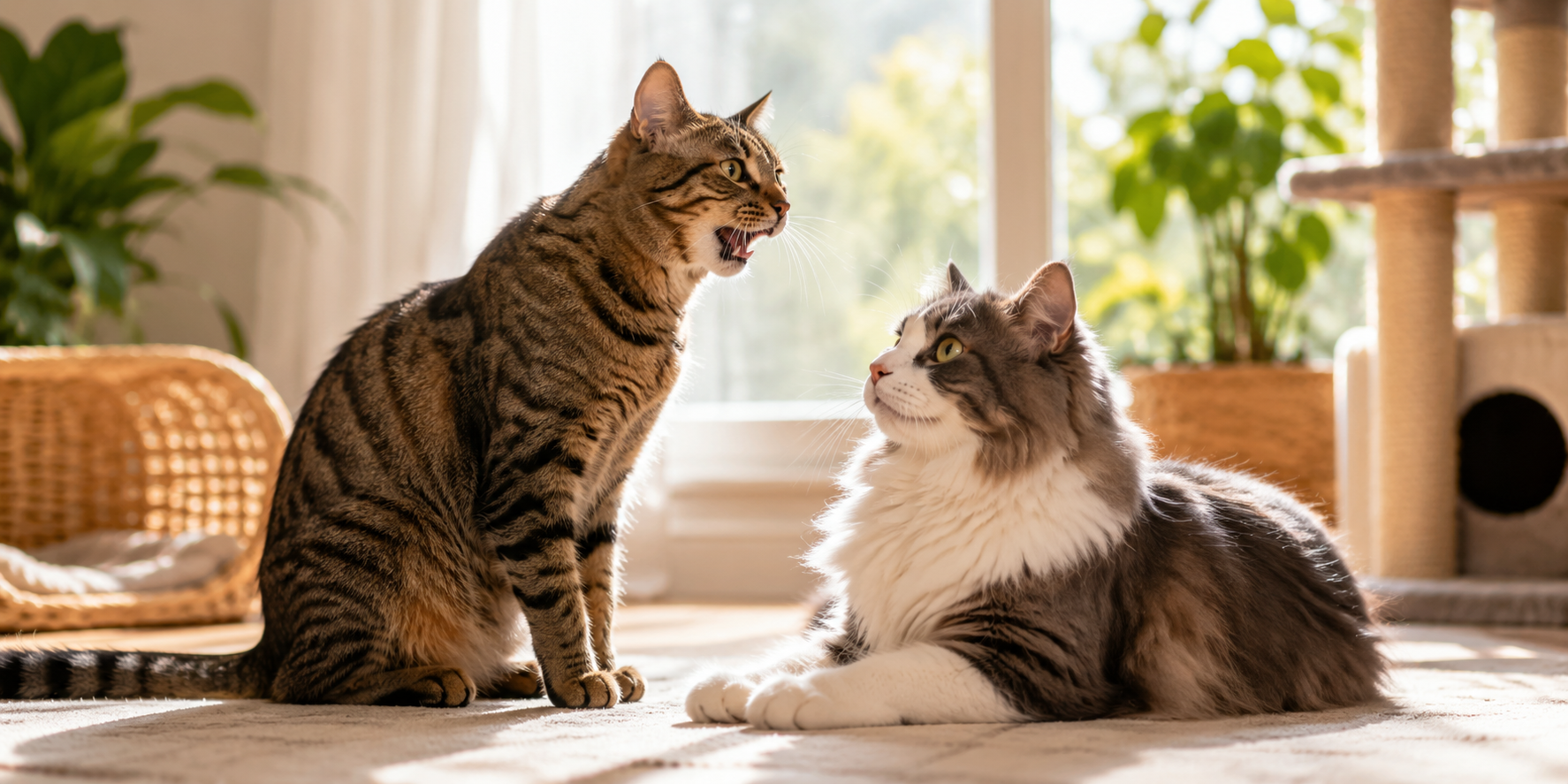
Some cats are naturally more vocal because of genetics, temperament, learned behavior, age, and their relationship with the people around them. Meows, chirps, trills, purrs, and yowls can all carry different meanings, and sudden changes in vocal behavior are worth paying attention to—especially when they appear alongside changes in eating, drinking, litter-box habits, activity, breathing, or comfort.
If you live with a talkative cat, you probably know the feeling of having an entire conversation without understanding a single word. There is the short “hello” meow when you walk into the room, the impatient announcement that dinner is apparently three minutes late, the chirp from the windowsill, and the dramatic nighttime yowl that seems designed to wake everyone in the house.
Cats are remarkably individual in how they communicate. Some seem to narrate every part of the day, while others reserve their voices for very specific moments. Breed tendencies can play a role, but personality, learning, environment, age, routine, and physical comfort all influence how much a cat vocalizes.
That is why understanding cat vocalizations is less about memorizing a dictionary of sounds and more about learning what is normal for your cat. A frequent meower who has always been chatty may simply be expressing their usual personality. A quiet cat who suddenly begins vocalizing constantly, however, may be telling you that something in their environment, routine, or physical state has changed.
The goal is not to interpret every meow as a health problem. It is to recognize patterns and use your cat’s voice as one of several clues to their everyday well-being.
Cats Have Different Vocal Personalities
Some cats are simply more conversational than others.
Siamese, Oriental Shorthair, Balinese, and related breeds are often described by owners and breeders as particularly vocal. Their voices may be louder, more frequent, or more distinctive than those of cats who tend to communicate through body posture, eye contact, or quieter sounds.
Breed is only part of the picture, though. Individual temperament matters enormously. Two cats from the same litter can have completely different communication styles.
Learning also plays a role. Cats quickly discover which behaviors get results. If meowing at the kitchen counter reliably leads to dinner, your cat has learned that vocalization is an effective communication strategy. If chirping at you causes you to open the bedroom door or pick up a favorite toy, that sound may become part of a familiar social routine.
Researchers have also found that humans can distinguish certain qualities in cat vocalizations. In one study, Nicastro and Owren examined how people interpreted domestic cat vocalizations recorded in different behavioral contexts. Listeners were able to make some distinctions between sounds, particularly when they had more experience with cats.
The study does not mean every meow has a precise translation, nor does it allow us to diagnose a cat’s physical state from sound alone. It does, however, support something many cat owners already recognize: vocalizations can carry contextual information, and familiarity with an individual cat can make those signals easier to interpret.
What Different Cat Sounds May Be Telling You
The classic meow is only one part of a cat’s vocal repertoire.
A short, higher-pitched meow may occur during greeting or when a cat wants attention. A trill or chirrup may appear when the cat approaches you, follows another animal, or becomes interested in something nearby. Some cats chatter while watching birds through a window, while others hardly make that sound at all.
Purring is equally interesting because it does not always mean simple happiness. Cats often purr while relaxed, but they may also purr in unfamiliar or stressful situations. Context matters.
Longer, lower vocalizations such as yowls can be associated with many situations, including territorial behavior, mating behavior in intact cats, frustration, seeking attention, disorientation, or discomfort. Again, the sound alone is not enough to identify the cause.
Instead of asking, “What does this exact sound mean?” try asking three questions:
When does it happen? Before food, during the night, near the litter box, while looking out the window, or when left alone?
What is the rest of the body doing? Is the cat relaxed, pacing, crouched, hiding, tail upright, ears back, or repeatedly visiting a particular area?
Is anything else different? Appetite, water intake, urination, bowel movements, grooming, sleep, breathing, mobility, and social behavior can all provide important context.
That combination tells you much more than the vocalization alone.
When Vocalization Changes Suddenly
A change from a cat’s usual behavior deserves more attention than the simple fact that the cat is vocal.
If your normally quiet cat begins meowing continuously, look for changes in the environment first. Have you moved furniture?
Changed feeding times? Brought home a new pet? Started working outside the home again? Had visitors staying over?
Cats often rely heavily on routine, so even changes that seem minor to us can become noticeable to them.
Physical factors should also remain on the list. Hunger, thirst, pain, gastrointestinal discomfort, difficulty urinating, hearing changes, vision changes, or other health concerns can sometimes coincide with unusual vocal behavior.
This is why sudden or persistent vocalization should not automatically be labeled “attention seeking.” Pay attention to eating, drinking, litter-box use, grooming, movement, and general behavior.
A cat repeatedly entering the litter box while vocalizing, straining to urinate, producing little or no urine, or appearing distressed requires prompt veterinary attention. Urinary obstruction can be particularly serious in male cats.
Similarly, a voice that suddenly becomes weak, hoarse, or strained should not simply be interpreted as a need for “immune support.” Respiratory irritation, infection, inflammation, foreign material, or other conditions can affect vocal quality, and a veterinarian is the appropriate person to determine the cause.
Digestion, Routine, and Everyday Comfort
Digestive wellness is another part of the broader comfort picture, but it is important not to assume that every meow around food signals a microbiome imbalance.
Cats may vocalize near the food bowl because they are hungry, because they have learned that the behavior gets attention, because they enjoy interacting with you during meals, or because something about the feeding routine has changed.
Digestive discomfort is also possible. Changes in stool, constipation, diarrhea, vomiting, appetite, or abdominal sensitivity can sometimes occur alongside behavioral changes.
The safest approach is to look at the entire pattern.
Diet plays an obvious role in feline digestion. Cats need nutritionally complete food appropriate for their life stage and health status, and sudden food changes can sometimes affect gastrointestinal tolerance.
Water matters as well. Providing fresh water and, where appropriate, moisture-rich foods can help support normal hydration. Cats vary considerably in their drinking habits, so becoming familiar with your cat’s baseline makes changes easier to notice.
Some owners also choose feline probiotic products as part of a general digestive wellness routine. Probiotics should not be presented as treatments for vomiting, diarrhea, inflammatory bowel disease, anxiety, or persistent gastrointestinal symptoms, but they may provide an additional layer of nutritional support when appropriate for the individual animal.
Why Senior Cats May Become More Vocal
Age can change the way a cat experiences the home.
Some senior cats begin vocalizing more frequently at night or when moving through unfamiliar-looking spaces. Changes in hearing or vision may make the environment feel less predictable, while mobility problems can make previously simple tasks harder.
Older cats can also experience changes in sleep-wake patterns. A cat who slept quietly through the night for years may suddenly begin waking, pacing, or calling out.
These changes should not automatically be dismissed as “just old age.” Conditions involving pain, thyroid function, blood pressure, kidney health, sensory changes, and cognitive function can all influence behavior in senior cats.
A veterinary examination is particularly important when nighttime vocalization is new or accompanied by weight changes, increased thirst, appetite changes, house-soiling, restlessness, confusion, or altered mobility.
At home, simple environmental adjustments can make senior life easier. Night-lights can help some cats navigate dark hallways, while low-entry litter boxes may be more comfortable for cats with mobility limitations. Keeping food, water, litter boxes, and favorite resting areas relatively predictable can also reduce unnecessary disruption.
The aim is not to stop a senior cat from communicating. It is to understand what may have changed around them.
How to Respond Without Reinforcing Constant Meowing
When a veterinarian has ruled out health problems, frequent meowing may sometimes be reinforced by routine.
If your cat learns that ten loud meows reliably produce food, opening the cupboard after the tenth meow teaches the cat that persistence works. This does not mean ignoring your cat’s needs; it means creating predictable ways for those needs to be met.
Regular feeding times can help reduce uncertainty around meals. Scheduled interactive play can provide an outlet for attention and activity. Puzzle feeders and appropriate enrichment can give indoor cats something constructive to do between interactions.
You can also reward quieter forms of communication. If your cat approaches calmly and sits near you, offering attention during that moment may encourage a less demanding interaction pattern.
Consistency is important. If one person ignores excessive meowing while another immediately responds with treats, the cat receives mixed signals.
Avoid punishment, yelling, spraying water, or frightening the cat. Those responses may increase stress without teaching the animal what you would prefer them to do instead.
A Simple Cat Vocalization Guide
Cat sounds should always be interpreted in context, but this guide can help you think through common patterns without jumping to conclusions
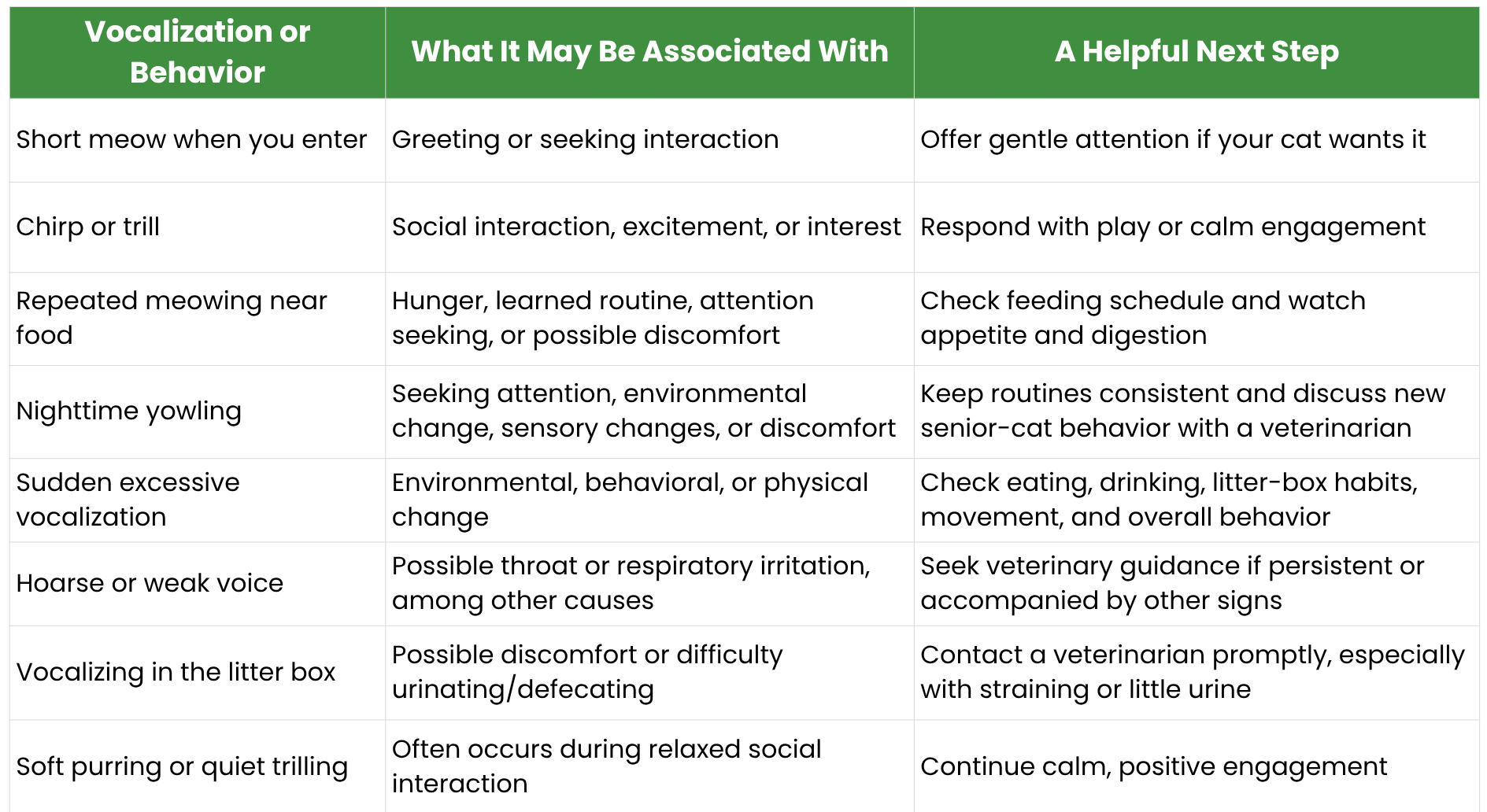
The table is a starting point, not a diagnostic tool. Your cat’s normal behavior remains the most useful reference.
Where GCP Purrbiotics and Cat L-Lysine May Fit
Once nutritious food, fresh water, enrichment, predictable routines, and veterinary care are established, some owners choose targeted feline supplements as part of an everyday wellness routine.
GCP Purrbiotics provides 5 billion CFUs along with prebiotic ingredients and is designed to complement digestive and microbiome wellness. Rather than positioning probiotics as a way to stop meowing, eliminate bloating, treat diarrhea, or change mood, they are better viewed as nutritional support within a balanced feline care routine.
GCP Cat L-Lysine provides the amino acid L-lysine as another targeted nutritional option. It should not be described as clearing airways, treating respiratory infections, preventing feline herpesvirus symptoms, or restoring a cat’s voice; instead, it can be positioned as an amino-acid supplement intended to complement everyday feline nutrition according to its label directions.
Because cats have highly individual nutritional and medical needs, supplements are best discussed with a veterinarian, particularly for kittens, seniors, pregnant or nursing cats, cats taking medications, or animals with chronic health conditions.
Frequently Asked Questions
-
Sudden vocalization can be related to environmental changes, learned behavior, hunger, discomfort, sensory changes, or other health factors. If the change persists or appears alongside altered appetite, thirst, litter-box use, movement, or behavior, contact your veterinarian.
Your Cat’s Voice Is Part of the Bigger Wellness Picture
There is no universal amount of meowing that makes a cat “normal.” Some cats greet every family member with a running commentary, while others communicate mostly through a slow blink, a raised tail, or the strategic placement of themselves directly on your keyboard.
What matters is knowing your own cat’s baseline.
When vocalization changes, look at the whole picture before deciding what it means. Consider routine, food, activity, social interaction, litter-box habits, digestion, mobility, age, and physical comfort. A single sound rarely tells the entire story.
This approach also makes it easier to recognize when a veterinary conversation is worthwhile. A dramatic personality shift, repeated nighttime distress, litter-box vocalization, unusual thirst or appetite, weight changes, breathing changes, or a persistent hoarse voice deserves more attention than ordinary chatty behavior.
For everything in between, consistent meals, fresh water, enrichment, affection, safe spaces, appropriate nutrition, and predictable routines create a strong foundation. Your cat may still have plenty to say—and that is part of what makes living with cats so interesting.
Support Everyday Feline Wellness With GCP Purrbiotics and Cat L-Lysine
GCP Purrbiotics and GCP Cat L-Lysine offer two targeted options for pet parents who want to complement an established feline wellness routine. Purrbiotics focuses on digestive and microbiome nutrition with 5 billion CFUs plus prebiotic support, while Cat L-Lysine provides targeted amino-acid nutrition that can fit alongside a complete diet and appropriate veterinary care.
Formula and wellness-supporting features include:
-
GCP Purrbiotics provides 5 billion CFUs
-
Includes probiotic microorganisms
-
Includes prebiotic support
-
Designed to complement digestive wellness
-
Supports a balanced microbiome routine
-
Easy to incorporate into an established daily care schedule according to label directions
-
GCP Cat L-Lysine provides supplemental L-lysine
-
Offers targeted amino-acid nutritional support
-
Can complement a complete, balanced feline diet
-
Suitable as part of a broader everyday wellness routine when appropriate
-
Neither product is intended to diagnose or treat digestive, respiratory, behavioral, or immune-related disease
-
Best used alongside proper nutrition, hydration, enrichment, and regular veterinary care
For cat parents who already pay close attention to nutrition, behavior, litter-box habits, and routine, these products can provide an additional nutritional layer without replacing the fundamentals of good feline care. The best reason to consider them is not to make a vocal cat quieter, but to build a thoughtful wellness routine in which nutrition and digestive support sit alongside observation, enrichment, comfort, and veterinary guidance.
Reference
Nicastro, N., & Owren, M. J. (2003). Classification of domestic cat (Felis catus) vocalizations by naive and experienced human listeners. Journal of Comparative Psychology, 117(1), 44–52. https://doi.org/10.1037/0735-7036.117.1.44
For all general inquiries, please contact us at info@guardianschoice.com
© Copyright. All rights reserved.