
Why Indoor Cats Suffer Most During Summer Celebrations
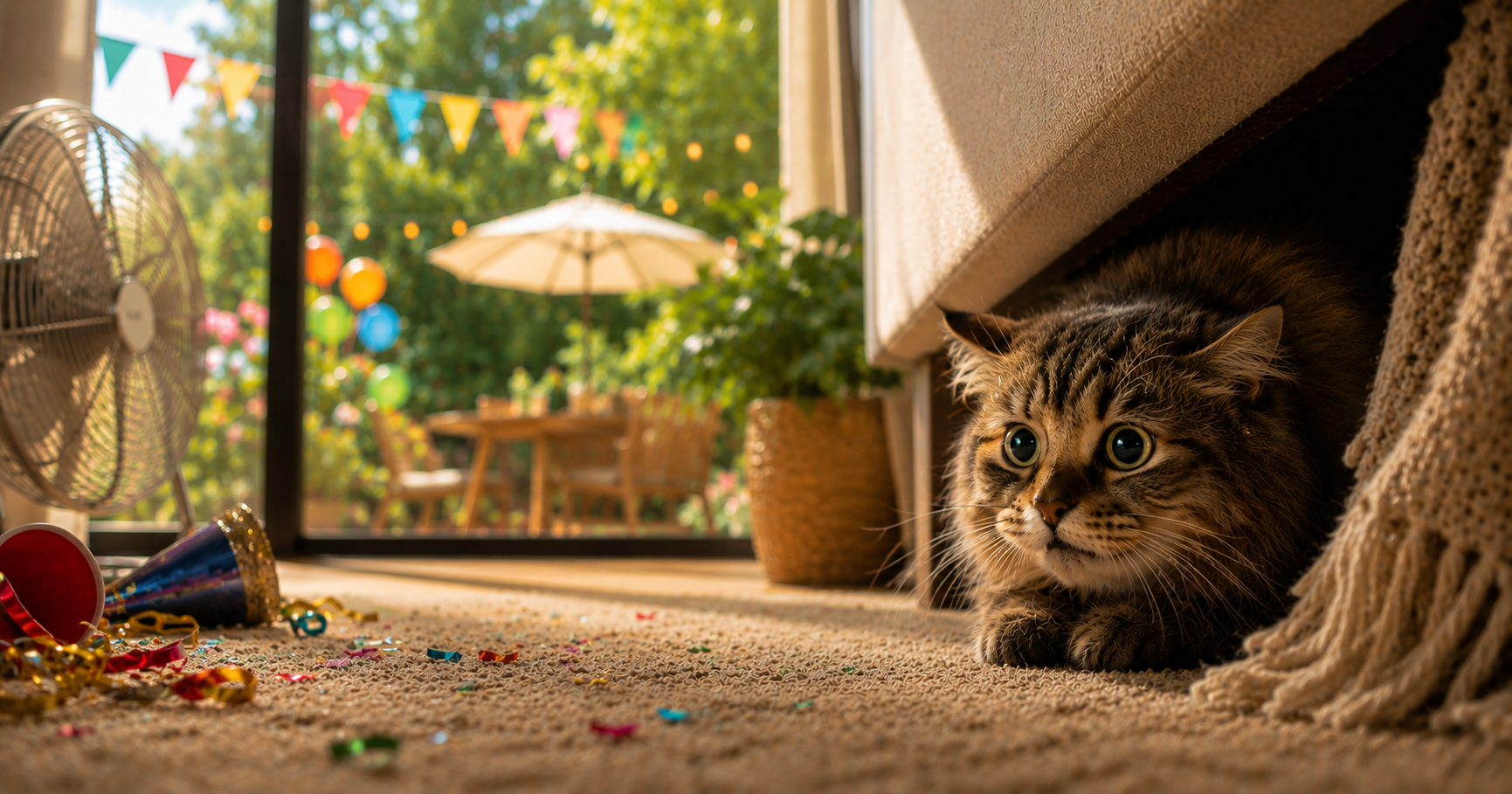
Indoor cats may seem protected from summer chaos, but they often experience a different kind of seasonal stress. Heat can build up indoors, fireworks can create intense sound and vibration, visitors can disrupt routines, and open windows can increase the chance of pests getting inside. A thoughtful summer routine that supports immune wellness, digestive balance, and everyday pest awareness can help indoor cats feel more comfortable, and Guardian’s Choice Cat L-Lysine, Purrbiotics, and Flea & Tick Natural Defense can each fit naturally into that broader plan.
Why Summer Celebrations Can Be Harder on Indoor Cats
When people think about summer pet care, the focus usually goes to outdoor dogs, hot sidewalks, and backyard flea prevention. Indoor cats are often seen as the lucky ones, safely tucked away from the heat and noise of the season. But indoor cat summer safety is more complex than it first appears, because the home can actually amplify several seasonal stressors instead of removing them.
A closed room with direct sun can trap warmth throughout the day, especially in homes with large windows, curtains left open, or limited air circulation. What feels “fine” to people may feel stuffy to a cat, particularly one with a thick coat or a favorite nap spot in a warm corner. Indoor cats also have less freedom to move around the environment than outdoor cats, so if their resting spaces become warm, noisy, or busy, they may feel that pressure more intensely.
Then there is the emotional side of summer. Fireworks, neighborhood parties, visitors coming in and out, music, unfamiliar scents, and routine changes can all affect a cat’s sense of stability. Cats thrive on predictability. They like familiar smells, consistent feeding times, quiet hiding spots, and a clear understanding of what belongs in their space. Summer celebrations often disrupt all of that at once.
That is why so many cat parents search for terms like cat stress from fireworks, summer cat care, cat immune support, cat probiotics, and natural flea and tick support for cats. These concerns are not exaggerated. They reflect the reality that even indoor cats can feel physically and emotionally unsettled during summer, and when multiple stressors overlap, the effects may show up in subtle but meaningful ways.
The Hidden Summer Stressors Inside the Home
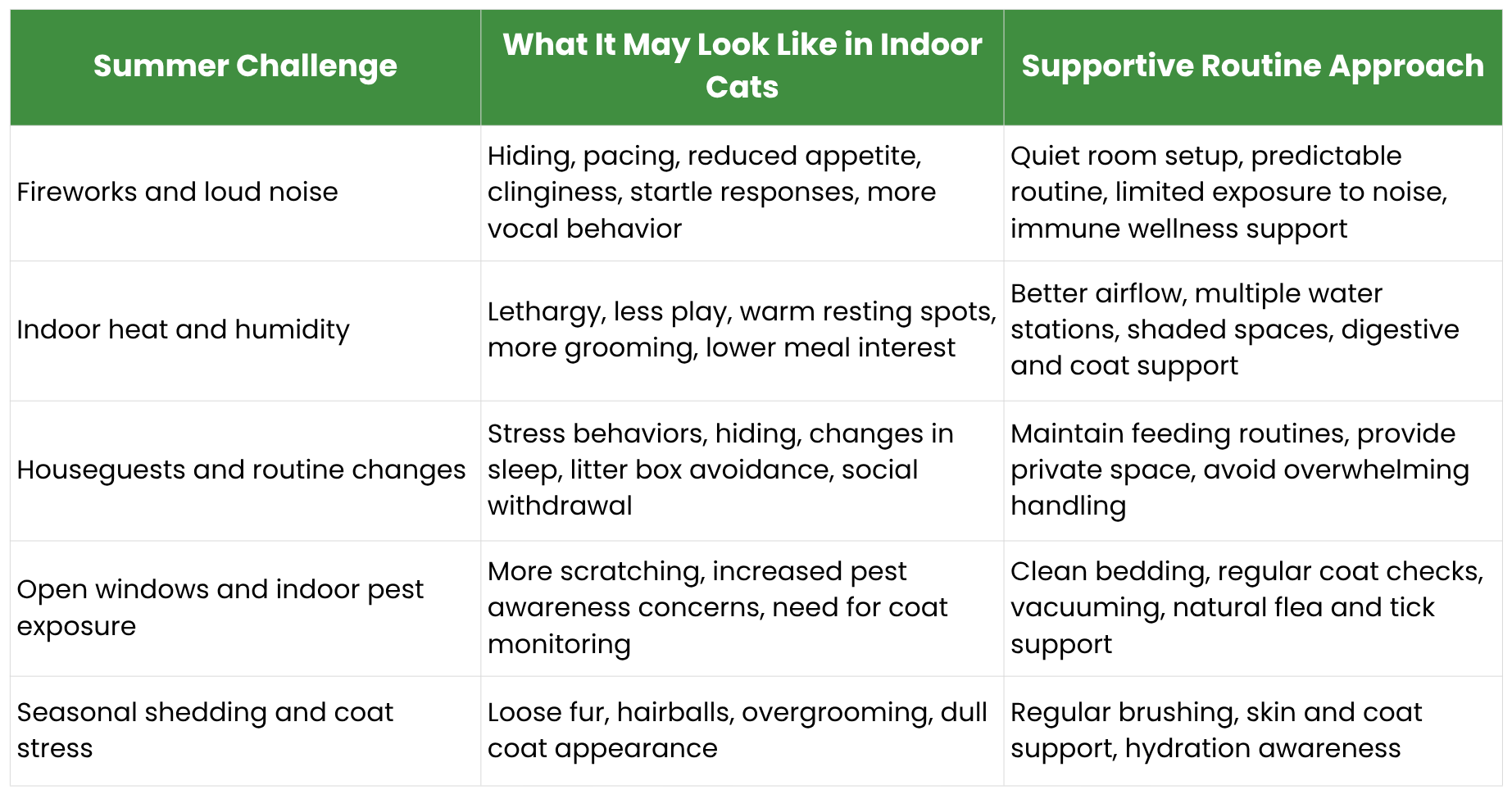
The first stressor is indoor heat. Cats are good at finding warm, cozy places, but summer heat is different from a winter nap in a sunny patch of light. During hot months, indoor warmth can linger, and high humidity may make resting areas less comfortable. Cats may respond by moving less, seeking out tile floors, stretching out more than usual, grooming more frequently, or seeming less interested in meals and play.
The second stressor is noise, especially fireworks. Cats hear a wider range of sound than humans do, and sudden booms can feel both frightening and physically unsettling. It is not only the sound itself that matters, but the unpredictability. A cat cannot prepare for random noise bursts, especially when they are paired with flashing lights, vibration, and a household that feels different from normal.
A published study by Stella, Lord, and Buffington observed that unusual external events were associated with increased sickness behaviors in cats. This does not mean fireworks automatically make every cat sick, and it does not mean one product can prevent stress-related issues. What it does support is the idea that cats are sensitive to environmental change, and that unusual events can affect how they eat, rest, groom, and behave. That insight is useful when thinking about why immune support, digestive balance, and calm routines matter more during busy seasons.
The third stressor is social disruption. Summer often brings houseguests, children on school break, extra activity, and more doors and windows opening and closing. A cat who normally spends the day in a quiet home may suddenly have strangers walking through their space, different smells on furniture, and less access to the room they usually use to relax. Some cats become clingier in response, while others disappear under beds or behind furniture until the activity ends.
The fourth stressor is pest exposure. Indoor cat owners sometimes assume fleas or other pests are only an outdoor issue, but summer changes that equation. Open windows, damaged screens, visiting pets, people moving in and out, and dogs in the home can all increase the chance of pests entering the household. An indoor lifestyle lowers some risks, but it does not remove them entirely, which is why natural flea and tick support for cats often becomes part of the summer conversation.
What Summer Stress May Look Like in Cats
Cats rarely announce discomfort in obvious ways. Instead, summer stress may show up through behavior changes that are easy to overlook at first. A cat may hide more often, spend longer in closets or under beds, eat more slowly, become less playful, or start grooming more than usual. Some may become vocal at night, while others may act more withdrawn during the day.
Digestive changes can also happen when routines feel unsettled. If a cat is stressed by heat, noise, or household disruption, appetite and stool quality may shift. This does not mean every digestive change is caused by stress, and it does not mean probiotics are a treatment for gastrointestinal disease. It simply shows why gut support becomes more relevant during seasons when the environment is less predictable.
The skin and coat can also reflect seasonal stress. Increased grooming, mild coat dullness, more shedding, or a cat seeming bothered by its coat can all be part of the bigger picture. In summer, those changes may overlap with indoor heat, hydration needs, grooming habits, and environmental exposure.
Immune wellness belongs in the conversation, too. During noisy, disruptive periods, many pet parents look for ways to help support their cat’s overall resilience. Again, this should be framed carefully. Immune support is not the same as claiming to prevent illness, and supplements should never be presented as a substitute for veterinary care. But when routines are stressful, supporting normal wellness can be a reasonable part of a broader care plan.
A Smarter Summer Routine for Indoor Cats
The best way to “fix” summer stress for indoor cats is not with one dramatic step. It is with a series of small, thoughtful habits that make the environment feel safer and more stable. Start with temperature and comfort. Keep curtains or blinds partially closed during the hottest parts of the day, make sure there is fresh water in multiple spots, and allow access to cooler resting areas such as tile floors or shaded rooms.
Next, create a quiet retreat before celebrations begin. This can be a bedroom, laundry area, or any room where your cat already feels secure. Add familiar bedding, a litter box if needed, and something that smells like home. If fireworks are expected, closing windows and using soft background sound can help muffle some of the sudden noise.
Routine matters just as much as environment. Feed your cat on time, keep the litter box clean, and avoid changing food or rearranging key spaces right before busy summer events. Cats cope better when the essentials stay familiar.
Grooming and pest awareness also deserve attention. Brush your cat regularly to help with shedding and coat comfort, and check the coat and skin during brushing sessions. Wash bedding, vacuum favorite resting spots, and keep an eye on windows, screens, and traffic coming in from outdoors. This is especially useful in homes where people or other pets may carry in more than just party bags and shoes.
Seasonal Support Comparison Table
How Guardian’s Choice Fits Into the Story
Once the summer routine is in place, this is where Guardian’s Choice products connect naturally to the needs cat parents are already noticing. Instead of forcing the products into the conversation too early, it makes more sense to introduce them as part of a complete indoor cat summer support plan.
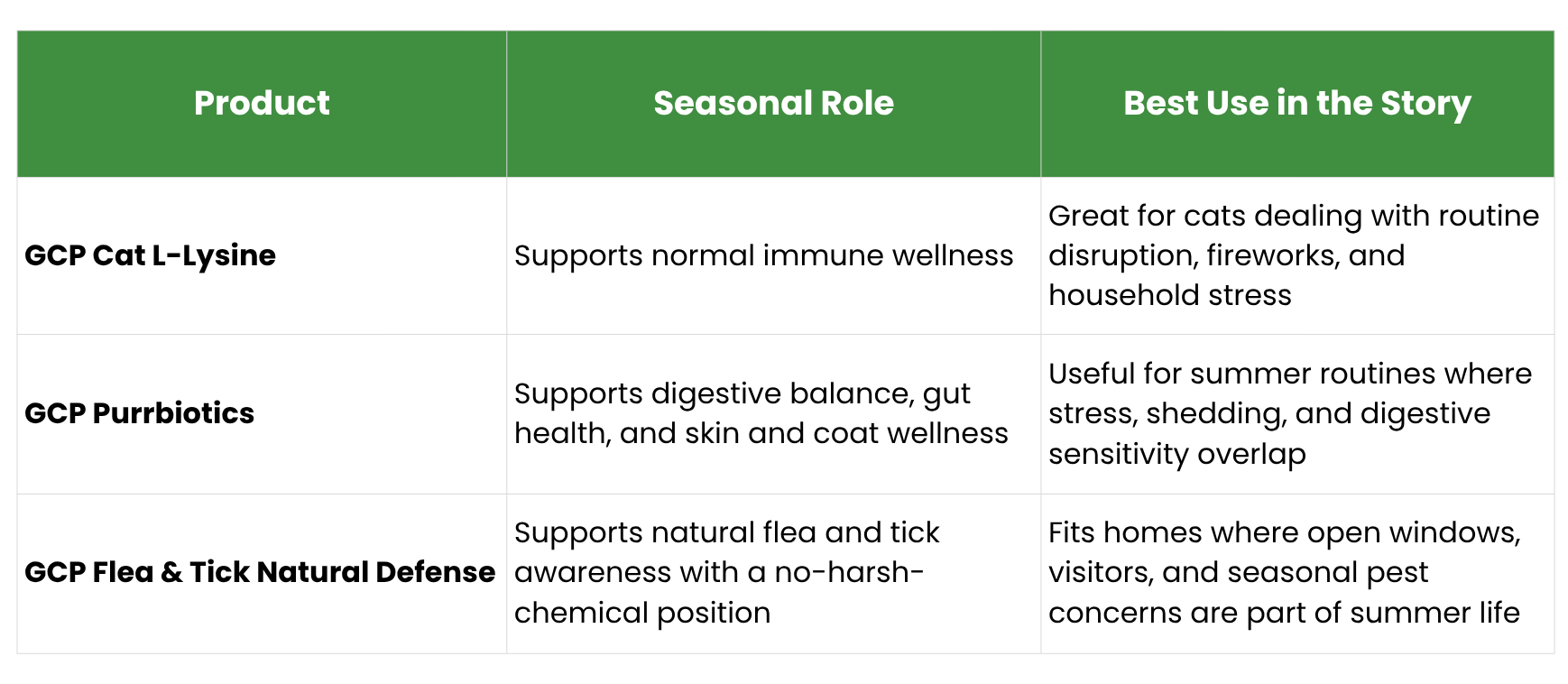
For cat parents who want to support normal immune wellness during noisy, stressful seasons, GCP Cat L-Lysine fits well into the story. Fireworks, visitors, and routine changes can all make summer feel more demanding, so a product positioned around immune support makes sense as part of a consistent routine.
For households focused on digestion, skin, and coat comfort, GCP Purrbiotics connects naturally to the effects of heat, seasonal shedding, and stress-related routine disruption. A summer season that feels busy and irregular is often when cat parents start paying closer attention to gut balance and overall daily wellness.
And because open windows, guest traffic, and warmer months can raise pest awareness even for indoor pets, GCP Flea & Tick Natural Defense becomes the third piece of the story. For cat parents who prefer a no-harsh-chemical approach, it offers a way to think about natural flea and tick support as part of a broader routine rather than a fear-based reaction.
Together, these three products create a clear and believable seasonal narrative: support the cat’s environment, support normal wellness from within, and stay mindful of summer pest exposure. That is a much stronger message than trying to position any single product as a cure-all.
Frequently Asked Questions
-
Indoor cats are sensitive to changes in sound, temperature, routine, and environment. Summer celebrations often combine all of those factors at once, which can make even a normally calm cat feel unsettled.
A Calmer Summer Starts at Home
Indoor cats may look protected from the chaos of summer, but in many homes, they actually experience a concentrated version of it. Trapped heat, loud fireworks, visitors, routine changes, and the chance of pests entering the home can all add pressure to a cat’s daily comfort. When those stressors build at the same time, even small changes in behavior can become easier to understand.
The most effective approach is a layered one. Keep the home cool and predictable, give your cat a quiet retreat, maintain familiar routines, and support everyday wellness in ways that feel practical and gentle. Guardian’s Choice Cat L-Lysine, Purrbiotics, and Flea & Tick Natural Defense each fit into that bigger story, helping cat parents build a thoughtful summer routine around immune support, gut balance, and natural pest awareness.
Guardian’s Choice Summer Support for Indoor Cats
Guardian’s Choice offers a simple trio of products that connect naturally to the main challenges indoor cats may face during summer celebrations. Rather than treating them as isolated products, they work best when positioned as a seasonal support system built around routine, comfort, and wellness.
Use all products only as directed on their labels. If your cat is very young, elderly, pregnant, nursing, on medication, or showing unusual symptoms, consult your veterinarian before adding new supplements.
Citation:
Stella, J. L., Lord, L. K., & Buffington, C. A. T. “Sickness behaviors in response to unusual external events in healthy cats and cats with feline interstitial cystitis.” Journal of the American Veterinary Medical Association, 2011. https://pubmed.ncbi.nlm.nih.gov/21194250/
For all general inquiries, please contact us at info@guardianschoice.com
© Copyright. All rights reserved.