
Why Flea Drops May Not Be Enough: A More Balanced Way to Think About Flea and Tick Support

Pets may still scratch after flea drops because flea issues can involve the pet, the home, the yard, and the skin’s reaction to bites. Some research has discussed flea resistance, which is why many pet parents now look at layered flea and tick support rather than relying on one step alone. GCP Flea & Tick Natural Defense is best positioned as part of a thoughtful pet-care routine, not as a cure, treatment, or replacement for veterinarian-recommended flea control.
Why Pets May Still Scratch After Flea Care
It can feel discouraging when you apply flea drops, wait for relief, and still see your dog or cat scratching, biting, or grooming more than usual. Many pet parents immediately assume the product failed, but flea and tick concerns are often more complicated than one application. Fleas can live in different stages around the home, including eggs and larvae in bedding, carpets, furniture, shaded outdoor areas, and favorite resting spots. Even when a pet has been treated, new fleas may continue emerging from the environment, which can make the situation look like it never improved.
Another reason flea care can feel inconsistent is that pets do not all react the same way to bites. Some dogs or cats may barely react, while others become visibly uncomfortable after only a few bites. A pet with sensitive skin may scratch, lick, chew, or rub against furniture even when you do not see many fleas. This is why flea and tick support should not only focus on what is on the coat today. It should also consider the pet’s skin comfort, the environment, grooming habits, product consistency, and veterinary guidance when symptoms become intense or persistent.
Season, lifestyle, and household routine also matter. Pets that spend time outdoors, visit parks, live with other animals, or sleep in multiple areas of the home may have more chances for exposure. Bathing too soon after topical applications, applying the product to the fur instead of the skin, using the wrong size range, or missing other pets in the household can also affect results. None of these details mean a pet parent did anything wrong; they simply show why a more complete flea and tick routine is often more practical than relying on one monthly step.
What Flea Resistance Means for Pet Parents
Flea resistance is a topic that gets attention because it helps explain why some parasite-control strategies may become less predictable over time. In simple terms, resistance means certain fleas may become less affected by specific active ingredients. This does not mean every flea product has stopped working, and it does not mean pet parents should abandon veterinarian-recommended flea care. It means flea control can be more successful when it is approached with consistency, environmental awareness, and a willingness to adjust under veterinary advice.
One review published in Parasites & Vectors discussed insecticide and acaricide resistance in fleas and ticks affecting dogs and cats. The practical takeaway is not that pet parents should panic, but that parasite management can require a layered strategy. A veterinarian may recommend a different product type, a new schedule, environmental control, or additional checks depending on the pet’s health, household risk, and local flea pressure. Because pets vary in age, weight, breed, health status, and sensitivity, professional guidance is especially important when itching continues or the skin begins to look irritated.
This is also where “natural flea and tick support” keywords often enter the conversation. Many pet parents search for natural flea support, flea and tick defense, no harsh chemicals, pet skin comfort, and flea bite irritation because they want a gentler-feeling routine. Those searches make sense, but it is important to keep expectations clear. Natural support products should not be described as guaranteed protection, medical treatment, or a cure for flea-related skin problems. They are best discussed as part of a broader pet wellness routine that may include vet-approved prevention, cleaning, grooming, and daily care habits.
The Skin Barrier and Flea-Related Irritation
A flea bite is small, but the skin response can feel much bigger for some pets. When a dog or cat scratches repeatedly, the skin can become more stressed, which may lead to visible redness, flakes, tenderness, or changes in coat appearance. The skin barrier is the outer layer that helps maintain moisture and defend against everyday environmental stressors. When that barrier is healthy, pets may be better supported through seasonal challenges; when it is already dry or irritated, scratching and licking may become more noticeable.
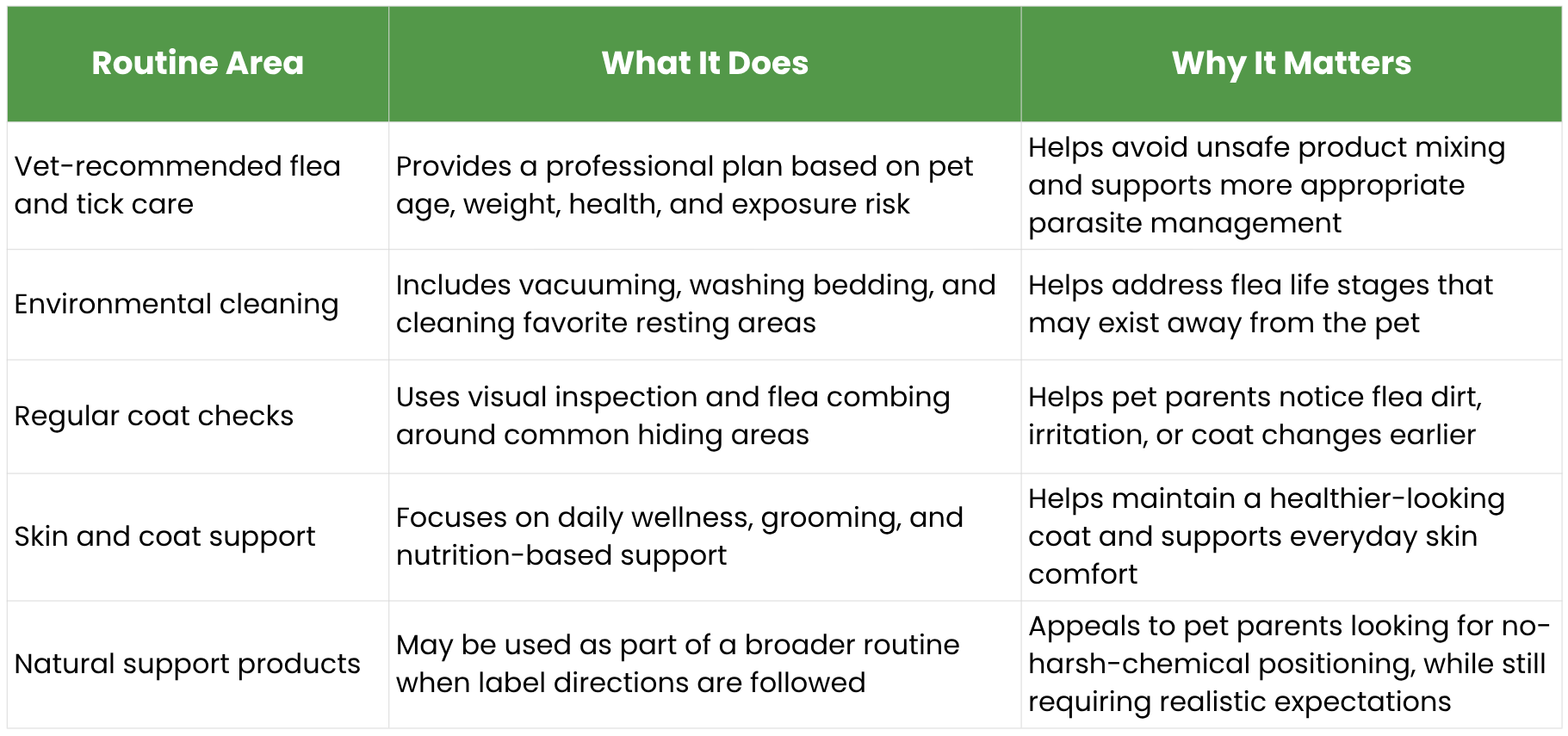
This is why pet parents often need to think beyond killing or removing pests. The comfort side of flea season matters, too. A complete routine may include regular brushing, checking for flea dirt near the tail base or belly, washing bedding, vacuuming common areas, and watching for changes in appetite, mood, sleep, and grooming behavior. If a pet develops open sores, hair loss, strong odor, swelling, or nonstop scratching, that is a sign to contact a veterinarian rather than trying multiple products at once.
Skin and coat support also fits naturally into this conversation. A healthy-looking coat can make it easier to spot changes early, while regular grooming gives pet parents a chance to notice irritation before it becomes more uncomfortable. This does not mean skin support prevents fleas, removes ticks, or replaces flea medication. It simply means skin health is part of the bigger wellness picture, especially for pets that seem sensitive during flea and tick season.
Flea-Care Routine Comparison
Where GCP Flea & Tick Natural Defense Fits In
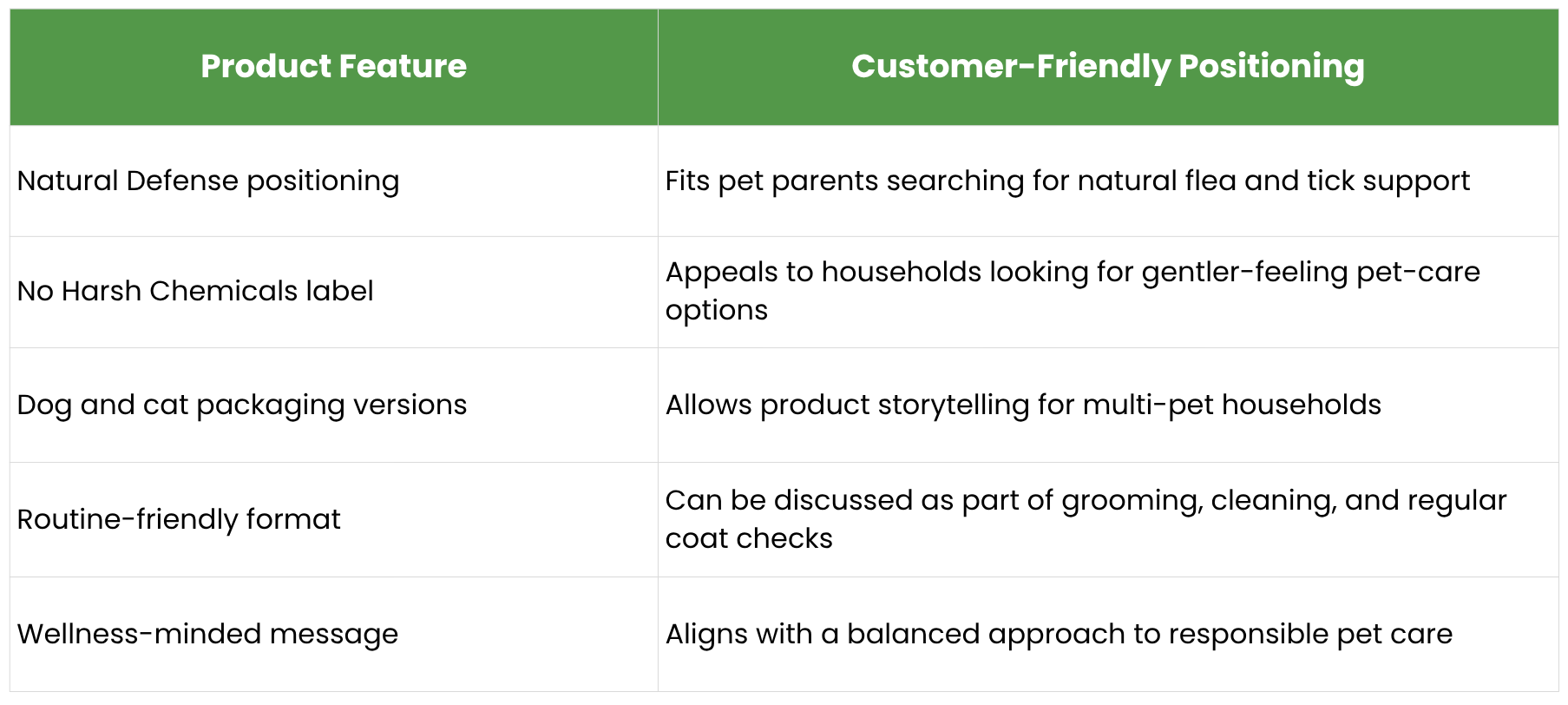
For pet parents who want a more balanced routine, GCP Flea & Tick Natural Defense can be introduced as a supportive product within a larger flea and tick care plan. Its packaging highlights “Natural Defense” and “No Harsh Chemicals,” which makes it a strong fit for customers searching for gentler-feeling flea and tick support. The product should be discussed carefully and responsibly: it is not a medical treatment, not a cure for flea allergy dermatitis, and not a replacement for veterinarian-recommended parasite prevention when that is needed.
The strongest way to position GCP Flea & Tick Natural Defense is through routine-building. Pet parents can use it alongside regular grooming, home cleaning, coat checks, and professional veterinary advice. This keeps the message trustworthy and avoids overpromising. Instead of saying one product solves the entire problem, the story becomes more helpful: flea and tick care works best when pet parents support the pet, manage the environment, and stay consistent with safe, label-directed use.
This also creates a natural bridge between the customer’s concern and the product’s role. A pet parent who is frustrated by scratching may not only want another harsh-feeling solution; they may want a calmer, more wellness-minded option that fits into everyday care. GCP Flea & Tick Natural Defense can be presented as that supportive step, especially for households that value natural-positioned pet products, clear routines, and responsible prevention habits.
Frequently Asked Questions
-
Your pet may still scratch because fleas can continue emerging from the home or yard even after a topical product is applied. Scratching may also come from skin sensitivity, dryness, allergies, or irritation from earlier bites, so ongoing discomfort should be discussed with a veterinarian.
Flea and Tick Care Works Best as a Layered Routine
When flea drops seem like they are not enough, it is easy to feel frustrated and look for a quick answer. In reality, flea and tick concerns usually involve several factors: the pet’s exposure, the home environment, the product being used, the timing of application, and the pet’s individual skin response. That is why a layered routine is often the most responsible approach.
A thoughtful plan may include veterinarian-recommended flea control, regular cleaning, coat checks, grooming, and supportive products that fit your pet’s needs. GCP Flea & Tick Natural Defense can be part of that routine for pet parents who want a natural-positioned option with no-harsh-chemical messaging. The key is to keep the promise honest: support the routine, follow the label, and involve a veterinarian when symptoms suggest something more serious.
GCP Flea & Tick Natural Defense
GCP Flea & Tick Natural Defense is designed for pet parents looking for a natural-positioned flea and tick support product to include in their everyday care routine. The packaging highlights “No Harsh Chemicals” and presents the product as a natural defense option for dogs and cats, making it especially relevant for pet owners who are mindful about what they use around their pets.
Use only as directed on the product label, and speak with a veterinarian before use if your pet has medical conditions, is pregnant, is very young or elderly, or has a history of sensitivity.
Citation:
Coles, T. B., & Dryden, M. W. “Insecticide/acaricide resistance in fleas and ticks infesting dogs and cats.” Parasites & Vectors, 2014. https://parasitesandvectors.biomedcentral.com/articles/10.1186/1756-3305-7-8
For all general inquiries, please contact us at info@guardianschoice.com
© Copyright. All rights reserved.