
The Science of the Scratch: Why Your Cat Targets the Sofa
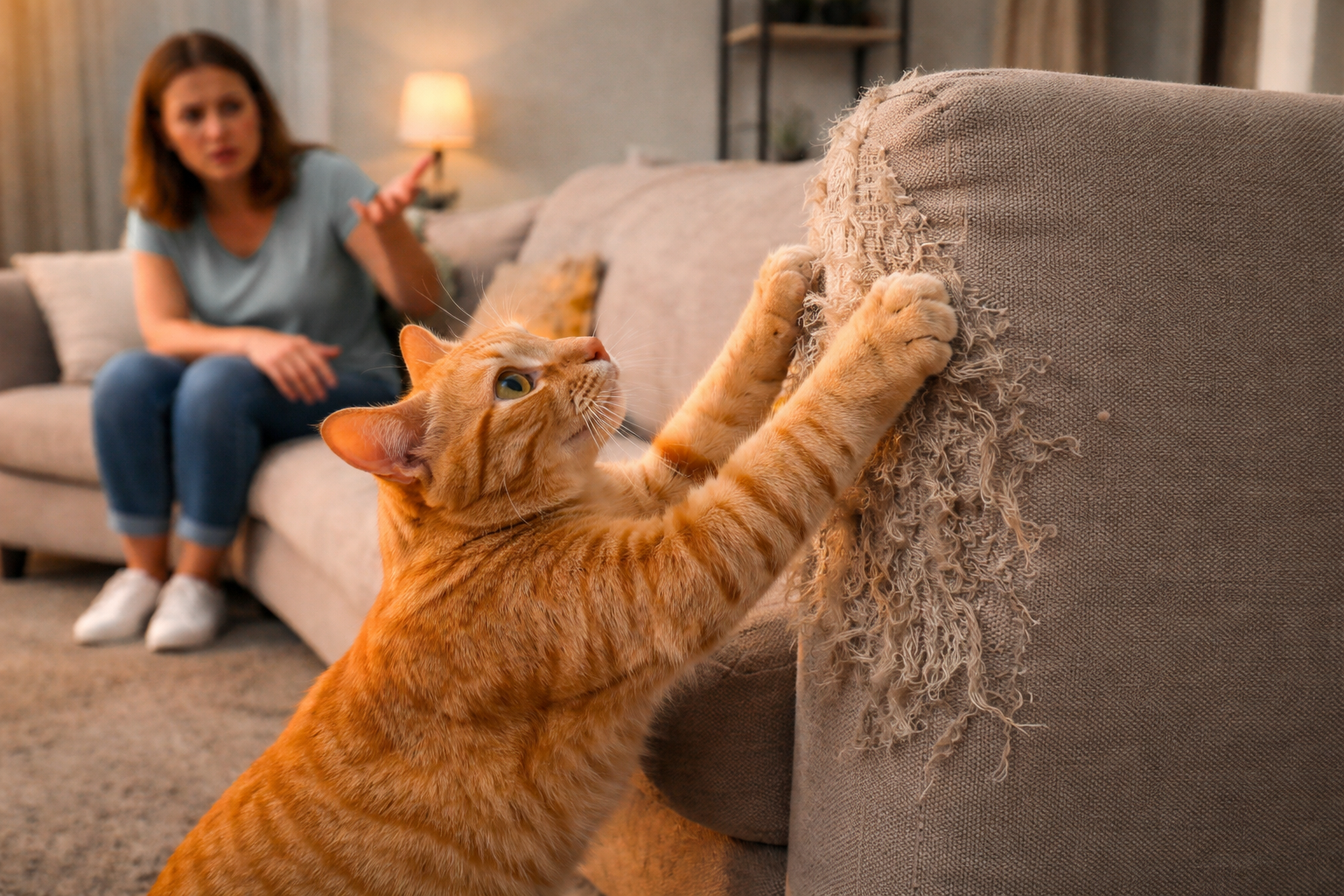
Scratching is a natural and necessary behavior for cats, driven by instincts related to territory marking, claw maintenance, and physical stretching. What often appears as “destructive behavior” is usually a mismatch between your cat’s needs and their environment. By understanding why cats scratch and providing better alternatives, pet parents can redirect this behavior without conflict while supporting overall comfort and routine.
Why Scratching Is a Biological Need
Scratching is not optional for cats. It is part of how they interact with their environment and maintain their physical condition. When a cat scratches, several things are happening at once. They are removing the outer sheath of their claws, stretching their muscles, and marking territory.
Cats have scent glands in their paws. When they scratch, they leave both a visual mark and a scent marker. This combination acts as a signal that helps them feel secure in their space. It is not about destruction. It is about communication and comfort.
Because of this, eliminating scratching entirely is not realistic. The goal is not to stop the behavior, but to guide it.
The Real Reason Your Sofa Becomes the Target
From a cat’s perspective, your furniture often checks all the boxes. Sofas are sturdy, tall enough for a full stretch, and covered in material that provides satisfying resistance. In many cases, they are also located in central areas of the home, which makes them ideal for territorial marking.
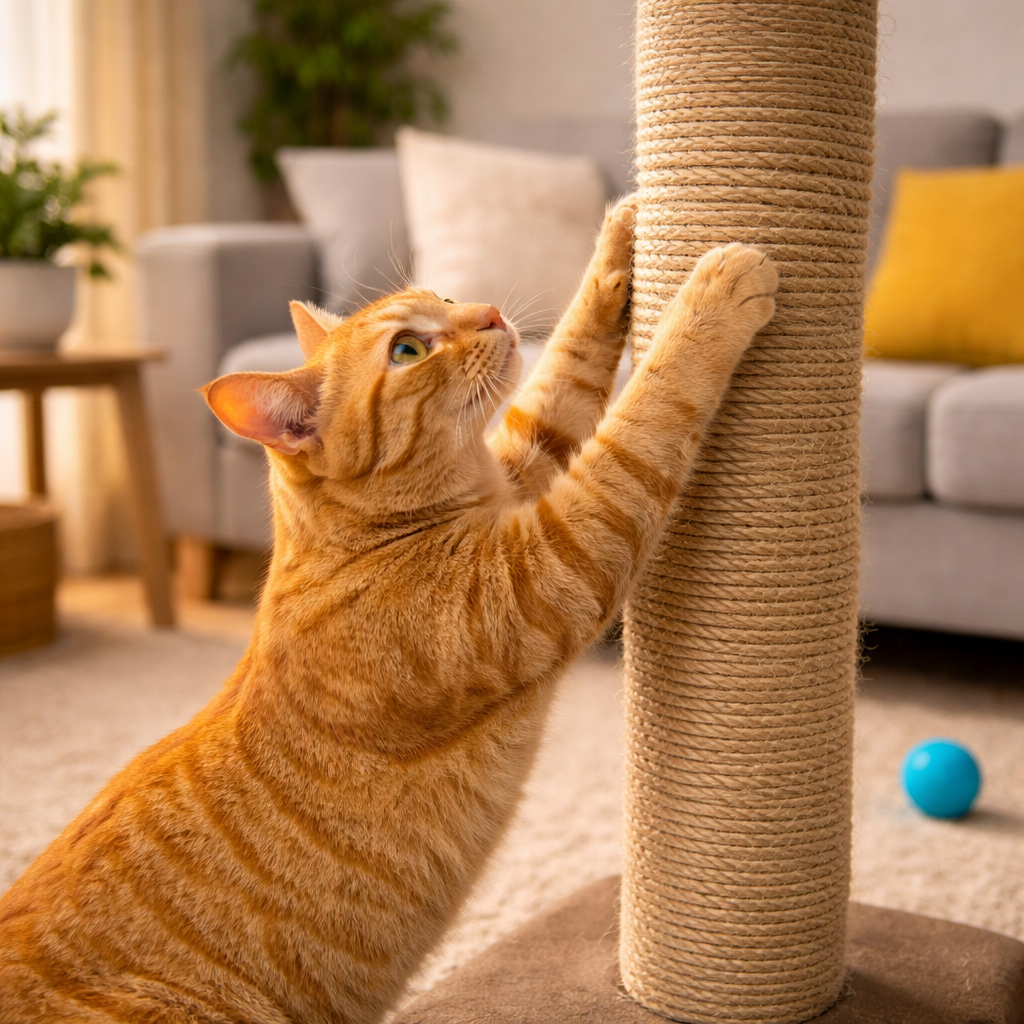
Cats prefer surfaces that allow them to fully extend their bodies. A scratching post that is too short or unstable will not meet this need. If the alternative does not feel right, the cat will return to the sofa.
Placement also matters. If scratching options are hidden in corners while the sofa sits in a high-traffic area, the sofa becomes the natural choice.
The Role of Stress and Environment
Scratching behavior can increase when a cat feels uncertain about their environment. Changes such as new pets, rearranged furniture, or unfamiliar sounds can influence how often and how intensely a cat scratches.
Research in animal behavior has explored how environmental stressors influence repetitive behaviors in animals, including marking behaviors like scratching. These responses are linked to how animals establish control and familiarity within their space.
When a cat feels secure, scratching tends to remain consistent and manageable. When stress increases, scratching can become more frequent or more targeted.
This does not mean scratching is a problem. It means the behavior is reflecting a shift in the cat’s internal or external environment.
Redirecting the Behavior Effectively
The most effective way to protect your furniture is to make the alternative more appealing than the target. This requires a combination of placement, texture, and stability.
Start by placing scratching posts near the areas your cat already uses. If your cat scratches the sofa, placing a post directly beside it can help redirect the behavior.
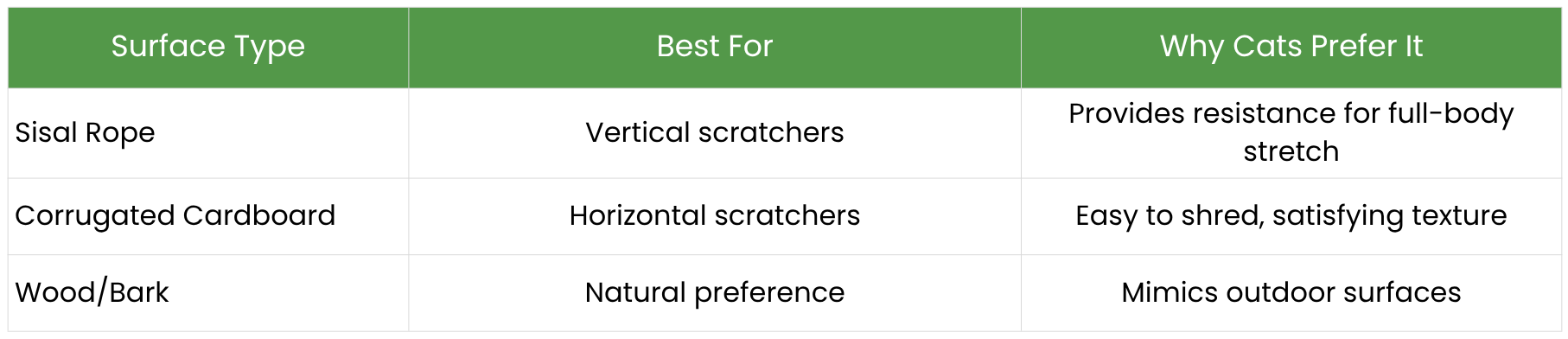
Texture is equally important. Some cats prefer rough resistance, while others prefer softer materials that shred easily. Offering multiple options increases the likelihood of success.
Consistency is key. Each time your cat uses the appropriate surface, reinforcing that behavior helps establish a new habit.
Common Behaviors and What They Mean
Different materials serve different preferences. Observing your cat’s behavior can help guide your choices.
Stability cannot be overlooked. A scratching post that moves or tips over will not be trusted. Cats rely on firm surfaces to support their full weight.
Supporting Calm Behavior Through Routine
Routine plays a significant role in how cats interact with their environment. Predictability reduces uncertainty, which can influence how often stress-related behaviors appear.
A balanced daily routine may include:
-
Regular feeding times
-
Interactive play sessions
-
Designated rest areas
-
Consistent environmental setup
In addition to environmental structure, some pet parents choose to include daily wellness support as part of their routine.
Where GCP Fits Into Your Cat’s Routine
Supporting your cat’s internal balance can complement environmental and behavioral strategies.
-
GCP Purrbiotics Daily Probiotics Supports digestive balance, which plays a role in overall wellness and routine stability
-
GCP Cat L-Lysine Commonly included in feline wellness routines as part of daily nutritional support
-
GCP Flea & Tick Natural Defense for Cats Supports skin comfort as part of grooming and environmental care
These products are designed to integrate easily into daily habits, making consistency easier to maintain without disrupting your cat’s routine.
The Bigger Picture
Scratching is not something to eliminate. It is something to understand and guide. When you align your home environment with your cat’s instincts, the behavior becomes more manageable.
Rather than working against your cat’s nature, you are working with it. This creates a more balanced environment where both you and your cat can coexist comfortably.
Frequently Asked Questions
-
Cats are highly territorial animals, and scratching the same spot helps reinforce their sense of ownership. When they scratch, they leave both visible marks and scent signals from glands in their paws. Returning to the same location strengthens that signal over time, especially in areas they consider important, such as near sleeping spots or high-traffic zones.
A Smarter Way to Work With Instinct
When you understand why your cat scratches, the solution becomes clearer. It is not about stopping the behavior, but about giving it a better outlet.
By combining environmental adjustments with consistent routines and supportive care using products like GCP Purrbiotics, Cat L-Lysine, and Flea & Tick Natural Defense, you create a space where your cat feels secure, and your furniture stays intact.
And in that balance, scratching becomes less of a problem and more of a natural behavior with the right place to happen.
Built for Consistency and Ease
When it comes to managing behavior and maintaining a calm environment, consistency matters more than intensity. This is where product design plays a role. The easier something is to use daily, the more likely it becomes part of a long-term routine.
Here’s how the GCP cat products are structured for real-life use:
GCP Purrbiotics Daily Probiotics
-
Powder format allows flexible mixing with wet or dry food
-
Designed for gradual daily use rather than one-time changes
-
Easy to adjust portions based on feeding habits
GCP Cat L-Lysine
-
Granule form blends seamlessly into meals without altering texture significantly
-
Suitable for multi-cat households where routines may differ
-
No complicated prep or scheduling required
GCP Flea & Tick Natural Defense (Cats)
-
Chewable format removes the need for topical application
-
No mess or residue, making it easier for indoor environments
-
Designed to fit alongside feeding or treat routines
Instead of adding extra steps to your day, these products are designed to align with what you are already doing. Feeding time, treat time, and daily care moments become opportunities for consistency.
Because in most cases, the effectiveness of any routine comes down to one thing: how easy it is to maintain over time.
For all general inquiries, please contact us at info@guardianschoice.com
© Copyright. All rights reserved.