
5 Trending Dog Wellness Items

Today’s dog wellness trends are moving toward more personalized daily care, with pet parents exploring targeted nutrition for puppies, omega-3 fatty acids, digestive support, breath-care products, and botanical seasonal wellness. The most useful approach is not giving every dog every trending product, but choosing items that complement a complete diet, regular exercise, grooming, dental care, parasite management, and veterinary guidance.
Walk into almost any modern pet store—or scroll through a pet wellness shop online—and it quickly becomes clear how much dog care has changed. There are supplements for different life stages, functional chews for specific routines, probiotics, fatty acids, botanical ingredients, dental products, interactive feeders, and enough wellness categories to make even an experienced pet parent wonder what their dog actually needs.
That growing interest in dog wellness supplements, natural dog care, puppy vitamins, canine probiotics, omega-3 supplements for dogs, and daily dog wellness routines reflects a larger change in how many families think about pet care. Rather than paying attention only when a problem appears, pet parents increasingly want simple ways to maintain healthy routines throughout the year.
That can be a positive shift, but more products do not automatically create a better wellness plan. A complete and balanced diet, appropriate physical activity, healthy body condition, grooming, dental hygiene, mental enrichment, parasite care, and routine veterinary visits still provide the foundation. Supplements are most helpful when they have a clear purpose within that bigger picture.
The better question is therefore not, “What is everyone buying right now?” It is, “Which of these wellness trends actually fits my dog?”
Why Dog Wellness Is Becoming More Personalized
Dogs may share the same species, but their daily needs can look completely different. A four-month-old puppy, a healthy adult hiking companion, and a twelve-year-old senior dog are not experiencing the same stage of life, even if they happen to live under one roof.
Modern canine wellness increasingly reflects those differences. Puppy-focused products emphasize developmental nutrition, while adult wellness routines may focus on skin and coat care, digestion, dental hygiene, activity, or seasonal outdoor habits. Senior dogs may need closer attention to body condition, comfort, mobility, and changing nutritional requirements.
Lifestyle matters just as much as age. A dog who spends weekends on wooded trails has a different routine from one who mainly takes neighborhood walks, while a dog with a history of scavenging may need different management than one who ignores everything on the ground.
That personalization is one reason targeted products have become popular. Instead of relying on one “everything” supplement, pet parents can choose individual categories according to what makes sense for their dog.
The important part is staying selective. Every new chew contributes ingredients and nutrients to the overall diet, so additions should be reviewed together rather than treated as isolated products.
1. Botanical and Nutritional Seasonal Care
Interest in naturally positioned flea and tick wellness products remains strong, especially among pet parents who prefer botanical and nutritional ingredients within their everyday routines. Ingredients such as apple cider vinegar, coconut oil, anise, and thiamine commonly appear in this category.
However, “natural” should not be confused with guaranteed parasite prevention.
Thiamine, also known as vitamin B1, is an essential nutrient involved in normal metabolism and nervous-system function, but claims that eating thiamine reliably changes a dog’s scent enough to repel fleas or ticks are not well established. The same caution applies to claims that oral apple cider vinegar or coconut oil creates a proven internal pest barrier.
A botanical chew can still appeal to pet parents who prefer that ingredient profile and want a simple addition to their seasonal routine. Its role should simply remain realistic.
Regular coat checks after walks, keeping bedding clean, monitoring the home and yard environment, and following veterinarian-recommended flea and tick prevention remain important. If fleas or ticks are actually found, a wellness supplement should not be expected to treat the infestation.
This makes seasonal care less about choosing between “natural” and “traditional” approaches and more about building an appropriate combination for the individual dog.
2. Life-Stage Nutrition for Growing Puppies
Puppy wellness products are another growing category, largely because pet parents understand that early life is nutritionally different from adulthood.
Growing puppies need a complete diet formulated for their developmental stage. Protein, energy, vitamins, minerals, fatty acids, and other nutrients need to be present in appropriate proportions, which is why puppy food—not a supplement—is the starting point for developmental nutrition.
Multivitamin chews may be considered as an additional nutritional product when they are appropriate for the individual puppy, but more vitamins are not automatically better. Complete commercial puppy diets already contain required nutrients, and unnecessary supplementation may create overlap.
This is particularly important with minerals involved in skeletal development. Adding extra nutrients without considering what the puppy already receives can be less helpful than simply maintaining a properly formulated diet.
Pet parents interested in a puppy multivitamin should therefore check the product label, review their puppy’s primary food, and discuss supplementation with a veterinarian when there are questions about breed size, growth, diet, or existing health concerns.
Convenience is still valuable. A puppy-specific chew that fits naturally into breakfast or another familiar routine can make supplemental nutrition easier to organize when additional support is appropriate.
3. Everyday Breath and Oral-Care Routines
Fresh-breath products have become increasingly common because nobody enjoys getting a close-up greeting from a dog whose breath can clear the room. Still, breath care deserves more than simply covering an unpleasant smell.
Persistent bad breath can sometimes be associated with plaque, tartar, gum disease, damaged teeth, retained material in the mouth, or other health concerns. A functional breath chew may complement an everyday oral-care routine, but it should not be positioned as a replacement for brushing, veterinary dental evaluation, or treatment when dental disease is present.
Ingredients such as parsley and chlorophyll are often incorporated into breath-focused pet products. These may fit the type of formulation pet parents prefer, but their presence does not mean the chew cleans below the gumline or corrects dental disease.
The strongest daily routine remains mechanical care when the dog tolerates it. Brushing with dog-appropriate toothpaste, using veterinary-recommended dental products, checking the mouth regularly, and keeping professional dental care on the schedule provide a more complete approach.
A breath-focused chew can then occupy a much clearer role: a convenient addition to the routine rather than the entire oral-health strategy.
4. Omega-3 Nutrition for Skin, Coat, and Mobility Wellness
Omega-3 fatty acids remain one of the most established nutritional categories in canine wellness conversations. Marine sources can provide EPA and DHA, two omega-3 fatty acids frequently studied in dogs.
Skin, coat, joints, and mobility are common reasons pet parents explore omega-3 supplementation, although the finished product, EPA and DHA amounts, total diet, dog’s health, and individual needs all influence how supplementation should be approached.
One controlled clinical study by Roush and colleagues evaluated dogs diagnosed with osteoarthritis that were fed a therapeutic diet containing increased amounts of omega-3 fatty acids. The researchers reported improvement in certain objective weight-bearing measurements during the study.
That research is useful background for why EPA- and DHA-containing nutrition continues to receive attention in canine mobility discussions, but it should not be stretched into a promise about every omega-3 product. The study tested a particular dietary intervention in dogs already diagnosed with osteoarthritis; it did not test every supplement, and it does not establish that an omega-3 chew cures arthritis or guarantees easier movement.
For everyday pet parents, the practical takeaway is simpler. Omega-3 supplementation can be discussed as nutritional support within a broader routine that includes a complete diet, healthy body condition, grooming, appropriate movement, and veterinary care when mobility or skin concerns appear.
5. Digestive Support and Stool-Eating Management
Gut-focused wellness has become another major pet-care category. Probiotics, prebiotics, and digestive enzymes now appear in a wide variety of canine products as pet parents become more interested in the relationship between diet and digestive function.
Probiotics are live microorganisms used in certain foods and supplements, while prebiotics are substances intended to provide a nutritional substrate for selected microorganisms in the digestive tract. Digestive enzymes are different again, so products combining several of these ingredients should be evaluated according to the finished formulation rather than assuming all “gut health” products work identically.
Some specialized digestive chews are also marketed for dogs that eat stool, a behavior known as coprophagia. Stool eating can be frustrating, but it does not automatically mean that a dog has a nutritional deficiency or digestive imbalance.
Management remains important. Remove stool promptly, supervise outdoor time when necessary, reinforce a reliable “leave it,” and avoid giving the dog repeated opportunities to practice the behavior.
If coprophagia begins suddenly or appears alongside unusual hunger, diarrhea, weight loss, vomiting, or other digestive changes, speak with a veterinarian. A digestive or taste-deterrent chew may fit into the management routine, but it should not replace investigation when another issue may be contributing.
Trending Dog Wellness Categories at a Glance
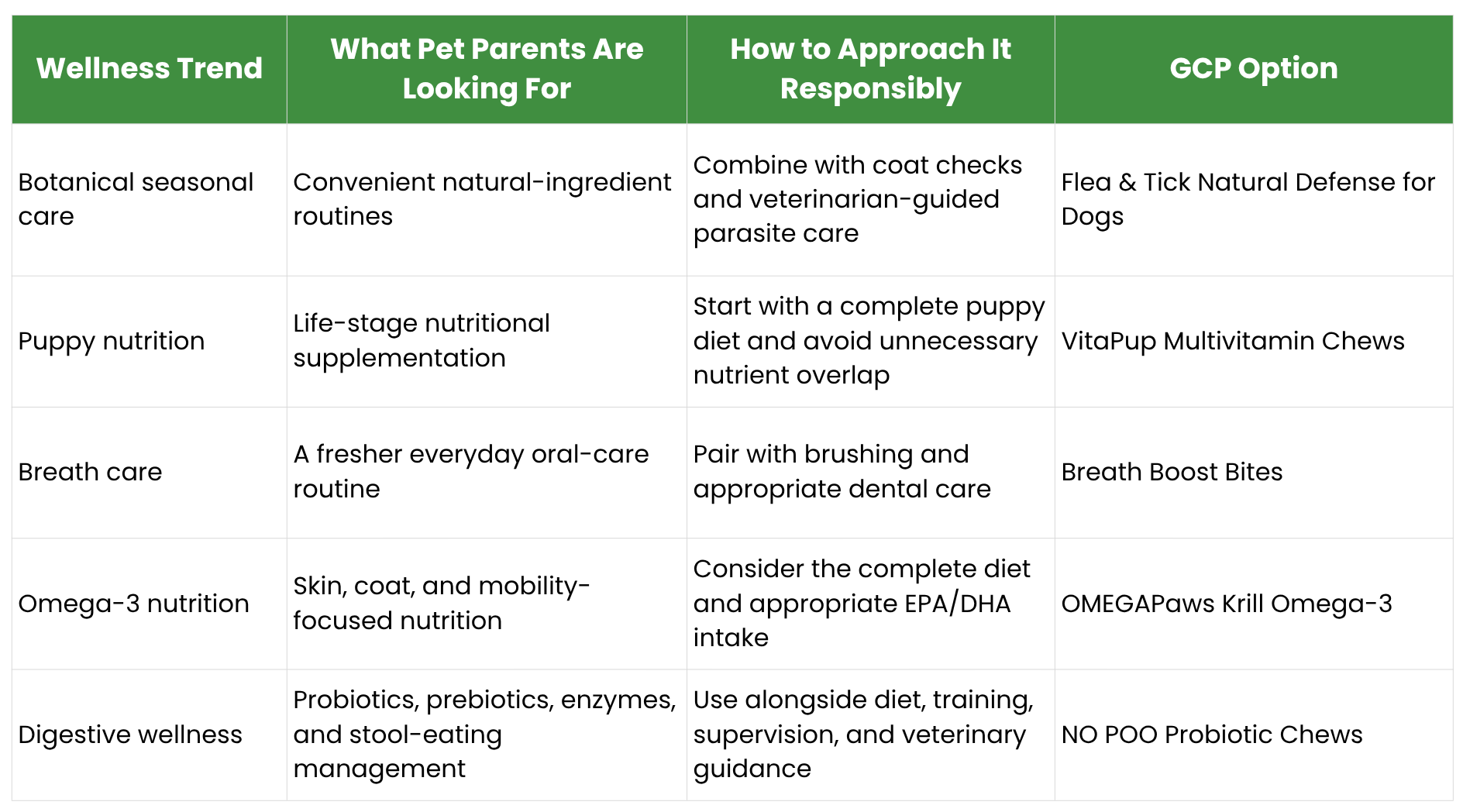
The best routine may include one of these categories, several of them, or none at all. What matters is whether each addition has a useful role for your individual dog.
How to Build a Routine Without Over-Supplementing
When several products look relevant, it can be tempting to introduce everything at once. A slower approach usually makes the routine easier to understand.
Start with the goal. Are you caring for a growing puppy? Looking to add marine omega-3s to an adult dog’s diet? Trying to improve an oral-care routine? Managing a persistent stool-eating habit? Building a broader seasonal outdoor-care plan?
Once the goal is clear, review the current food and any products your dog already receives. Ingredient overlap matters, especially when several supplements contain vitamins, minerals, fatty acids, or similar functional ingredients.
Introduce one new item at a time when practical. This gives you a clearer picture of how well your dog accepts it and makes it easier to identify the cause if digestive upset or another unexpected change occurs.
Most importantly, supplements should not become a way to postpone appropriate veterinary care. Persistent bad breath, itching, hair loss, diarrhea, vomiting, mobility changes, unexplained weight changes, or signs of parasites deserve proper evaluation.
Bringing Guardian’s Choice Into a Personalized Daily Routine
Once the foundations are established, Guardian’s Choice (GCP) offers several dog-focused products that can help pet parents personalize their everyday wellness routine without expecting one supplement to do everything.
GCP Flea & Tick Natural Defense for Dogs comes in a 100-soft-chew format and its packaging highlights apple cider vinegar, coconut oil, anise, and thiamine. It can be positioned as a botanical and nutritional addition to seasonal care while appropriate parasite management remains essential.
GCP VitaPup Multivitamin Chews for Puppies offers a puppy-focused way to incorporate supplemental nutrition when it makes sense within the puppy’s complete diet. GCP Breath Boost Bites provides a convenient breath-focused option that can complement brushing and routine dental care.
For omega-3 nutrition, GCP OMEGAPaws Krill Omega-3 can fit into skin, coat, and mobility-focused wellness routines when supplemental marine fatty acids are appropriate. GCP NO POO Probiotic Chews combines a digestive-focused format with ingredients such as prebiotics, digestive enzymes, and capsicum, making it an option for pet parents building a broader stool-eating management routine.
The value of having several GCP options is choice. You can select support according to your dog’s life stage and actual needs rather than placing every wellness goal into a single chew.
Frequently Asked Questions
-
No, many dogs receive their essential nutritional requirements through an appropriate complete and balanced diet, and supplementation should have a clear purpose. Consider your dog’s age, diet, lifestyle, health history, and veterinary recommendations before adding a new product.
The Best Wellness Routine Starts With What Your Dog Actually Needs
Dog wellness trends can be useful because they introduce pet parents to new ways of thinking about everyday care. They can encourage closer attention to nutrition, skin and coat condition, digestion, dental routines, seasonal outdoor habits, and the different needs of puppies, adults, and senior dogs.
But a trend should never become a requirement simply because it is popular.
The strongest routine still begins with the basics: complete nutrition, clean water, regular movement, healthy body condition, grooming, enrichment, dental care, parasite management, and veterinary checkups. Supplements can then be added selectively to complement those foundations.
One dog may benefit from an omega-3-focused nutritional routine, while another household may be more interested in puppy supplementation or digestive support. A dog with persistent bad breath needs more than a breath chew, while a dog with an active flea problem needs appropriate parasite care rather than relying on a botanical supplement.
Choosing products with realistic expectations is what turns wellness shopping into thoughtful pet care. Instead of trying to give your dog everything, build a routine where every product earns its place.
Build Their Routine With Five GCP Wellness Favorites
GCP Flea & Tick Natural Defense, VitaPup Multivitamin Chews, Breath Boost Bites, OMEGAPaws Krill Omega-3, and NO POO Probiotic Chews offer five different ways to personalize a dog’s routine according to life stage and wellness priorities. Rather than treating the collection as a one-size-fits-all package, pet parents can select the products that complement their dog’s existing nutrition, grooming, activity, dental care, behavioral management, and veterinary plan.
-
GCP Flea & Tick Natural Defense for Dogs: 100-soft-chew format featuring apple cider vinegar, coconut oil, anise, and thiamine on the packaging
-
Provides a convenient botanical and nutritional option for a broader seasonal wellness routine
-
GCP VitaPup Multivitamin Chews for Puppies: Puppy-focused supplemental nutrition designed to fit into an established feeding routine
-
Offers an easy-to-use multivitamin format when additional supplementation is appropriate for the puppy
-
GCP Breath Boost Bites: A functional addition to everyday breath-care routines
-
Can complement tooth brushing, regular mouth checks, and veterinarian-guided dental care
-
GCP OMEGAPaws Krill Omega-3: Provides marine-source omega-3 nutrition for dogs
-
Can complement everyday skin, coat, and mobility-focused nutritional care
-
GCP NO POO Probiotic Chews: Digestive-focused chew featuring prebiotics, digestive enzymes, and capsicum
-
Can be incorporated alongside training, supervision, prompt waste cleanup, and broader digestive wellness habits
-
Convenient formats make individual products easier to pair with established mealtimes
-
Each option is intended to complement rather than replace complete nutrition or appropriate veterinary care
If you are looking to refresh your dog’s daily wellness routine, these five GCP options make it easier to choose support according to a specific need instead of reaching for one product that promises everything. Start with the category most relevant to your dog, follow each current label carefully, review supplements together for unnecessary overlap, and build from the everyday habits that already support a healthier, happier life.
Reference
Roush, J. K., Dodd, C. E., Fritsch, D. A., Allen, T. A., Jewell, D. E., Schoenherr, W. D., Richardson, D. C., Leventhal, P. S., & Hahn, K. A. (2010). Multicenter veterinary practice assessment of the effects of omega-3 fatty acids on osteoarthritis in dogs. Journal of the American Veterinary Medical Association, 236(1), 59–66. https://doi.org/10.2460/javma.236.1.59
For all general inquiries, please contact us at info@guardianschoice.com
© Copyright. All rights reserved.