
The Ultimate Guide to Stress-Free Pet Travel
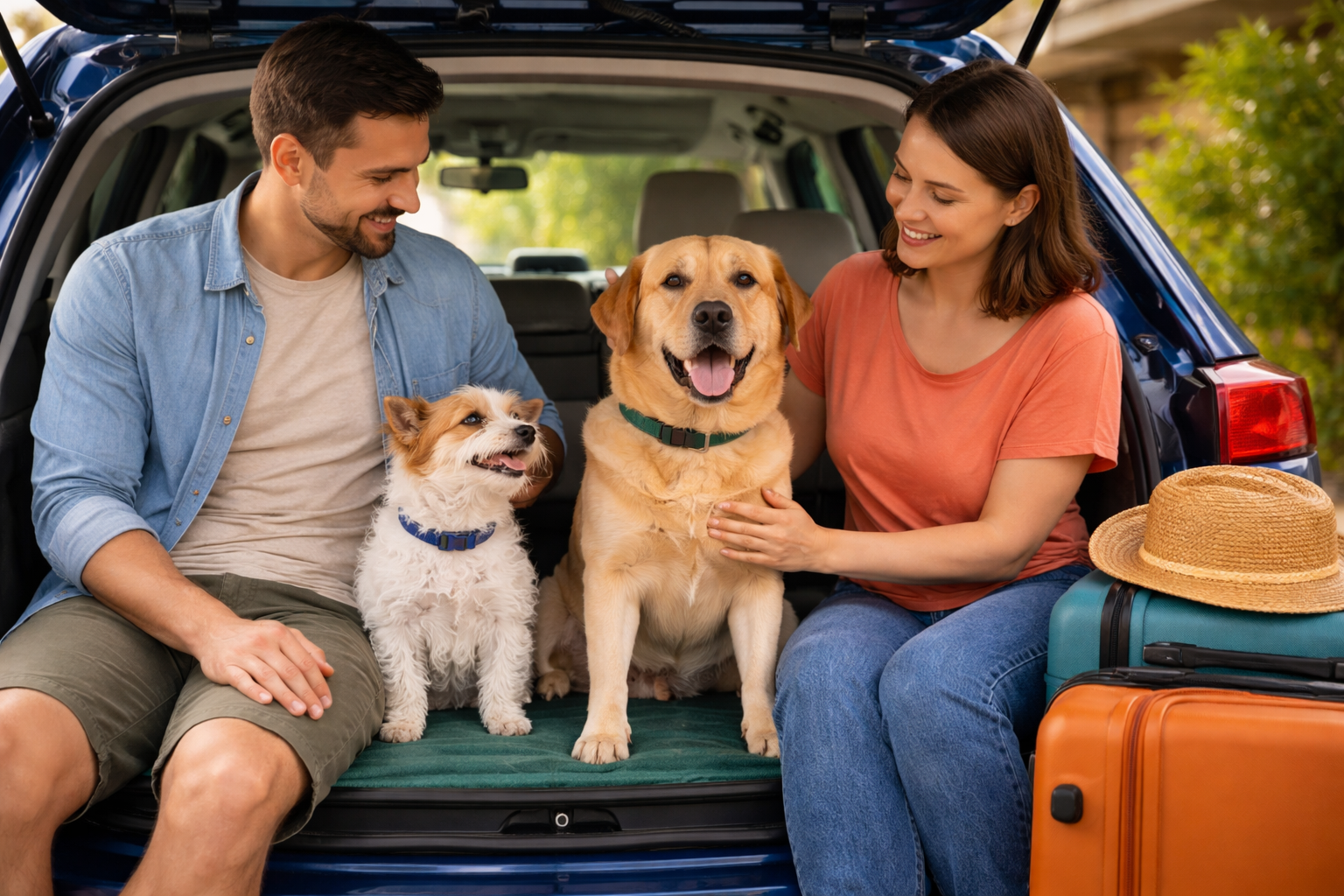
Traveling with pets requires a balance between safety, preparation, and managing stress. Many pets experience anxiety during travel due to unfamiliar movement, sounds, and environments. By focusing on secure transport, consistent routines, and supportive habits, pet parents can create a smoother, more predictable experience that helps their pets stay comfortable throughout the journey.
Why Preparation Changes Everything
Traveling with your pet can either feel seamless or overwhelming depending on how well you prepare. Unlike humans, pets do not understand where they are going or why their environment suddenly changes. What feels like an exciting trip for you can feel unpredictable and stressful for them.
Preparation creates familiarity within unfamiliar situations. When pets recognize elements of their routine such as their crate, scent, or feeding schedule, they are more likely to remain settled during travel. Without this structure, even short trips can lead to restlessness, vocalization, or discomfort.
The goal is not to eliminate every variable, but to reduce uncertainty as much as possible.
Safety First: Building a Travel-Ready Setup
Before addressing comfort or anxiety, safety should always come first. An unrestrained pet in a moving vehicle is not only a distraction but also at risk during sudden stops or sharp turns.
A secure setup creates both physical protection and psychological stability. Pets that feel contained in a safe space often exhibit calmer behavior compared to those moving freely inside the vehicle.
Key Safety Considerations
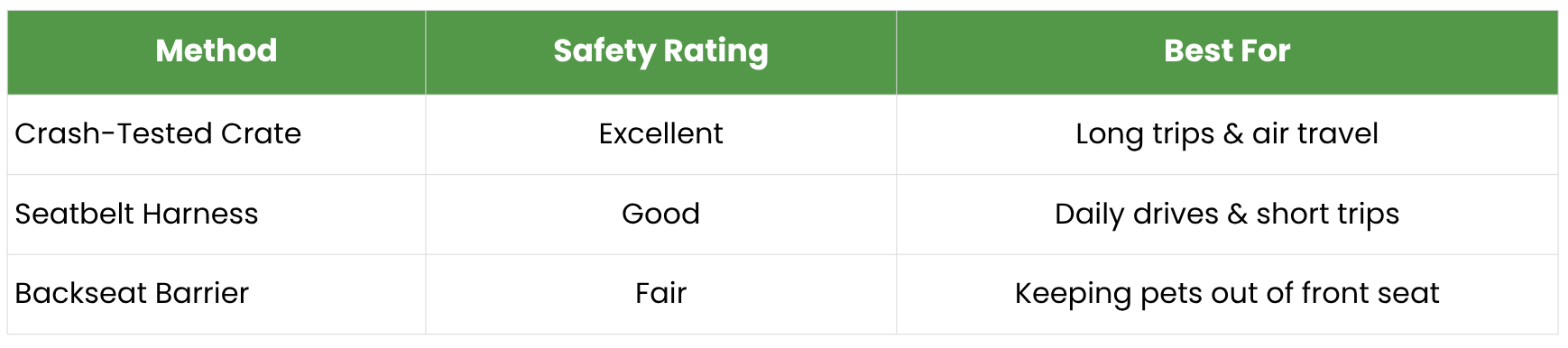
Crate Training A travel-certified crate provides structure and limits movement. Even pets that do not use crates at home can adapt when introduced gradually.
Seatbelt Harness For shorter trips, a harness can offer a balance between safety and mobility.
Identification Updated microchip information and visible ID tags are essential in case of unexpected separation.
Ventilation and Temperature Maintaining airflow and avoiding heat buildup is critical, especially during warmer months.
Understanding Travel Anxiety in Pets
Travel introduces a combination of unfamiliar motion, sounds, and visual stimuli. For some pets, this results in what is commonly referred to as motion stress.
Signs may include:
-
Excessive panting
-
Drooling
-
Restlessness or pacing
-
Whining or vocalization
Research in veterinary behavior suggests that environmental changes can influence how pets respond to new situations. These reactions are often linked to sensory overload rather than intentional behavior.
Because of this, managing travel stress is less about quick fixes and more about creating a stable, predictable routine that your pet can rely on before and during the journey.
Creating a Calm Pre-Travel Routine
One of the most effective ways to support your pet during travel is to focus on consistency before the trip begins. A structured pre-travel routine helps regulate energy levels and reduce sudden environmental changes.
Instead of rushing out the door, build a predictable sequence:
-
Light exercise before departure
-
Calm interaction rather than overstimulation
-
Familiar items such as blankets or toys
-
Gradual exposure to the car environment
When pets recognize familiar patterns, they are more likely to remain settled even in new situations. Over time, this routine becomes a signal that travel is safe and manageable.
Hydration, Feeding, and Break Timing
Travel disrupts normal feeding and hydration patterns, which can influence how your pet feels during the journey.
Key Guidelines
Feeding Timing A light meal several hours before travel can help reduce discomfort. Feeding immediately before departure may increase the likelihood of motion-related issues.
Hydration Offer small amounts of water regularly rather than large amounts at once.
Breaks Plan stops every 2–3 hours to allow your pet to move, reset, and relieve themselves.
Maintaining these habits creates a rhythm that pets can adapt to, even in unfamiliar environments.
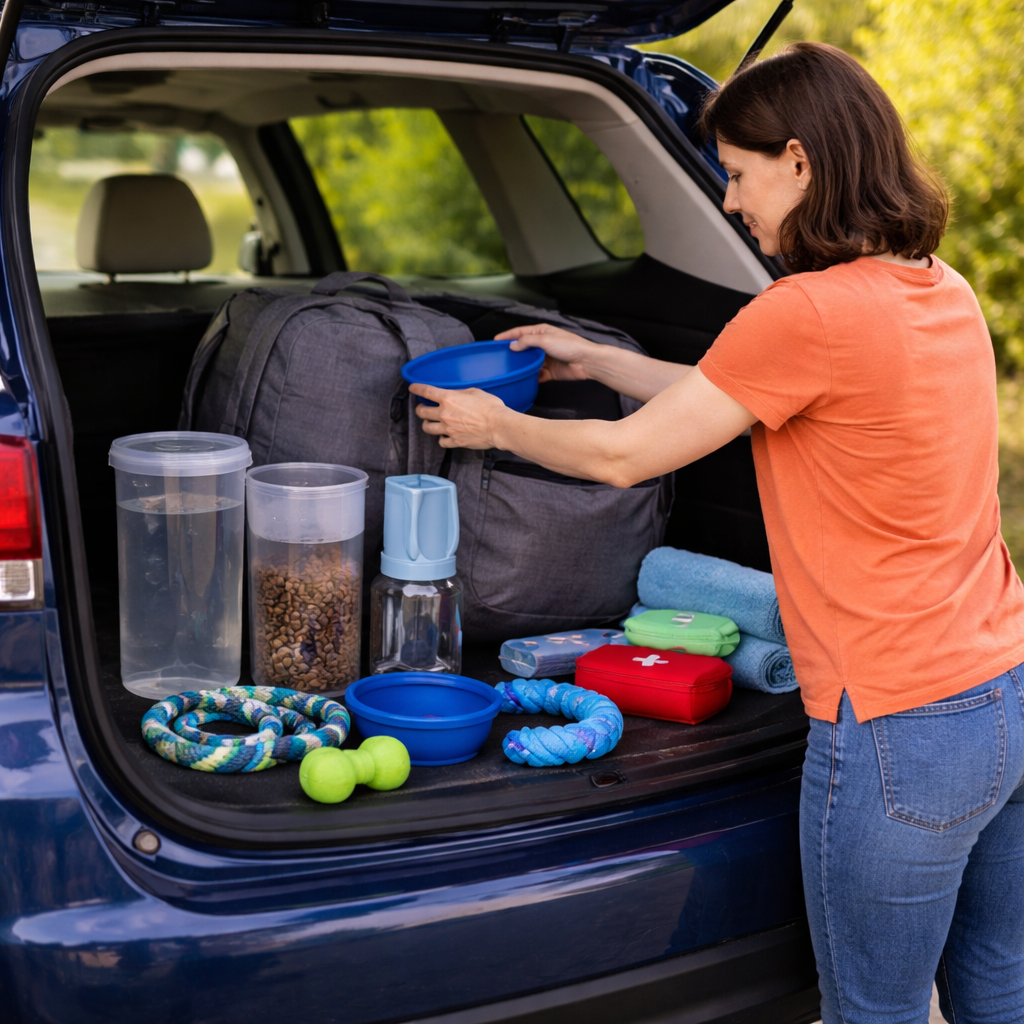
Where GCP Fits Into Your Travel Routine
Creating a smoother travel experience often comes down to consistency before, during, and after the trip. While preparation and training remain essential, integrating simple daily wellness habits can help support your pet’s overall readiness for new environments.
GCP’s product line for both dogs and cats is designed to fit into everyday routines, making it easier to maintain consistency even when your schedule shifts during travel.
For Dogs
-
GCP Flea & Tick Natural Defense (Dogs) Supports skin comfort as part of outdoor and travel routines
-
GCP VitaPup Multivitamin Chews Helps maintain daily nutritional balance when routines change
-
GCP OmegaPaws Premium Krill Omega-3 Commonly included in routines focused on skin and coat maintenance
-
GCP Breath Boost Bites Supports oral hygiene as part of everyday care
For Cats
-
GCP Flea & Tick Natural Defense (Cats) Supports skin comfort in new or shared environments
-
GCP Purrbiotics Daily Probiotics Supports digestive balance during routine changes
-
GCP Cat L-Lysine Commonly included in daily wellness routines for cats
These products are not designed to replace preparation or travel safety practices. Instead, they fit into your existing habits, helping you maintain consistency no matter where you and your pet are headed.
Product Feature Spotlight: Designed for Travel Days
Travel introduces unpredictability, which makes ease of use even more important. GCP products are structured to integrate into your routine without adding extra steps.
-
Pre-measured chew and scoop formats reduce guesswork
-
Portable packaging makes them easy to pack for trips
-
No refrigeration required, ideal for travel and outdoor stays
-
Can be added to feeding or treat routines without disruption
-
Suitable for multi-pet households with different needs
By focusing on simplicity and flexibility, these products support one key goal: making consistency easier, even outside your normal environment.
Comparison: Travel Safety Options
The Bigger Picture of Stress-Free Travel
Traveling with your pet is not just about reaching the destination. It is about how they experience the journey.
When you combine:
-
Secure transport
-
Predictable routines
-
Environmental familiarity
-
Consistent daily care habits
You create a system that helps your pet adapt more comfortably to change. Over time, repeated positive travel experiences can make future trips easier.
Frequently Asked Questions
-
Stopping every two to three hours is generally recommended for most pets. These breaks allow your pet to stretch, hydrate, and reset from the stimulation of travel. Regular stops also help prevent restlessness from building up over time.
A Better Way to Travel Together
Traveling with your pet does not have to feel stressful or unpredictable. With the right preparation, simple routines, and consistent daily habits, the journey becomes part of the experience rather than a challenge to manage.
Because the goal is not just to get there. It is to arrive together, comfortable, safe, and ready for what comes next.
Where GCP Fits Into Your Travel Routine
Creating a smoother travel experience often comes down to consistency before, during, and after the trip. While preparation and training remain essential, integrating simple daily wellness habits can help support your pet’s overall readiness for new environments.
GCP’s product line for both dogs and cats is designed to fit into everyday routines, making it easier to maintain consistency even when your schedule shifts during travel.
For Dogs
-
GCP Flea & Tick Natural Defense (Dogs) Supports skin comfort as part of outdoor and travel routines, especially when dogs are exposed to grass, trails, or new environments
-
GCP VitaPup Multivitamin Chews Helps maintain daily nutritional balance, which is important when feeding schedules or environments change
-
GCP OmegaPaws Premium Krill Omega-3 Commonly included in routines focused on skin and coat maintenance, especially during exposure to changing climates
-
GCP Breath Boost Bites Supports oral hygiene as part of daily care, even while on the go
For Cats
-
GCP Flea & Tick Natural Defense (Cats) Supports skin comfort for indoor and travel transitions, especially in new or shared environments
-
GCP Purrbiotics Daily Probiotics Supports digestive balance, which can be helpful when routines, feeding times, or environments change
-
GCP Cat L-Lysine Commonly included in daily wellness routines for cats, especially during periods of environmental change or stress
These products are not designed to replace preparation or travel safety practices. Instead, they fit into your existing habits, helping you maintain consistency no matter where you and your pet are headed.
Product Feature Spotlight: Travel-Friendly and Routine-Ready
Travel introduces unpredictability, which makes ease of use even more important. GCP products are structured to integrate into your routine without adding extra steps.
-
Pre-measured chew and scoop formats reduce guesswork
-
Portable packaging makes them easy to pack for trips
-
No refrigeration required, ideal for travel and outdoor stays
-
Can be added to feeding or treat routines without disruption
-
Suitable for multi-pet households with different needs
By focusing on simplicity and flexibility, these products support one key goal: making consistency easier, even outside your normal environment.
For all general inquiries, please contact us at info@guardianschoice.com
© Copyright. All rights reserved.