
Things to Know Before Getting a Cat: The Honest Version
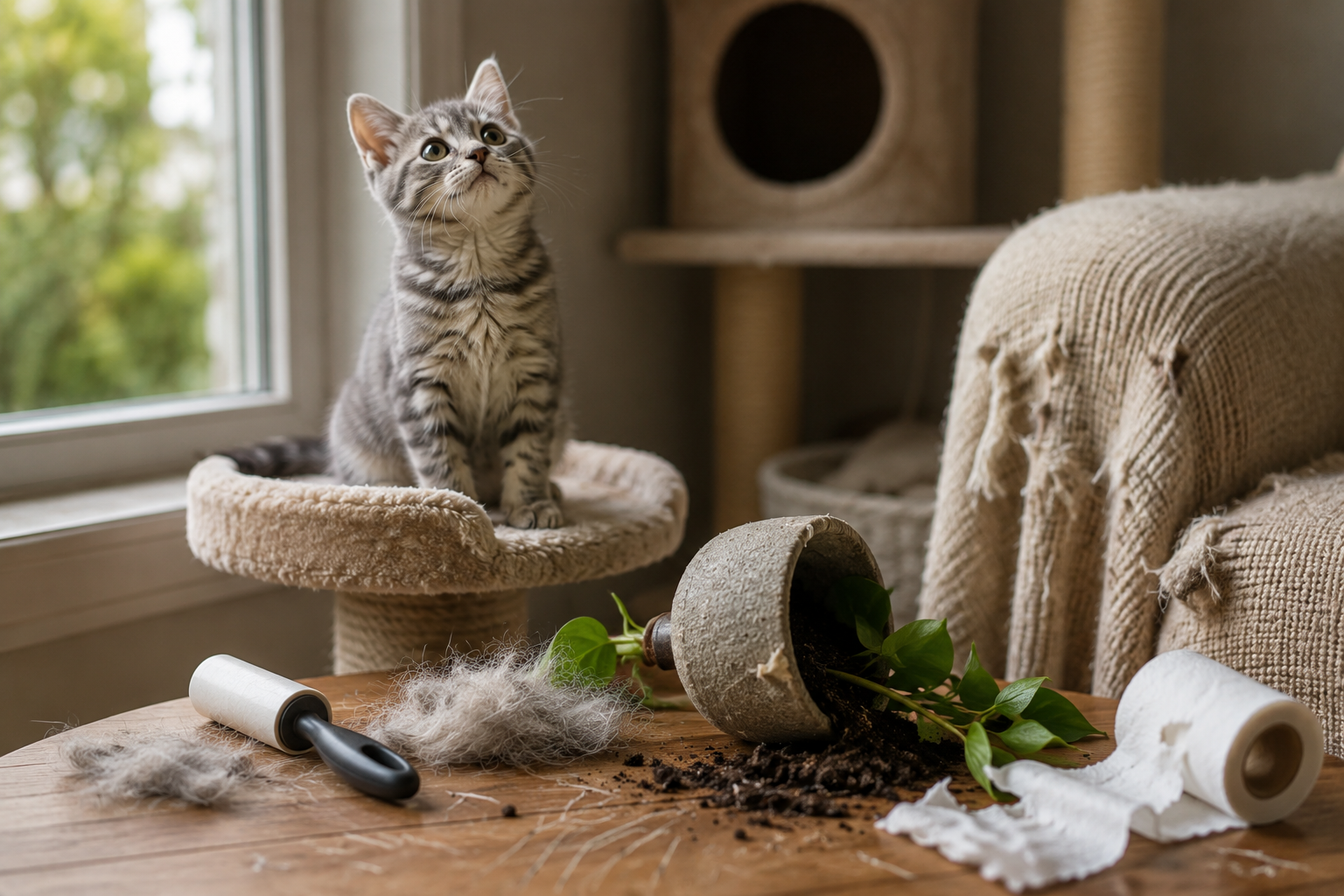
Adopting a cat is a beautiful experience, but the first few weeks may not look like instant cuddles and perfect routines. Many newly adopted cats need time to hide, observe, explore, and understand that their new home is safe. During this transition, pet parents can help by creating a quiet safe room, keeping meals and litter box access consistent, watching subtle body language, and supporting daily wellness from within. GCP Purrbiotics supports digestive health, gut balance, immune wellness, and healthy skin and coat, while GCP Cat L-Lysine supports normal immune function, respiratory wellness, eye comfort, and overall feline health as part of a steady daily routine.
Why the First Few Weeks Matter So Much
Bringing a cat home from an adoption center is exciting. You may imagine soft purrs, slow blinks, cozy lap naps, and a new best friend following you around the house. Those moments can absolutely happen, but the honest version of cat adoption is usually slower, quieter, and more emotional than people expect.
A newly adopted cat has just gone through a major change. They may have moved from a shelter, foster home, rescue center, street environment, or another household. They are suddenly surrounded by new smells, new voices, new furniture, new food bowls, new litter, and unfamiliar routines. Even if your home is loving and safe, your cat does not know that yet. They need time to gather information and feel secure.
This is why many cats hide during the first few days. Hiding does not mean they dislike you. It does not mean you made a mistake. It often means they are doing what cats naturally do when they need safety and control. A cat may hide under the bed, behind furniture, inside a closet, or in the carrier you brought them home in. The best thing you can do is give them permission to adjust slowly.
One study published in Applied Animal Behaviour Science looked at newly arrived shelter cats and hiding boxes. The study found that cats with access to hiding boxes showed lower stress scores early in the shelter period compared with cats without hiding boxes. This does not mean a box solves every adjustment challenge, but it supports a practical idea cat parents can use right away: safe hiding spaces matter.
Adoption is not only about bringing a cat home. It is about helping them believe they are home.
The First 72 Hours: Give Your Cat Room to Feel Safe
The first three days should be calm, quiet, and simple. A newly adopted cat does not need full-house access right away. In fact, too much freedom too soon can feel overwhelming. A better approach is to start with a dedicated safe room.
This room should have the essentials: food, fresh water, a clean litter box, soft bedding, a hiding spot, and a few simple toys. Keep the room quiet and low-traffic. A bedroom, office, or small spare room can work well. Avoid forcing your cat to come out, pulling them from hiding, or inviting too many people to meet them right away.
During this stage, your job is to become predictable. Enter the room calmly. Speak softly. Refresh food and water. Scoop the litter box. Sit nearby without demanding attention. Some cats may approach quickly, while others may only watch from a hiding place. Both responses are normal.
Food can be a helpful way to build trust, but do not panic if your cat eats less during the first day. Many cats need time before eating normally in a new space. However, cats should not go long without food, so if your cat refuses food for more than 24 to 48 hours, or shows other concerning signs, contact your veterinarian.
The first 72 hours are not about making your cat love you immediately. They are about showing your cat that nothing bad happens when you are nearby. That quiet trust is the foundation for everything that comes later.
Understanding the Quiet Language of Cats
Cats communicate constantly, but they do not always communicate loudly. A dog may wag, bark, jump, or follow you everywhere. A cat may tell you how they feel with a tail flick, ear position, body posture, slow blink, or decision to leave the room. Learning this language helps prevent misunderstandings.
A relaxed cat may have soft eyes, a loose body, upright ears, and a gently moving tail. They may blink slowly, knead a blanket, or stretch near you. A nervous cat may crouch low, flatten their ears slightly, tuck their tail, or stare without blinking. An overstimulated cat may swish their tail, twitch the tip, turn their head quickly toward your hand, or suddenly stop enjoying petting.
This matters because many new cat parents accidentally push too quickly. They want to pet, hold, cuddle, and bond, but the cat may not be ready. If your cat walks away, let them. If they hide, give them space. If they sniff your hand and choose not to come closer, accept that as progress.
Trust with cats often grows through consent. Let your cat approach first. Offer your hand for sniffing. Pet briefly, then pause. If they lean in, continue. If they move away, stop. This teaches your cat that they have control, which can make them feel safer around you.
The more you respect small signals, the more likely your cat is to relax over time. A strong bond does not need to be rushed. It needs to feel safe.
New Cat Adjustment Guide
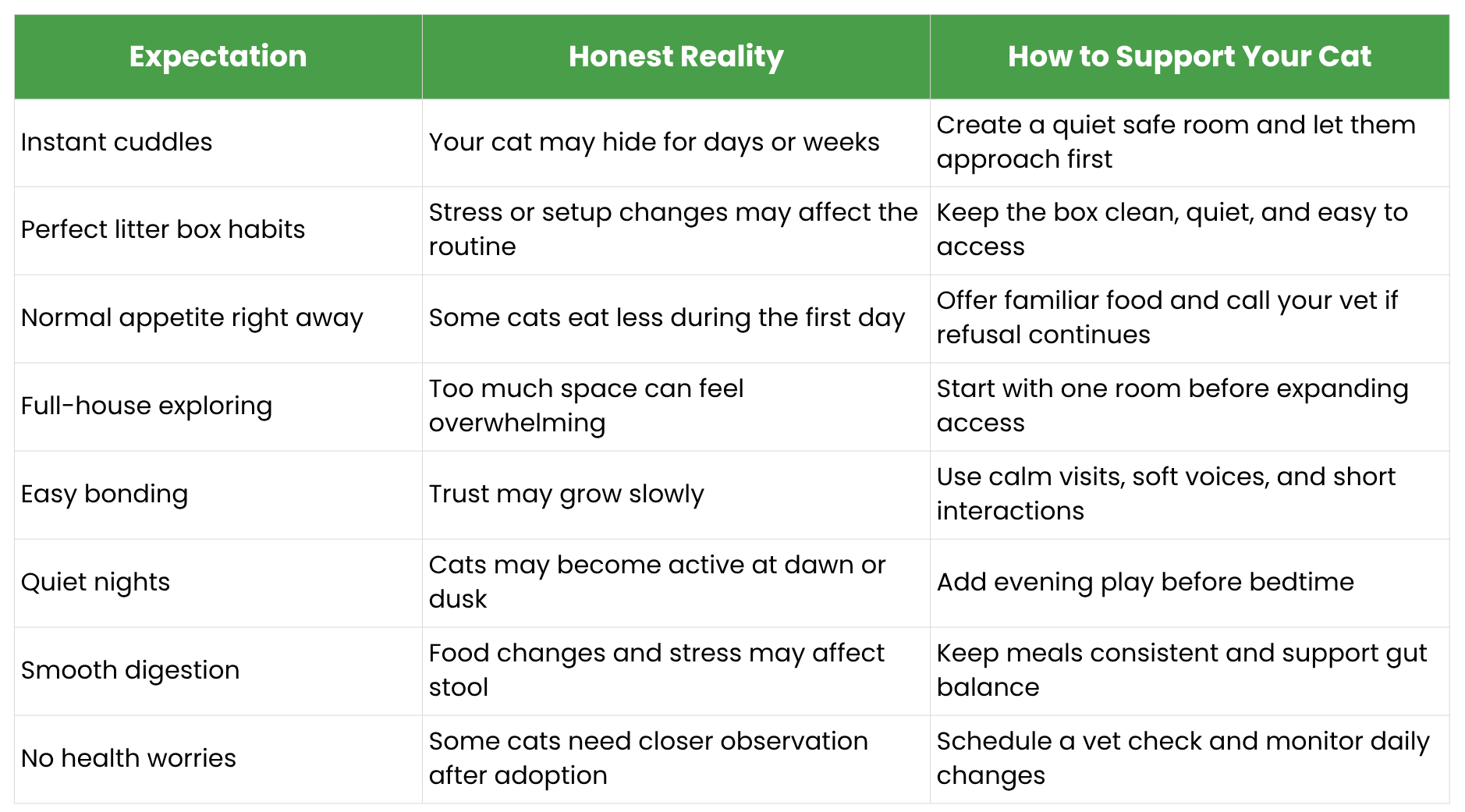
This guide helps set realistic expectations. A newly adopted cat is not being difficult. They are adjusting to a completely new world, and your steady routine helps them feel more secure.
How to Build a Calm Daily Routine
Once your cat begins to settle, routine becomes your best friend. Cats usually feel more confident when they can predict what happens next. Feeding time, litter box placement, resting spaces, and play sessions should stay as consistent as possible during the first few weeks.
Start with meals. If you know what food your cat was eating before adoption, transition slowly instead of switching everything at once. Sudden diet changes may affect digestion or appetite. If you want to change food, mix the new food gradually unless your veterinarian gives different instructions.
Keep the litter box simple. Use a quiet location and avoid scented litter if your cat seems sensitive. Scoop daily and make sure the box is easy to enter. If you have a multi-level home, you may need more than one box once your cat has full access.
Add enrichment gently. A scratching post, soft bed, cardboard box, cat tree, window perch, and wand toy can all help your cat feel more at home. Do not overwhelm the room with too much at once. Give your cat time to explore each new item.
Play is helpful, especially in the evening. A short wand-toy session before bedtime can help your cat use energy in a positive way. After play, offer food or a treat to create a satisfying routine.
Most importantly, keep watching. Changes in appetite, litter box habits, grooming, breathing comfort, eye comfort, or energy should be noted. Newly adopted cats deserve patience, but they also deserve careful observation.
Daily Wellness Support for Newly Adopted Cats
This is where daily wellness support can fit naturally into the adoption story. A new cat is adjusting to a different home, routine, diet, and environment. While love and patience are the most important parts of the transition, targeted support can help pet parents feel more prepared.
GCP Purrbiotics is a daily probiotic and prebiotic powder made for cats. It supports digestive health, gut balance, immune wellness, and healthy skin and coat. This can be especially useful during a transition because cat parents are often watching appetite, stool, litter box habits, grooming, and coat condition closely.
GCP Cat L-Lysine supports normal immune function, respiratory wellness, eye comfort, and overall feline health. For newly adopted cats, this can be a simple daily wellness step that fits into a routine built around meals, fresh water, rest, and observation.
These products should not be positioned as treatments for stress, illness, digestive disease, respiratory problems, or adoption anxiety. They are daily wellness products that support key areas cat parents often monitor after bringing a new cat home. If your cat is not eating, hiding constantly, breathing differently, sneezing often, has watery-looking eyes, has diarrhea, or seems unusually low-energy, your veterinarian should be involved.
The goal is simple: give your cat a calm home, a predictable routine, and daily support that fits their needs.
Frequently Asked Questions
-
Every cat is different, but many cats need days to weeks before they feel fully comfortable in a new home. Shy cats, senior cats, rescue cats, or cats with stressful past experiences may need even longer, and that is okay.
A Good Cat Bond Starts With Patience
Adopting a cat is not always instant purrs and perfect cuddles, but that does not make the experience any less special. The quiet early days are part of the bond. Every slow blink, every step out of hiding, every finished meal, and every relaxed nap is a sign that your cat is learning to trust their new home.
The best thing you can offer is patience. Create a safe room. Keep routines steady. Respect body language. Watch appetite, litter box habits, grooming, and overall comfort. Give your cat time to decide that you are safe.
With calm care and daily wellness support, the transition can become less stressful for both of you. A strong bond is built slowly, and that slow beginning often becomes the start of a very loyal companionship.
GCP Purrbiotics and GCP Cat L-Lysine
GCP Purrbiotics and GCP Cat L-Lysine are daily feline wellness products that fit naturally into a new cat’s routine. Together, they support areas cat parents often monitor during the adoption transition, including digestion, gut balance, immune wellness, respiratory wellness, eye comfort, and healthy skin and coat.
GCP Purrbiotics Benefits:
-
Supports digestive health
-
Helps support gut balance
-
Supports immune wellness
-
Supports healthy skin and coat
-
Provides 5 billion CFU per scoop
-
Includes probiotic and prebiotic support
-
Chicken liver flavor cats can enjoy
-
Easy to mix into daily meals
-
120 servings per jar
GCP Cat L-Lysine Benefits:
-
Supports normal immune function
-
Supports respiratory wellness
-
Helps support overall feline health
-
Supports eye comfort as part of daily wellness
-
Easy-to-serve formula
-
Fits into consistent daily routines
-
Helpful for year-round feline wellness support
-
200 servings per jar
If you are preparing to adopt a cat or helping a new cat settle in, these two GCP favorites can make daily wellness support easier to manage. Use them as directed, and pair them with a quiet safe room, consistent meals, clean litter, fresh water, gentle play, and regular veterinary guidance.
Citation: Vinke, C. M., Godijn, L. M., & van der Leij, W. J. R. (2014). Will a hiding box provide stress reduction for shelter cats? Applied Animal Behaviour Science, 160, 86–93. https://doi.org/10.1016/j.applanim.2014.09.002
For all general inquiries, please contact us at info@guardianschoice.com
© Copyright. All rights reserved.