Sneeze or Flea? How to Tell the Difference Between
Spring Allergies and Parasites
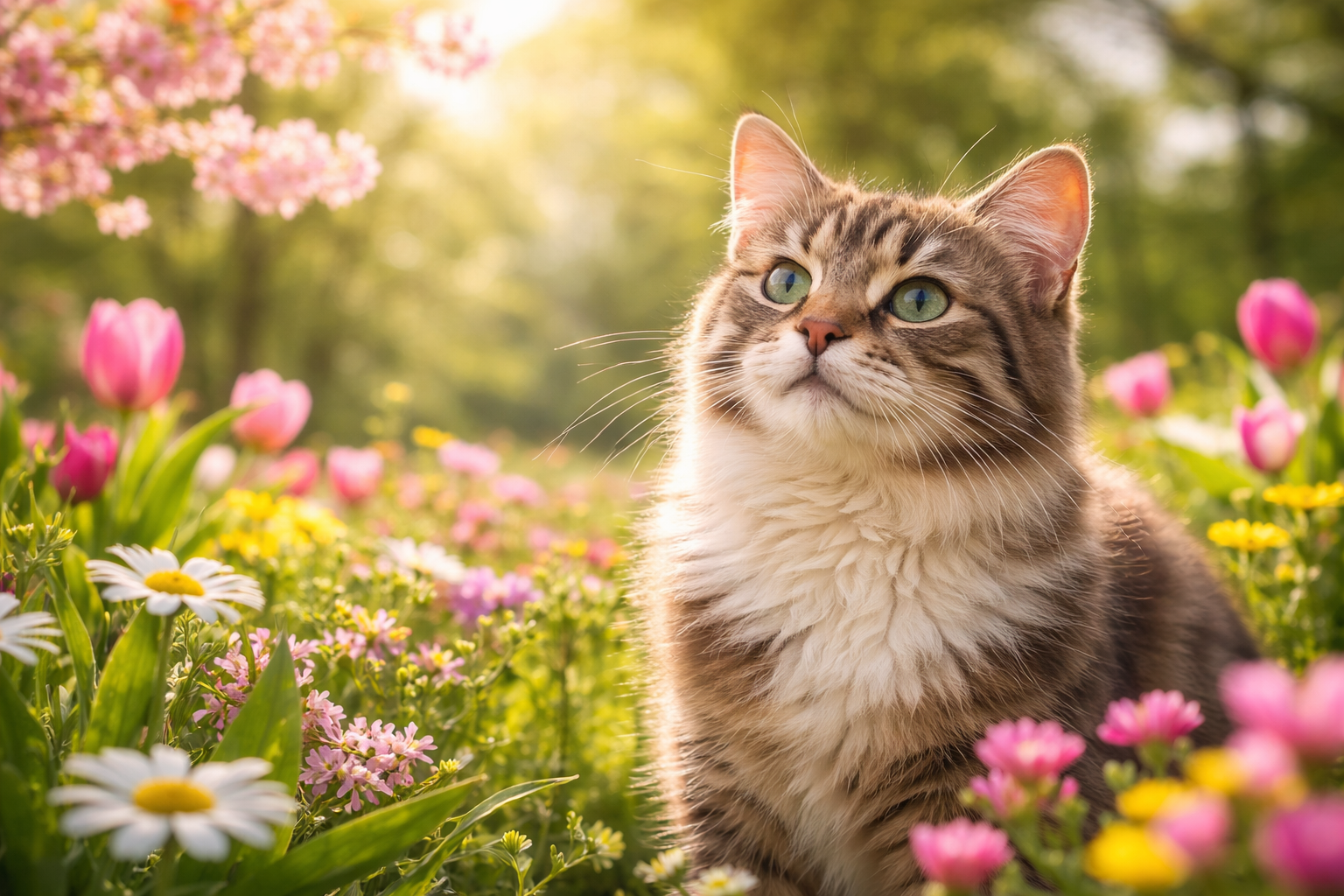
Spring is a season of renewal—open windows, fresh air, and blooming flowers. But for many cat parents, it’s also the season when something feels… off.
Your cat starts scratching more than usual. You notice a sneeze here and there. Then, you find a small, crusty scab behind their ears or along their back. It’s easy to assume the culprit is pollen or dust. After all, humans struggle with seasonal allergies—why wouldn’t cats?
But here’s the critical truth: Not all itching is created equal. Confusing an allergy with a parasite invasion can allow a small, hidden problem to snowball into a persistent health crisis.
Allergies vs. Parasites: The Internal Battle
While the symptoms overlap, the battle happening inside your cat's body is very different.
Spring Allergies: An Immune Overreaction
Seasonal allergies occur when your cat’s immune system misidentifies harmless environmental triggers—like pollen, mold spores, or grass—as a threat. The body releases inflammatory compounds that irritate the eyes, nose, and skin. It’s an internal reaction; your cat isn’t being attacked, but their body is responding as if it is.
Parasite Infestations: A Physical Invasion
Parasites like fleas, mites, and lice are external attackers. They feed on your cat’s skin and blood, triggering a physical response. Unlike allergies, this threat is constant and growing as long as the parasite remains. Some cats even develop Flea Allergy Dermatitis (FAD), where a single bite causes a massive, systemic "immune explosion" that lasts for weeks.
The "Indoor Cat" Myth: How Parasites Sneak In
The most common mistake pet parents make is assuming that because their cat never steps foot outside, fleas are impossible. Parasites don't need an invitation; they operate on opportunity.
Fleas are masters of passive transport. They can enter your home by:
-
Hitchhiking on your shoes or pant legs after a walk.
-
Clinging to delivery boxes or jackets that were placed on the ground outside.
-
Entering through window screens or open doors during warmer months.
Because cats are fastidious groomers, they often lick away the evidence (the adult fleas) before you ever see them. This creates a delayed timeline: the bite occurs quietly, inflammation builds under the surface, and by the time you see scabs, the skin has already been under assault for weeks.
The Hidden Cost: Immune Fatigue
Repeated exposure to parasites or chronic allergens doesn't just make a cat itchy; it causes Immune Fatigue. When the immune system is in a constant state of "high alert," it drains metabolic energy. This leads to:
-
Slower skin healing and hair regrowth.
-
Restlessness and irritability (the "itch-scratch" stress).
-
Higher risk of secondary bacterial or yeast infections.
Closing the Gap with L-Lysine
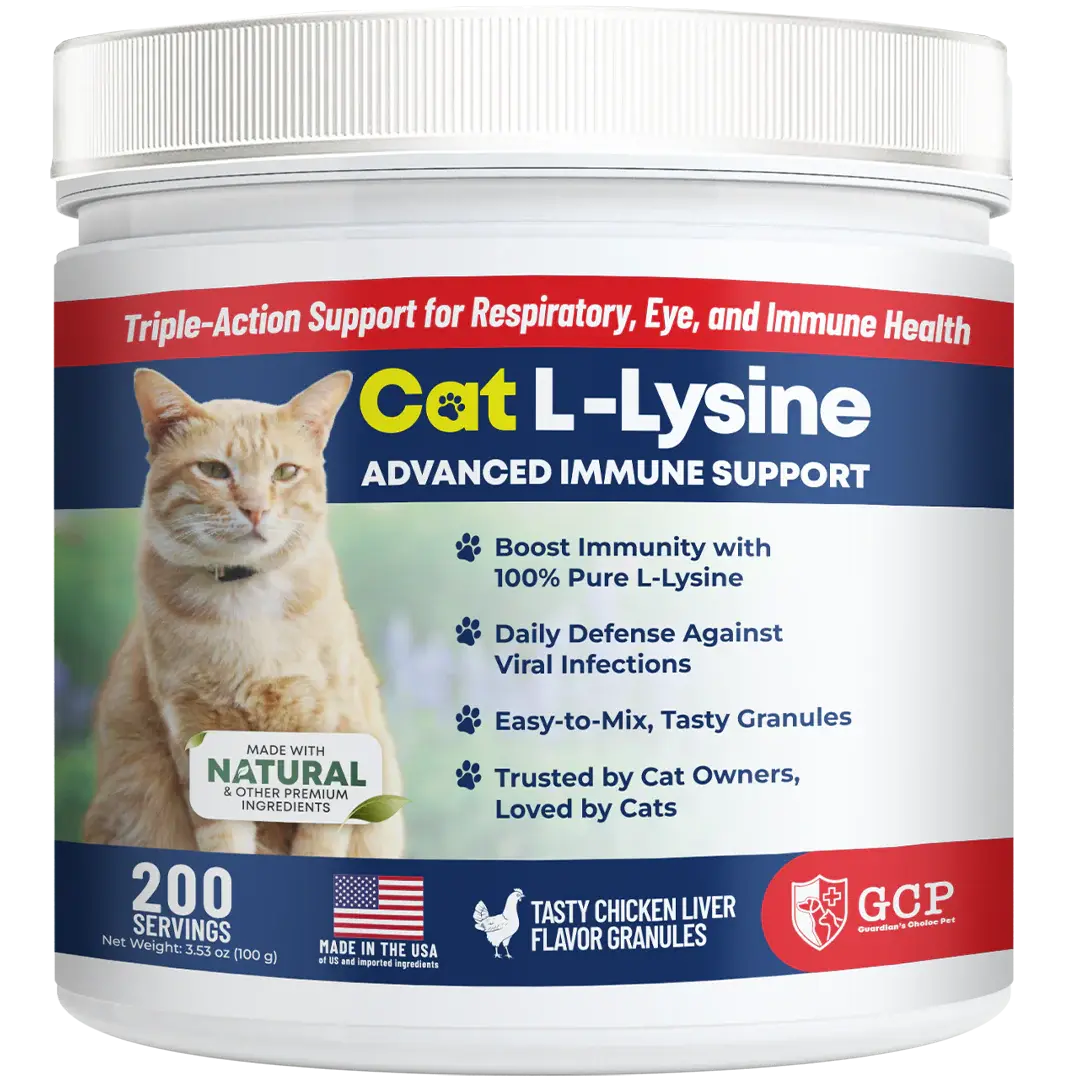
Whether your cat is fighting a pollen "overreaction" or recovering from a "physical invasion," their immune system needs a foundation to rebuild. This is where Guardian’s Choice Cat L-Lysine fits into the ritual.
L-Lysine is an essential amino acid that acts as a foundational support during the "Spring Mix-Up." It doesn't replace flea treatment, but it supports the body while healing takes place:
-
Respiratory Support: Helps the immune system manage the nasal and eye irritation caused by spring allergens.
-
Tissue Repair: Provides the building blocks for healthy skin, helping those scabs heal faster once the parasites are cleared.
-
Immune Regulation: Helps the body respond more calmly to stressors, preventing the "collateral damage" of systemic inflammation.
Frequently Asked Questions: Mites, Mood and the Microbiome
-
Scabs are a definitive sign of localized trauma. While allergies cause general redness, parasite bites are concentrated attacks. Scabs along the neck and base of the tail are classic indicators of a flea invasion, even if you don't see the fleas.
For all general inquiries, please contact us at info@guardianschoice.com
© Copyright. All rights reserved.