
The Daily Litter Box Audit: How Summer Heat Reveals Your Cat’s Hydration Status
When temperatures rise, cats may face a higher risk of dehydration because they naturally have a low thirst drive and often do not drink large amounts of water on their own. A daily litter box audit helps cat parents monitor urine clump size, urination frequency, stool consistency, and routine changes that may reflect hydration and digestive comfort. GCP Purrbiotics and GCP Cat L-Lysine can fit into a broader summer cat wellness routine by supporting digestive balance, skin and coat health, and normal immune wellness, while hydration concerns and urinary symptoms should always be discussed with a veterinarian.
Why Summer Heat Can Challenge Your Cat’s Hydration
Cats are often described as desert-descended animals, and that background helps explain why many of them do not rush to the water bowl the way dogs do. A dog may pant, drink heavily after playtime, and make thirst very obvious. A cat may simply sleep longer, eat less, hide in a cooler corner, and continue producing concentrated urine without showing many outward signs that summer heat is affecting them.
This natural low thirst drive can become a bigger concern during hot weather. Warmer rooms, sunlit windows, dry indoor air, humidity, stress from summer activity, and changes in appetite can all influence how much moisture a cat takes in. If your cat eats mostly dry food, their daily water intake may depend even more on whether they choose to drink. Since cats are skilled at hiding discomfort, cat hydration often becomes easiest to monitor through subtle patterns rather than dramatic symptoms.
A daily litter box audit is one of the simplest ways to understand how your cat may be coping with summer heat. Urine clump size, litter box frequency, stool texture, and changes in odor can all provide useful clues. These clues do not replace veterinary care, and they should not be used to diagnose a medical issue at home. Still, they help cat parents notice changes early, which matters because urinary and hydration concerns can become serious quickly.
Research has also shown that dietary water intake can affect feline urinary output and urine concentration. One study in cats found that higher dietary water intake increased urine volume and reduced urine specific gravity, which supports the practical advice that moisture intake matters for urinary wellness. This does not mean water or supplements cure urinary problems, but it does reinforce why summer hydration should be taken seriously.
What Your Cat’s Litter Box Can Tell You
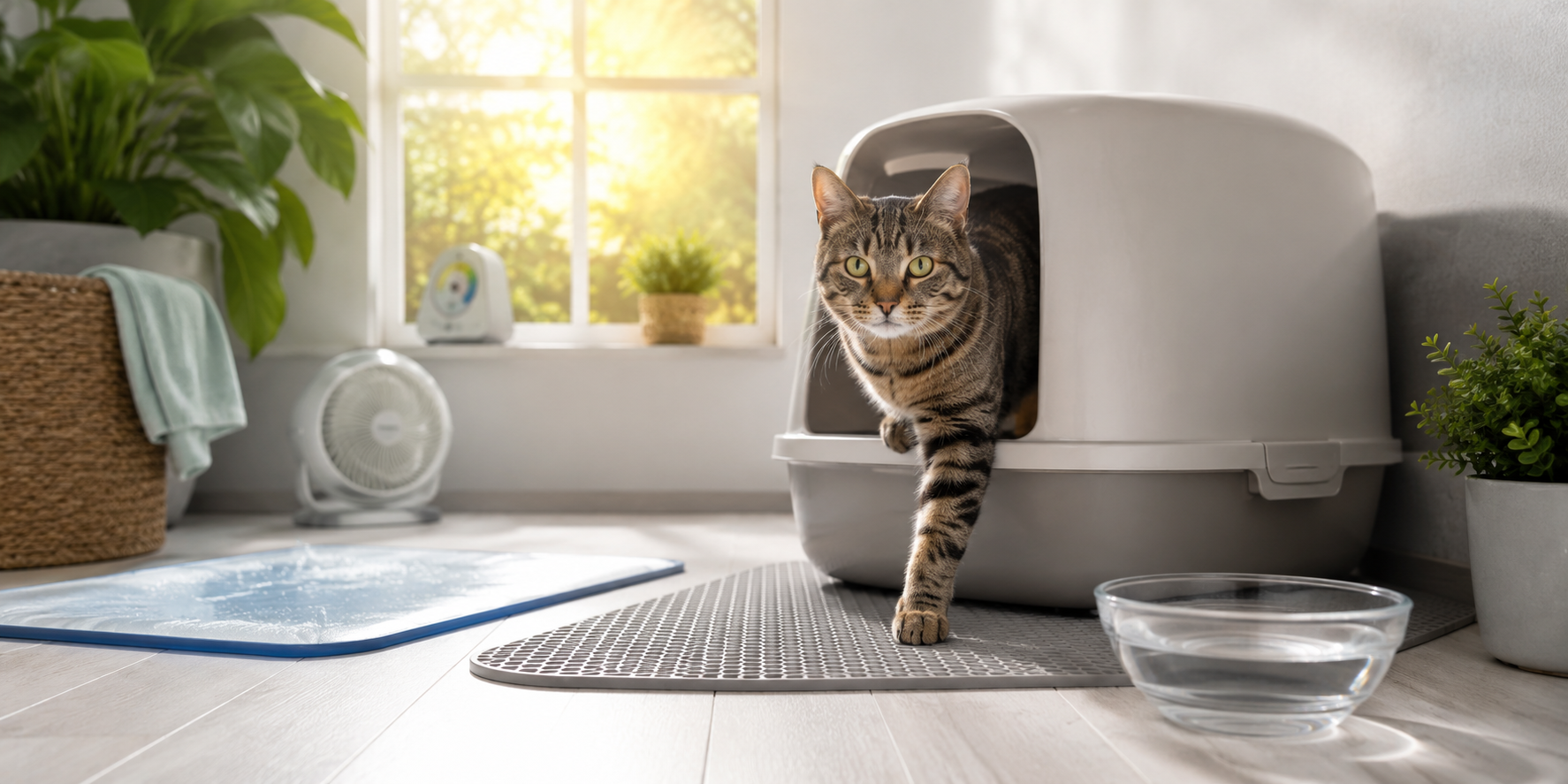
Your cat’s litter box is more than a household chore. It is one of the clearest daily windows into your cat’s routine. Because cats often hide symptoms, the box can reveal changes you might not see during normal interaction. A cat who looks fine on the couch may still be producing smaller urine clumps, passing harder stool, or visiting the box less often than usual.
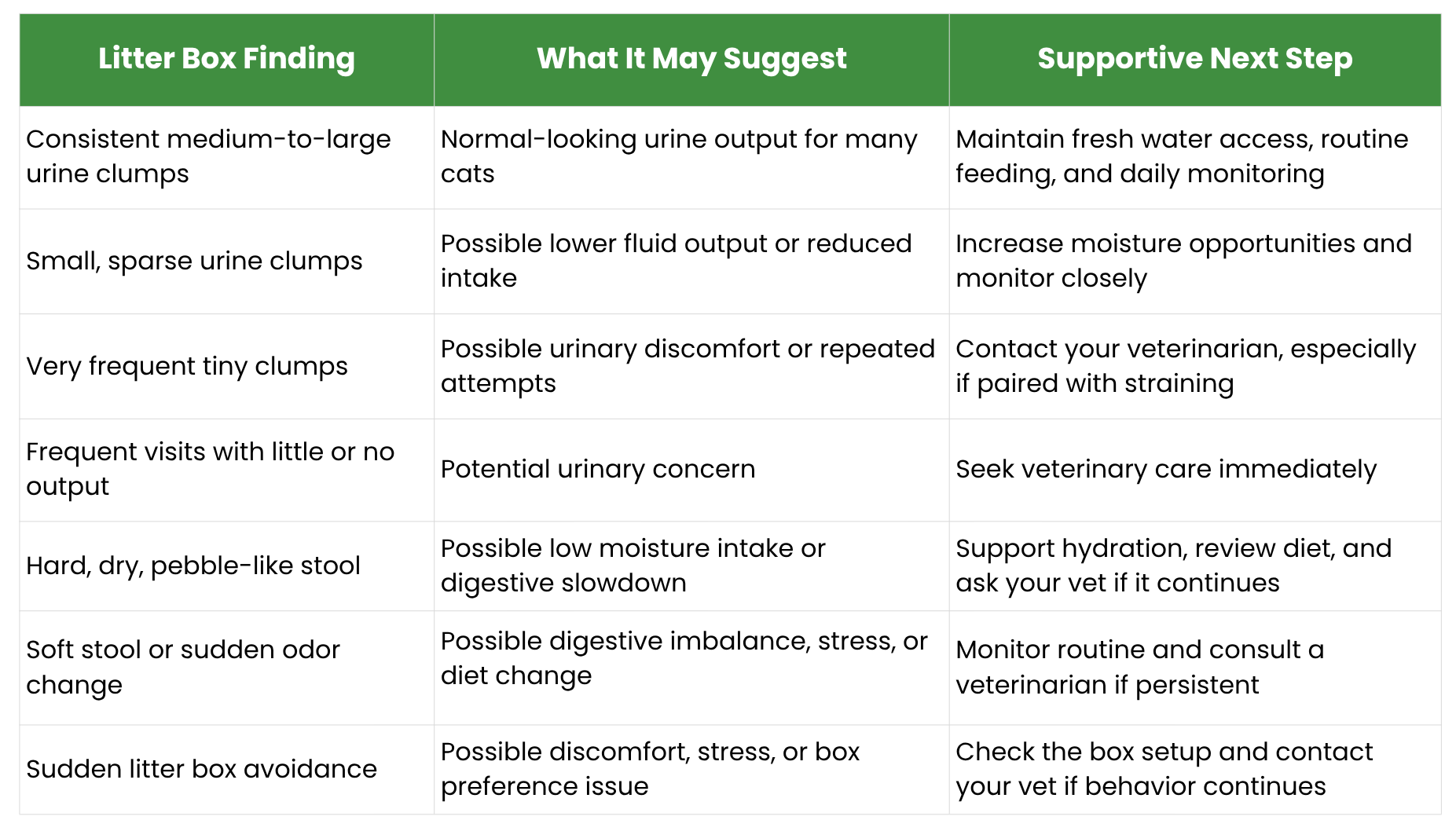
Urine clumps are especially helpful when you use clumping litter. Consistent, medium-to-large clumps often suggest your cat is producing a steady amount of urine. Very small, sparse, or unusually hard clumps may suggest lower fluid output, although litter type, box sharing, and cleaning frequency can affect what you see. A sudden increase in urine clump size or frequency can also matter, so the key is knowing your cat’s normal pattern.
Stool consistency is another important clue. When hydration is low, stool may become dry, hard, or pebble-like because the colon absorbs more water from waste. If your cat strains, produces very small stools, skips stools, or seems uncomfortable in the box, it is worth watching closely and contacting your veterinarian if it continues.
Frequency matters too. Many healthy cats urinate a few times per day, but every cat has an individual baseline. A sudden drop in urination, repeated trips to the box with little or no output, crying in the box, blood, or visible discomfort should be treated as urgent, especially in male cats. Litter box monitoring is helpful because it gives you a chance to notice these changes before they become easier to miss.
The Daily Litter Box Audit Checklist
A good litter box audit does not need to be complicated. It simply means paying attention during your daily scoop and comparing what you see to your cat’s normal pattern. The goal is not to obsess over every clump, but to become familiar enough with your cat’s routine that meaningful changes stand out.
Start with urine clump size. Look to see whether clumps are roughly the same size each day, or whether they have become smaller, harder, larger, or more frequent. If you have multiple cats, consider whether separate boxes or occasional isolation may be needed to better understand each cat’s output.
Next, note frequency. Most cat parents do not watch every litter box visit, but daily scooping can still reveal whether the amount of urine or stool seems different from normal. Fewer clumps than usual may suggest reduced output, while many small clumps may suggest frequent attempts. Either pattern can be worth discussing with a veterinarian if it appears suddenly or continues.
Then, check stool texture. Healthy stool is usually formed but not rock-hard. Dry pellets, straining, very soft stool, mucus, blood, or sudden odor changes should not be ignored. Stool quality is influenced by hydration, diet, gut health, stress, and medical conditions.
Finally, notice behavior. A cat who enters and exits the box repeatedly, cries, hides after using the box, licks excessively, or avoids the box may be uncomfortable. Behavior changes paired with litter box changes should be treated with extra caution.
Summer Hydration and Litter Box Clue Guide
How Gut Health, Immunity, and Hydration Work Together
Hydration is often discussed as a urinary topic, but it also connects closely with digestive comfort. When a cat does not take in enough moisture, stool can become harder and less comfortable to pass. When stool quality changes, the litter box routine becomes less predictable. And when the digestive system feels off, appetite and water intake may shift, creating a cycle that can be hard to correct without steady routine support.
Gut health also supports the way nutrients are processed and used. A balanced gut microbiome helps support digestive regularity, stool quality, and everyday comfort. Cat probiotics and prebiotics do not replace water, and they should not be used as a treatment for urinary disease or dehydration. However, they can support the digestive side of the summer wellness picture, especially when heat, stress, and routine changes affect appetite and stool.
Immune wellness also matters during summer. Heat, visitors, travel, fireworks, boarding, and changes in household rhythm can create stress for cats. Some cats respond to stress with hiding, less appetite, changes in grooming, or occasional wellness shifts. Supporting normal immune function can be part of a thoughtful seasonal routine, especially for cats who are sensitive to environmental changes.
This is where summer cat care becomes more complete. Fresh water supports hydration. Wet food or added moisture may support fluid intake when appropriate. Litter box audits help you notice changes. Gut support helps maintain digestive balance. Immune support helps round out the routine during stressful seasonal conditions.
Building a Smarter Summer Wellness Routine for Cats
A smarter summer routine begins with water access. Offer fresh water in multiple locations and refresh it often. Some cats prefer wide bowls because their whiskers do not touch the sides. Others prefer fountains because moving water feels fresher. Bowl material can matter too; stainless steel and ceramic are often easier to clean than plastic and may be more appealing for sensitive cats.
Moisture-rich food can also help, depending on your cat’s diet and veterinary guidance. If your cat eats dry food only, ask your veterinarian whether adding wet food or water to meals is appropriate. Any diet change should be gradual because sudden changes can upset digestion.
Keep the home environment cool and calm. Close curtains during peak heat, make sure your cat has access to shaded resting spots, and avoid trapping them in warm rooms. During heat waves, check where your cat actually spends time, not just where you expect them to rest.
Make litter box audits part of daily scooping. A clean box makes it easier to notice changes, and it also encourages your cat to keep using the box comfortably. If the box smells stronger in summer, do not rely only on fragrance or scented litter, since some cats dislike strong smells. Better airflow, regular scooping, hydration support, and digestive balance often make a more thoughtful routine.
Supporting Summer Wellness With GCP Purrbiotics and GCP Cat L-Lysine
Once the core hydration routine is in place, GCP Purrbiotics and GCP Cat L-Lysine can support the broader summer wellness story shown in the product image. GCP Purrbiotics is designed to support digestive health, healthier skin and coat, and immune wellness with probiotic and prebiotic support. For cats dealing with seasonal heat, routine disruption, or changes in stool consistency, digestive balance can be an important part of daily comfort.
GCP Cat L-Lysine supports normal immune wellness and is especially relevant during seasons when cats may face stress from heat, visitors, travel, fireworks, or shifting routines. It should not be positioned as a cure or treatment for illness, but it can fit into a responsible daily support plan for cat parents who want to help maintain overall wellness.
Together, these products complement a summer care routine without replacing hydration, litter box monitoring, or veterinary care. The role is supportive: fresh water, cool spaces, litter box audits, digestive balance, and immune support all work together to help cat parents stay proactive during hot weather.
Frequently Asked Questions
-
Small, sparse urine clumps or hard, dry stool may suggest your cat is not getting enough moisture, although litter type and routine changes can affect what you see. If these signs continue or appear with lethargy, appetite loss, or discomfort, contact your veterinarian.
Your Cat’s Litter Box Tells a Bigger Wellness Story
Summer hydration is not always obvious in cats. They may not drink dramatically, complain loudly, or show clear signs until a problem is more noticeable. That is why the litter box is so valuable. Urine clumps, stool texture, frequency, odor, and behavior around the box can help you understand whether your cat’s routine looks steady or needs attention.
A good summer plan includes cool spaces, fresh water, moisture-aware feeding, daily litter box audits, digestive support, and immune wellness support. GCP Purrbiotics and GCP Cat L-Lysine fit into that plan by helping cat parents support the inside systems that matter during seasonal heat and stress, while veterinary care remains essential for urinary symptoms, dehydration concerns, or sudden changes.
GCP Purrbiotics and GCP Cat L-Lysine
GCP Purrbiotics and GCP Cat L-Lysine help cat parents build a more complete summer wellness routine. While hydration and litter box monitoring remain essential, these two products support digestive balance, skin and coat wellness, and normal immune function during seasons when heat and routine changes can affect daily comfort.
Benefits of GCP Purrbiotics:
-
Supports digestive health and gut microbiome balance
-
Includes probiotics and prebiotics for daily digestive support
-
Promotes healthier skin and coat through digestive wellness
-
Supports immune wellness as part of everyday care
-
Helps support stool quality and litter box comfort
-
Chicken liver flavor helps make daily use easier
-
Powder format mixes easily with food
Benefits of GCP Cat L-Lysine:
-
Supports normal immune wellness in cats
-
Designed for daily feline support routines
-
Helpful during seasons with heat, travel, visitors, or stress
-
Cat-friendly formula for ongoing wellness support
-
Complements hydration, nutrition, and litter box monitoring
-
Fits multi-product summer care routines for cats
GCP Purrbiotics and GCP Cat L-Lysine are smart additions for cat parents who want to support more than one part of summer wellness. Use them as directed, keep fresh water available, check the litter box daily, and contact your veterinarian if urinary, digestive, or appetite changes become sudden, severe, or persistent.
Citation:
Buckley, C. M. F., Hawthorne, A., Colyer, A., & Stevenson, A. E. (2011). Effect of dietary water intake on urinary output, specific gravity and relative supersaturation for calcium oxalate and struvite in the cat. British Journal of Nutrition, 106(S1), S128–S130. https://doi.org/10.1017/S0007114511001849
For all general inquiries, please contact us at info@guardianschoice.com
© Copyright. All rights reserved.