
Spring Shedding & Hairballs in Cats: Understanding Digestive Health During Seasonal Coat Changes
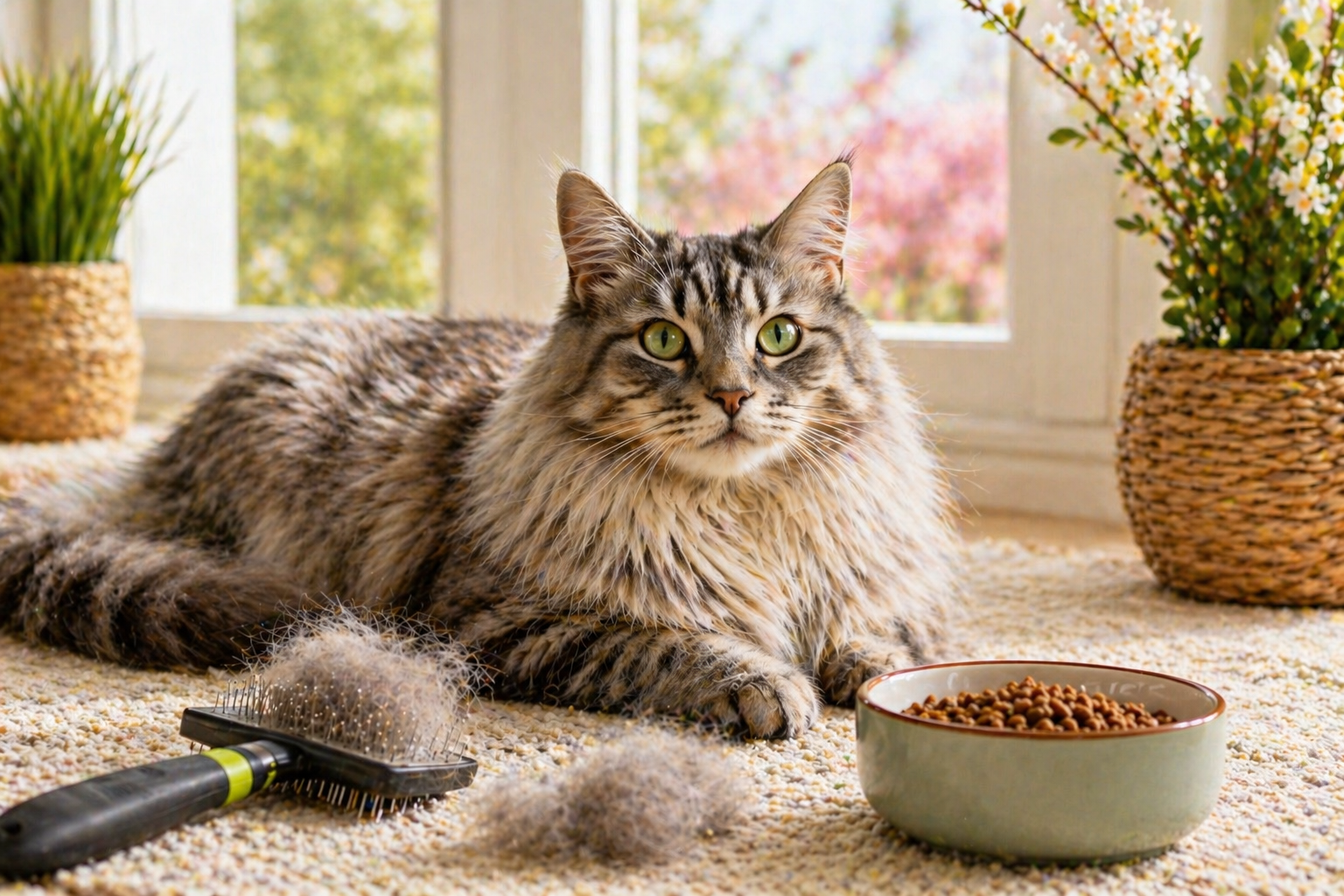
Spring shedding increases the amount of fur cats ingest while grooming, which can place extra strain on digestion and lead to more frequent hairballs. Supporting gut motility and overall digestive balance can help ease this seasonal transition.
Why Spring Shedding Impacts Your Cat’s Gut
As the seasons shift and temperatures rise, many cat owners notice a familiar pattern—more fur on furniture, clothes, and just about every surface in the home. This natural process, often referred to as “spring shedding,” is your cat’s way of losing its dense winter undercoat. While this transition is completely normal, what’s often overlooked is how closely it’s tied to your cat’s digestive system.
Cats are meticulous groomers by nature, and during shedding season, that grooming intensifies. The result is a higher intake of loose fur, which then travels through the gastrointestinal (GI) tract. Under typical conditions, small amounts of ingested hair pass through the digestive system without issue. However, during peak shedding periods, the volume can increase significantly, creating a heavier internal load that the digestive system must process.
This is where subtle changes may begin to appear. You might notice your cat coughing up hairballs more frequently or showing mild shifts in appetite or energy. These aren’t necessarily signs of illness, but rather indicators that the body is adapting to an increased grooming and digestion cycle. In fact, research published in the Journal of Feline Medicine and Surgery has noted that seasonal changes can influence grooming behavior and gastrointestinal responses in cats, particularly in relation to hair ingestion and expulsion patterns. While this doesn’t imply a problem in itself, it highlights the connection between external seasonal changes and internal digestive processes.
Understanding this connection allows pet owners to take a more proactive, supportive approach rather than simply reacting when hairballs occur.
The Hidden Digestive Load Behind Hairballs
Hairballs are often treated as a surface-level inconvenience, but they actually represent a deeper digestive dynamic. When hair accumulates faster than it can move through the GI tract, it may clump together in the stomach. This can result in the familiar retching or vomiting associated with hairball expulsion.
Beyond that, there are other subtle effects that may accompany this buildup. Some cats may experience temporary reductions in appetite, occasional lethargy, or changes in stool consistency. Again, these signs are not necessarily severe, but they can indicate that the digestive system is working harder than usual.
What’s important to understand is that the goal isn’t to eliminate shedding or even completely prevent hairballs—both are natural processes. Instead, the focus should be on supporting how efficiently the body manages this increased “fur load.” This is where digestive motility plays a key role. Motility refers to how effectively food and other materials (including hair) move through the digestive tract.
When motility is balanced, ingested hair is more likely to pass through the system smoothly rather than accumulating. Supporting this natural movement can help reduce the frequency or severity of hairball-related episodes without interfering with your cat’s normal biology.
Supporting GI Motility During Shedding Season
A thoughtful approach to spring shedding doesn’t rely on a single solution but instead combines daily habits with nutritional awareness. Small, consistent actions can make a meaningful difference in how your cat navigates this seasonal shift.
Brushing remains one of the most direct ways to reduce the amount of loose fur your cat ingests. By removing excess hair before it’s swallowed, you’re essentially reducing the internal workload. While effective, brushing does require consistency, especially for long-haired breeds or cats with dense undercoats.
Hydration is another often-overlooked factor. Adequate water intake supports overall digestion and helps maintain smoother movement within the GI tract. Cats that primarily eat dry food may benefit from added moisture sources, such as wet food or water fountains that encourage drinking.
Nutrition also plays a central role. Diets that include appropriate fiber levels can help support the natural passage of ingested hair, while certain fatty acids contribute to skin and coat health. A healthier coat may shed more efficiently, which can indirectly influence how much loose fur accumulates during grooming.
Rather than viewing these strategies in isolation, it’s helpful to think of them as part of a broader ecosystem—one that supports both the external (coat health) and internal (digestive balance) aspects of your cat’s well-being.
A Smarter Approach to Seasonal Hairball Management
As awareness grows around feline digestive health, many pet owners are beginning to look beyond reactive solutions and toward daily support strategies. This shift reflects a broader understanding that consistent, gentle support may be more sustainable than occasional interventions.
In our blog and educational resources, we often emphasize the importance of maintaining balance rather than chasing extremes. Seasonal shedding is temporary, but the digestive system works year-round. Supporting it during peak periods like spring can help maintain overall comfort and routine.
This is also where thoughtfully formulated supplements enter the conversation—not as cures or quick fixes, but as part of a holistic approach to wellness. When designed with digestive balance in mind, they can complement existing routines such as grooming and proper nutrition.
Supporting Your Cat with GCP Purrbiotics
As we connect everything discussed—from increased fur ingestion to the importance of GI motility—it becomes clear that consistent digestive support can play a valuable role during shedding season.
GCP Purrbiotics Daily Probiotics for Cats is designed to align with this philosophy of gentle, everyday support. Featuring a blend of probiotic strains and functional ingredients, it’s crafted to complement your cat’s daily routine, particularly during times when their digestive system may be handling more than usual. The inclusion of ingredients like Bacillus strains and prebiotic fibers reflects a focus on maintaining internal balance rather than addressing isolated symptoms.
Within the broader Guardian’s Choice ecosystem, products are developed with an emphasis on transparency, quality, and education—values that extend beyond the product itself into community support and learning initiatives . This approach ensures that pet owners are not only supported with products, but also with the knowledge to make informed decisions.
Frequently Asked Questions
-
Yes, it’s common for hairball frequency to increase during spring due to heavier shedding and increased grooming. However, consistently frequent episodes may suggest the digestive system is under more strain than usual.
Helping Your Cat Transition Comfortably
Spring shedding is a natural and recurring part of your cat’s life, but it doesn’t have to be disruptive. By understanding the connection between grooming, fur ingestion, and digestive health, pet owners can take a more informed and proactive approach. Rather than focusing solely on hairballs as isolated events, it’s more effective to support the systems behind them—particularly GI motility and overall digestive balance.
With the right combination of grooming habits, hydration, nutrition, and thoughtful supplementation, your cat can move through shedding season with greater ease and comfort.
Product Feature: Gentle Daily Support for Feline Digestive Balance
GCP Purrbiotics Daily Probiotics for Cats
-
5 Billion CFU per scoop
-
Includes Bacillus subtilis, Bacillus licheniformis, and Bacillus pumilus
-
Contains prebiotic FOS to complement digestive balance
-
Easy-to-mix powder for daily feeding routines
-
Crafted to align with Guardian’s Choice values of quality, transparency, and pet wellness
Designed for everyday use, Purrbiotics fits seamlessly into your cat’s routine—especially during seasonal transitions like spring shedding, when digestive support matters most.
Citation:
Rossi, M., Bianchi, L., Conti, F., & De Santis, R. (2024). Seasonal variations in grooming behavior and dermatological responses in domestic cats. Animals, 14(5), 1234. https://pmc.ncbi.nlm.nih.gov/articles/PMC11898201/
For all general inquiries, please contact us at info@guardianschoice.com
© Copyright. All rights reserved.