8 Signs Your Dog Might Be Dehydrated and How to Help Them Safely
Dogs can become dehydrated during warm weather, long walks, outdoor play, travel, pool days, or times when they are not drinking enough water. Pet parents should watch for signs like dry or sticky gums, low energy, heavy panting, loss of skin elasticity, dark urine, sunken-looking eyes, reduced appetite, and a dry nose paired with other changes. Mild cases may improve with shade, rest, and small amounts of fresh water, but moderate or severe signs need veterinary guidance right away. GCP OMEGAPaws Premium Krill Omega-3 does not treat dehydration, but it can support healthy skin, coat, joints, normal immune function, and overall vitality as part of an active summer wellness routine.
Why Dehydration Can Sneak Up on Dogs
Warm weather can make dogs look happier than ever. They want to walk longer, chase toys, run through the yard, swim in the pool, ride in the car, and follow the family wherever the fun is happening. But because dogs cannot tell us when they are thirsty, tired, overheated, or starting to feel off, pet parents need to watch closely.
Dehydration happens when the body loses more fluid than it takes in. For dogs, this can happen during hot weather, intense play, illness, vomiting, diarrhea, travel, long outdoor activity, or simply not drinking enough water during the day. Some dogs are more at risk because of age, body type, health status, coat thickness, activity level, or the weather in their environment.
It is also easy to miss early signs. A dog may still wag their tail, follow you outside, or act interested in play even when their body needs a break. Some dogs push themselves because they are excited, especially during fetch, hiking, beach days, or pool time.
A study published in Animals found that exertional heat-related illness was a major concern for dogs and highlighted that dogs are not only at risk in hot cars. Outdoor exercise and activity can also become serious when dogs are exposed to heat, overexertion, or poor cooling conditions. This does not mean every active dog will have a heat issue, but it does remind pet parents that hydration, shade, rest, and observation matter during warm-weather routines.
The good news is that daily awareness can make a big difference. When you know your dog’s normal energy, gum moisture, bathroom habits, drinking habits, and recovery after activity, you are more likely to notice when something changes.
The 8 Signs Your Dog Might Be Dehydrated
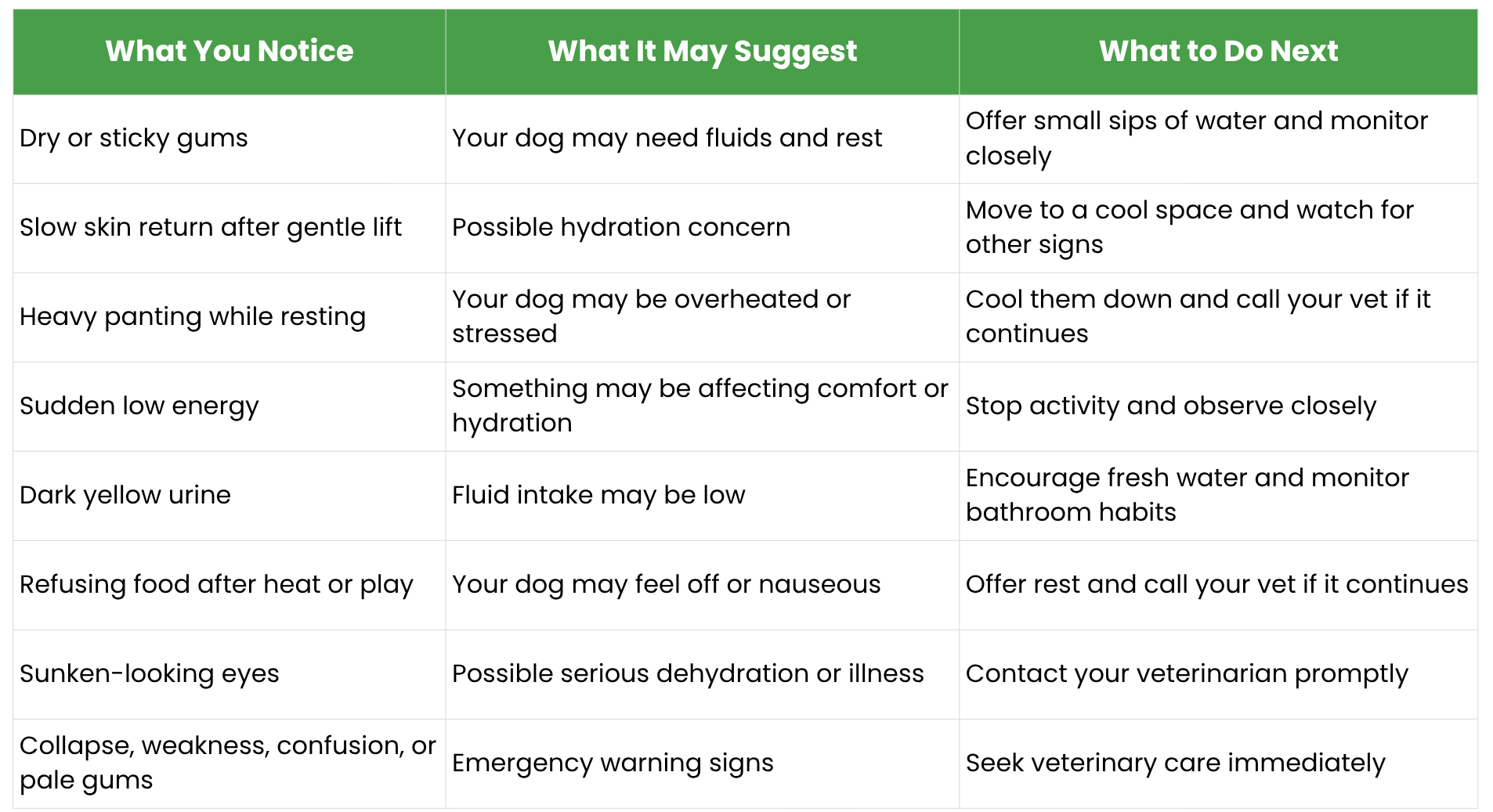
The first sign to check is dry or sticky gums. A healthy dog’s gums usually feel moist and smooth. If the gums feel tacky, dry, or unusually pale, your dog may need closer attention. Gum changes can be concerning, especially if they appear with weakness, heavy panting, vomiting, diarrhea, or unusual behavior.
The second sign is loss of skin elasticity. Some pet parents use the gentle “skin tent” check by lifting loose skin near the shoulders and watching how quickly it returns. In a well-hydrated dog, the skin usually settles back quickly. If it stays raised or returns slowly, dehydration may be possible. This check is not perfect for every dog, especially older dogs or dogs with certain body types, but it can be a useful observation tool.
The third sign is low energy or sudden lethargy. If your normally active dog suddenly seems weak, unusually tired, uninterested in play, or reluctant to stand, pay attention. Low energy can happen for many reasons, and dehydration is only one possibility, but it should not be ignored.
The fourth sign is heavy panting that does not match the activity. Dogs pant to cool themselves down, especially after exercise or in warm weather. But if your dog is panting heavily while resting, cannot settle, or seems distressed, move them to a cooler area and contact your veterinarian if the signs continue or worsen.
The fifth sign is sunken-looking or dull eyes. A dehydrated dog may look less bright or alert than usual. Eye changes are not something to diagnose at home, but they can be a signal that your dog needs prompt attention.
The sixth sign is reduced appetite. A dog who suddenly refuses food after heat exposure, heavy play, travel, or stomach upset may need monitoring. If appetite changes come with vomiting, diarrhea, weakness, or continued refusal to eat, call your veterinarian.
The seventh sign is dark or strong-smelling urine. When a dog has less fluid available, urine may become darker or more concentrated. Pet parents should also watch for changes in urination frequency, straining, accidents, or discomfort.
The eighth sign is a dry nose paired with other symptoms. A dry nose alone does not always mean dehydration. But if it appears alongside sticky gums, lethargy, panting, dark urine, or unusual behavior, it becomes part of a bigger picture worth taking seriously.
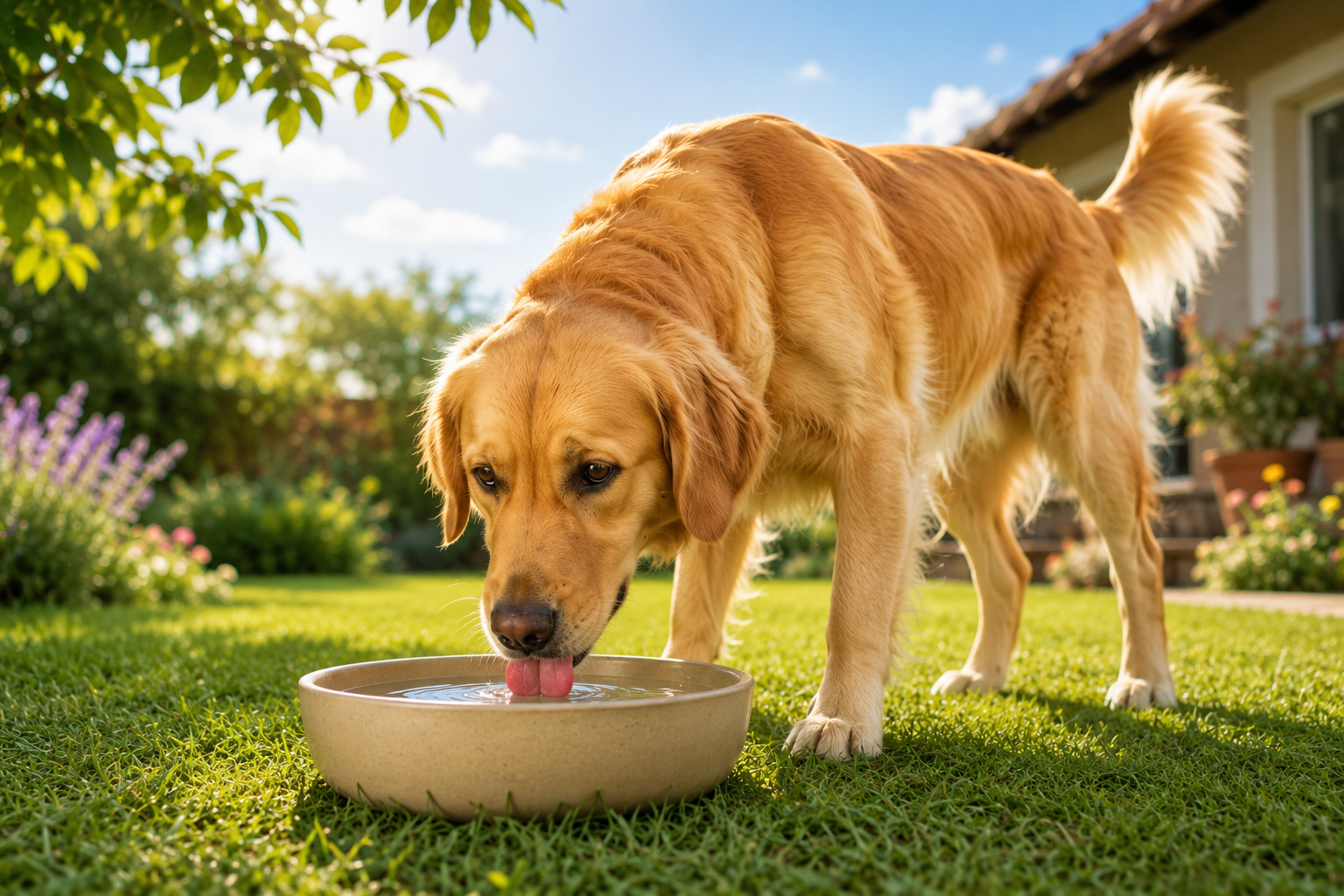
What to Do If Your Dog Seems Dehydrated
If your dog seems mildly dehydrated after activity, start by moving them to a cool, shaded, or air-conditioned space. Encourage rest and offer small amounts of clean, fresh water. Do not force water into your dog’s mouth, and do not let them gulp an entire bowl at once if they seem overheated or nauseous. Small, frequent sips are usually safer while you monitor them.
If your dog is hot, panting, or uncomfortable, help them cool gradually. Move them out of direct sun. Offer a cool resting area. You can use cool, not ice-cold, damp towels on the paws, belly, or body while you contact a veterinarian for guidance if symptoms are concerning.
Do not rely on supplements, treats, or chews to address dehydration. Dehydration is about fluid balance, and moderate to severe cases may require veterinary care. If your dog has vomiting, diarrhea, weakness, collapse, confusion, pale gums, continued heavy panting, sunken-looking eyes, or cannot keep water down, seek veterinary help right away.
Prevention is always easier than emergency response. Bring water on walks. Take breaks in the shade. Avoid peak heat. Keep water bowls clean and full. Watch your dog after play, swimming, travel, and outdoor events. Dogs who love activity often need humans to set limits for them.
Hydration is not only a summer issue, either. Heated indoor air, travel, illness, diet changes, medications, and dry weather can all affect daily water needs. The best habit is to make water access and observation part of everyday care.
Dog Dehydration and Summer Safety Guide
Frequently Asked Questions
-
Common signs may include dry or sticky gums, low energy, heavy panting, dark urine, sunken-looking eyes, reduced appetite, and slower skin return after a gentle skin check. These signs can also be linked to other health concerns, so call your veterinarian if symptoms are moderate, severe, sudden, or ongoing.
GCP OMEGAPaws Premium Krill Omega-3
GCP OMEGAPaws Premium Krill Omega-3 is made for dogs who need daily support for healthy skin, coat, joints, normal immune function, and overall vitality. It fits naturally into warm-weather routines for dogs who walk, swim, play, train, and spend more time outdoors.
Benefits:
-
Supports healthy skin
-
Helps support a shiny-looking coat
-
Supports hip and joint comfort
-
Supports normal immune function
-
Supports overall vitality
-
Provides premium omega-3 support from krill oil
-
Easy-to-feed soft chews
-
Delicious chicken flavor
-
Fits into daily summer wellness routines
-
Pairs well with grooming, fresh water, shade, and active outdoor care
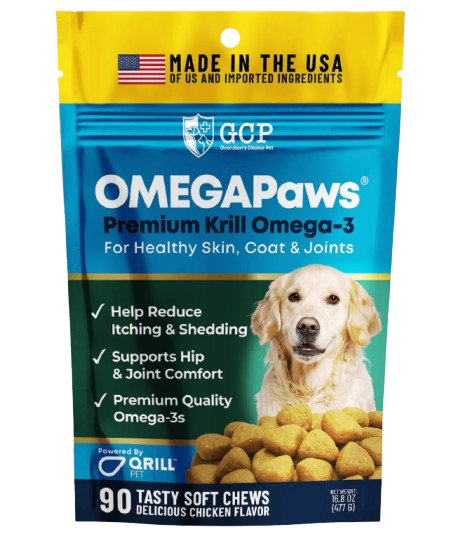
If your dog loves summer activity, GCP OMEGAPaws can help support the skin, coat, joints, and vitality behind those everyday adventures. Use it as directed, and pair it with fresh water, safe exercise, rest breaks, post-swim rinsing, grooming, and regular veterinary guidance.
Citation: Hall, E. J., Carter, A. J., & O’Neill, D. G. (2020). Dogs don’t die just in hot cars—Exertional heat-related illness (heatstroke) is a greater threat to UK dogs. Animals, 10(8), 1324. https://doi.org/10.3390/ani10081324
For all general inquiries, please contact us at info@guardianschoice.com
© Copyright. All rights reserved.