
Is the Cold Weather Making Your Senior Dog Stiff?

Senior dogs may appear slower or stiffer during colder months, particularly after sleeping, during morning walks, or when they are less active than usual. Keeping them warm, providing gentle daily movement, maintaining a healthy body condition, improving traction around the home, and discussing appropriate nutritional support such as omega-3 fatty acids with your veterinarian can help create a more comfortable cold-weather routine.
There is something especially noticeable about the first truly cold morning of the season when you share your home with an older dog. The pup who once jumped up as soon as the leash appeared may take an extra moment to stretch, shift their weight, and carefully stand before heading toward the door. On warmer afternoons, they may seem almost like their younger self again, which naturally leaves many pet parents wondering whether the weather is making their dog’s joints feel different.
Senior dog joint stiffness, cold-weather mobility changes, dog arthritis support, and omega-3 joint nutrition are common concerns as temperatures fall. What is important, however, is not to assume that cold weather itself is causing arthritis or directly damaging the joints. Older dogs may simply have existing age-related changes that become more noticeable when activity decreases, muscles are colder, floors are slippery, or walks become shorter.
Instead of looking for one explanation or one quick fix, think of winter joint care as a collection of small supportive habits. A warmer sleeping space, better footing, gentle movement, appropriate body weight, good nutrition, and veterinary guidance can work together to make everyday activities feel more manageable for an aging companion.
Why Cold Weather Can Make Stiffness More Noticeable
Many pet parents report that older dogs seem slower when the weather changes, but the exact relationship between temperature, barometric pressure, and joint discomfort in dogs is not fully understood. Claims that colder temperatures automatically “thicken joint fluid” or that falling barometric pressure directly causes painful swelling are often repeated online, but they are more certain than the available canine evidence allows us to be.
What we can say more comfortably is that several practical things change when the season changes. Dogs may spend more time sleeping, take shorter walks, move less frequently around the yard, or avoid going outside when conditions are wet or cold. Reduced movement can make an older dog look especially stiff when they first stand after resting.
Cold floors can also feel less inviting, and wet or icy surfaces may cause senior dogs to move cautiously because they are trying not to slip. A dog with existing osteoarthritis, muscle weakness, or reduced balance may therefore appear significantly slower even if the underlying joint condition has not suddenly become worse.
That is why observing patterns matters. If your dog takes several careful steps after getting up but becomes more comfortable after a few minutes of gentle movement, tell your veterinarian. If the stiffness is suddenly severe, affects only one limb, or is accompanied by pain, swelling, reluctance to bear weight, or a change in appetite or behavior, the situation deserves more immediate attention.
Signs Your Senior Dog May Need Extra Mobility Support
Aging does not look exactly the same in every dog. Some seniors remain highly active well into their later years, while others gradually change the way they stand, walk, climb stairs, or settle into bed.
One of the earliest changes pet parents notice is hesitation after rest. A dog may pause before getting up, stretch for longer, shift weight from side to side, or take several slow steps before walking normally. You might also notice that they no longer rush upstairs, hesitate before jumping into the car, or wait for assistance getting onto furniture.
Walks can offer other clues. A senior dog may lag behind, shorten their stride, stop more frequently, avoid certain surfaces, or seem less enthusiastic about a route they previously enjoyed. Some dogs may lick or pay extra attention to a joint, while others simply become quieter.
These observations do not diagnose arthritis. Mobility changes can also be associated with paw injuries, spinal problems, neurological conditions, muscle loss, ligament problems, or other health concerns, which is why changes that persist should be discussed with a veterinarian.
It can be helpful to keep a short mobility diary during colder months. Note how easily your dog stands in the morning, how long they comfortably walk, whether stairs seem more difficult, and whether there are better or worse days. Even a few notes or short videos may give your veterinarian useful information that is difficult to recreate during an office visit.
Keep Their Environment Warm, Safe, and Easy to Navigate
You cannot control the weather outside, but you can make the home easier for an aging dog to move through. Start with the places where your dog spends the most time.
A comfortable bed in a warm, draft-free area gives older dogs a supportive place to rest without lying directly on a cold floor. The bed does not necessarily need to be heavily heated; the important thing is that it is appropriately padded, easy to enter, and positioned somewhere your dog already likes to sleep.
Floor traction can make an enormous practical difference. Hardwood, tile, and laminate may become difficult for senior dogs with weaker hind legs or reduced balance, so washable runners, non-slip mats, or rugs can create safer pathways between their bed, food bowl, doorway, and favorite rooms.
Stairs may also deserve a second look. Baby gates, ramps, or supervised access can reduce unnecessary slipping, while a ramp or step system may make getting into the car easier for dogs who can no longer comfortably jump.
On outdoor walks, consider a warm coat for dogs who tolerate clothing and are sensitive to cold conditions, particularly short-haired breeds, small dogs, and older animals with reduced body condition. Make sure clothing fits comfortably and does not restrict normal movement.
Gentle Movement Still Matters in Colder Months
When an older dog looks stiff, it is tempting to let them rest for most of the day. Rest certainly matters, but completely eliminating routine movement can sometimes make it harder for a senior dog to maintain muscle strength and comfortable mobility.
Rather than one demanding walk, consider shorter and more frequent outings that match your dog’s current ability. Five or ten comfortable minutes several times a day may be more manageable than expecting an older dog to complete a long route in one session.
Start slowly, especially first thing in the morning. Give your dog time to stand, stretch, and walk around the home before asking them to manage stairs or head into cold outdoor conditions.
Choose flatter routes and stable surfaces whenever possible. On icy days, indoor movement may be safer, whether that means walking gently through the house, doing veterinarian-approved mobility exercises, or using enrichment activities that encourage your dog to stand and move without overexertion.
Pay attention to recovery afterward. Exercise should not leave your dog dramatically more uncomfortable for the rest of the day. If a short walk consistently results in limping, exhaustion, reluctance to stand, or obvious discomfort later, the activity level may need to be adjusted with veterinary guidance.
Nutrition and Healthy Weight Belong in the Joint-Care Picture
Mobility support is not only about what happens during a walk. Nutrition and body condition influence the amount of work your dog’s joints have to perform every day.
Maintaining an appropriate weight can be especially important for senior dogs with mobility concerns because additional body weight places more mechanical load on joints that may already be affected by age-related change. Your veterinarian can help assess your dog’s body condition and recommend an appropriate feeding plan rather than relying on appearance alone.
Omega-3 fatty acids, particularly EPA and DHA from marine sources, are another area of interest in canine joint nutrition. In one controlled clinical study, researchers evaluated dogs with osteoarthritis that were fed a diet containing fish-oil omega-3 fatty acids and found improvements in objective weight-bearing measurements over the study period. That finding supports continued research into omega-3 nutrition for dogs with joint concerns, but it does not mean every supplement will produce the same result or that omega-3s replace veterinary treatment.
The study examined a specific dietary intervention in dogs already diagnosed with osteoarthritis. Product formulation, dose, EPA and DHA concentration, a dog’s overall diet, health history, and concurrent treatment can all influence how nutritional support fits into an individual care plan.
For pet parents, the useful takeaway is not that omega-3s are a cure for joint stiffness. It is that appropriate fatty-acid nutrition may have a place within a larger mobility routine when selected thoughtfully and discussed with a veterinarian.
A Cold-Weather Joint Comfort Routine at a Glance
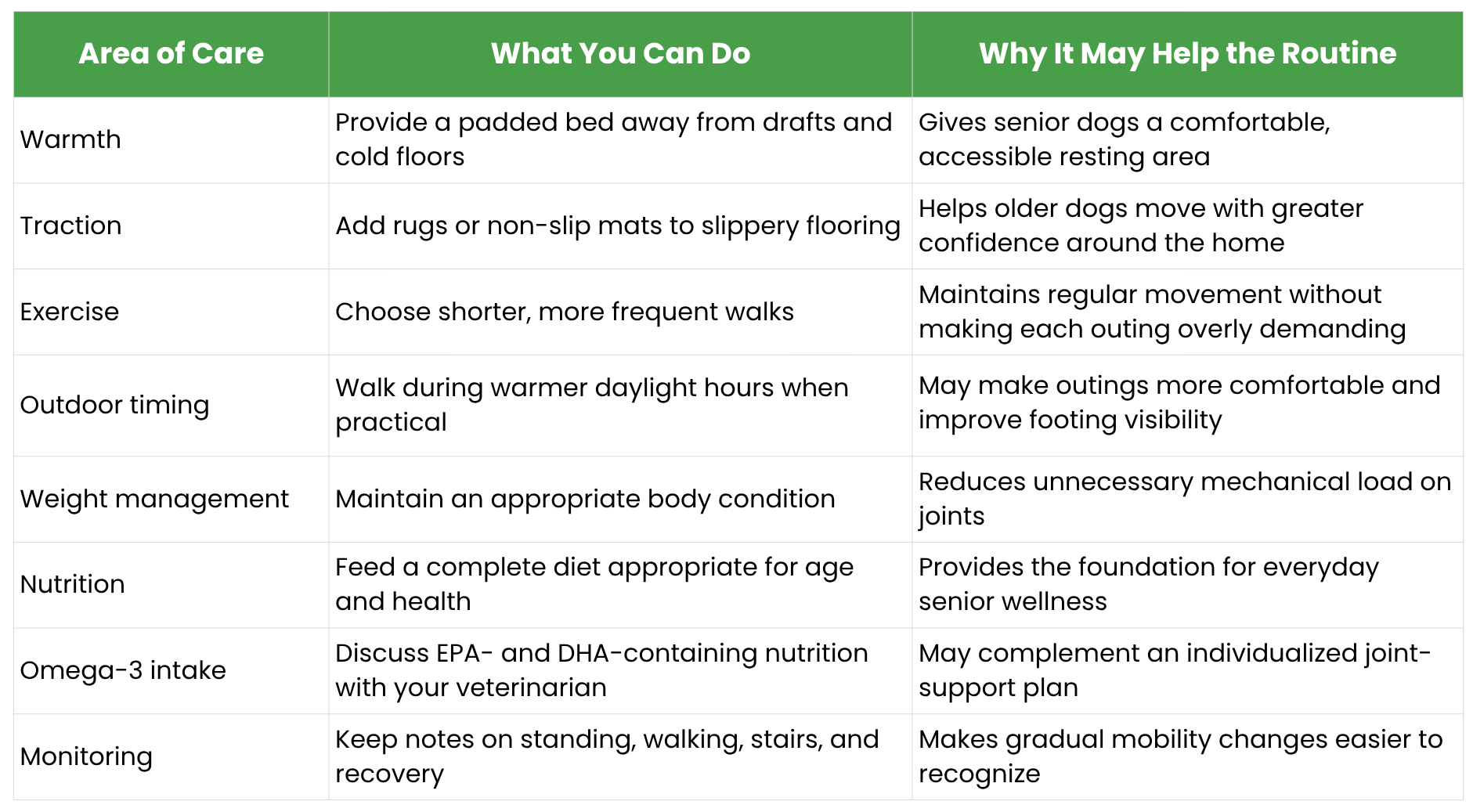
When Stiffness Deserves Veterinary Attention
Gradual slowing can occur with age, but age should never become the automatic explanation for every mobility change. Dogs can experience pain and illness at any age, and senior pets deserve the same attention to new symptoms as younger animals.
Schedule a veterinary visit if stiffness is persistent, repeatedly interferes with normal activity, or seems to be progressing. A veterinarian can examine the joints, spine, muscles, paws, and neurological function and determine whether diagnostic testing is appropriate.
More urgent evaluation may be needed when a dog suddenly refuses to bear weight on a limb, cries out, develops obvious swelling, falls repeatedly, drags a leg, or cannot stand normally. Similarly, major changes in appetite, breathing, energy, or behavior alongside mobility problems should not simply be attributed to winter weather.
Avoid giving human pain medication unless a veterinarian specifically directs you to do so. Common household medications can be dangerous for dogs, and appropriate pain management should be selected according to the individual animal.
Adding GCP OMEGAPaws Premium Krill Omega-3 to Their Routine
Once warmth, safe movement, healthy body condition, and veterinary care are in place, Guardian’s Choice GCP OMEGAPaws Premium Krill Omega-3 can be considered as a convenient nutritional addition to a senior dog’s everyday routine. The product described features omega-3 sources from krill meal and fish oil, along with EPA, DHA, and Vitamin E, in a chicken-flavored soft-chew format designed to be simple to incorporate into daily care.
Rather than positioning OMEGAPaws as a treatment for arthritis or a guarantee of easier movement, it is more accurate to view it as nutritional support that can complement a complete diet and an individualized joint-care plan. Marine omega-3 fatty acids are relevant to joint-health research, but the effects of one clinical diet or study cannot automatically be attributed to every finished supplement.
The same omega-3 nutrition can also be considered within broader skin and coat wellness, particularly during months when indoor heating and seasonal grooming changes may affect how a dog’s coat looks and feels. Follow the current label and speak with your veterinarian about serving size, overall dietary intake, medications, and whether additional omega-3 supplementation is appropriate for your senior dog.
Frequently Asked Questions
-
Cold weather is not considered a direct cause of osteoarthritis, although existing stiffness or mobility limitations may become more noticeable when dogs are less active or navigating colder, slippery conditions. New or worsening mobility changes should be discussed with your veterinarian rather than automatically attributed to the season.
Support Their Daily Routine With GCP OMEGAPaws Premium Krill Omega-3
GCP OMEGAPaws Premium Krill Omega-3 offers a convenient way to include marine omega-3 fatty acids in a senior dog’s established wellness routine. With krill meal and fish oil as omega-3 sources and a soft-chew format designed for everyday use, it can complement appropriate nutrition, gentle activity, weight management, and veterinarian-guided joint care without being positioned as a cure for arthritis or mobility problems.
-
Provides marine-source omega-3 fatty acids as part of daily nutritional support
-
Features EPA and DHA, fatty acids commonly studied in canine nutrition
-
Includes krill meal and fish oil according to the product information provided
-
Includes Vitamin E as part of the formula
-
Complements a broader senior-dog joint and mobility routine
-
Can also fit within everyday skin and coat nutrition
-
Chicken-flavored soft-chew format designed for convenient daily use
-
Easy to pair with a consistent mealtime routine
-
Intended to complement, not replace, veterinary evaluation or prescribed joint care
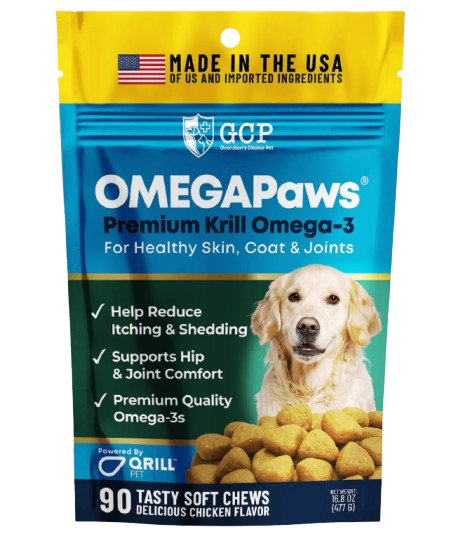
For pet parents who want to add omega-3 nutrition to an already thoughtful senior-dog routine, GCP OMEGAPaws Premium Krill Omega-3 provides an easy-to-use option worth discussing with a veterinarian. Follow the current label, consider your dog’s full diet and medications, and use it as one supportive piece of a larger plan built around warmth, movement, nutrition, and the everyday comfort your older companion deserves.
Reference
Roush, J. K., Dodd, C. E., Fritsch, D. A., Allen, T. A., Jewell, D. E., Schoenherr, W. D., Richardson, D. C., Leventhal, P. S., & Hahn, K. A. (2010). Multicenter veterinary practice assessment of the effects of omega-3 fatty acids on osteoarthritis in dogs. Journal of the American Veterinary Medical Association, 236(1), 59–66. https://doi.org/10.2460/javma.236.1.59
For all general inquiries, please contact us at info@guardianschoice.com
© Copyright. All rights reserved.