
How to Build the Perfect Outdoor Space for Your Cat
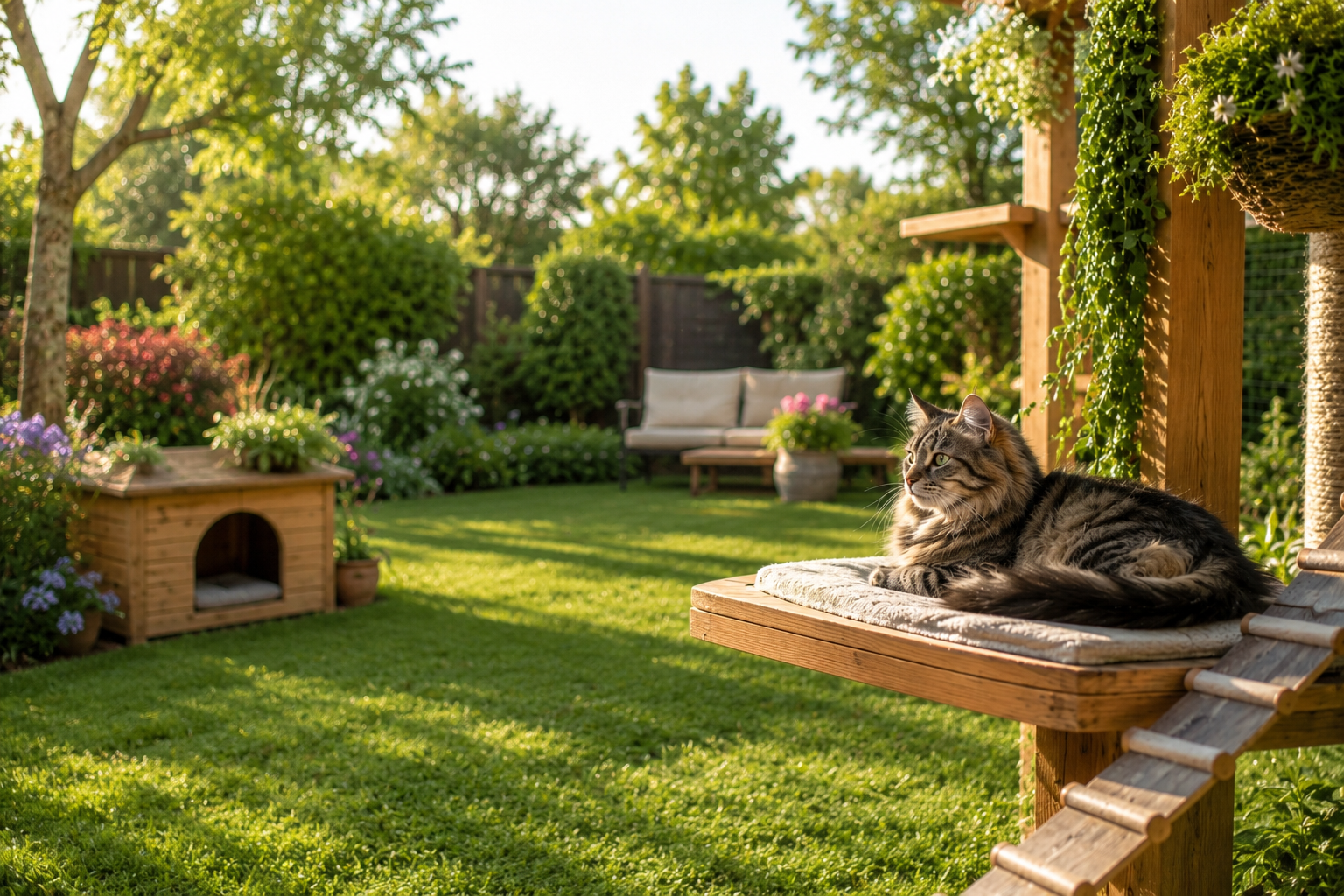
Cats love watching birds, smelling fresh air, climbing high perches, and exploring new textures, but free-roaming can expose them to safety concerns that many pet parents want to avoid. A secure outdoor cat space, often called a catio, gives your cat fresh-air enrichment while keeping their environment more controlled. With strong enclosures, vertical climbing areas, shaded rest spots, cat-safe greenery, and a daily outdoor-season routine that includes GCP Flea & Tick Natural Defense for Cats, you can help your cat enjoy the sights and sounds of nature while supporting their seasonal wellness from within.
Why Cats Love Outdoor Stimulation
If you have ever watched your cat stare out the window for twenty straight minutes, you already know how fascinating the outside world can be to them. A bird on the fence, a leaf moving across the patio, or the sound of insects in the grass can hold their attention in a way that no ordinary toy can fully replace. Cats are natural observers, climbers, scratchers, and scent explorers, so it makes sense that they are drawn to the movement, sound, and texture of the outdoors.
At the same time, many cat parents do not feel comfortable letting their cats roam freely. Roads, unfamiliar animals, harsh weather, poisonous plants, and accidental escapes can make outdoor access feel too risky. This is why more pet parents are looking for a middle ground: a safe outdoor cat space that provides fresh air and enrichment without the same level of uncertainty that comes with free-roaming.
A catio can be a wonderful solution. It can be large and custom-built in a backyard, or it can be simple and compact on a balcony, patio, or window box. What matters most is that the space is secure, comfortable, and designed around the way cats actually behave. Cats want height, hiding spots, soft resting areas, scratching surfaces, and interesting views. When those pieces come together, a catio becomes more than a cute home upgrade. It becomes a daily enrichment space that supports your cat’s routine, confidence, and overall quality of life.
A study published in Frontiers in Veterinary Science looked at controlled outdoor environments for cats and found that introducing a contained outdoor system was associated with positive changes in cat and owner quality of life. The study should not be treated as proof that every catio works the same way for every cat, but it does support the idea that safe, controlled outdoor access can play a helpful role in feline enrichment.
Start With a Secure Outdoor Structure
Before you think about plants, shelves, or cozy décor, start with safety. A good outdoor cat space needs to be fully enclosed because cats are flexible, curious, and very good at finding weak spots. A gap that looks too small may still be tempting to a determined cat, especially if something interesting moves on the other side.
For the enclosure, choose strong materials such as galvanized wire mesh, hardware cloth, or high-quality cat-safe netting. Standard window screen is usually not the best choice for a primary barrier because it can tear under claws or pressure. If you are building a wooden frame, choose weather-resistant materials and make sure all corners, seams, doors, and latches are secure.
If the catio sits on grass or soil, the base should be anchored well. This helps prevent shifting and makes it harder for any openings to form near the ground. If you are creating a balcony catio, pay close attention to railings, ledges, flooring gaps, and overhead openings. Balcony spaces can be wonderful for cats, but they need extra care because height adds another layer of safety planning.
Weather matters too. Cats may enjoy warm sun, but they need shade and airflow. A covered corner, partial roof, outdoor-safe cat bed, or shaded perch can make the space more comfortable. The best catio gives your cat options: a sunny spot when they want warmth, a shaded corner when they want rest, and a secure path back indoors when they are ready.
Add Vertical Spaces for Climbing and Confidence
Cats do not just live on the ground. They experience the world vertically, which is why a flat outdoor space may not be enough to keep them engaged for long. Shelves, ramps, bridges, and elevated perches can turn a simple enclosure into a much richer environment.
Start with staggered shelves that allow your cat to climb in steps rather than one big jump. This is especially helpful for kittens, senior cats, or cats who are not used to climbing. Ramps can also make the space more accessible and comfortable, while bridges or tunnels can create a sense of adventure.
A high lookout perch is often one of the most popular catio features. Cats love being able to watch birds, leaves, people, and outdoor activity from a safe elevated spot. If possible, place a perch where your cat can observe interesting movement while still having shade nearby. This gives them a comfortable place to rest, watch, and feel in control of their surroundings.
Be sure every shelf and perch is stable. Outdoor surfaces can become slippery from rain, humidity, or dust, so consider adding non-slip material where your cat will land or walk. If more than one cat will use the catio, offer multiple perches and resting spots so they do not have to compete for the best view. A well-planned layout supports movement, exploration, and peaceful sharing.
Create a Sensory-Friendly Catio Your Cat Will Enjoy
A catio should feel interesting, not empty. Once the structure is safe and the climbing areas are in place, think about your cat’s senses. What can they smell, scratch, nibble, watch, and touch? These small details can make the difference between a catio your cat visits once and a catio they use every day.
Scratching surfaces are a great addition. Use weather-resistant scratching posts, sisal rope, cedar, or other durable materials that can hold up outdoors. Scratching is a normal feline behavior, and giving your cat an approved surface can make the space feel more natural and satisfying.
Cat-safe greenery can also make the space more inviting. Cat grass, catnip, and other feline-friendly plants can add scent and texture, but always check plant safety before placing anything where your cat can chew it. Avoid unknown garden plants, decorative flowers, or anything treated with chemicals. If you are unsure whether a plant is safe for cats, it is better to leave it out or ask your veterinarian.
Rest areas matter just as much as play areas. Add a weatherproof bed, a soft mat, or a covered hideaway where your cat can relax. Some cats want to watch the world from above, while others prefer a tucked-away corner where they can feel hidden and secure. Offering both types of spaces lets your cat choose what feels best in the moment.
Outdoor Cat Space Essentials
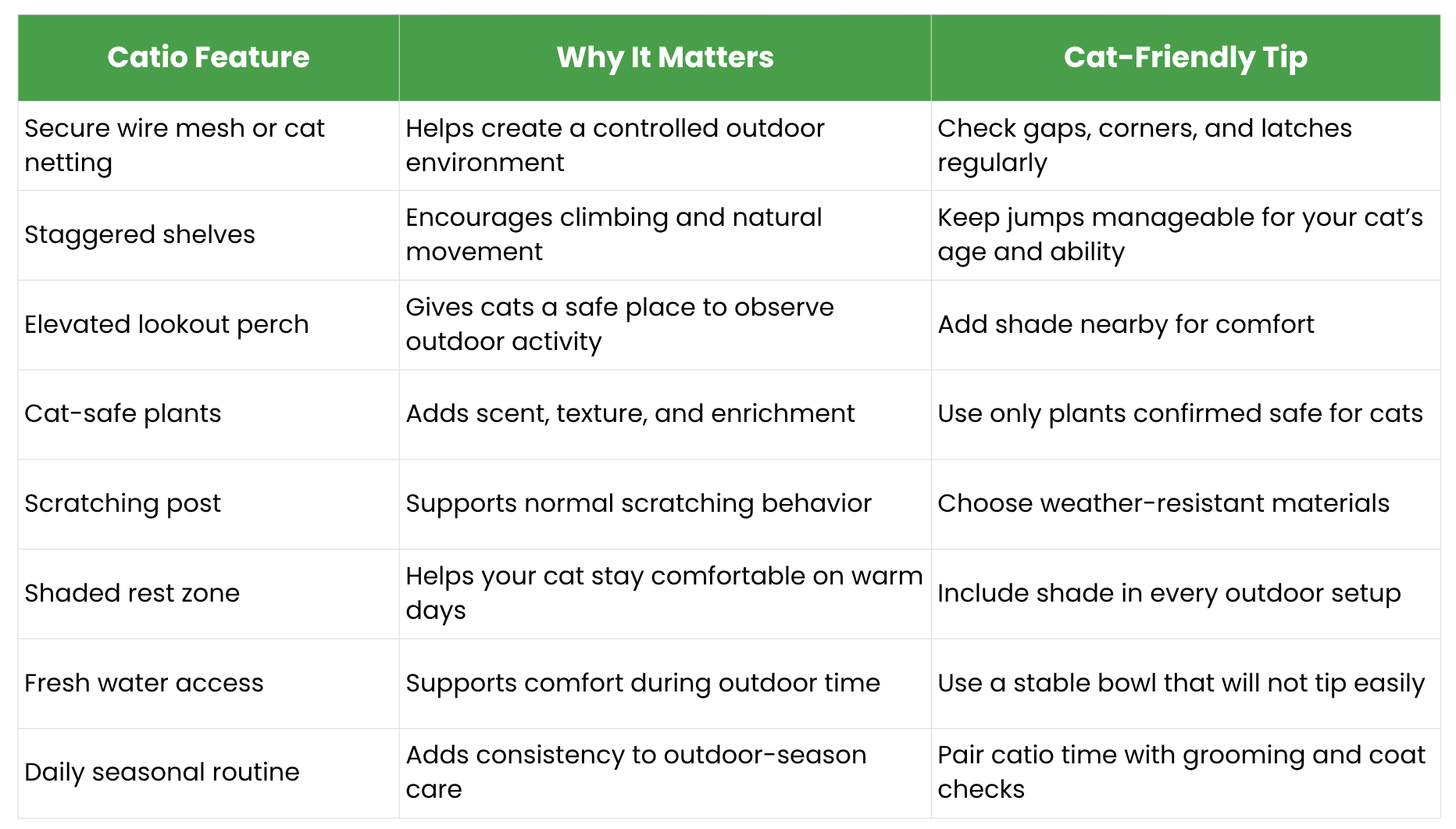
This kind of setup gives your cat more than a place to sit. It creates a safe outdoor routine that feels stimulating, cozy, and manageable for both cats and pet parents. The best catio is not necessarily the biggest one; it is the one that matches your cat’s personality and gives them safe choices.
Supporting Your Cat’s Seasonal Outdoor Routine
As your cat spends more time enjoying fresh air, sunshine, grass-side views, and outdoor scents, it is a good idea to build a seasonal care routine around that new lifestyle. Even a secure catio can introduce your cat to more outdoor elements than they experience indoors. That does not mean you need to avoid outdoor enrichment. It simply means your cat’s routine should include a little extra attention during warmer months and outdoor season.
After catio time, give your cat a quick visual check. Look over their coat, paws, ears, and skin, especially if their enclosure is near grass, plants, or garden areas. Regular grooming can help you notice small changes early and can also support coat comfort. Keep bedding clean, sweep the catio floor, remove leaves or debris, and refresh water daily. These simple habits help the space stay comfortable and inviting.
This is also where GCP Flea & Tick Natural Defense for Cats fits naturally into the story. These chicken-flavored soft chews are designed to support your cat’s natural seasonal defense routine from within. For cats who enjoy supervised outdoor spaces, patios, balconies, or catios, a daily chew can become part of a consistent warm-weather wellness routine alongside grooming, bedding care, coat checks, and a clean outdoor setup.
Instead of thinking of seasonal care as one single step, think of it as a layered routine. A secure enclosure supports safer exploration. Shaded rest areas support comfort. Grooming and coat checks support awareness. Daily seasonal wellness chews help support your cat from the inside out. Together, those small steps create a thoughtful plan for fresh-air enrichment.
Frequently Asked Questions
-
Yes, many indoor cats enjoy a catio because it gives them access to fresh air, outdoor sights, and interesting sounds in a more controlled space. Some cats explore right away, while others need several days or weeks to feel comfortable, so it is best to let your cat move at their own pace.
Give Your Cat Outdoor Enrichment With Peace of Mind
A catio is one of the best ways to give your cat a taste of the outdoors while keeping their environment more controlled. With secure materials, vertical spaces, cat-safe plants, shaded areas, scratching surfaces, and cozy rest spots, you can create a fresh-air sanctuary that supports your cat’s natural curiosity.
The key is to think beyond the enclosure itself. Outdoor enrichment works best when it is paired with routine care: grooming, clean bedding, fresh water, coat checks, and seasonal wellness support. By building those habits into your cat’s day, you can help make catio time feel safer, more comfortable, and more enjoyable for both of you.
GCP Flea & Tick Natural Defense for Cats
GCP Flea & Tick Natural Defense for Cats is a chicken-flavored soft chew designed to support your cat’s natural seasonal defense routine from within. It fits easily into daily outdoor-season care, especially for cats who enjoy catios, balconies, patios, window watching, or supervised fresh-air time.
Benefits:
-
Supports your cat’s natural seasonal defense routine
-
Helps support outdoor-season wellness
-
Supports skin comfort and coat wellness
-
Chicken-flavored soft chews cats can enjoy
-
Easy to add to a daily routine
-
Pairs well with grooming, coat checks, and clean bedding
-
Made without harsh chemicals
-
Designed for consistent seasonal support from within
If you are building a catio or giving your indoor cat more fresh-air enrichment, GCP Flea & Tick Natural Defense for Cats can be a helpful part of the routine. Pair it with a secure outdoor space, regular grooming, clean resting areas, and daily care habits to support your cat’s comfort during outdoor season.
Citation: de Assis, L. S., & Mills, D. S. (2020). Introducing a controlled outdoor environment impacts positively in cat welfare and owner concerns: The use of a new feline welfare assessment tool. Frontiers in Veterinary Science, 7, Article 599284. https://doi.org/10.3389/fvets.2020.599284
For all general inquiries, please contact us at info@guardianschoice.com
© Copyright. All rights reserved.