
Ragweed Season: Why Fall Allergies Can Affect Pets Too and How to Support Them
Ragweed pollen tends to become more noticeable in late summer and fall, and dogs and cats can encounter it on grass, outdoor surfaces, clothing, shoes, and even inside the home. Some pets may develop itching, paw licking, skin irritation, sneezing, or watery eyes during seasonal changes, so reducing pollen exposure, maintaining gentle grooming habits, and watching for persistent symptoms can make autumn care easier to manage.
Autumn is one of the best times of year to enjoy life with a pet. Cooler mornings make walks more comfortable, changing leaves create beautiful outdoor adventures, and many families spend more time opening windows or enjoying patios before winter arrives. At the same time, fall pet allergies can become more noticeable as ragweed pollen and other environmental particles circulate through yards, parks, walking trails, and neighborhoods.
For pet parents searching for information about ragweed allergies in dogs, seasonal allergies in cats, itchy dog paws in fall, or why a pet suddenly seems more sensitive during autumn, it helps to remember that environmental discomfort does not always look the same from one animal to another. It also does not automatically mean ragweed is responsible. Skin irritation, sneezing, eye discharge, licking, scratching, and other signs can have many possible causes, including parasites, infections, food sensitivities, dry skin, irritants, or underlying health conditions.
That is why the most useful approach combines everyday observation with simple environmental care. Rather than trying to diagnose a seasonal allergy at home, pet parents can reduce unnecessary pollen exposure, keep living spaces cleaner, maintain familiar grooming routines, and seek veterinary guidance when signs continue or become uncomfortable.
Why Ragweed Season Can Be Uncomfortable for Pets
Ragweed is a wind-pollinated plant, which means its pollen can travel through the air rather than relying on insects to carry it. Because the particles are easily dispersed, pollen can settle on lawns, sidewalks, outdoor furniture, pet fur, clothing, shoes, and other surfaces that dogs and cats encounter throughout the day.
Dogs that spend time walking through grass may collect pollen on their paws, legs, belly, and coat. Even a short neighborhood walk can bring outdoor particles back into the home, where they may transfer to rugs, bedding, sofas, or favorite resting places.
Cats may experience exposure differently. Indoor cats can still encounter pollen when windows are open, when people carry outdoor particles indoors, or when another pet returns from outside. Cats with supervised patio access or time in enclosed outdoor spaces may have additional contact with grasses and airborne pollen.
None of this means every pet will experience a seasonal reaction. Some dogs and cats move through ragweed season without noticeable changes, while others appear more sensitive at certain times of year. Weather also matters because pollen levels can vary according to rainfall, wind, temperature, location, and the plants growing nearby.
The practical takeaway is simple: seasonal patterns are worth noticing, but symptoms should never be assumed to have one cause based only on the calendar.
Dogs and Cats May Show Seasonal Discomfort Differently
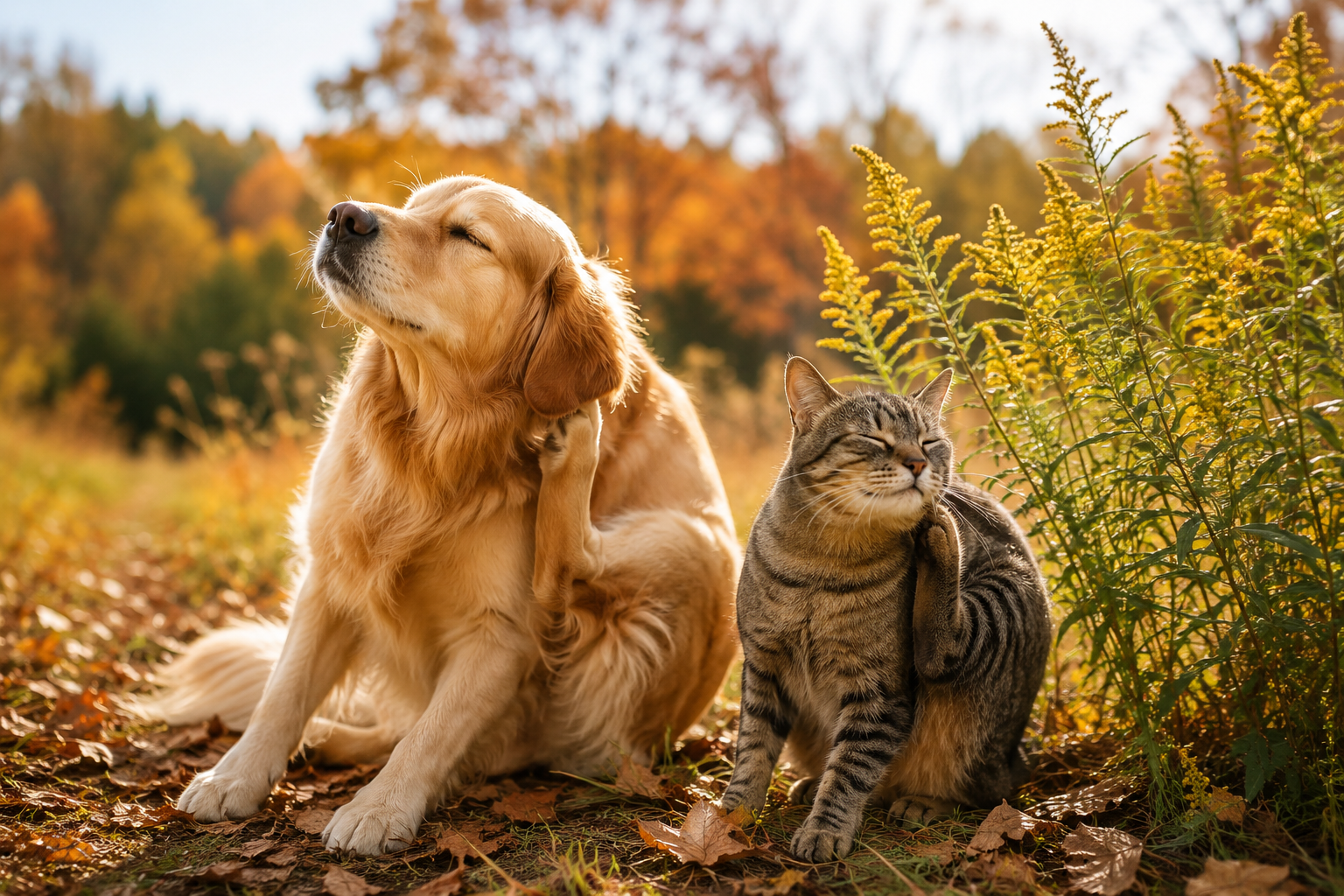
Dogs experiencing environmental sensitivity often show signs through their skin. Pet parents may notice more frequent paw licking, scratching around the ears or underarms, rubbing the face, or irritation on areas of the body that regularly come into contact with grass.
One prospective study examining chronic canine atopic dermatitis documented pruritus, or itching, as an important clinical feature and identified characteristic patterns of affected areas in dogs. The study helps illustrate why repeated itching and licking deserve attention, but it does not mean that ragweed is responsible for every itchy dog or that nutritional products can diagnose or treat allergic dermatitis.
Cats can be less predictable. Some may scratch, groom more often, or develop skin changes, while sneezing and watery eyes can also occur for many unrelated reasons. Upper respiratory infections, eye irritation, dust, household fragrances, and other conditions can resemble what owners think of as “allergy symptoms.”
Because of that overlap, it is safer to think in terms of signs rather than diagnoses. A pet who occasionally sneezes after sitting beside an open window may simply need monitoring, while repeated sneezing, thick discharge, swollen eyes, skin lesions, excessive scratching, or appetite changes deserve a veterinary conversation.
Recognizing Signs That Deserve a Closer Look
Seasonal pet discomfort can begin subtly. A dog may spend an extra minute licking their paws after a walk, or a cat may have slightly watery eyes on a windy afternoon. When the behavior becomes repetitive or begins interfering with sleep, eating, walking, playing, or normal grooming, it is worth paying closer attention.
For dogs, watch for persistent paw licking, chewing between the toes, repeated ear scratching, rubbing the face, redness around the belly or underarms, or areas of thinning fur. These signs do not confirm an allergy because fleas, mites, infections, injuries, and other skin problems can appear similar.
For cats, look for increased grooming, scratching around the head or neck, changes in the coat, sneezing, watery eyes, squinting, or nasal discharge. A cat that stops eating, becomes unusually quiet, has difficulty breathing, or develops significant eye swelling should receive prompt veterinary attention rather than being managed at home as a seasonal issue.
It can help to keep a simple seasonal journal. Note when symptoms appear, what the weather was like, where your pet spent time, whether windows were open, and whether anything changed in the home. That information may help your veterinarian see patterns that are difficult to recognize from memory alone.
Simple Ways to Reduce Everyday Pollen Exposure
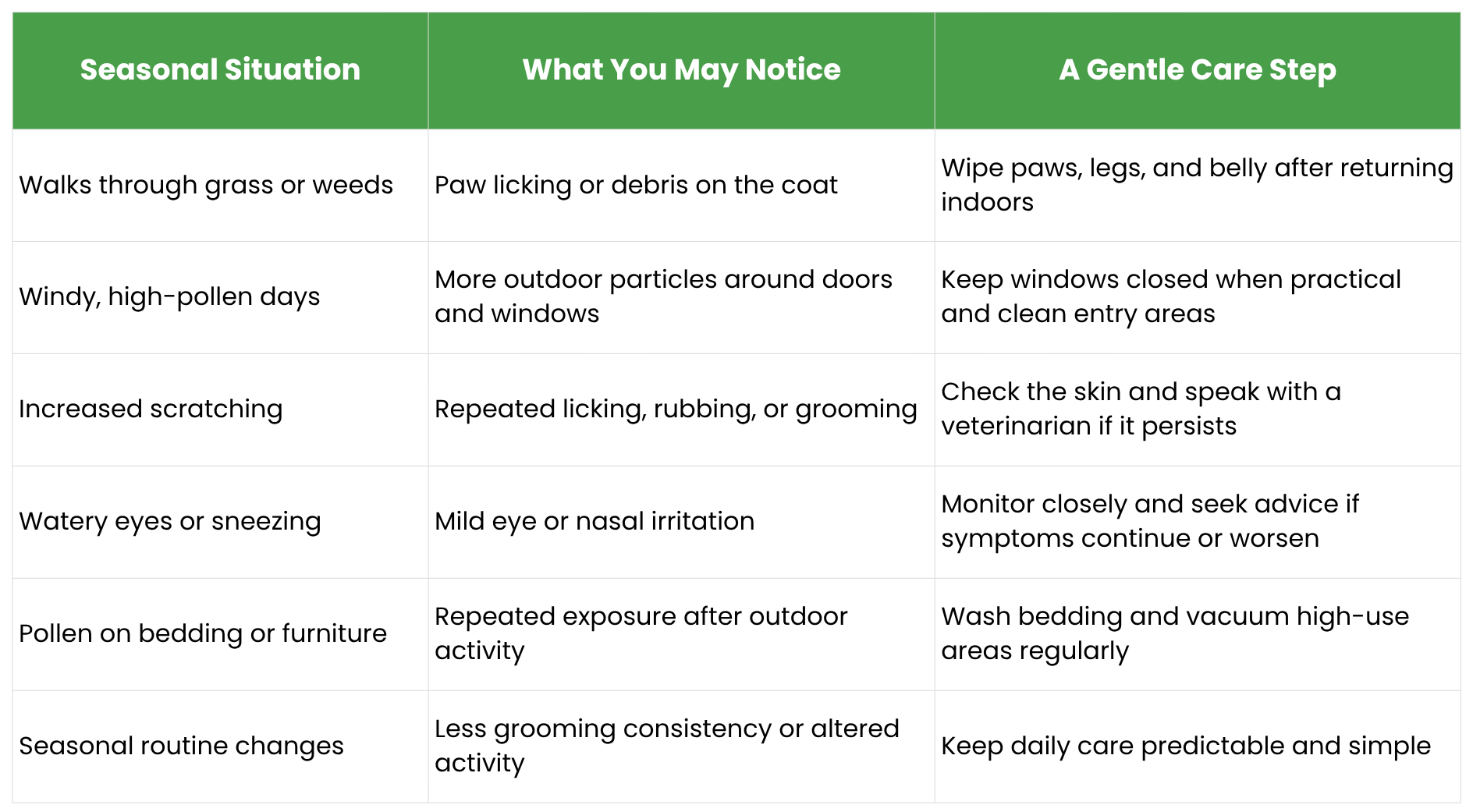
The good news is that many useful fall pet care habits are simple and inexpensive. One of the easiest is keeping a clean towel or pet-safe wipe near the door and gently cleaning your dog’s paws, lower legs, and belly after outdoor time. This removes some of the pollen and debris sitting on the surface of the coat before your pet settles onto furniture or bedding.
Regular brushing can help remove loose fur and outdoor particles, but avoid over-bathing unless your veterinarian recommends otherwise. Frequent bathing with unsuitable shampoos can dry or irritate the skin, particularly when a dog is already uncomfortable.
Inside the home, vacuum high-traffic areas regularly and wash pet bedding according to the manufacturer’s directions. If pollen levels are particularly noticeable in your area, keeping windows closed during windy periods may reduce the amount entering living spaces.
A HEPA air purifier may also be useful as part of general indoor air management, especially in the rooms where pets sleep or spend most of their time. It should not be viewed as an allergy treatment, but it can complement routine cleaning by filtering airborne particles within the limitations of the device.
For dogs, consider choosing walking routes with less tall grass during periods when your pet appears especially sensitive. You do not need to eliminate outdoor activity entirely; simply adjusting where and when you walk may reduce unnecessary exposure while preserving exercise and enrichment.
A Fall Allergy Care Routine at a Glance
Supporting Skin, Coat, and Everyday Wellness From Within
Once environmental habits are in place, nutritional support can become another part of a broader seasonal wellness routine. Guardian’s Choice offers species-specific products that can be used alongside grooming, balanced nutrition, environmental care, and veterinary guidance rather than in place of them.
For dogs, GCP OMEGAPaws Krill Omega-3 provides omega-3 fatty acids that can complement everyday skin and coat nutrition. Omega-3 supplements are commonly chosen by pet parents who want to add essential fatty acids to an established diet, but the product should not be described as a treatment for ragweed allergy, itching, dermatitis, or any other medical condition.
For cats, GCP Cat L-Lysine Advanced Immune Support provides L-lysine in an easy-to-use format that can fit into a regular feline wellness routine. Because sneezing, watery eyes, or nasal symptoms can have many causes, L-lysine should not be positioned as an allergy remedy or replacement for veterinary evaluation.
The most helpful way to think about both products is as supportive additions to a complete routine. Outdoor cleanup reduces surface exposure, household care keeps shared spaces cleaner, balanced nutrition provides the everyday foundation, and appropriately selected supplements can complement that foundation when they fit the individual pet.
Frequently Asked Questions
-
Yes, pollen can enter the home through open windows and doors or be carried indoors on shoes, clothing, and other pets. Keeping resting areas clean and monitoring seasonal patterns can help you better understand your cat’s exposure.
A Gentler Fall Starts With Consistent Care
Fall allergies in pets can be frustrating because the signs are not always obvious and do not always point to a single cause. A dog that suddenly begins licking its paws or a cat that sneezes more frequently may be responding to something seasonal, but those same behaviors can also be connected with completely different health concerns.
That is why the most useful autumn routine starts with observation rather than assumption. Wiping paws, cleaning bedding, limiting unnecessary pollen exposure, maintaining regular grooming, and watching how your pet responds from week to week can help you create a calmer and more informed approach to seasonal care.
Nutritional supplements can fit into that routine when they are used thoughtfully and according to the current product label. The goal is not to promise a pollen-free season, but to give dogs and cats consistent everyday support while staying attentive to symptoms that deserve professional care.
GCP OMEGAPaws Krill Omega-3 and GCP Cat L-Lysine
GCP OMEGAPaws Krill Omega-3 and GCP Cat L-Lysine give dog and cat parents two species-appropriate options for complementing their fall wellness routines. Each product is designed to fit alongside balanced nutrition, grooming, environmental care, and veterinary guidance rather than functioning as a treatment for seasonal allergies.
-
GCP OMEGAPaws Krill Omega-3: Provides omega-3 fatty acids as part of a daily canine nutritional routine
-
Complements everyday skin and coat nutrition
-
Easy to pair with regular meals and grooming habits
-
Can be included in a broader seasonal wellness plan
-
GCP Cat L-Lysine: Provides supplemental L-lysine for cats
-
Offers an easy way to incorporate amino acid supplementation into daily care
-
Complements an established feline wellness routine
-
Suitable for pet parents who prefer targeted, species-specific nutritional support
For pet parents already focusing on cleaner indoor spaces, post-walk wipe-downs, consistent grooming, and balanced nutrition, these GCP products offer convenient ways to add another layer to everyday wellness care. Review the current labels, follow serving directions carefully, and ask your veterinarian whether either supplement is appropriate for your individual pet.
Reference
Favrot, C., Steffan, J., Seewald, W., & Picco, F. (2010). A prospective study on the clinical features of chronic canine atopic dermatitis and its diagnosis. Veterinary Dermatology, 21(1), 23–31. https://doi.org/10.1111/j.1365-3164.2009.00758.x
For all general inquiries, please contact us at info@guardianschoice.com
© Copyright. All rights reserved.