Puppy Vitamins Guide: Supporting Growth, Immunity, and Daily Wellness Naturally

Puppies go through rapid growth and development, which increases their nutritional needs. Vitamins and supportive nutrients help maintain balance across systems like digestion, coat health, and overall development. A consistent daily routine that includes nutritional support can help create a strong foundation over time. Simple, steady habits often make the biggest difference in early life stages.
Why Puppies Need More Than Just Basic Nutrition
Bringing a puppy home is often filled with excitement—new routines, playful energy, and the beginning of a long-term bond. Along with that excitement comes a responsibility that isn’t always immediately visible: supporting your puppy’s rapid development through proper nutrition.
Puppies grow at a pace that is significantly faster than adult dogs. In just a matter of months, they go through major changes in size, structure, and behavior. This accelerated growth requires more than just calories. It requires a steady intake of nutrients that support different systems simultaneously.
While high-quality dog food is designed to meet general nutritional standards, many pet owners begin exploring additional ways to support their puppy’s development. This is where conversations around puppy vitamins, immune support, coat health, and digestion naturally come into play.
Rather than thinking of vitamins as an “extra,” it can be helpful to see them as part of a broader approach to maintaining balance during a critical stage of life. Research published in Animals highlights how environmental and physiological changes influence development in animals, reinforcing the idea that consistent nutritional support plays a role in how young animals adapt over time.
The Role of Vitamins in Early Development
Vitamins are essential micronutrients that contribute to a wide range of biological processes. In puppies, these processes are happening simultaneously and at a faster rate than in adult dogs.
For example, B-complex vitamins are commonly associated with energy metabolism and neurological function. Omega fatty acids are often discussed in relation to skin and coat health. Other nutrients contribute to how the body maintains internal balance as it grows.
What’s important to understand is that these nutrients don’t work in isolation. They function as part of interconnected systems. Supporting one area—such as digestion—can influence how nutrients are absorbed and utilized across the body.
This is why consistency matters. Rather than focusing on one nutrient at a time, a more balanced approach considers how different components work together within a daily routine.
Key Nutrients That Support Growing Puppies
When exploring puppy nutrition, certain nutrients are frequently highlighted for their role in early development. While individual needs may vary, these components are often part of a well-rounded approach:
-
B-Complex Vitamins: Commonly associated with energy support and metabolic processes
-
Omega Fatty Acids: Often discussed in relation to skin, coat, and overall appearance
-
Digestive Support Nutrients: Help maintain how food is processed and absorbed
-
Immune-Supporting Nutrients: Contribute to overall balance during growth
These nutrients are not about quick changes—they are about supporting the body as it develops. Over time, consistent intake helps maintain stability across multiple systems.
Daily Habits That Shape Long-Term Health
Nutrition is only one part of the equation. Daily habits play an equally important role in how your puppy grows and adapts.
Feeding consistency is one of the most important factors. Puppies benefit from regular meal times, which help regulate digestion and energy levels. Hydration is also essential, supporting everything from digestion to overall comfort.
Activity and rest should be balanced. Puppies need playtime to develop physically and mentally, but they also require adequate rest to support growth.
When these habits are combined with consistent nutritional support, they create a routine that feels stable and manageable. This is often more effective than making large, sudden changes.
Comparing Basic Diet vs Nutritional Support
To better understand how vitamins fit into your puppy’s routine, it helps to compare different approaches:
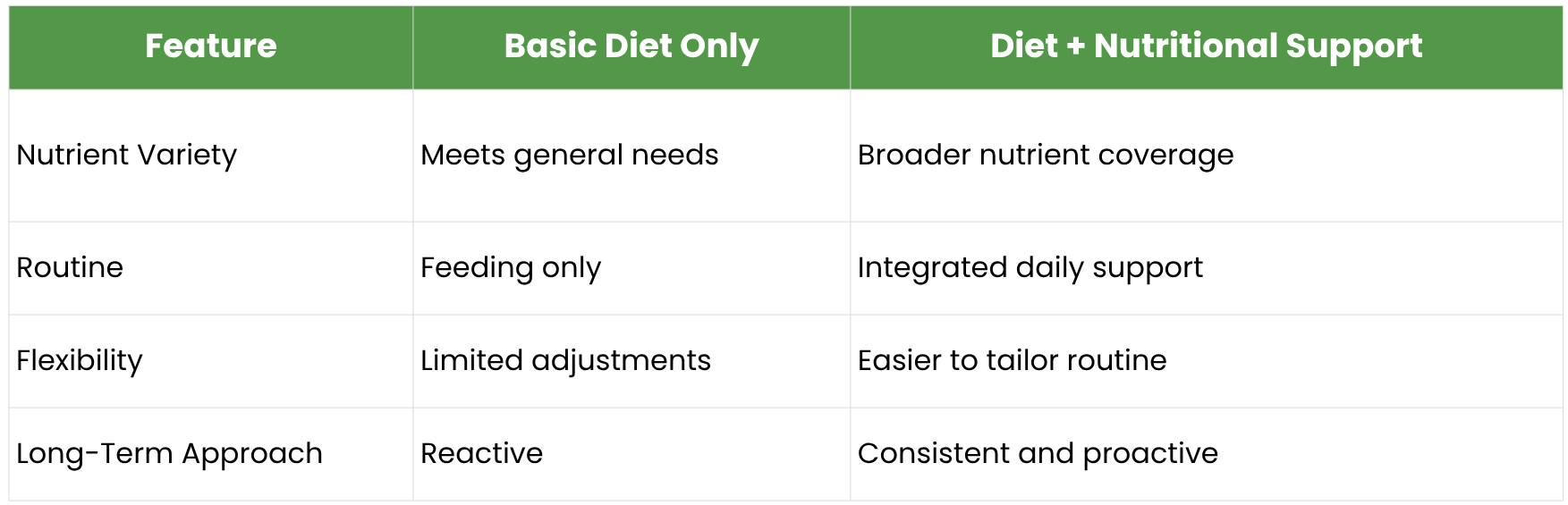
This comparison doesn’t suggest that one approach replaces the other. Instead, it highlights how nutritional support can complement an already balanced diet.
Building a Simple Routine for Your Puppy
One of the biggest challenges for new pet owners is creating a routine that feels sustainable. Puppies thrive on consistency, but routines need to be realistic to maintain.
Start with feeding. Choose a schedule that fits your lifestyle and stick to it. Add supplements or vitamins during mealtime to keep the process simple.
Observe your puppy’s behavior. Energy levels, appetite, and coat condition can all provide insight into how your routine is working.
Avoid overcomplicating the process. A routine that feels easy to follow is far more likely to be maintained over time.
A Smarter Way to Support Your Puppy’s Growth
As routines become more established, many pet owners look for ways to support their puppy’s development without adding complexity. This is where products like GCP VitaPup fit naturally into the picture.
Designed as a daily soft chew, VitaPup includes a blend of vitamins and nutrients such as B-complex vitamins and omega fatty acids. Its format makes it easy to incorporate into feeding routines, especially for puppies that respond well to treat-style supplements.
Rather than replacing a balanced diet, it complements it—supporting multiple areas like coat condition, digestion, and overall wellness as part of a consistent routine.
The chicken flavor also plays a role in acceptance, helping maintain the consistency that is often key in early development stages.
FAQs About Puppy Vitamins
-
Most puppy foods are formulated to meet general nutritional requirements. However, some pet owners choose to include additional support as part of a consistent routine.
Supporting Growth from the Start
Puppyhood is a critical stage that sets the foundation for long-term health. By focusing on consistent routines, balanced nutrition, and supportive habits, pet owners can create an environment that supports steady development.
Rather than relying on quick fixes, a thoughtful approach that integrates vitamins and daily care helps maintain balance over time. These small, consistent steps often shape how your puppy grows and adapts.
GCP VitaPup
Supporting your puppy’s development starts with simple, consistent choices.
GCP VitaPup Puppy Vitamins Soft Chews
-
Supports brain, coat, heart, digestion, and immune health
-
Includes B-complex vitamins and omega fatty acids
-
Soft chew format for easy daily use
-
Chicken flavor for better acceptance
-
Designed for growing puppies
A simple addition to your puppy’s routine that supports daily wellness—without adding complexity.
References
Rossi, M., Bianchi, L., Conti, F., & De Santis, R. (2024). Seasonal variations in grooming behavior and dermatological responses in domestic cats. Animals, 14(5), 1234. https://pmc.ncbi.nlm.nih.gov/articles/PMC11898201/
For all general inquiries, please contact us at info@guardianschoice.com
© Copyright. All rights reserved.