Plain Pumpkin For Pet Digestion and What To Do If They Hate It
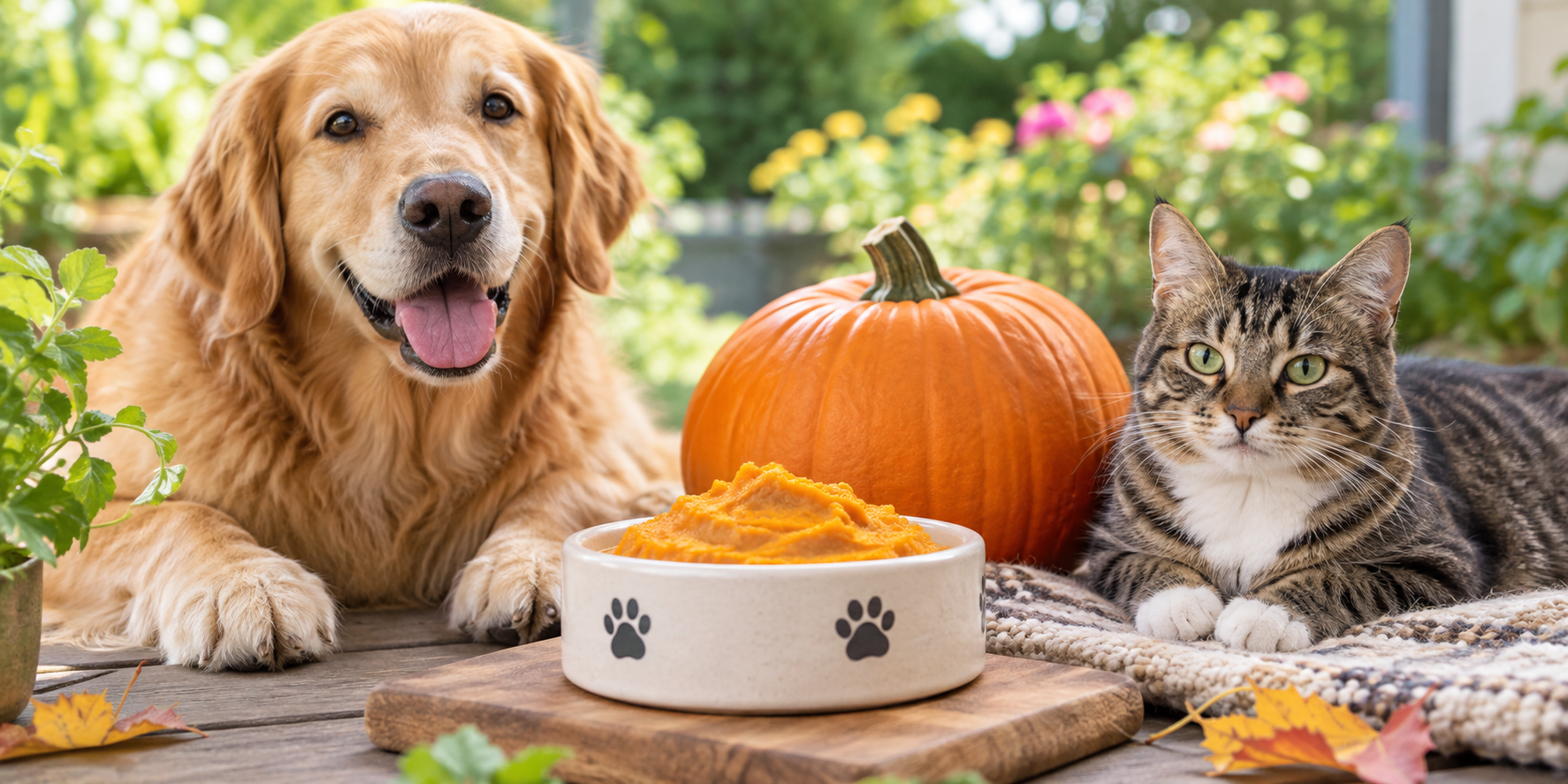
Plain pumpkin is a popular seasonal addition for dogs and cats because it provides dietary fiber, moisture, and naturally occurring nutrients in an easy-to-serve form. It can complement a balanced pet diet when offered appropriately, while probiotics, prebiotics, digestive enzymes, and other pet-specific wellness products give families additional options when pumpkin is not a favorite or does not fit the individual pet’s routine.
Pumpkin season is one of the coziest parts of fall. It appears in everything from front-porch decorations to kitchen recipes, and pet parents have discovered that plain pumpkin can have a place in the pet bowl too.
Unlike pumpkin-flavored human treats, 100% plain pumpkin puree offers something much simpler: moisture, dietary fiber, and naturally occurring nutrients in a texture that many dogs—and even some cats—enjoy. That is why searches for pumpkin for dogs, pumpkin for cats, pet gut health, digestive support for pets, and natural fiber for dogs and cats tend to become especially popular as autumn arrives.
Pumpkin does not need to be treated like a miracle ingredient to be useful. It can simply be a wholesome, food-based way to add variety and fiber to an appropriate diet.
For some pets, it becomes a favorite seasonal topper. Others may take one sniff and politely decline the entire bowl. Both responses are completely fine, because healthy digestive routines can be built in more than one way.
The most helpful approach is to enjoy pumpkin for what it can contribute while knowing there are also convenient pet-specific options when you want something more targeted or easier to use year-round.
Why Pumpkin Has Become a Pet-Parent Fall Favorite
Pumpkin has several characteristics that make it particularly appealing in pet wellness conversations. It is easy to find, simple to serve when purchased as plain puree, and naturally contains dietary fiber along with moisture and nutrients such as beta-carotene.
Its soft texture is another advantage. A spoonful can be mixed easily into many wet or dry foods without requiring complicated preparation, making it an approachable option for pet parents who want to add a little seasonal variety.
Fiber is probably the biggest reason pumpkin gets so much attention.
Dietary fiber contributes to the physical characteristics of stool and interacts with the gastrointestinal tract in ways that can support normal digestive function. Some types of fiber retain water, while others may be fermented by microorganisms living in the intestine.
That means pumpkin can fit comfortably into conversations about digestive regularity and stool quality, provided we keep the expectations realistic.
It should not be presented as a treatment for diarrhea, constipation, gastrointestinal disease, or another medical condition. But for a healthy pet whose complete diet allows for an occasional topper, plain pumpkin can be an enjoyable and convenient source of additional dietary fiber.
Sometimes simple really is appealing.
How Pumpkin Fiber Fits Into Digestive Wellness
The digestive system works best as part of a larger nutritional picture. Complete food, appropriate portions, fresh water, activity, and a consistent feeding schedule all matter more than any single topper.
Pumpkin can complement that foundation by adding fiber.
Different fibers behave differently in the gastrointestinal tract. Some contribute bulk, some help retain water, and some are more readily fermented by intestinal microorganisms. Pumpkin contains a mixture of fiber types, which helps explain why it has become popular among pet parents looking for a gentle food-based addition.
The key is moderation.
Adding a little pumpkin to a familiar diet is different from turning half the bowl orange overnight. Large dietary changes can alter stool consistency simply because the digestive system is being asked to process something new.
This is why gradual introduction makes sense. Start modestly and observe how your individual dog or cat responds rather than assuming that the amount appropriate for one pet will be right for another.
Your pet’s current food matters too. Many complete diets already contain carefully selected fiber sources, so pumpkin should be viewed as an optional addition rather than a nutritional requirement.
When it fits, however, it can be a colorful, seasonal way to make the food bowl a little more interesting.
Pumpkin and the Gut Microbiome
The gut microbiome is the community of microorganisms that normally lives within the gastrointestinal tract. It is an active area of nutrition research because diet can influence which microbial populations are present and what compounds they produce.
This is where fiber becomes especially interesting.
Certain fermentable fibers and prebiotic ingredients can serve as substrates for intestinal microorganisms. One study by Barry and colleagues compared different dietary fiber sources in adult cats, including cellulose, fructooligosaccharides, and pectin, and observed differences in fecal microbial populations and fermentation-related measurements.
The study did not test pumpkin, so it would not be accurate to say it proves that pumpkin produces those same effects. What it does support is the broader idea that the type of fiber in the diet can influence the intestinal environment, which helps explain why pet nutritionists pay attention to fiber sources rather than treating all fiber as identical.
Pumpkin can therefore be appreciated as one food-based fiber option within a much bigger digestive wellness picture.
And for pet parents who want a product containing a defined prebiotic ingredient or specific probiotic microorganisms, targeted pet supplements provide another route.
It does not have to be pumpkin or supplements. Depending on the individual pet, they can simply represent different tools.
Pumpkin Can Be Nutritious Without Becoming Complicated
One of pumpkin’s best qualities is that it does not need elaborate preparation.
Choose 100% plain pumpkin puree or plainly cooked pumpkin with no added sugar, butter, salt, or seasoning. Pumpkin pie filling is a different product and should stay with the human desserts because it may contain ingredients that were never intended for pets.
Fresh pumpkin can work too when prepared plainly and safely.
The pumpkin should complement rather than replace the pet’s complete diet. Dogs and cats still need nutrition formulated for their species and life stage, so the puree is best thought of as a topper or occasional addition.
This is also a good reminder that autumn pet wellness does not have to follow human food trends exactly. Your pet does not need a pumpkin-spice latte, pumpkin cookie, or heavily flavored seasonal treat to join the fun.
A small amount of plain pumpkin gives them the seasonal ingredient without all the extras.
And if they do not like it? No problem.
Wellness should never turn into a battle over the food bowl.
Pumpkin and Other Pet-Friendly Foods at a Glance
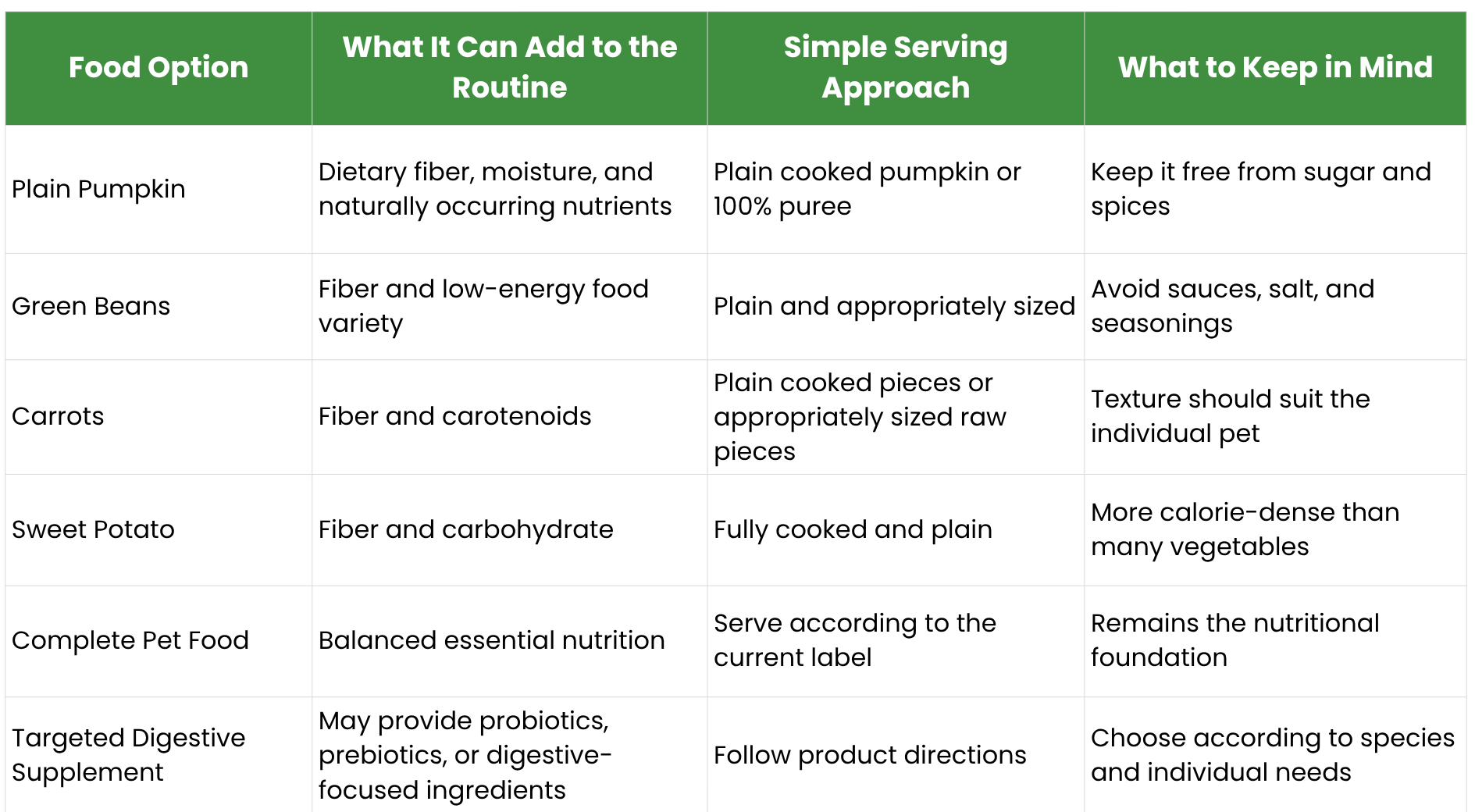
None of these choices has to “beat” the others. A healthy routine can include different foods and products for different reasons.
What If Your Pet Simply Does Not Like Pumpkin?
Cats have opinions.
Dogs have opinions too, although many of them express those opinions by eating first and asking questions later.
Still, not every pet enjoys pumpkin’s taste or texture. A cat may stop eating if the familiar consistency of their food suddenly changes, while some dogs simply prefer their regular dinner untouched.
There is no reason to force the issue.
Pumpkin is a useful option, not a requirement for good digestion.
Some pets also follow specialized diets where owners prefer not to add extra food ingredients casually. Others may simply do better with a more consistent routine based around their complete diet and a targeted supplement selected specifically for them.
This is where alternatives become valuable without taking anything away from pumpkin.
A feline probiotic product can provide defined microorganisms and prebiotic ingredients in a measured daily format. A dog-focused digestive chew may combine prebiotics with enzymes and other formulation ingredients, while another dog treat can focus on breath and oral-wellness support alongside the larger digestive routine.
Pumpkin gives you one approachable food-based option.
Targeted products give you additional choices.
Building a Year-Round Digestive Wellness Routine
Pumpkin may be most visible in autumn, but digestive wellness does not have a season.
Consistency begins with the basics. Feed a complete diet appropriate for your pet’s species and life stage, keep fresh water available, introduce major food changes gradually, and monitor appetite and stool so you become familiar with what is normal.
For dogs, prevent regular access to garbage, spoiled foods, and animal waste whenever possible. If stool eating becomes a recurring habit, prompt cleanup, supervision, and training deserve just as much attention as nutrition.
For cats, litter-box monitoring provides useful daily information. Changes in stool frequency, consistency, or straining are easier to notice when boxes are kept clean.
Oral care matters too. Persistent bad breath should not automatically be blamed on the digestive system, because teeth and gums can be an important source of odor.
The most sustainable wellness routines usually combine several small habits instead of expecting one ingredient to do everything.
Pumpkin fits beautifully into that philosophy.
It can be the seasonal fiber topper you enjoy using when appropriate, while other products handle more specific daily wellness priorities.
Pumpkin-Free Daily Support From Guardian’s Choice
If pumpkin is already a hit in your household, there is no need to replace it. But when your pet does not enjoy pumpkin—or you want a convenient year-round option with more specifically defined ingredients—Guardian’s Choice (GCP) offers several products that can complement the same digestive-wellness story.
GCP PURRBIOTICS Daily Probiotics for Cats is the feline-focused option shown. Its guaranteed analysis lists 5 billion CFU per 1-gram scoop, including Bacillus subtilis, Bacillus licheniformis, and Bacillus pumilus, plus 200 mg of fructooligosaccharides (FOS), a prebiotic ingredient.
This makes PURRBIOTICS a convenient choice for cat parents who want a measured probiotic-and-prebiotic routine without needing to change the texture of every meal with pumpkin.
For dogs, GCP NO POO Probiotic Chews provides a 120-soft-chew chicken-flavored format. The packaging highlights digestive enzymes, prebiotics, and capsicum, making it an option for households building a digestive wellness and stool-eating management routine alongside supervision, training, and prompt cleanup.
GCP Breath Boost Bites gives dog parents another route. The 70-treat chicken-flavored format features chlorophyll, parsley, and Champex®, allowing it to complement a broader breath and oral-wellness routine while regular dental care remains important.
These products are not replacements for pumpkin in the nutritional sense because they contain different ingredients and serve different purposes.
They are simply easy alternatives when pumpkin is not your pet’s thing—or complementary options when you want to build a more targeted routine around an already healthy diet.
Frequently Asked Questions
-
Many healthy dogs and cats can enjoy small amounts of plain cooked pumpkin or 100% pumpkin puree when it fits their overall diet. Keep it free of added sugar, spices, and other dessert ingredients, and introduce it gradually.
Enjoy the Pumpkin Season—Without Making It the Only Option
Pumpkin deserves its popularity.
It is colorful, easy to serve, naturally contains dietary fiber, and can be a fun way to bring a little seasonal variety into an appropriate dog or cat diet. For pets who enjoy it, a modest amount of plain pumpkin can fit comfortably into the bigger picture of digestive wellness.
The important thing is simply keeping the role realistic.
Pumpkin does not need to cure every tummy problem to be worthwhile. It can be exactly what it is: a wholesome food ingredient that offers fiber and gives pet parents another simple option.
And if your cat refuses to touch it or your dog’s routine works better without it, there is no reason to feel as though they are missing out.
Digestive wellness has plenty of pathways. Complete nutrition comes first, hydration matters every day, and targeted probiotics, prebiotics, digestive enzymes, training, oral care, and veterinary guidance can all have their place depending on the pet.
So enjoy the pumpkin while the leaves are changing.
Just remember that a healthy gut routine can keep going long after the pumpkin decorations come down.
Three GCP Favorites for Everyday Digestive Wellness
GCP PURRBIOTICS, GCP NO POO Probiotic Chews, and GCP Breath Boost Bites give pet parents three convenient ways to personalize everyday wellness when pumpkin is not preferred or when a more targeted product fits the routine. Each product serves a different purpose, so families can choose according to their cat or dog instead of expecting one seasonal ingredient to cover every need.
-
GCP PURRBIOTICS Daily Probiotics for Cats
-
5 billion CFU per 1-gram scoop
-
Includes Bacillus subtilis
-
Includes Bacillus licheniformis
-
Includes Bacillus pumilus
-
Provides 200 mg of FOS
-
120 servings shown on the product packaging
-
Convenient for cats that prefer their regular meals without pumpkin puree
-
GCP NO POO Probiotic Chews for Dogs
-
120 tasty soft chews
-
Chicken-flavored format
-
Packaging highlights digestive enzymes
-
Includes prebiotics
-
Features capsicum as a taste-deterrent ingredient
-
Can complement a broader stool-eating management routine that includes training, supervision, and prompt cleanup
-
-
GCP Breath Boost Bites for Dogs
-
70 tasty treats
-
Chicken-flavored format
-
Features chlorophyll
-
Includes parsley
-
Includes Champex®
-
Designed as a convenient addition to everyday breath and oral-wellness care
-
If plain pumpkin is already working beautifully in your pet’s bowl, keep enjoying it as an easy seasonal addition. When pumpkin is not a favorite—or when you want specifically formulated probiotic, digestive, or breath-focused support—these GCP options make it simple to choose a routine that works for the individual pet while keeping complete nutrition and appropriate veterinary care at the center.
Reference
Barry, K. A., Wojcicki, B. J., Middelbos, I. S., Vester, B. M., Swanson, K. S., & Fahey, G. C., Jr. (2010). Dietary cellulose, fructooligosaccharides, and pectin modify fecal protein catabolites and microbial populations in adult cats. Journal of Animal Science, 88(9), 2978–2987. https://doi.org/10.2527/jas.2009-2464
For all general inquiries, please contact us at info@guardianschoice.com
© Copyright. All rights reserved.