
Winning Over the Picky Eater: How to Support Your Cat’s Gut Naturally
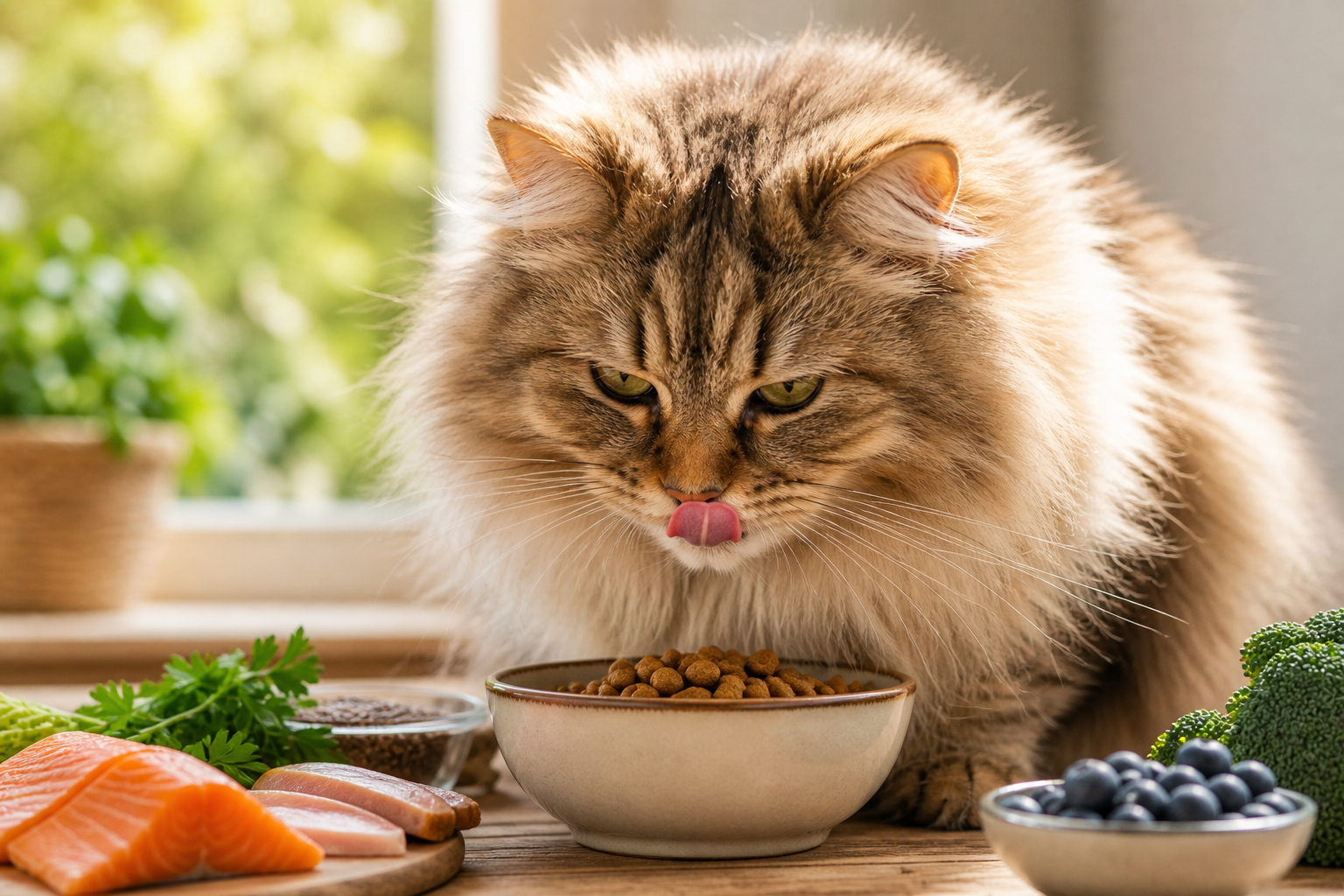
Supporting your cat’s gut health starts with consistency, not complexity. Probiotics, hydration, and palatable formats can help maintain digestive balance—even for picky eaters. A well-supported microbiome plays a role in digestion, immunity, and overall daily comfort. Small, consistent additions to your cat’s routine can make long-term care more manageable.
Why Gut Health Matters for Every Cat
When it comes to feline wellness, digestion often sits at the center of everything. Whether you're noticing occasional bloating, inconsistent stools, or even subtle changes in energy levels, many of these signs can be traced back to the gut. The digestive system doesn’t just process food—it plays a role in how nutrients are absorbed and how the body maintains internal balance.
The microbiome, a community of beneficial bacteria in the gut, is a key part of this system. When this environment is balanced, digestion tends to feel more predictable and comfortable. When it shifts, even slightly, you might notice small but meaningful changes in your cat’s daily behavior or routine.
What’s important to understand is that gut health isn’t static. It responds to diet, stress, environment, and even routine changes. Research published in Animals highlights how internal systems in pets adapt to environmental and behavioral shifts, reinforcing the idea that maintaining balance is an ongoing process rather than a one-time fix.
This is why many pet owners are moving toward a more consistent, supportive approach to digestive health—focusing on daily habits rather than reactive solutions.
The Challenge of Picky Eaters and Consistency
If you’ve ever tried to introduce something new into your cat’s food, you’re probably familiar with the look—the hesitation, the sniff, and sometimes the outright refusal. Cats are naturally selective, and this can make maintaining a consistent routine more challenging than expected.
Consistency, however, is one of the most important factors in supporting gut health. Probiotics and other supportive additions work best when used regularly, not occasionally. When a supplement is rejected, it interrupts that consistency, making it harder to maintain balance over time.
This is where palatability becomes more than just a convenience—it becomes a key part of the routine. A supplement that blends easily into food and aligns with your cat’s taste preferences is more likely to be used consistently. And in the context of gut health, consistency often matters more than intensity.
Rather than forcing change, a more effective approach is to work with your cat’s natural preferences. This makes the routine feel seamless rather than disruptive.
Understanding Probiotics and CFU Strength
Probiotics are often described as “good bacteria,” but their role is more nuanced than that. They contribute to the overall balance of the microbiome, supporting how the digestive system functions day to day.
One of the most commonly discussed aspects of probiotics is CFU, or colony-forming units. This refers to the number of viable bacteria present in a serving. While higher CFU counts are often associated with stronger formulations, what matters most is how well these bacteria survive and reach the gut.
Cats have relatively short and acidic digestive tracts, which means that not all probiotics make it through effectively. This is why formulation and consistency are often emphasized alongside CFU count.
Rather than focusing solely on numbers, it’s more helpful to consider how probiotics fit into a daily routine. When used consistently, they contribute to maintaining a balanced environment rather than creating sudden changes.
Why Flavor Plays a Bigger Role Than You Think
It’s easy to think of flavor as a secondary feature, but in feline care, it can be the deciding factor between success and inconsistency. A highly effective supplement that your cat refuses won’t contribute much to their routine.
Flavor influences behavior. When a supplement is perceived as part of the meal rather than an addition, it becomes easier to integrate into daily feeding. This is particularly important for long-term use, where repetition and acceptance are key.
Natural flavor profiles, such as chicken liver, are often used because they align with what cats already enjoy. This reduces resistance and helps maintain a smooth routine. Over time, this consistency supports the broader goal of maintaining digestive balance.
Comparing Probiotic Options for Cats
Understanding how different probiotic options compare can help clarify what to look for when building a routine.
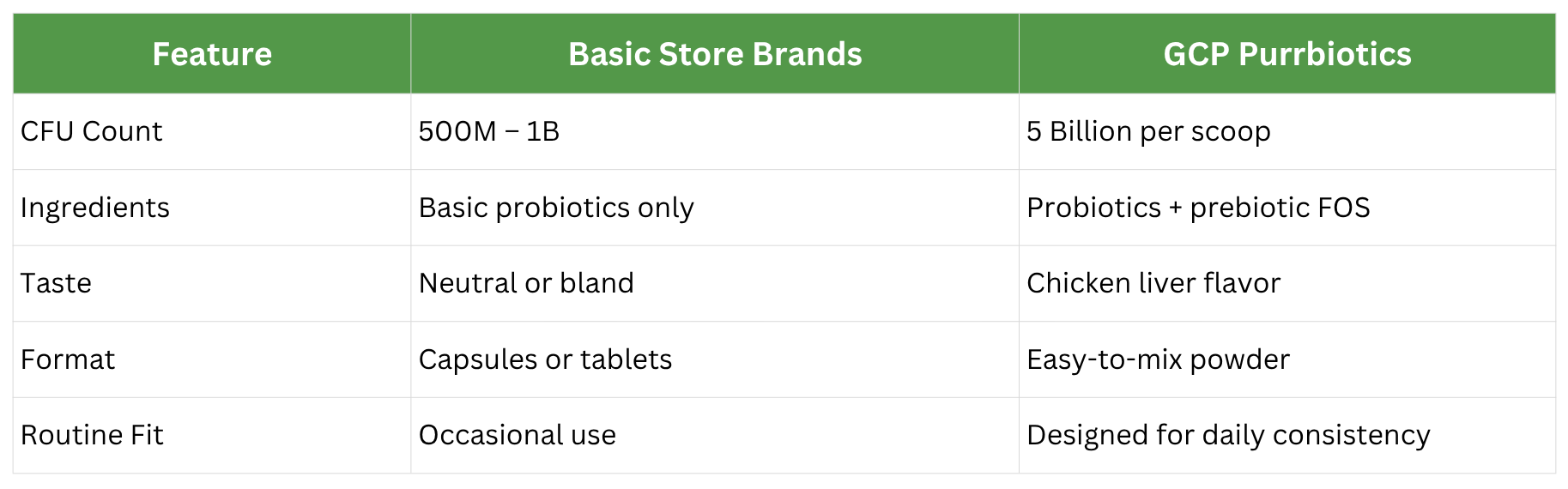
This comparison highlights how formulation, taste, and usability all contribute to long-term success—not just the ingredient list alone.
Building a Simple Daily Gut Health Routine
Supporting your cat’s digestion doesn’t require complicated systems. In many cases, the most effective routines are the simplest ones.
Start with consistent feeding times. This helps regulate your cat’s internal rhythm and supports digestive predictability. Pair this with hydration, ensuring fresh water is always available.
Adding a probiotic can be part of this routine, especially when it integrates easily into meals. The key is to keep the process simple and repeatable. A routine that feels effortless is more likely to be maintained over time.
Observation also plays a role. Paying attention to small changes—like stool consistency, appetite, or energy—can help you understand how your cat is responding. This allows you to adjust gradually rather than react suddenly.
A Smarter Way to Support Your Cat’s Gut Daily
As routines become more consistent, many pet owners look for ways to simplify their approach while still supporting their cat’s needs. This is where a product like GCP Purrbiotics fits naturally into the picture.
With 5 billion CFU per scoop and a blend of probiotic strains alongside prebiotic FOS, it’s designed to complement the digestive environment. The chicken liver flavor helps align with your cat’s natural preferences, making it easier to maintain daily use without resistance.
Rather than replacing other aspects of care, it works alongside them—supporting a routine that prioritizes consistency and balance. For pet owners navigating picky eating habits, this kind of formulation can make the difference between occasional use and a sustainable routine.
FAQs About Dog Coat and Skin Health
-
Probiotics are often easiest to give in powder form that can be mixed into food. Choosing a flavor your cat enjoys can make a significant difference in acceptance and consistency.
Consistency Is the Real Game-Changer
When it comes to supporting your cat’s digestion, the most effective approach is often the simplest one. Consistency, routine, and palatability all play a role in maintaining balance over time.
Rather than searching for quick fixes, focusing on small, repeatable habits creates a foundation for long-term wellness. By supporting the microbiome daily, pet owners can take a more proactive approach to their cat’s overall care.
GCP Purrbiotics
Supporting your cat’s gut health starts with consistency—and that’s exactly what this formula is designed for. By combining targeted probiotic strains with a palatable, easy-to-use format, it fits naturally into your cat’s daily routine, making ongoing digestive support feel simple and sustainable.
-
5 Billion CFU per scoop to complement daily gut balance
-
Includes Bacillus subtilis, Bacillus licheniformis, and Bacillus pumilus
-
Contains prebiotic FOS to support a balanced microbiome environment
-
Chicken liver flavor designed for easy mixing and better acceptance
-
Fine powder format that blends seamlessly with wet or dry food
-
Crafted for consistent, everyday use as part of your cat’s routine
A simple, consistent way to support your cat’s gut health—without adding complexity to your routine.
References
Rossi, M., Bianchi, L., Conti, F., & De Santis, R. (2024). Seasonal variations in grooming behavior and dermatological responses in domestic cats. Animals, 14(5), 1234. https://pmc.ncbi.nlm.nih.gov/articles/PMC11898201/
For all general inquiries, please contact us at info@guardianschoice.com
© Copyright. All rights reserved.