5 Preventive Habits Every Pet Parent Should Know
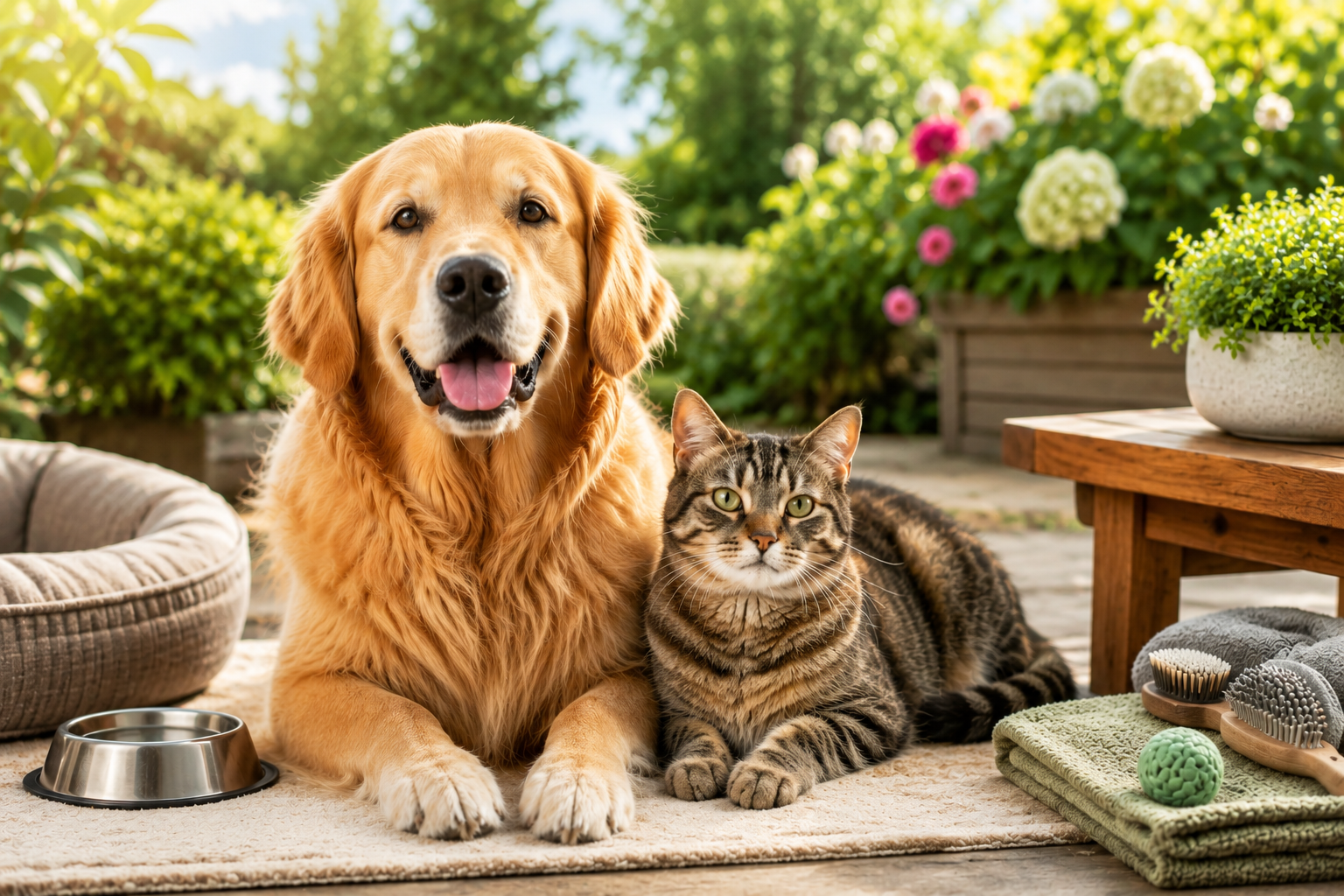
Preventive pet care is less about waiting for a problem and more about building simple habits that make everyday wellness easier to monitor. Regular veterinary visits, complete nutrition, appropriate activity, dental care, and year-round flea and tick awareness can give pet parents a stronger foundation for caring for dogs and cats through every life stage.
Most pet parents would do almost anything to keep their dogs and cats comfortable, active, and enjoying life. Yet some of the most meaningful parts of pet care are not dramatic at all. They are the ordinary things repeated over time: keeping the wellness appointment, measuring dinner, taking the evening walk, brushing the teeth, checking the coat, and noticing when something looks a little different from usual.
That is what preventive pet care for dogs and cats is really about. Rather than assuming every concern can be prevented, the goal is to create routines that support everyday well-being and make changes easier to notice. A good preventive wellness plan can also help you have more productive conversations with your veterinarian because you already know what your pet normally eats, weighs, does, and looks like.
Preventive dog care, cat wellness routines, balanced pet nutrition, dental care, daily exercise, and flea and tick awareness may sound like separate topics, but they work best when they are treated as pieces of the same routine. The easier those habits are to repeat, the less overwhelming everyday pet wellness tends to feel.
Why Preventive Pet Care Is Really About Everyday Habits
The word “preventive” can sometimes sound as though there is a perfect routine that guarantees a pet will never become sick. Unfortunately, no wellness plan can promise that. Genetics, age, environment, accidents, infectious disease, chronic conditions, and many other factors can influence health even when a family provides excellent care.
What preventive care can do is give you more opportunities to notice change and support normal daily needs.
A veterinarian who sees your pet regularly can monitor weight and physical changes over time. Consistent feeding makes appetite changes easier to spot. Regular grooming helps you become familiar with normal skin and coat condition, while routine activity gives you a better sense of what normal mobility and energy look like.
The same principle applies to flea and tick awareness. You do not need to assume pests are always present, but checking your pet after outdoor activity and maintaining an appropriate parasite plan means you are less dependent on noticing a problem only after scratching becomes severe.
Think of prevention as preparedness rather than perfection. You are creating a familiar baseline so that when something changes, you are more likely to recognize it.
1. Keep Veterinary Wellness Visits on the Calendar
Routine veterinary care is one of the strongest foundations of a preventive pet wellness plan because it gives a trained professional an opportunity to evaluate your dog or cat before you necessarily notice a concern at home.
During a wellness examination, your veterinarian may assess body condition, weight, heart and lung sounds, skin and coat, teeth and gums, eyes, ears, mobility, and other aspects of physical health. Vaccination schedules, parasite prevention, nutrition, dental care, and age-related screening can also be discussed according to your individual pet.
How frequently a healthy pet should be seen depends on age, medical history, medications, lifestyle, and veterinary recommendations. An annual exam is common for many healthy adult pets, while puppies, kittens, seniors, and animals managing health conditions may need more frequent visits.
The key is not following a universal calendar simply because it appears online. Ask your veterinarian what interval makes sense for your own pet and keep that schedule consistent.
It also helps to bring observations from home. Changes in water consumption, appetite, litter box habits, stool, exercise tolerance, sleep, scratching, or behavior can provide useful context even when your pet appears perfectly calm in the examination room.
2. Build the Routine Around Complete Nutrition and Hydration
Nutrition is one area where more does not automatically mean better. The most important foundation is a complete and balanced diet appropriate for the pet’s species and life stage, rather than collecting as many added vitamins or functional ingredients as possible.
Puppies and kittens have different nutritional requirements from adults, while seniors or animals with diagnosed conditions may need individualized dietary recommendations. Portion size matters too, since even a nutritious food can contribute to unwanted weight gain when feeding consistently exceeds energy needs.
Measure meals instead of relying entirely on visual estimates, particularly if more than one family member feeds the pet. Treats, table foods, dental chews, and food-based enrichment should also count toward the daily intake.
Fresh water should remain readily accessible. Some cats prefer several water stations or flowing fountains, while dogs may drink differently depending on exercise, weather, food type, and individual preference.
Watch for changes rather than focusing only on a specific volume. A pet suddenly drinking substantially more or less than usual may deserve veterinary attention, especially when the change appears alongside altered urination, appetite, energy, or weight.
Supplements can fit into this picture when there is a clear reason for using them, but the primary diet should come first. Before introducing several products, review what your pet already receives so you are not unnecessarily duplicating vitamins, minerals, fatty acids, or other nutrients.
3. Make Movement and Mental Enrichment Part of Every Day
Exercise supports more than physical fitness. Appropriate movement gives dogs and cats opportunities to explore, interact, maintain muscle, and engage with the world around them.
For dogs, that might include walks, sniffing opportunities, training games, fetch, swimming, or other activities suited to their age and physical ability. A high-energy young adult may need a very different routine from a senior dog who enjoys several short, comfortable outings.
Cats deserve daily activity too, particularly when they live indoors. Wand toys, food puzzles, climbing areas, scratching surfaces, tunnels, and short play sessions can provide opportunities for movement and normal feline behavior without requiring a large home.
Mental stimulation is equally useful. A slow sniffing walk can sometimes be more engaging than simply covering distance, while a food puzzle or five-minute training session can add variety to a quiet afternoon.
The important thing is matching the activity to the individual animal. Exercise should not leave a dog limping or exhausted, and a cat should not be forced into interactions they clearly avoid.
Sudden changes deserve attention as well. If your dog stops wanting to walk, your cat no longer jumps onto favorite furniture, or either pet becomes unusually reluctant to move, do not automatically assume the change is simply part of aging.
4. Give Dental Care a Regular Place in the Routine
Dental wellness is easy to overlook because many dogs and cats continue eating even when something inside the mouth is uncomfortable. That is why regular home observation and veterinary dental assessment belong in preventive care.
When your pet allows it, look at the mouth occasionally and notice what is normal. Persistent bad breath, visible tartar, bleeding gums, loose teeth, difficulty chewing, dropping food, pawing at the mouth, or suddenly avoiding harder foods should not simply be covered up with breath-freshening products.
Tooth brushing with a pet-appropriate toothpaste is one common home-care option when your animal tolerates it. Start gradually rather than trying to turn the first session into a full dental cleaning; allowing your pet to become comfortable with handling around the lips and mouth can make the habit much easier.
Dental chews and other oral-care products may complement brushing depending on the product and pet, but they do not replace examination or professional dental treatment when disease is present.
Routine matters here just as it does everywhere else. A quick dental habit repeated regularly is generally more realistic than remembering oral care only when the breath becomes difficult to ignore.
5. Keep Flea and Tick Awareness Going Throughout the Year
It is tempting to think flea and tick care belongs entirely to spring and summer. In reality, parasite activity varies according to climate, region, species, indoor conditions, wildlife, and individual lifestyle.
Dogs spending time in parks, grass, brush, or wooded environments may have different exposure than indoor cats, yet an indoor animal is not necessarily completely separated from the outside environment. Other pets, people, visitors, travel, porches, and shared spaces can all influence household exposure.
Fleas are especially important to think about beyond the animal itself. A review by Rust (2017) describes the biology of the cat flea—one of the flea species commonly associated with both cats and dogs—and explains how eggs and immature life stages can occur within the surrounding environment.
That study does not show that a nutritional or botanical supplement prevents flea infestation, nor does it mean every home has an ongoing flea problem. It simply supports a practical point: flea awareness should include the animal and the environment rather than depending solely on whether an adult flea happens to be visible.
Check dogs after higher-exposure outdoor activities, groom cats regularly, wash pet bedding, and pay attention to unexplained scratching or coat changes. If you actually find fleas, ticks, or flea dirt, use appropriate veterinary guidance rather than relying on a wellness supplement alone.
Five Preventive Pet Care Habits at a Glance
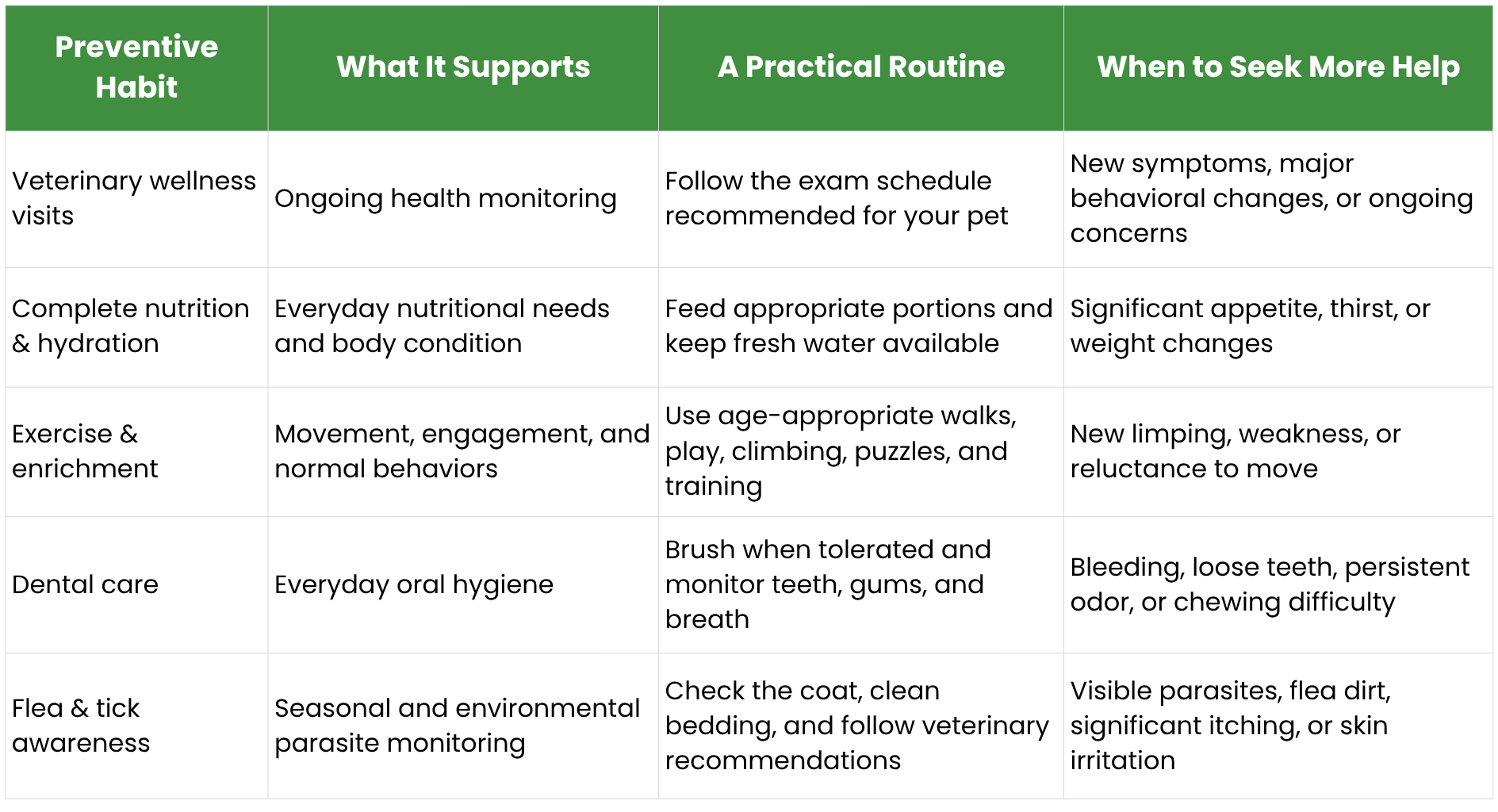
These habits do not need to happen in separate “wellness sessions.” The easiest approach is to connect them with things you already do.
How to Make Preventive Care Easier to Maintain
Good routines tend to survive busy weeks because they do not require much extra thought.
Your evening walk can double as a chance to observe your dog’s movement. Brushing can become a coat and skin check. Feeding time can remind you to refresh the water bowl, while a quiet weekend morning can become the regular time for a short dental-care session.
For cats, scooping the litter box also provides useful daily information. You may notice changes in stool or urine before you notice anything unusual about behavior.
Keep veterinary appointments scheduled in advance and set reminders rather than relying on memory. If your veterinarian has recommended parasite prevention, place that schedule somewhere everyone involved in pet care can see.
The same idea applies to any daily wellness product you intentionally choose. Attach it to an established habit rather than creating a completely separate routine.
Preventive care becomes much easier when it feels like part of normal life rather than another list of tasks.
Adding GCP Flea & Tick Natural Defense to a Broader Wellness Routine
Once veterinary care, nutrition, exercise, dental hygiene, environmental care, and appropriate parasite management are established, Guardian’s Choice (GCP) Flea & Tick Natural Defense can be considered as a convenient botanical and nutritional addition for pet parents who prefer a soft-chew wellness format.
GCP offers separate dog and cat formulas, so households with both species can keep their routines species-appropriate rather than treating one product as interchangeable. Product packaging shows 100-soft-chew formats for both dogs and cats; the dog packaging highlights apple cider vinegar and coconut oil, while the cat packaging highlights apple cider vinegar, coconut oil, and thiamine.
The phrase “No Harsh Chemicals” also appears on the cat packaging, but that label language should not be interpreted as meaning that a natural formulation is automatically safer, more effective, or appropriate for every pet. Follow the current label and discuss your broader parasite plan with your veterinarian.
Most importantly, GCP Flea & Tick Natural Defense should not be described as guaranteed flea or tick prevention, an internal shield, or treatment for an active infestation. Its role is better framed as a simple daily wellness addition that can sit alongside grooming, coat checks, environmental cleaning, and veterinarian-guided parasite care.
Frequently Asked Questions
-
Many healthy adult pets are examined at least annually, while puppies, kittens, seniors, or animals with ongoing medical needs may require more frequent visits. Your veterinarian can recommend the schedule that best fits your pet’s age, lifestyle, and health history.
Small Habits Can Make Pet Care Feel More Manageable
Preventive pet care does not require doing everything perfectly. It comes from knowing your dog or cat well enough to recognize what is normal, keeping the important basics consistent, and responding thoughtfully when something changes.
Regular veterinary visits create opportunities for professional monitoring. Complete nutrition and fresh water support daily needs, while exercise and enrichment give pets opportunities to move, explore, and engage. Dental habits help you pay closer attention to a part of pet wellness that is easy to overlook, and flea and tick awareness keeps seasonal and environmental exposure on your radar throughout the year.
None of these habits guarantees that a pet will never become ill or encounter a health concern. What they do provide is a clearer, more organized approach to everyday care.
That distinction matters. Responsible preventive care is not about creating fear around what might happen; it is about helping you feel prepared for the routine decisions that come with caring for another living being.
The most useful wellness plan is ultimately the one you can maintain. Start with the fundamentals, add products only when they have a clear role, and keep veterinary guidance close whenever a concern moves beyond normal daily care.
Keep Seasonal Care Simple With GCP Flea & Tick Natural Defense
GCP Flea & Tick Natural Defense for Dogs and Cats offers species-specific soft-chew options for pet parents who want to add a botanical and nutritional product to an already established wellness routine. The convenient formats can be paired with regular meals while grooming, environmental cleaning, coat checks, and veterinarian-guided parasite management continue to provide the broader foundation.
-
Separate formulas for dogs and cats
-
100 soft chews per product container shown
-
Convenient format for an established daily routine
-
Dog packaging highlights apple cider vinegar and coconut oil
-
Cat packaging highlights apple cider vinegar, coconut oil, and thiamine
-
Cat packaging includes the “No Harsh Chemicals” label message
-
Easy to pair with regular grooming and coat-check habits
-
Fits naturally within a broader year-round flea and tick awareness routine
-
Helpful for multi-pet households that prefer species-specific products
-
Designed as a complementary wellness product rather than a replacement for veterinary parasite prevention or treatment
If you are looking for an easy way to add a botanical and nutritional step to your pet’s existing preventive-care routine, GCP Flea & Tick Natural Defense offers convenient dog- and cat-specific options to consider. Choose the formula intended for your pet, follow the current label carefully, and keep the product in its appropriate role alongside the everyday habits that matter most.
Reference
Rust, M. K. (2017). The biology and ecology of cat fleas and advancements in their pest management: A review. Insects, 8(4), 118. https://doi.org/10.3390/insects8040118
For all general inquiries, please contact us at info@guardianschoice.com
© Copyright. All rights reserved.