
The Suitcase Trigger: Why Pet Travel Anxiety Starts 14 Days Before Takeoff
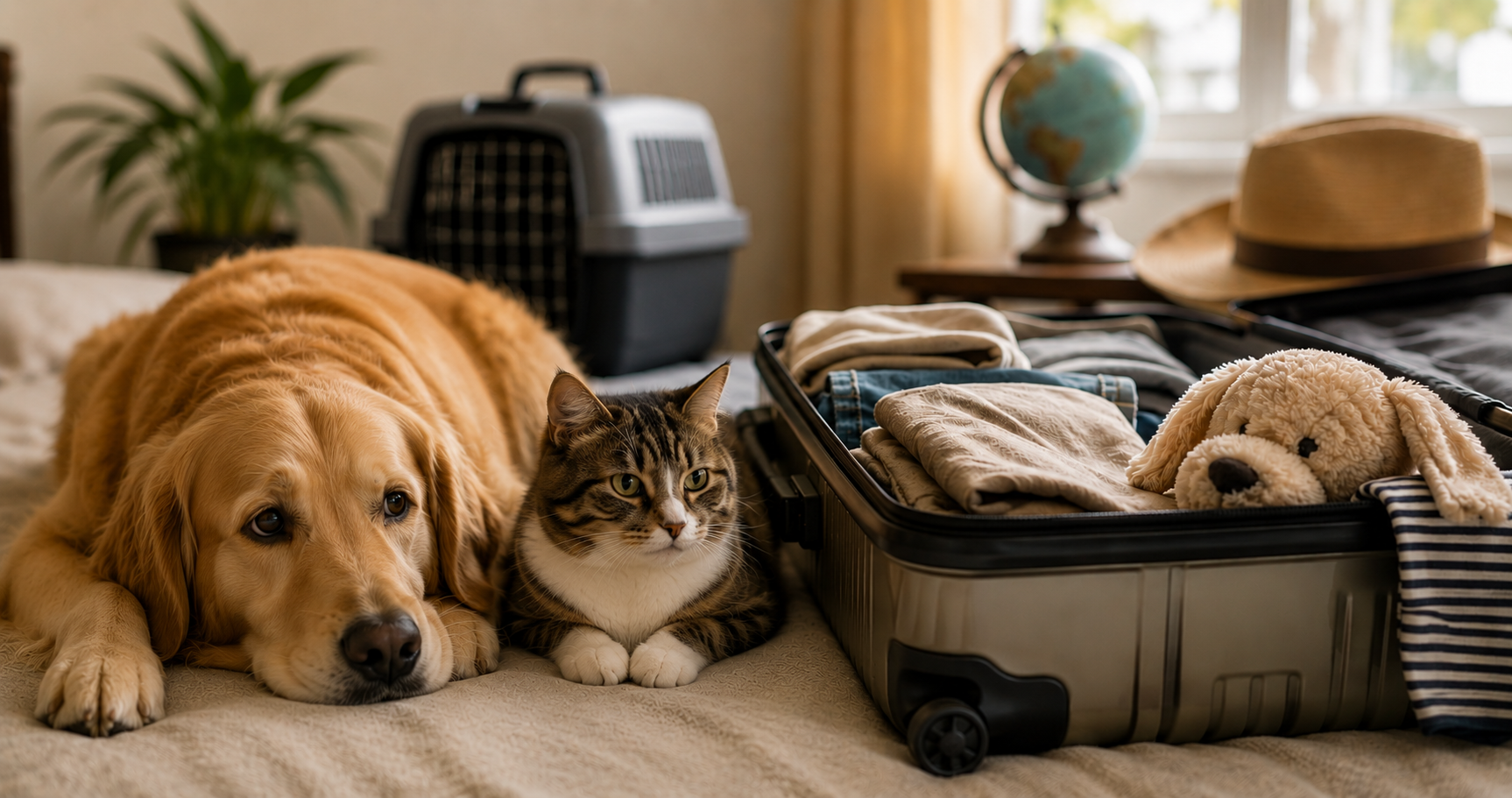
Travel can be exciting for pet parents, but for dogs and cats, a trip often means new smells, unfamiliar sounds, changed feeding times, different water, car rides, boarding spaces, and more exposure to new environments. A thoughtful pre-trip routine can help support immune wellness, gut balance, hydration, skin and coat comfort, and pest awareness before travel begins. Starting at least two weeks before departure gives your pet time to settle into a steady routine, while GCP wellness favorites can help support daily care for dogs and cats on the road, at boarding, or during family getaways.
Why Travel Can Feel Bigger to Pets Than It Does to Us
For people, travel usually comes with planning, excitement, packing lists, and a calendar full of things to look forward to. For pets, travel can feel much less predictable. A suitcase on the floor may signal that something is changing. A car ride may mean motion, noise, and unfamiliar stops. A boarding facility may be filled with new animals, new people, and new smells. Even a happy family vacation can still disrupt the routine your pet depends on every day.
Dogs and cats feel safest when life has familiar patterns. They learn when breakfast happens, where their water bowl sits, what time the walk usually starts, and which rooms feel quiet. Travel changes many of those details at once. Some pets adjust easily, while others become more sensitive, clingy, restless, or quiet. A dog may pant during the ride, eat less at a hotel, or have softer stool after a long day. A cat may hide in the carrier, skip a meal, or become less predictable with the litter box.
That is why a pet travel checklist should include more than a carrier, leash, food bag, and vaccination records. It should also include immune support for pets, pet gut health support, hydration planning, natural flea and tick awareness, skin and coat care, and a plan for keeping routines as familiar as possible. These small steps can help your companion feel more supported before the trip begins.
A study on dogs found that exposure to different types of stressful stimuli was associated with changes in behavior, saliva cortisol, and heart rate. This does not mean every pet will respond the same way to travel, and it does not mean supplements can prevent stress. It does support what many pet parents already notice: unfamiliar experiences can affect the body, so preparing early and keeping routines steady can make travel feel more manageable.
Start Two Weeks Before Departure
The best time to support your pet’s travel routine is not the night before you leave. It is about two weeks before departure. This gives you time to make gentle adjustments without overwhelming your dog or cat. Sudden changes right before travel can create more stress, especially for pets with sensitive stomachs, picky eating habits, or strong attachment to routine.
Two weeks out, begin by keeping meals, walks, litter box access, and sleep schedules as consistent as possible. If your pet will be boarding, confirm the facility’s requirements early and ask what food, supplements, bedding, and comfort items are allowed. If your pet is traveling with you, make sure the carrier, crate, harness, or travel bed is familiar before the day of departure. A carrier that only appears during stressful events may already feel like a warning sign to your pet.
Hydration should also be planned ahead. Pets may be sensitive to changes in water source, especially when traveling to a new area. Bringing water from home, using filtered water, or transitioning gradually can help avoid unnecessary tummy changes. This is especially important for cats, who may not drink much when they feel uncertain, and for dogs who become too distracted to drink during long car rides.
This two-week period is also a good time to think about daily wellness support. The goal is not to overload your pet with new products right before a trip. The goal is to build a calm, steady routine that supports digestion, immune wellness, skin and coat comfort, and pest awareness in a way your pet can get used to before travel day.
The Travel Stress Response in Dogs and Cats
Travel stress can affect pets in different ways. For some dogs, it looks like excitement: pacing, whining, panting, barking, or jumping from window to window. For others, it looks like worry: hiding, shaking, drooling, refusing food, or needing extra reassurance. Cats may become very still, vocalize in the carrier, hide after arrival, avoid food, or act more sensitive around the litter box.
These behaviors are not “bad behavior.” They are often signs that the pet is trying to understand a new situation. When the body feels stressed, digestion may shift, appetite may change, and normal routines may become less steady. That is why gut health and immune wellness are such important parts of pre-trip care. The digestive system is closely connected to everyday comfort, and the immune system works best when the body is not being pushed from every direction at once.
Boarding and daycare environments add another layer. Pets may be around more animals than usual, and they may encounter new scents, surfaces, routines, and sounds. Airports, hotels, rest stops, and road trips can do the same. This does not mean travel should be avoided, but it does mean pet parents should prepare with care.
The safest approach is simple: keep food familiar, avoid last-minute diet changes, maintain hydration, give your pet quiet recovery time, and use daily support products as directed. If your pet has a medical condition, is elderly, very young, pregnant, medicated, or has a history of travel distress, speak with your veterinarian before the trip.
Pre-Travel Challenges and Support Strategies
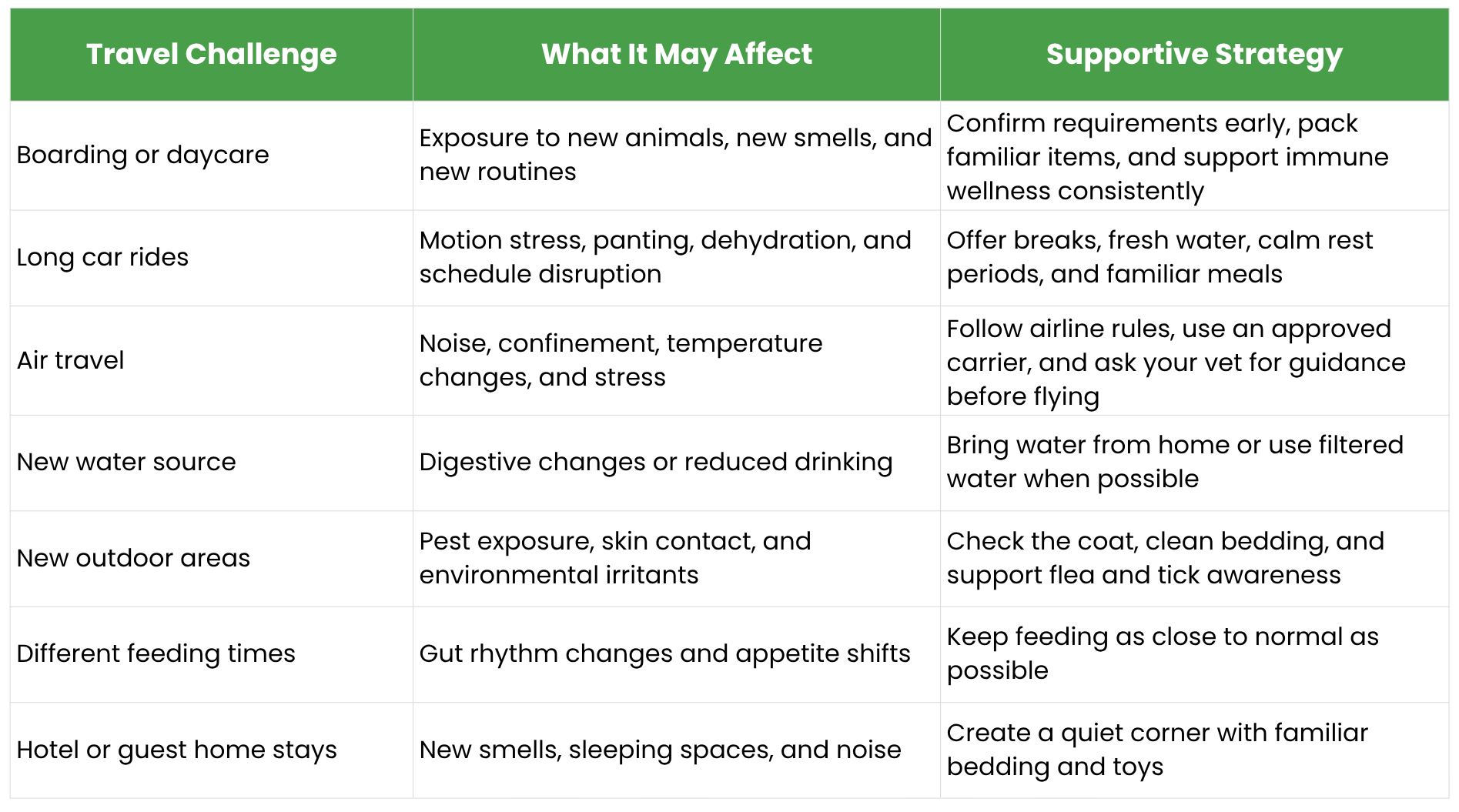
A Simple 14-Day Pet Travel Wellness Checklist
A strong pre-trip routine does not have to be complicated. Start with your pet’s normal schedule and protect it as much as possible. Two weeks before departure, keep feeding times steady, maintain regular walks or play sessions, and avoid sudden changes in food or treats. If your pet needs a new travel crate, carrier, harness, or seat belt setup, introduce it gradually with calm praise and short practice sessions.
Ten days before departure, begin organizing the travel essentials. Pack enough food for the entire trip, plus extra in case of delays. Bring familiar bowls, waste bags, litter if needed, grooming tools, medications, supplements, and veterinary records. If your pet is staying at boarding, ask whether supplements can be given and how they should be labeled.
One week before travel, pay closer attention to stool quality, appetite, coat condition, energy, and behavior. This gives you a baseline before the trip. If something already seems off, it is better to call your veterinarian before leaving rather than waiting until you are away from home.
Three days before departure, simplify the routine. Avoid new foods, rich treats, stressful grooming appointments, or unnecessary changes. Make sure your pet is drinking well, eating normally, and using the litter box or bathroom as expected. On travel day, keep things calm, feed appropriately based on your vet’s advice and travel schedule, and give your pet time to settle once you arrive.
Supporting Your Pet’s Travel Routine With GCP Wellness Favorites
Once the travel plan is in place, GCP wellness products can help support the daily routine before and during your trip. For dogs, GCP VitaPup Multivitamin Chews can help support baseline wellness, including brain, coat, heart, digestion, and immune support. This makes it a helpful option for active dogs who are heading into a busy travel season.
For pets who may encounter new outdoor areas, rest stops, yards, trails, or open-window spaces, GCP Flea & Tick Natural Defense for Dogs and Cats can fit into a natural, no-harsh-chemical pest-awareness routine. It should not be positioned as a medical replacement for veterinarian-recommended flea and tick prevention, but it can be a thoughtful daily support step alongside grooming, coat checks, and clean bedding.
For cats, GCP Purrbiotics supports digestive health, gut microbiome balance, immune wellness, and healthier skin and coat, which can be helpful when travel disrupts feeding, hydration, and litter box habits. GCP Cat L-Lysine supports normal immune wellness and can fit into a cat’s daily routine before boarding, travel, or busy household changes. For dogs focused on skin, coat, and joint comfort, GCP OMEGAPaws Krill Omega-3 can help support active travel days, while GCP Breath Boost Bites support fresh breath, odor control, and healthy gut function during close-contact adventures.
The best routine is the one that fits your pet’s species, needs, and travel plans. Use products as directed, keep routines steady, and ask your veterinarian when your pet has special health needs.
A Simple 14-Day Pet Travel Wellness Checklist
A good travel routine starts before the carrier comes out or the car gets packed. Pets feel more secure when their daily habits stay familiar, so the goal is to make small, steady preparations instead of rushing everything the night before. Use this checklist to support your dog or cat’s immune wellness, gut health, hydration, pest awareness, and comfort before travel day.
14 Days Before Travel: Start the Wellness Foundation
☐ Keep feeding times, walks, litter box access, and bedtime as normal as possible.
☐ Begin or continue daily wellness support based on your pet’s needs.
☐ For dogs, consider GCP VitaPup for daily baseline support, GCP OMEGAPaws for skin, coat, and joint support, or GCP Flea & Tick Natural Defense for outdoor pest awareness.
☐ For cats, consider GCP Purrbiotics for digestive and gut support, GCP Cat L-Lysine for immune wellness, or GCP Flea & Tick Natural Defense for cat-specific pest support.
☐ Check your pet’s current food, supplements, medications, and supplies so you have enough for the full trip.
☐ Confirm boarding, airline, hotel, or travel requirements early, especially vaccine records and supplement rules.
7 Days Before Travel: Protect the Routine
☐ Avoid sudden food changes, new treats, or unfamiliar toppers.
☐ Practice short crate, carrier, or car sessions if your pet is not used to traveling.
☐ Add extra water bowls at home to encourage steady hydration before the trip.
☐ Watch your pet’s normal stool, appetite, energy, coat, and behavior so you know their baseline.
☐ Wash travel blankets, beds, or soft carriers, but keep at least one familiar-smelling item for comfort.
☐ Check your dog or cat’s coat for fleas, ticks, dryness, irritation, or anything unusual before departure week.
3 Days Before Travel: Keep Things Calm
☐ Pack your pet’s food, supplements, bowls, leash, harness, carrier, waste bags, litter supplies, grooming tools, and records.
☐ Keep meals simple and familiar to avoid unnecessary digestive stress.
☐ Make sure your pet is eating, drinking, and using the bathroom normally.
☐ Avoid stressful grooming appointments, big schedule changes, or extra visitors if your pet is sensitive.
☐ Prepare labeled supplement instructions if your pet will be staying with a sitter or boarding facility.
☐ Give daily GCP products as directed so the routine stays steady going into travel day.
Travel Day: Support Comfort From Departure to Arrival
☐ Offer water before leaving and during safe travel breaks.
☐ Keep your pet’s favorite blanket, toy, or comfort item nearby.
☐ Stick as closely as possible to normal feeding and bathroom times.
☐ Avoid giving unfamiliar snacks from rest stops, airports, or family gatherings.
☐ Check your dog’s coat after outdoor stops, especially around the ears, belly, tail base, and paws.
☐ Give your pet quiet time after arrival before introducing them to a new space, new people, or other animals.
After Arrival: Help Your Pet Settle In
☐ Set up food, water, bedding, and litter box or potty access right away.
☐ Let your pet explore slowly instead of forcing interaction.
☐ Continue daily wellness support with the GCP products that match your pet’s needs.
☐ Monitor appetite, stool quality, hydration, skin, coat, breath, and energy for the first 24 to 48 hours.
☐ Contact your veterinarian if your pet has vomiting, diarrhea, appetite loss, extreme stress, coughing, lethargy, difficulty urinating, or any unusual symptoms.
This checklist helps turn travel prep into a calm routine instead of a last-minute scramble. When your pet’s food, hydration, supplements, and comfort items are planned ahead, the trip becomes easier on their body and less stressful for the whole family.
Frequently Asked Questions
-
A two-week preparation window is a good starting point for most pets. This gives you time to build routine consistency, introduce travel gear, organize essentials, and support daily wellness without making sudden changes.
A Better Trip Starts Before You Leave
A smooth trip with your pet begins long before you pack the car or check in at the boarding desk. Dogs and cats handle travel best when their daily routine feels steady, their food stays familiar, hydration is easy, and their bodies are supported through digestion, immune wellness, pest awareness, skin and coat care, and rest.
Starting your pre-trip checklist two weeks before departure gives you time to prepare calmly instead of rushing at the last minute. GCP wellness favorites can help support that routine for both dogs and cats, whether your companion is joining the adventure or staying somewhere safe while you travel.
GCP Travel Wellness Favorites
GCP offers daily wellness products that help pet parents prepare dogs and cats for travel season with more confidence. These products are not travel medications or medical treatments, but they can support the everyday systems that matter when pets face new routines, new spaces, and seasonal exposure.
Benefits of GCP travel wellness favorites:
-
GCP Flea & Tick Natural Defense for Dogs supports no-harsh-chemical pest awareness for outdoor travel routines
-
GCP Flea & Tick Natural Defense for Cats supports cat-specific pest awareness during boarding, open-window seasons, and multi-pet homes
-
GCP VitaPup Multivitamin Chews support puppy brain, coat, heart, digestion, and immune wellness
-
GCP OMEGAPaws Krill Omega-3 supports dog skin, coat, shedding, and everyday joint comfort
-
GCP Breath Boost Bites support dog fresh breath, odor control, and healthy gut function
-
GCP Purrbiotics supports cat digestion, gut balance, immune wellness, and healthier skin and coat
-
GCP Cat L-Lysine supports normal immune wellness for cats
-
Species-specific options help pet parents choose the right support for each companion
Travel can be easier when your pet’s daily care is already steady. Choose the GCP products that match your dog or cat’s needs, start early, use them as directed, and pair them with familiar meals, hydration, safe travel gear, and veterinary guidance when needed.
Citation: Beerda, B., Schilder, M. B. H., van Hooff, J. A. R. A. M., de Vries, H. W., & Mol, J. A. (1998). Behavioural, saliva cortisol and heart rate responses to different types of stimuli in dogs. Applied Animal Behaviour Science, 58(3–4), 365–381. https://doi.org/10.1016/S0168-1591(97)00145-7
For all general inquiries, please contact us at info@guardianschoice.com
© Copyright. All rights reserved.