The Hidden Dangers of Hairballs: What Every Cat Parent Should Know
Hairballs are common in cats, but frequent coughing, gagging, vomiting, appetite changes, constipation, or low energy should not be ignored. Cats swallow loose fur when they groom, and most of that fur passes through the digestive tract naturally. When too much fur builds up, it may lead to discomfort or signs that deserve closer attention. Regular brushing, fresh water, moisture-friendly meals, and daily digestive support from GCP Purrbiotics for Cats can help pet parents build a more complete wellness routine around gut balance, immune wellness, skin and coat health, and everyday feline care.
Why Cats Get Hairballs in the First Place
Cats are famous for keeping themselves clean. If you have ever watched your cat sit in a sunbeam and calmly groom for twenty minutes, you have seen one of their most natural daily habits. Grooming helps cats remove loose fur, dirt, and scent from their coat. It also helps them feel settled, especially after meals, naps, or active play.
The challenge is that a cat’s tongue is not smooth. It has tiny backward-facing hooks called papillae that help pull loose hair from the coat. That makes grooming very effective, but it also means much of that loose fur gets swallowed. In many cases, the swallowed fur moves through the digestive tract and leaves the body in the stool without much drama.
A hairball forms when swallowed fur collects instead of passing through smoothly. The classic hairball is not usually round like a ball. It often looks long, damp, and tube-shaped because it passes through the narrow esophagus when a cat brings it up. It can be unpleasant to find on the floor, but an occasional hairball may happen, especially in long-haired cats or during shedding seasons.
The bigger concern is frequency. If hairballs happen often, or if your cat keeps coughing, gagging, or retching without producing anything, it may be time to look more closely at their grooming, hydration, diet, and digestive routine. Hairballs should not become something you simply accept every few days. They can be a clue that your cat needs more support or that your veterinarian should check for another issue.
When Hairballs Become More Than a Messy Surprise
Many pet parents think of hairballs as a normal cat problem, but “normal” does not mean “ignore it.” A hairball once in a while may not be alarming, but repeated vomiting, frequent gagging, appetite changes, constipation, hiding, or low energy can point to something more serious. Cats are very good at hiding discomfort, so small changes in behavior matter.
If your cat tries to bring up a hairball but nothing comes out, watch closely. Occasional coughing or gagging may happen, but repeated attempts can be stressful for your cat and worrying for you. If your cat is also not eating, straining in the litter box, acting weak, or vomiting frequently, contact your veterinarian. Hairballs are not the only reason cats cough, gag, vomit, or seem uncomfortable, so professional guidance matters when signs become frequent or intense.
Long-haired cats may have more swallowed fur because they have more coat to manage. Cats who shed heavily, groom excessively, or do not get brushed often may also swallow more hair. Senior cats, cats with sensitive digestion, and cats going through routine changes may need closer observation too.
The goal is not to make scary claims. It is to help pet parents know the difference between an occasional hairball and a pattern that deserves attention. Hairball care is strongest when it includes both outside support, like brushing, and inside support, like hydration, balanced meals, and digestive wellness.
How Grooming, Hydration, and Digestion Work Together
Hairball support starts with grooming. Brushing removes loose fur before your cat can swallow it. This is especially important for long-haired breeds, thick-coated cats, and cats who shed more during seasonal changes. Even short-haired cats can benefit from brushing because it helps reduce loose fur and gives you a chance to notice changes in coat condition, skin comfort, or grooming habits.
Hydration is another important part of the routine. Water supports normal digestion and helps the body function properly. Some cats are not enthusiastic drinkers, so pet parents may need to make water more appealing. Clean bowls, water fountains, multiple water stations, and moisture-rich meals can all help support better hydration habits.
Digestive wellness matters too. A cat’s gastrointestinal tract is part of their everyday comfort, nutrient use, stool routine, and overall wellness. A review published in Frontiers in Microbiology explains that the gastrointestinal microbiome of cats and dogs is closely connected to pet health, and that nutrition can influence the composition and function of the microbiome. This study should not be used to claim that probiotics treat hairballs or prevent blockages, but it does support the broader idea that gut wellness and nutrition are important parts of daily feline care.
When you combine grooming, hydration, and digestive support, you create a more complete hairball routine. You are not relying on one step to do everything. You are supporting your cat from several practical angles.
Hairball Signs and Daily Support Guide
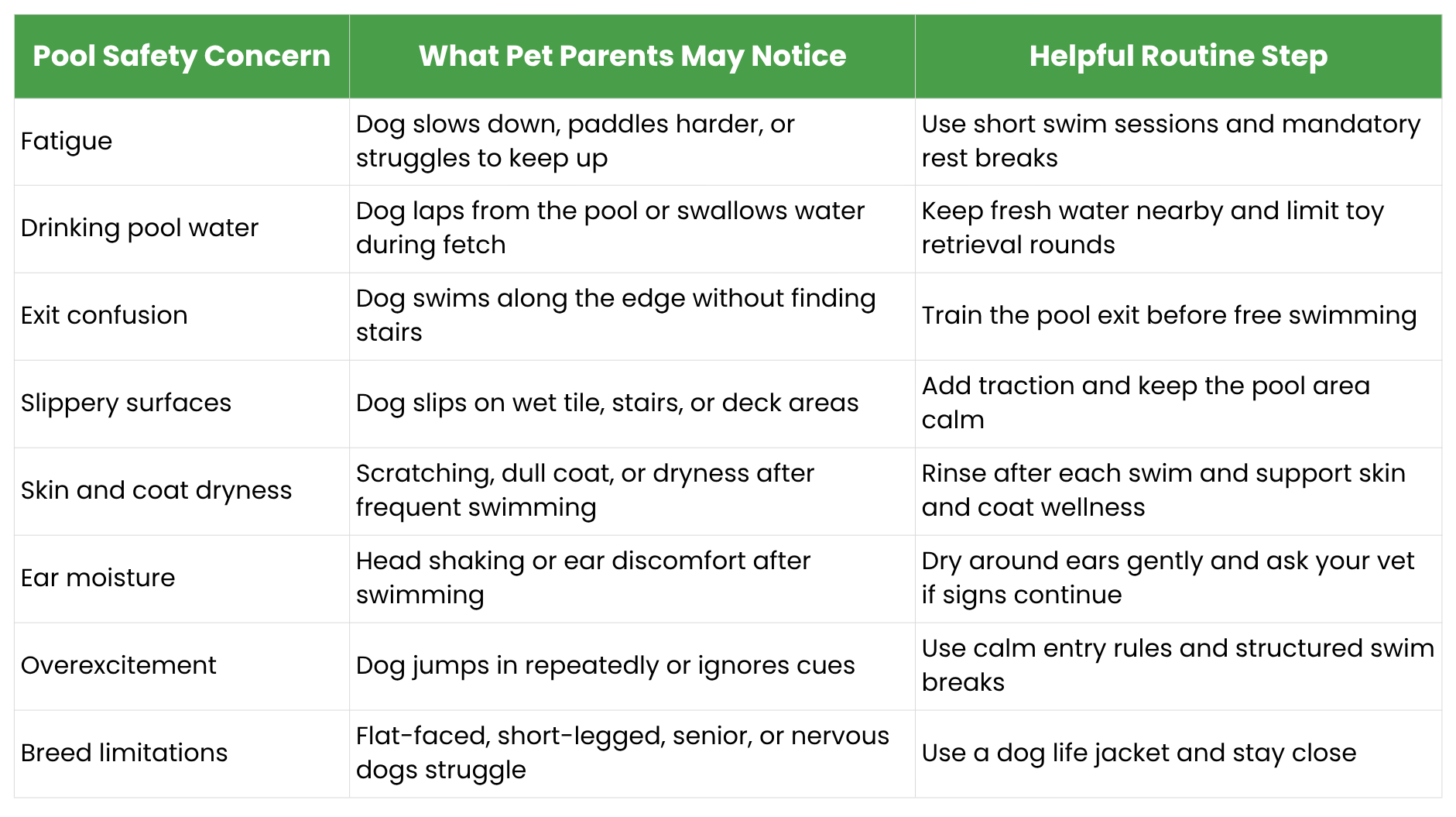
This guide helps pet parents see pool safety as a full routine, not one single rule. Dogs can enjoy water, but they need structure, recovery, and support to make pool time safer.
How to Build a Safer Swim Routine
Start before your dog ever gets in the pool. Walk them around the pool area on leash and show them where the stairs or ramp are. Use treats, praise, and calm encouragement to help them understand that the exit point matters. Practice guiding them out several times so they do not rely on panic or guessing when they are in the water.
Next, use the right gear. A dog life jacket is a smart choice for puppies, senior dogs, flat-faced breeds, short-legged breeds, nervous swimmers, or dogs who are still learning. Even strong swimmers may benefit from a life jacket during long pool days or family gatherings where excitement levels are high. Choose one that fits properly and has a sturdy handle so you can help your dog if needed.
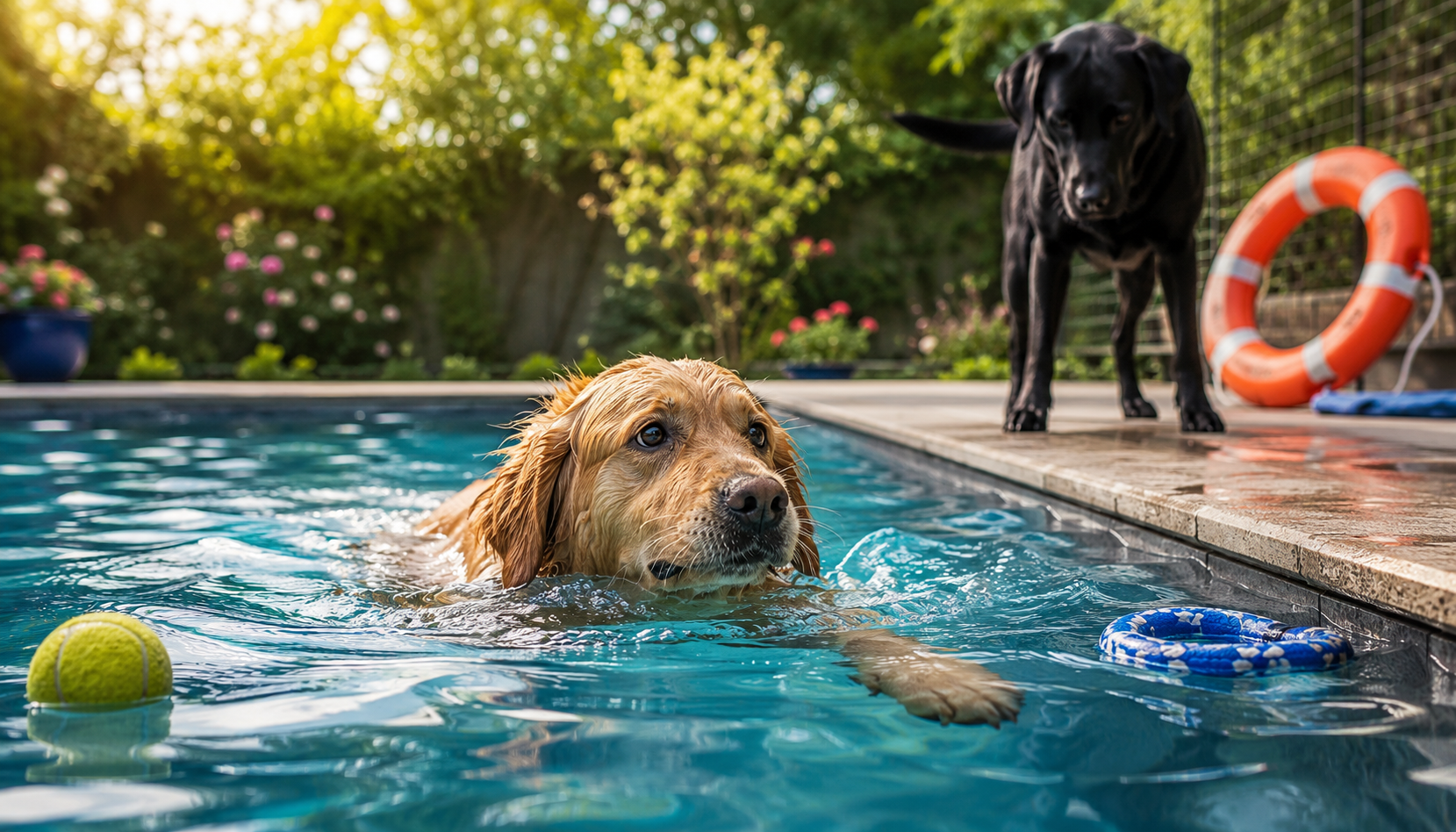
Keep swim sessions short. Instead of one long pool session, use shorter rounds with breaks in the shade. Let your dog rest, drink fresh water, and fully calm down before going back in. If your dog is panting heavily, moving slower, or ignoring cues, it is time to stop.
Choose toys carefully. Floating toys can make swimming more fun, but repeated fetch can also cause dogs to swallow more water and overwork themselves. Use fewer retrieval rounds and give your dog breaks between throws.
After swimming, rinse and dry your dog. Brush them once their coat is dry enough, check their paws, and make sure their bedding is clean. Pool days should end with recovery, not just a wet dog running through the house.
Supporting Pool-Season Wellness With GCP OMEGAPaws
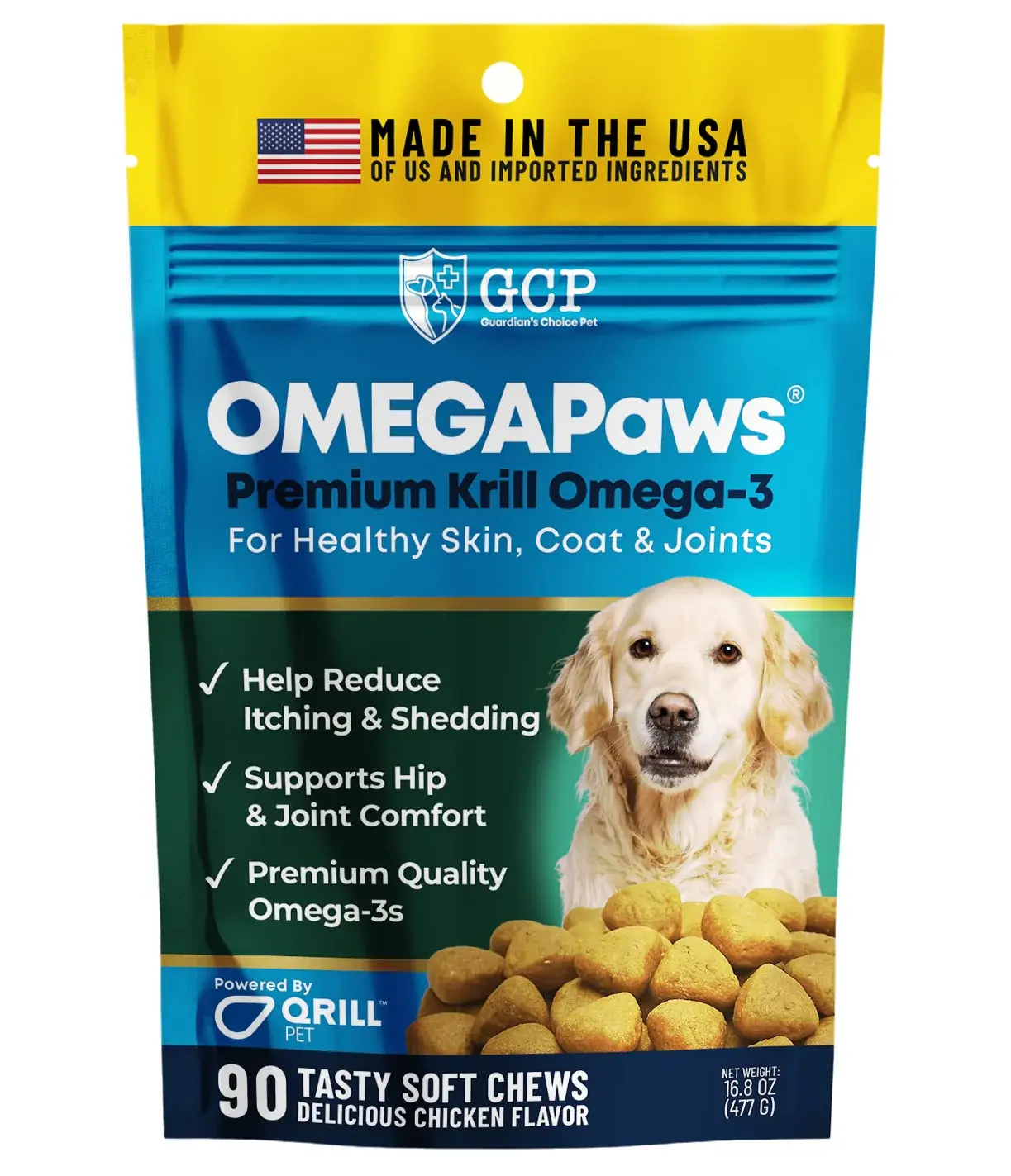
This is where GCP OMEGAPaws Premium Krill Omega-3 fits naturally into your dog’s pool-season routine. Pool safety starts with supervision, life jackets, exit training, fresh water, and post-swim rinsing, but daily wellness support can help care for the body behind all that movement.
GCP OMEGAPaws supports healthy skin, coat, joints, normal immune function, and overall vitality. For dogs who swim, run around the deck, play fetch, dry off in the sun, and stay active all summer, omega-3 support can be a simple addition to daily care.
The chew format also makes consistency easier. Instead of dealing with oils or capsules, pet parents can add a soft chew to their dog’s daily routine as directed. This is helpful during summer because routines can get busy with pool days, travel, outdoor play, and family activities.
It is important to keep the product role clear. GCP OMEGAPaws does not replace rinsing after swimming, veterinary care, ear cleaning guidance, a life jacket, or direct supervision. It supports daily skin, coat, joint, immune, and vitality routines from within, making it a strong partner to smart pool habits.
Frequently Asked Questions
-
No, not all dogs are natural swimmers, and some breeds may struggle because of body shape, short legs, flat faces, age, or confidence level. Even if your dog seems excited around water, introduce swimming slowly and consider a properly fitted dog life jacket.
Safer Pool Days Start With Better Habits
Pool time can be a wonderful part of summer for dogs, but it should never be treated as completely risk-free. Fatigue, pool water swallowing, exit confusion, slippery surfaces, ear moisture, and skin and coat dryness are all easy to overlook when everyone is focused on having fun.
The good news is that safer pool days are built from simple habits. Supervise closely. Teach the exit. Use a dog life jacket when needed. Offer fresh water. Keep swim sessions short. Rinse and dry your dog afterward. Watch their coat, ears, energy, and comfort after every pool day.
With the right routine, swimming can stay fun while giving your dog the structure and support they need.
GCP OMEGAPaws Premium Krill Omega-3
GCP OMEGAPaws Premium Krill Omega-3 is made for dogs who need daily support for healthy skin, coat, joints, normal immune function, and overall vitality. It fits naturally into pool-season routines, especially for dogs who swim, play, walk, train, and stay active during warm weather.
Benefits:
-
Supports healthy skin
-
Helps support a shiny-looking coat
-
Supports hip and joint comfort
-
Supports normal immune function
-
Supports overall vitality
-
Provides premium omega-3 support from krill oil
-
Easy-to-feed soft chews
-
Chicken-flavor dogs can enjoy
-
Fits into daily summer wellness routines
-
Pairs well with grooming, rinsing, and active outdoor care
If your dog loves pool days, GCP OMEGAPaws can help support the wellness areas that matter during active seasons. Add it to your dog’s daily routine as directed, and pair it with supervision, fresh water, safe exits, post-swim rinsing, rest breaks, and regular veterinary care.
Citation: Combarros, D., Castilla-Castaño, E., Lecru, L. A., Pressanti, C., Amalric, N., & Cadiergues, M. C. (2020). A prospective, randomized, double blind, placebo-controlled evaluation of the effects of an n-3 essential fatty acids supplement (Agepi® ω3) on clinical signs, and fatty acid concentrations in the erythrocyte membrane, hair shafts and skin surface of dogs with poor quality coats. Prostaglandins, Leukotrienes and Essential Fatty Acids, 159, 102140. https://doi.org/10.1016/j.plefa.2020.102140
For all general inquiries, please contact us at info@guardianschoice.com
© Copyright. All rights reserved.