The Paw-fect Shot: How to Take Professional
Pet Portraits at Home
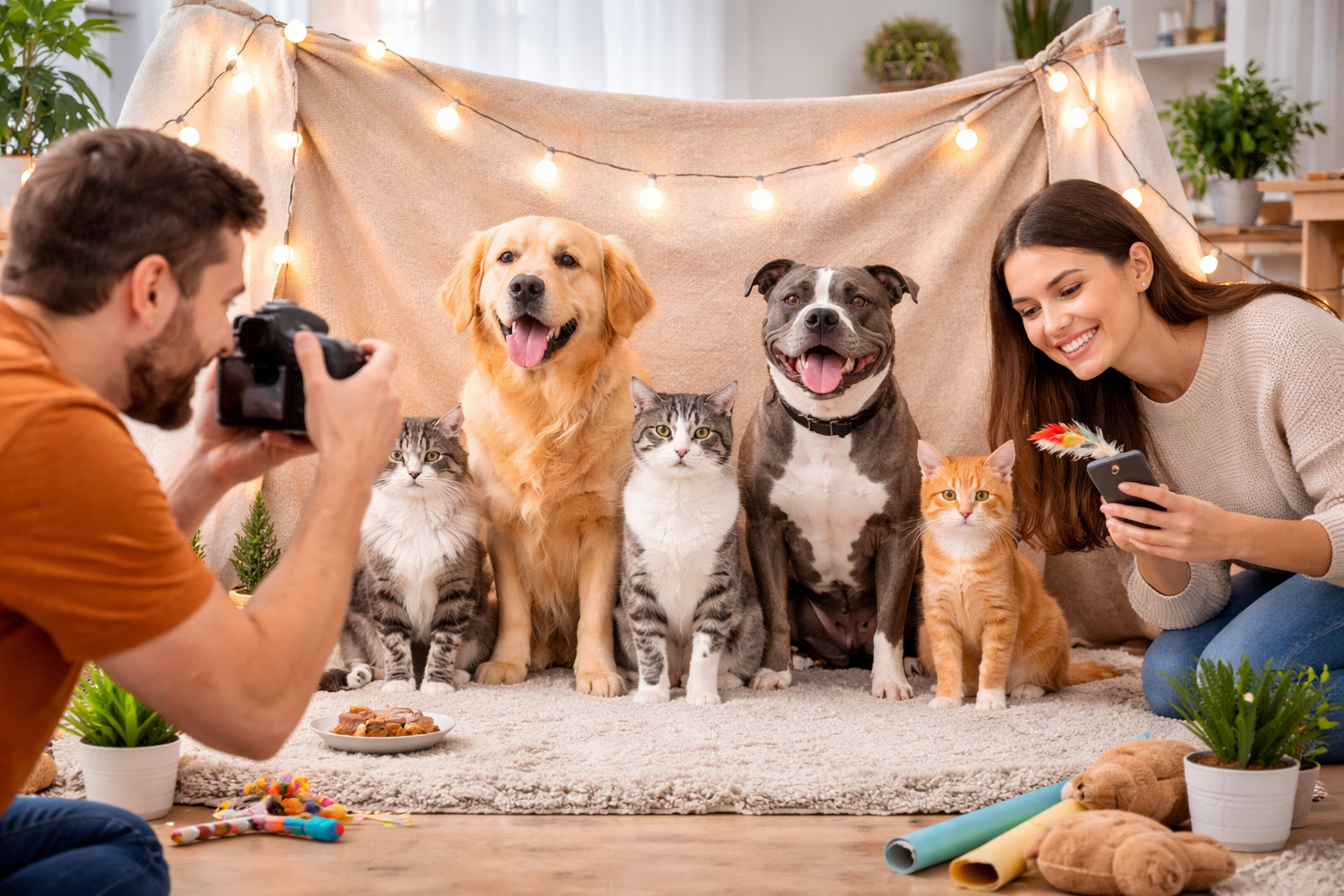
Taking great pet photos at home comes down to lighting, perspective, and timing. Natural light and eye-level angles help capture more engaging images, while patience allows your pet’s personality to come through. A well-maintained coat and consistent routine can also enhance how your pet appears on camera, making everyday moments easier to capture beautifully.
Why Pet Photography Is More Than Just Timing
Pet photography often looks effortless when you see the final image. A perfectly timed head tilt, a sharp gaze, or a relaxed pose can feel like pure luck. In reality, these moments are usually the result of preparation and environment rather than timing alone.
Pets are naturally expressive, but they are also unpredictable. They respond to movement, sound, and energy in the room. This means your role as the photographer is not just to capture the moment, but to create conditions where those moments are more likely to happen.
Instead of chasing the perfect shot, it helps to focus on creating a calm and familiar setting. When pets feel comfortable, their natural expressions come through more easily, which often leads to better photos without forcing the moment.
The Foundation: Light, Angle, and Patience
Great pet photography starts with a few core principles. These are simple adjustments, but they have a noticeable impact on the final result.
1. Work with Natural Light
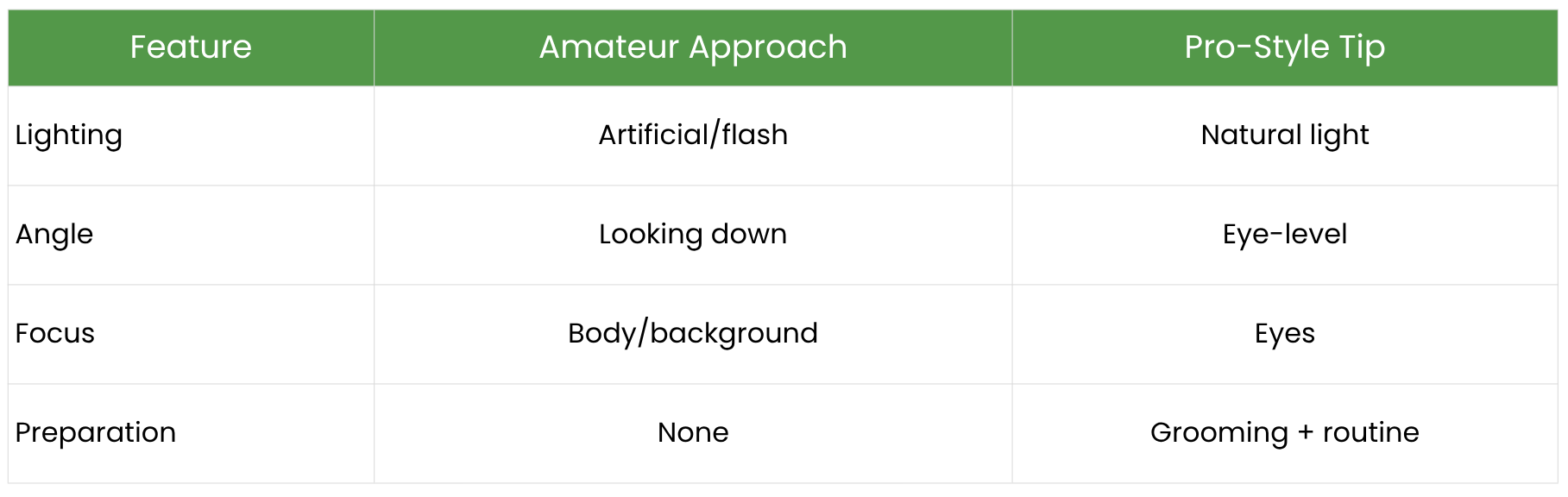
Lighting is one of the biggest factors in photography. Artificial lighting and flash can create harsh shadows and unnatural reflections, especially in pets’ eyes. Natural light, on the other hand, produces softer and more balanced images.
Position your pet near a window or shoot outdoors during early morning or late afternoon. These times provide softer light that enhances details without overwhelming the image.
2. Get on Their Level
Perspective changes everything. Taking photos from above can make pets look smaller or less expressive. Getting down to their eye level creates a more engaging and intimate image.
This angle allows you to capture their expressions more clearly. It also shifts the photo from a casual snapshot to something that feels more intentional.
3. Use Patience as Your Main Tool
Unlike people, pets do not follow instructions. Trying to force poses often leads to frustration for both you and your pet.
Short sessions work best. A few minutes at a time allows you to capture natural moments without overwhelming them. Over time, these small sessions build familiarity, making future photos easier.
Capturing Personality Instead of Perfection
The most memorable pet photos are not always perfectly posed. They are the ones that reflect personality.
A curious head tilt, a relaxed stretch, or even a playful moment can create a stronger image than a forced pose. Instead of focusing on perfection, focus on capturing behavior that feels authentic.
Using simple tools like treats or toys can help guide your pet’s attention. Holding them near the camera lens encourages eye contact, which often becomes the focal point of the image.
The Behavior Factor: Why Cooperation Matters in Photos
Capturing a great photo is not just about camera settings or timing. It also depends on how your pet responds to the environment in that moment. Pets that feel relaxed and engaged are naturally more responsive, making it easier to capture eye contact, stillness, and expressive behavior.
Research in animal behavior suggests that dogs, in particular, are more responsive and attentive when they are in a familiar environment and receiving positive reinforcement. Studies on canine cognition and training have shown that consistency, reward-based interaction, and low-stress environments can improve focus and cooperation during tasks.
In the context of photography, this means that pets are more likely to remain still, follow visual cues, and engage with the camera when they feel comfortable and rewarded. Simple actions like using treats, maintaining a calm tone, and keeping sessions short can significantly influence how cooperative your pet is during a shoot.
Rather than forcing poses, the goal is to create conditions where your pet chooses to engage. This not only improves the quality of your photos but also makes the experience more enjoyable for both of you.
The Role of Coat Health in Photography
One detail that is often overlooked in pet photography is coat condition. Lighting and angles can only do so much if the coat appears dull or uneven.
A well-maintained coat reflects light more evenly, which can enhance the overall look of a photo. Regular grooming plays a role, but internal factors such as nutrition are also part of the equation.
Research in veterinary nutrition has explored how dietary components influence skin and coat condition over time. For example, studies referenced in the American Journal of Veterinary Research (AJVR) discuss how consistent nutritional inputs can influence visible changes in coat quality. These findings highlight the importance of routine rather than quick fixes.
This does not mean supplements replace grooming. Instead, it reinforces the idea that external care and internal routines work together.
Creating a Photo-Ready Routine
Instead of preparing only when you want to take photos, it helps to build a routine that keeps your pet consistently ready.
A simple routine may include:
-
Regular brushing to reduce loose fur
-
Consistent feeding schedules
-
Occasional play before photos to release excess energy
-
Keeping a familiar shooting spot in your home
These habits create predictability, which helps pets stay relaxed during photo sessions.
Where GCP Fits Into Your Pet’s Routine
A consistent routine often includes both external care and internal support. GCP products are designed to fit into everyday habits, making it easier to maintain consistency over time.
For Dogs
-
GCP OmegaPaws Premium Krill Omega-3 Commonly included in routines focused on skin and coat maintenance
-
GCP VitaPup Multivitamin Chews Helps support daily nutritional balance as part of regular feeding
-
GCP Breath Boost Bites Supports oral hygiene as part of everyday care routines
-
GCP Flea & Tick Natural Defense (Dogs) Supports skin comfort as part of grooming and outdoor routines
For Cats
-
GCP Purrbiotics Daily Probiotics Supports digestive balance as part of daily feeding habits
-
GCP Cat L-Lysine Commonly included in feline wellness routines
-
GCP Flea & Tick Natural Defense (Cats) Supports skin comfort in everyday environments
These products are not designed to replace grooming or preparation. Instead, they fit into existing routines, helping maintain consistency that supports your pet’s overall appearance and readiness.
Designed for Everyday Use
Consistency becomes easier when products are simple to use. GCP products are structured to fit naturally into daily routines without adding complexity.
-
Easy-to-administer formats like chews and powders
-
No refrigeration required for most products
-
Can be added to feeding or treat time
-
Portable and convenient for everyday use
-
Suitable for multi-pet households
By focusing on usability, these products support routines that are easy to maintain over time.
Frequently Asked Questions
-
Most pets will not stay still for long periods, so shorter sessions tend to work better. Using treats or toys can help guide their attention without forcing behavior. Over time, repetition helps them become more comfortable with the process.
A Better Way to Capture the Moment
Great pet photography is not about expensive equipment or perfect timing. It is about understanding your pet, creating the right environment, and building simple routines that make the process easier.
By combining natural techniques with consistent care habits and supportive routines that include GCP products, you create a setup where great photos happen naturally.
Because the best photos are not forced. They are captured in moments where your pet feels completely at ease.
For all general inquiries, please contact us at info@guardianschoice.com
© Copyright. All rights reserved.