
Your June Wellness Strategy for Pets

Flea and tick activity increases during warmer months like June, and a consistent, natural routine using ingredient-based support can help maintain your pet’s comfort without relying on harsh inputs.
As temperatures rise, so does the search for natural flea and tick prevention, flea and tick supplements for dogs, and safe flea protection for cats. June, in particular, marks a noticeable shift in pest activity, making it one of the most important times for pet owners to think about prevention strategies rather than reactive solutions.
Instead of waiting until fleas or ticks become visible concerns, many pet owners are now exploring how daily routines, especially those built around clean, recognizable ingredients, can play a role in maintaining a balanced environment for their pets. This includes commonly discussed elements like apple cider vinegar, coconut oil, thiamine (Vitamin B1), and botanicals such as catnip or anise.
This approach isn’t about replacing traditional methods entirely, but about creating a consistent, supportive routine that aligns with long-term wellness. By focusing on daily habits rather than occasional fixes, pet care becomes more predictable, manageable, and easier to sustain throughout peak seasons.
Why June Is Peak Flea and Tick Season
June is often considered the “red zone” for fleas and ticks, largely due to environmental conditions. Warmer temperatures combined with increased humidity create an ideal environment for these pests to thrive. Their life cycles accelerate, meaning populations can grow more rapidly compared to cooler months.
For pet owners, this means that even short outdoor exposure—whether it’s a walk in the park or time spent in the backyard—can increase the likelihood of contact with fleas or ticks. Once introduced into the home, these pests can become more difficult to manage, which is why early and consistent routines are often emphasized.
Research on ectoparasites highlights how environmental factors, host conditions, and exposure all play a role in pest behavior and infestation patterns. While no single factor determines outcomes, maintaining a stable and well-managed environment can influence how pests interact with animals. This reinforces the idea that prevention strategies, especially those used consistently, are an important part of overall pet care.
How Natural Ingredients Support Daily Defense
Natural flea and tick support often focuses on combining multiple ingredients that contribute to a broader, more balanced approach. Rather than relying on a single compound, these formulations are designed to work together over time.
One commonly discussed ingredient is thiamine (Vitamin B1). As a water-soluble vitamin, it supports normal metabolic processes and is sometimes included in formulations that aim to influence a pet’s natural scent profile. While this change is not noticeable to humans, it is often referenced in discussions around how pests interact with hosts.
Apple cider vinegar is another widely used ingredient in natural pet routines. It is often associated with maintaining internal balance and supporting skin condition, both of which can influence how pets interact with their environment. Coconut oil, similarly, is frequently included for its connection to skin and coat maintenance.
Botanicals such as catnip (for cats) and anise (for dogs) are also commonly used. These ingredients are valued for their aromatic properties and are often included as part of a broader formulation designed for daily use.
Here’s a simple breakdown of how these ingredients are typically positioned:
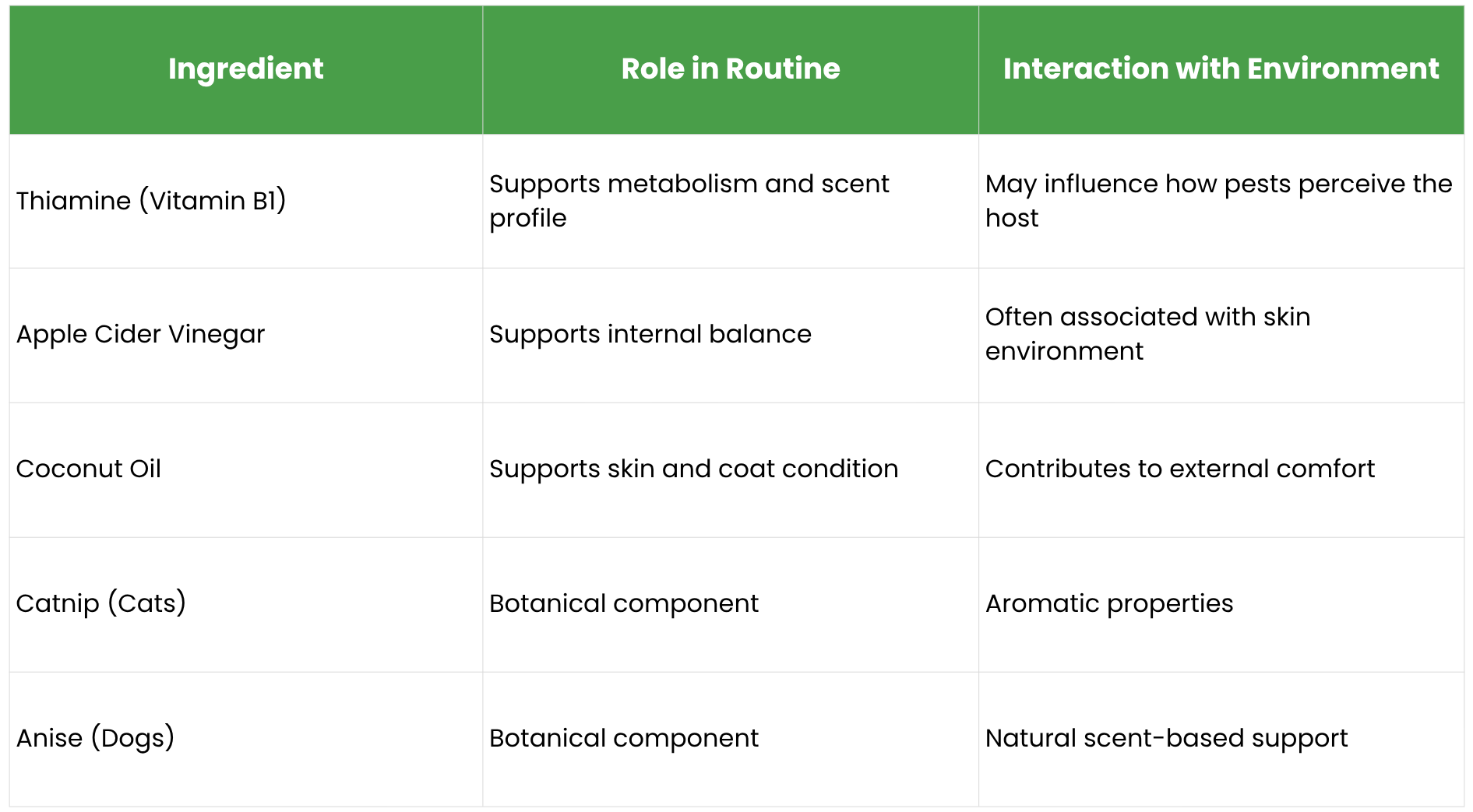
Rather than acting as a quick fix, these ingredients contribute to a system that works gradually, emphasizing consistency over intensity.
Building a Consistent Routine During Peak Season
Consistency becomes especially important during peak flea and tick season. While it’s easy to focus on what products to use, how consistently they are used often plays an even bigger role. Daily routines allow ingredients to integrate more naturally into your pet’s system, supporting stability over time.
One of the biggest challenges pet owners face is maintaining that routine. Life gets busy, products run out, or reorders are delayed. These small interruptions can disrupt consistency, making it harder to sustain long-term habits.
This is why simplicity is key. A routine that fits easily into your pet’s daily schedule—whether during feeding or regular care—has a higher chance of being maintained. Over time, this consistency becomes second nature, reducing the need for reactive measures and helping create a more predictable approach to pet care.
The goal isn’t perfection, but continuity. Even small, consistent actions can contribute to a more balanced environment when maintained over time.
The June Pest Defense Checklist: A Simple Daily Routine
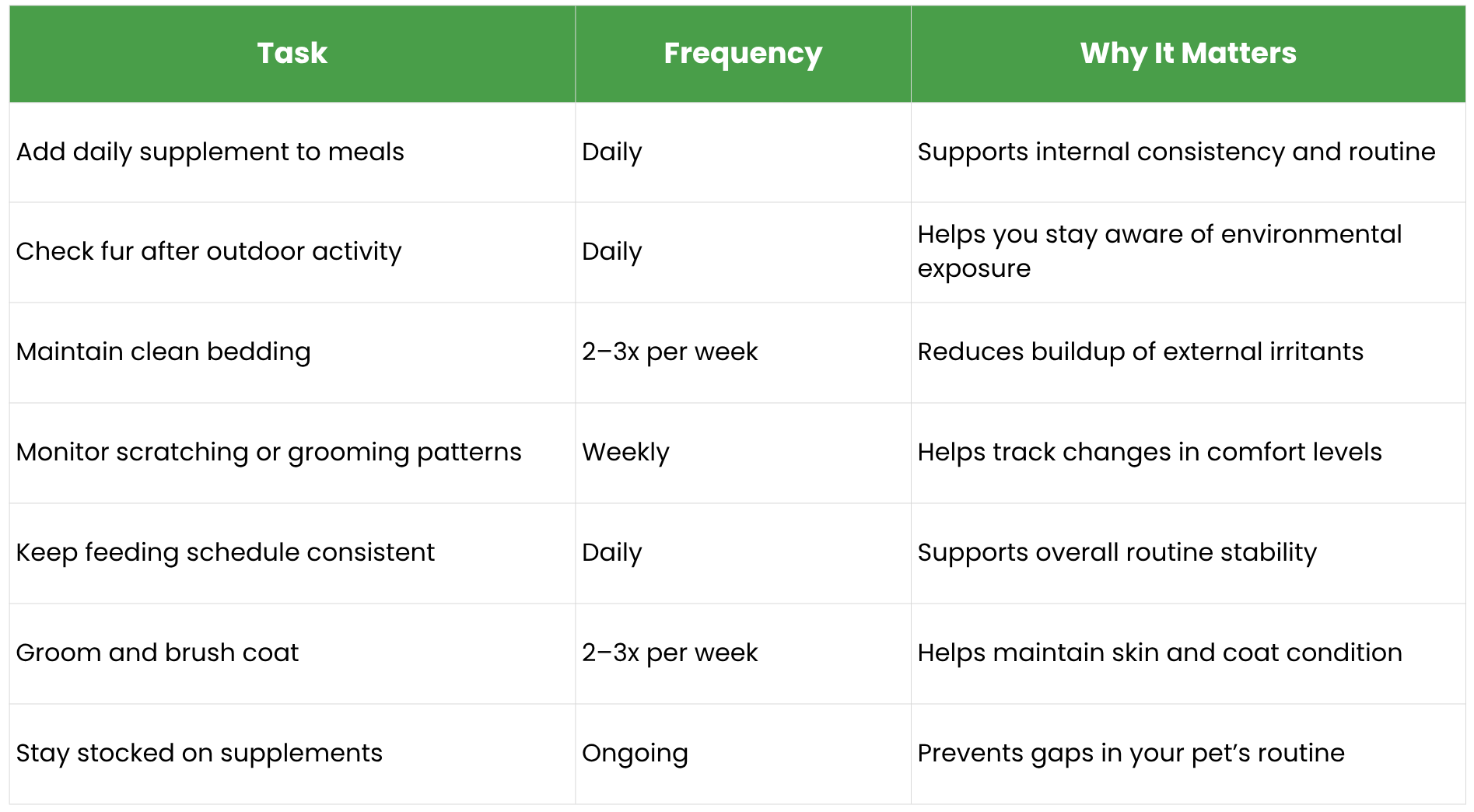
This is where everything comes together. Instead of overthinking flea and tick season, the goal is to follow a simple, repeatable routine that supports your pet consistently. A checklist makes it easier to stay on track, especially during peak months like June when pest activity is at its highest.
Rather than relying on one-time actions, this approach focuses on small, daily habits that build over time. Each step supports your pet’s overall environment, helping you stay proactive without adding unnecessary complexity to your routine.
Your Daily & Weekly Checklist for Natural Flea & Tick Support
A Smarter Way to Support Your Pet Daily
As more pet owners move toward routine-based wellness, products that align with this philosophy stand out more clearly. Guardian’s Choice Flea & Tick Natural Defense for Dogs and Cats is designed with this approach in mind, offering a blend of ingredients that fit naturally into daily routines.
Formulated with apple cider vinegar, coconut oil, and thiamine (Vitamin B1), along with botanicals like catnip (for cats) and anise (for dogs), it reflects a cleaner, ingredient-focused approach to flea and tick support. Instead of relying on harsh chemical inputs, it emphasizes consistency and simplicity.
The chew format makes it easy to incorporate into feeding routines, which helps reduce resistance and supports daily use. Over time, this consistency allows the product to become part of your pet’s routine rather than an occasional addition.
By focusing on daily integration rather than reactive use, this approach aligns with how pet wellness is increasingly viewed today—steady, manageable, and rooted in long-term habits.
Frequently Asked Questions
-
Natural routines typically build over time, especially when used consistently. Many pet owners focus on maintaining daily use for several weeks to establish a steady pattern.
A More Intentional Way to Handle Flea and Tick Season
Flea and tick season doesn’t have to feel reactive or overwhelming. By focusing on consistent routines and ingredient-based support, pet owners can take a more intentional approach to their pet’s daily care.
Rather than relying on last-minute solutions, building a steady routine helps create a more predictable environment—one that supports your pet’s comfort throughout peak seasons like June. Over time, this approach becomes less about managing problems and more about maintaining balance.
Natural Defense for Dogs and Cats
Guardian’s Choice Flea & Tick Natural Defense
-
Includes apple cider vinegar, coconut oil, and thiamine (Vitamin B1)
-
Features botanicals like catnip (cats) and anise (dogs)
-
Designed for daily use as part of a consistent routine
-
Easy-to-administer chew format
-
Formulated without harsh chemical inputs
This product reflects a simple philosophy: when your pet’s routine is consistent and ingredient-focused, supporting their environment becomes a more natural part of everyday care.
Citation: Benedek, A. M., Boeraș, I., Lazăr, A., Sandu, A., Cocîrlea, M. D., Stănciugelu, M., Cic, N. V., & Postolache, C. (2024). Effects of Season, Habitat, and Host Characteristics on Ectoparasites of Wild Rodents in a Mosaic Rural Landscape. Animals : an open access journal from MDPI, 14(2), 304. https://doi.org/10.3390/ani14020304
For all general inquiries, please contact us at info@guardianschoice.com
© Copyright. All rights reserved.