
A Safer Daily Defense Without The Harsh Chemicals: Natural Flea and Tick Prevention for Dogs and Cats

Flea and tick prevention is part of everyday pet care, especially in warmer seasons or active environments. Natural approaches using cleaner ingredients can support a more balanced routine without relying heavily on harsh chemicals. By focusing on consistency and simple habits, pet owners can maintain a more comfortable environment for both pets and home. Small daily choices often make prevention easier to manage over time.
Why Flea and Tick Prevention Matters Year-Round
Fleas and ticks are often thought of as seasonal issues, but in many environments, they can persist throughout the year. Whether your pet spends time outdoors, interacts with other animals, or simply moves through shared spaces, exposure can happen more easily than expected.
These pests are more than just an inconvenience. They can disrupt your pet’s comfort, affect their daily behavior, and create challenges within your home. Scratching, restlessness, and irritation are often the first signs pet owners notice, but the impact doesn’t always stop there. Once introduced into the home, fleas in particular can spread quickly, making prevention a more practical approach than reaction.
Rather than waiting for signs to appear, many pet owners are now focusing on maintaining a consistent routine that supports everyday protection. This shift reflects a broader trend in pet care—moving toward proactive, manageable habits rather than reactive solutions.
Research published in Animals highlights how environmental exposure and behavioral patterns influence how pets respond to external stressors. While the study does not focus specifically on fleas or ticks, it reinforces the idea that consistent environmental management plays a role in maintaining overall balance.
The Problem with Harsh Chemical Treatments
Traditional flea and tick treatments often rely on strong chemical agents designed to eliminate pests quickly. While these products are widely used, they can sometimes come with trade-offs that pet owners are increasingly aware of.
Chemical-based solutions may leave behind residues on your pet’s fur, which can transfer to surfaces like furniture, bedding, and even skin contact. For households with children or multiple pets, this becomes an added consideration. The idea of “protection” begins to extend beyond the pet to include the entire home environment.
There’s also the question of routine. Some treatments are designed for occasional use rather than daily consistency, which can create gaps in coverage. This can lead to a cycle of reacting to problems rather than maintaining steady support.
This doesn’t mean chemical treatments don’t have their place, but it does explain why many pet owners are exploring alternative approaches—ones that align more closely with everyday living and long-term routines.
How Natural Ingredients Support Daily Defense
Natural flea and tick approaches often focus on creating an environment that is less appealing to pests rather than relying on aggressive elimination. This subtle difference changes how these products are used—they become part of a daily routine rather than a one-time fix.
Ingredients like apple cider vinegar, coconut oil, anise, and thiamine are commonly discussed in this space. These components are often included in formulations designed to support a balanced external environment for dogs. For cats, ingredients like catnip may also be incorporated, aligning with feline preferences while supporting the same overall approach.
Rather than making strong claims, these ingredients are typically used to complement a broader prevention strategy. They fit into a system that includes grooming, environmental cleanliness, and consistent routines.
The goal isn’t to eliminate every possible exposure, but to create conditions that are easier to maintain over time.
Comparing Natural vs Chemical Flea and Tick Approaches
Understanding the differences between these approaches can help clarify what fits best into your routine.
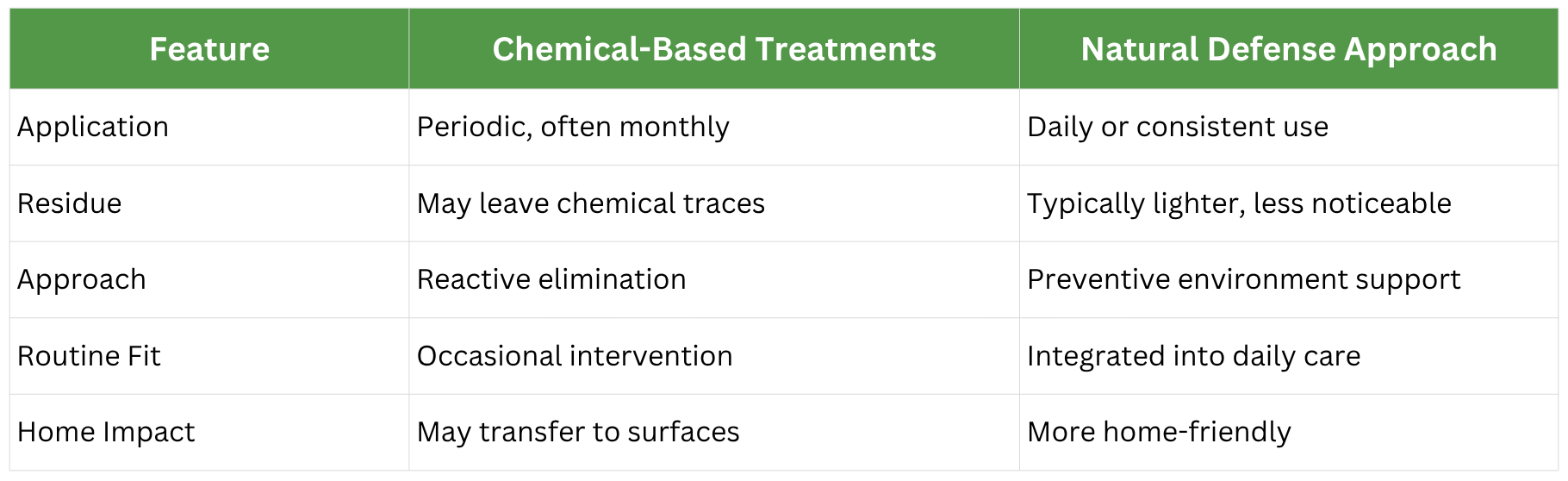
This comparison highlights a key shift—moving from reaction to routine. Many pet owners find that integrating prevention into daily habits feels more manageable than addressing issues after they appear.
Building a Simple Prevention Routine for Pets
Creating a routine for flea and tick prevention doesn’t have to be complicated. In fact, the most effective systems are often the simplest.
Start with regular grooming. Brushing your pet helps you monitor their coat and skin while also reducing the likelihood of pests settling in unnoticed. Bathing, when appropriate, supports overall cleanliness without overcomplicating care.
Environmental maintenance also plays a role. Washing bedding, vacuuming shared spaces, and maintaining outdoor areas can help reduce exposure. These small habits contribute to a broader system of prevention.
Adding a daily supplement or chew can complement this routine, especially when it integrates easily into feeding habits. The key is consistency—choosing options that fit naturally into your lifestyle so they can be maintained over time.
A Smarter Way to Support Daily Protection
As more pet owners move toward routine-based care, products that align with this philosophy are becoming part of everyday use.
GCP Flea & Tick Natural Defense for dogs and cats is designed with this approach in mind. Formulated with ingredients like apple cider vinegar, coconut oil, anise (for dogs), and catnip (for cats), it fits into a daily routine without relying on harsh chemical treatments.
The chewable format makes it easy to incorporate into feeding, reducing the friction that often comes with topical or occasional treatments. This simplicity supports consistency, which is often the most important factor in any prevention strategy.
Rather than acting as a standalone solution, it works alongside grooming, environmental care, and daily habits—contributing to a more complete and manageable system.
FAQs About Natural Flea and Tick Support
-
Natural products are typically designed to support an environment that is less appealing to pests. They are often used as part of a broader routine rather than as a one-time solution.
A Cleaner Approach to Everyday Protection
Flea and tick prevention doesn’t have to rely solely on strong, reactive solutions. By focusing on consistency, simple habits, and cleaner ingredients, pet owners can build a routine that feels more aligned with daily life.
Natural approaches offer a way to support your pet while also considering your home environment. Over time, these small, consistent efforts can make prevention feel less overwhelming and more manageable.
GCP Flea & Tick Natural Defense
Supporting your pet’s routine starts with choosing options that fit seamlessly into daily life.
GCP Flea & Tick Natural Defense (Dogs & Cats)
-
No harsh chemicals
-
Made with apple cider vinegar and coconut oil
-
Includes anise (dogs) and catnip (cats)
-
With added thiamine for daily support
-
Easy-to-use chew format
-
Designed for consistent, everyday use
A simple addition to your pet’s routine that supports a cleaner, more manageable approach to daily protection.
References
Rossi, M., Bianchi, L., Conti, F., & De Santis, R. (2024). Seasonal variations in grooming behavior and dermatological responses in domestic cats. Animals, 14(5), 1234. https://pmc.ncbi.nlm.nih.gov/articles/PMC11898201/
For all general inquiries, please contact us at info@guardianschoice.com
© Copyright. All rights reserved.