
Flea and Tick Prevention: Why Starting Early Supports Daily Protection for Pets

Flea and tick prevention often works best when started before peak exposure periods. Natural approaches focus on consistency, allowing ingredients to become part of your pet’s routine over time. Building this routine early can help support a more balanced and manageable approach to seasonal changes. Starting ahead of time makes daily care feel simpler and more predictable.
Why Flea and Tick Prevention Starts Before You Think
When most pet owners think about flea and tick prevention, the instinct is to act when the problem appears—usually when scratching starts or pests are already visible. However, by the time those signs show up, your pet has already been exposed. This is why timing plays such an important role in how prevention fits into your routine.
Seasonal shifts, particularly as temperatures begin to rise, create an environment where fleas and ticks become more active. May and early summer often act as a transition period, even if the visible impact isn’t immediate. During this time, pets are gradually being exposed through outdoor activity, shared environments, and contact with other animals.
Rather than reacting to this exposure, many pet owners are now focusing on preparation. This means starting routines earlier—before peak months—so that prevention becomes part of daily care instead of a last-minute solution.
Research published in Animals highlights how environmental changes influence how pets respond to external factors, reinforcing the idea that preparation and consistency play a role in overall balance. While not specific to flea prevention, it supports the broader concept that timing matters when managing seasonal changes.
Understanding the 30-Day “Shield” Concept
The idea behind a “30-day shield” isn’t about instant results—it’s about gradual integration. Natural approaches to flea and tick support often rely on ingredients that work with your pet’s system over time, rather than delivering immediate, short-term effects.
Think of it as a layering process. During the first few weeks, your pet’s body is simply adjusting. Ingredients are introduced, absorbed, and gradually incorporated into daily biological processes. Over time, these small changes begin to create a more stable internal and external environment.
This approach is very different from quick, reactive treatments. Instead of applying something once and expecting immediate results, the focus shifts to consistency. The routine becomes the foundation, and the benefits come from maintaining that routine rather than interrupting it.
For pet owners, this often feels more manageable. It removes the urgency of reacting to a problem and replaces it with a predictable system that fits into everyday life.
How Natural Ingredients Work Over Time
Natural flea and tick support often includes ingredients like apple cider vinegar, coconut oil, thiamine, and species-specific additions like anise (for dogs) or catnip (for cats). These ingredients are commonly discussed in relation to how they interact with your pet’s body and environment.
Rather than acting as aggressive deterrents, they are often used to support subtle changes over time. This may include how your pet’s coat, skin, or scent profile interacts with the surrounding environment. These changes don’t happen overnight—they build gradually through consistent use.
This is why timing and routine matter so much. Skipping days or starting too late can interrupt the process, making it harder to maintain a steady approach. On the other hand, starting early allows these ingredients to become part of your pet’s daily rhythm.
It’s less about a single moment of action and more about a continuous process that supports balance.
The 4-Week Build-Up Timeline Explained
To better understand how this process works, it helps to break it down into a simple timeline:

This timeline isn’t about exact outcomes—it’s about understanding the rhythm of consistency. Each week builds on the last, creating a gradual progression rather than a sudden change.
For pet owners, this framework makes it easier to plan ahead. Instead of wondering when to start, the focus shifts to maintaining the routine long enough for it to become effective within your pet’s lifestyle.
Natural vs Reactive Flea and Tick Strategies
There are generally two approaches to flea and tick management: reactive and preventive. Understanding the difference helps clarify why timing matters.
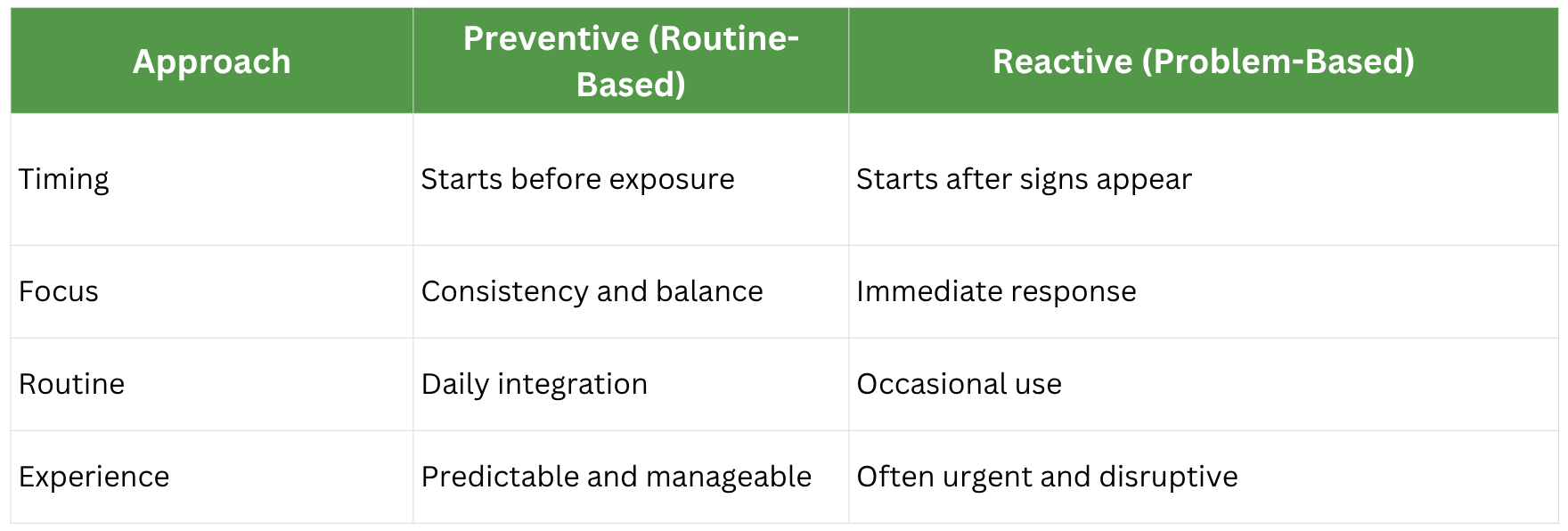
Preventive strategies focus on maintaining a steady routine, while reactive strategies address problems after they occur. Many pet owners find that preventive approaches feel less stressful over time, as they reduce the need for sudden interventions.
Creating a Consistent Routine for Your Pet
Building a routine doesn’t require major changes. In fact, the most effective systems are often the simplest.
Start by aligning prevention with existing habits. Feeding time, for example, is one of the easiest moments to introduce a daily supplement or chew. This ensures consistency without adding extra steps to your day.
Pair this with basic maintenance habits like grooming and environmental cleaning. Brushing your pet regularly and keeping shared spaces clean helps support the overall system you’re building.
The goal is not perfection, it’s consistency. A routine that fits naturally into your lifestyle is far more sustainable than one that feels complicated or forced.
A Smarter Way to Start Early Protection
As more pet owners shift toward routine-based care, products that support this approach are becoming part of everyday use.
GCP Flea & Tick Natural Defense (for Dogs & Cats) is designed to align with this philosophy. With ingredients like apple cider vinegar, coconut oil, thiamine, and species-specific additions like anise or catnip, it fits into a daily routine rather than acting as a one-time solution.
The chewable format makes it easy to incorporate into feeding time, which helps maintain consistency—one of the most important factors in any prevention strategy. Starting early allows the routine to build naturally, reducing the need for reactive solutions later on.
For multi-pet households, having both dog and cat formulas creates a more cohesive system, ensuring every pet follows the same consistent approach.
FAQs About Natural Flea and Tick Prevention
-
Starting before peak seasons is generally recommended. Beginning early allows routines to become consistent before exposure increases.
Establishing the Gold Standard in Pet Protection
In conclusion, the key to a successful, pest-free summer is not found in a last-minute spray, but in the diligent preparation of the preceding month. The 30-Day Shield Principle is a testament to the efficacy of natural wellness, proving that when we give the body time to integrate beneficial compounds, it can perform remarkable feats of self-defense. By starting in May, you ensure that your June is spent enjoying the outdoors rather than battling infestations. Guardian’s Choice is proud to lead the way in this proactive movement, providing the tools necessary for every dog and cat to thrive in harmony with nature.
GCP Flea & Tick Natural Defense
Guardian’s Choice Pet (GCP) Flea & Tick Natural Defense is the premier choice for owners seeking a chemical-free path to pest management. Available in specialized formulas for both cats and dogs, these soft chews make the 30-day loading phase simple and delicious.
-
For Cats: Features a blend of Apple Cider Vinegar, Coconut Oil, Catnip, and Thiamine in a savory chicken flavor that even picky felines love.
-
For Dogs: Utilizes Apple Cider Vinegar, Coconut Oil, Anise, and Thiamine to build a robust internal barrier while supporting skin and coat health.
-
Systemic Support: Designed specifically to power the "30-Day Shield," ensuring your pet is protected from the inside out before peak season.
-
Quality Assured: Proudly made with high-quality ingredients, GCP focuses on long-term health without the use of harsh synthetic pesticides.
A practical addition to your pet’s routine that supports a cleaner, more manageable approach to daily protection.
References
Rossi, M., Bianchi, L., Conti, F., & De Santis, R. (2024). Seasonal variations in grooming behavior and dermatological responses in domestic cats. Animals, 14(5), 1234. https://pmc.ncbi.nlm.nih.gov/articles/PMC11898201/
For all general inquiries, please contact us at info@guardianschoice.com
© Copyright. All rights reserved.