
Deep Dive: How Thiamine, Catnip, and Botanical Ingredients Fit Into a Natural Flea & Tick Care Routine
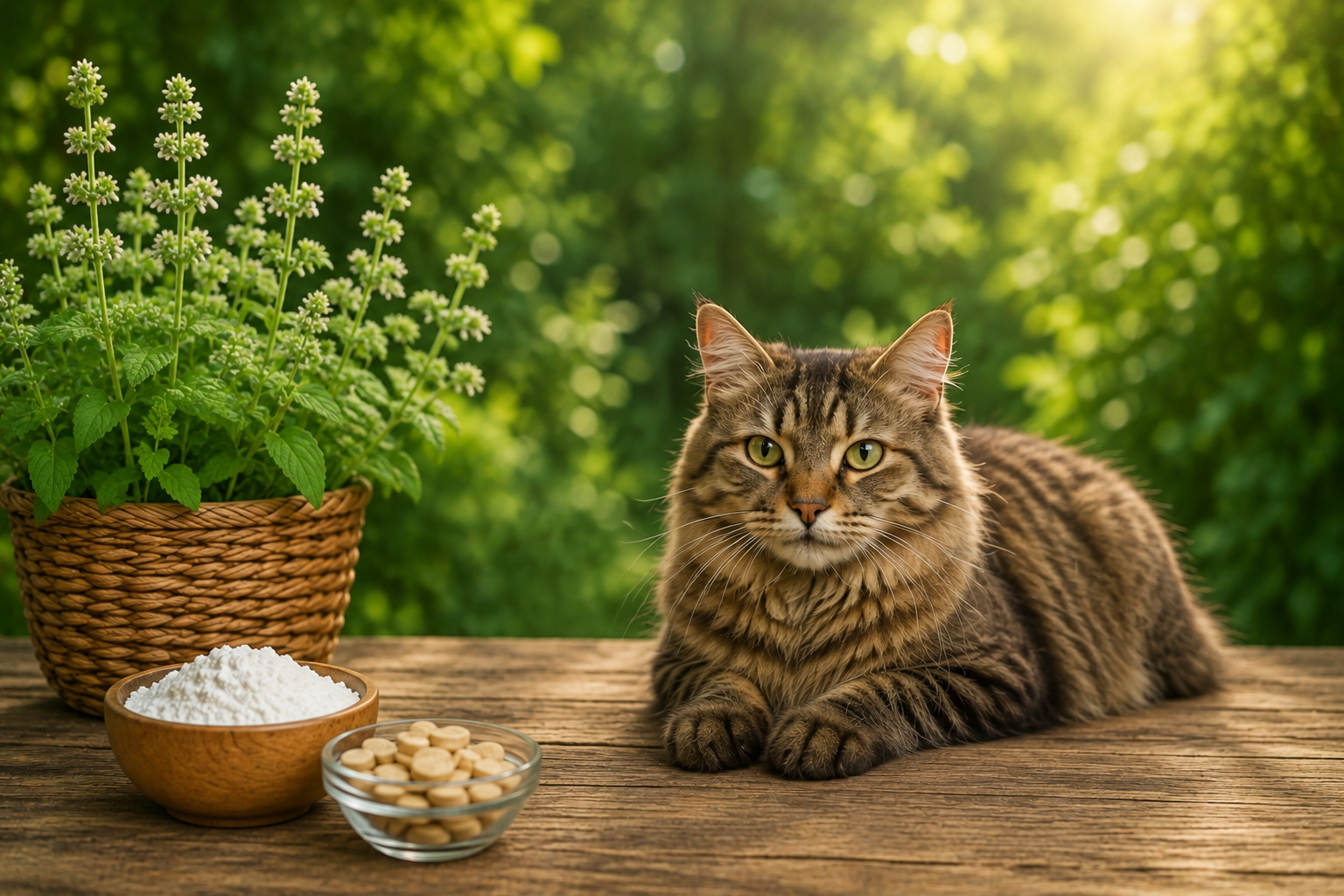
Ingredients such as thiamine, apple cider vinegar, coconut oil, and catnip often appear in conversations about natural flea and tick care, but their roles should be discussed carefully. Rather than treating any ingredient as an invisible “internal shield,” pet parents can use nutritional and botanical products as part of a broader routine that includes regular coat checks, environmental cleaning, grooming, and veterinarian-recommended parasite care.
When you share your home with a cat, flea and tick season can make even ordinary moments feel a little more complicated. A sunny window, a screened patio, another pet returning from the yard, or simply a visitor walking indoors can all create questions about seasonal pest exposure. It is understandable that many pet parents search for natural flea and tick support, botanical ingredients for cats, thiamine for pets, or alternatives that feel easier to incorporate into everyday wellness care.
Natural ingredients can certainly be appealing, particularly when you prefer a simple routine and want to know exactly what you are giving your pet. At the same time, “natural” does not automatically mean that an ingredient has been proven to repel fleas, ticks, or mosquitoes when taken orally, and it does not mean every formulation works through the same biological mechanism.
That distinction is important. A thoughtful natural flea and tick routine should give pet parents useful choices without turning preliminary ideas into promises. Understanding what each ingredient actually contributes—and where the evidence remains limited—makes it easier to build a routine around transparency rather than fear.
Why Pet Parents Are Looking Beyond One-Step Pest Care
Flea and tick care is often presented as though one product should do everything, but real-life pet care is usually more layered. Your cat’s exposure depends on whether they live entirely indoors, share the home with a dog, spend time on a screened porch, travel, visit boarding facilities, or live in an area where fleas and ticks remain active for much of the year.
That is why daily habits still matter even when a product is part of the routine. Washing bedding, vacuuming areas where pets rest, checking the coat after outdoor exposure, keeping other household animals on appropriate parasite-care plans, and watching for changes in scratching or grooming can all help you stay aware of what is happening.
Fleas can cause significant itching in sensitive animals, while attached ticks deserve prompt attention because different tick species can transmit pathogens. However, scratching alone does not prove that fleas are responsible. Dry skin, allergies, infections, mites, grooming products, and other conditions can produce similar signs, so persistent discomfort should be evaluated rather than automatically treated as a pest problem.
The more useful goal is not to search for a single ingredient that promises an invisible barrier. It is to understand where nutritional and botanical ingredients may fit within a practical, veterinarian-informed care plan.
Thiamine: An Essential Nutrient, but Not a Proven Internal Repellent
Thiamine, also known as vitamin B1, is an essential nutrient involved in normal carbohydrate metabolism and nervous-system function. Cats need adequate thiamine in their diets, and a deficiency can cause serious health problems, which is one reason the vitamin sounds reassuring when it appears on a supplement label.
What deserves more caution is the common claim that oral thiamine causes an animal to release a sulfur-like skin scent that fleas, ticks, or mosquitoes dislike. That idea has circulated for years, but it should not be presented as an established mechanism.
One frequently cited study tested oral vitamin B supplementation as a mosquito-repellent strategy in people and found no meaningful reduction in mosquito attraction. The research was conducted in humans rather than cats, so it cannot answer every question about pet supplementation, but it does show why we should be careful about stating that vitamin B1 reliably creates an insect-repelling body odor.
For pet parents, the sensible distinction is straightforward: thiamine is nutritionally important, but its presence in a chew should not be interpreted as proof of systemic flea, tick, or mosquito repellency. A transparent product story can acknowledge its nutritional role without promising an effect the evidence has not clearly demonstrated.
Where Apple Cider Vinegar Fits Into the Conversation
Apple cider vinegar is another ingredient that frequently appears in natural pet wellness discussions. It is often associated with traditional household and food uses, which makes it familiar to people looking for uncomplicated ingredients.
However, claims that consuming apple cider vinegar changes a cat’s skin pH, blood chemistry, taste, or scent enough to repel biting pests are not well established. Skin biology is highly regulated, and the idea that a dietary ingredient simply makes an animal “taste bad” to fleas or ticks is an oversimplification of how those parasites locate and interact with hosts.
That does not mean apple cider vinegar cannot appear in a pet supplement. It simply means its inclusion should be discussed as part of the formulation rather than as proof of a guaranteed pest-deterrent mechanism.
Pet parents should also avoid turning a supplement ingredient into a do-it-yourself topical treatment. Applying concentrated vinegar to irritated skin can cause discomfort, particularly when the skin is already inflamed or damaged, so home remedies should not replace an appropriate examination when a cat is persistently scratching or chewing at the coat.
Coconut Oil and Everyday Skin & Coat Wellness
Coconut oil provides fatty acids, including lauric acid, and is often included in products positioned around skin, coat, or general wellness. Skin and coat condition are influenced by nutrition, hydration, grooming, genetics, environmental exposure, and overall health, which means no single ingredient should carry the full credit for coat appearance.
When used in a formulation designed for pets and provided according to its label, coconut oil can be discussed as a nutritional component within a broader skin and coat routine. What should be avoided is promising that orally consumed coconut oil will repel fleas or ticks, soothe every irritated area, or resolve itching caused by parasites.
It is especially important to separate skin support from pest treatment. If a cat develops repeated scratching, redness, hair loss, scabs, or excessive grooming, simply adding a fatty-acid ingredient may overlook the actual cause.
A veterinarian can help determine whether the concern involves fleas, allergies, infection, pain, stress-related overgrooming, or something else entirely. That keeps nutritional support in its appropriate role: supporting the everyday routine rather than replacing diagnosis.
What About Catnip and Botanical Compounds?
Catnip is probably the most intriguing botanical in the conversation because compounds naturally found in Nepeta cataria have been investigated for their effects on insect behavior. Catnip contains compounds called nepetalactones, which are responsible for many of the familiar behavioral responses some cats have to the plant.
Laboratory research has explored these compounds as insect repellents, but there is an important gap between a botanical compound demonstrating an effect under controlled conditions and a cat eating that botanical as part of a chew. Oral use does not automatically mean the active volatile compounds will reach the skin in a concentration that repels fleas, ticks, or mosquitoes.
For that reason, catnip should not be described as proof of an “internal botanical shield.” It can be part of a formulation or ingredient story where appropriate, but the language should stay grounded in what the finished product has actually been shown to do.
This is an especially important distinction for pet supplements because consumers naturally assume that an ingredient with a reputation for one use will deliver the same effect regardless of dose, preparation, or route of administration. Formulation matters.
Ingredient Claims vs. What We Can Responsibly Say
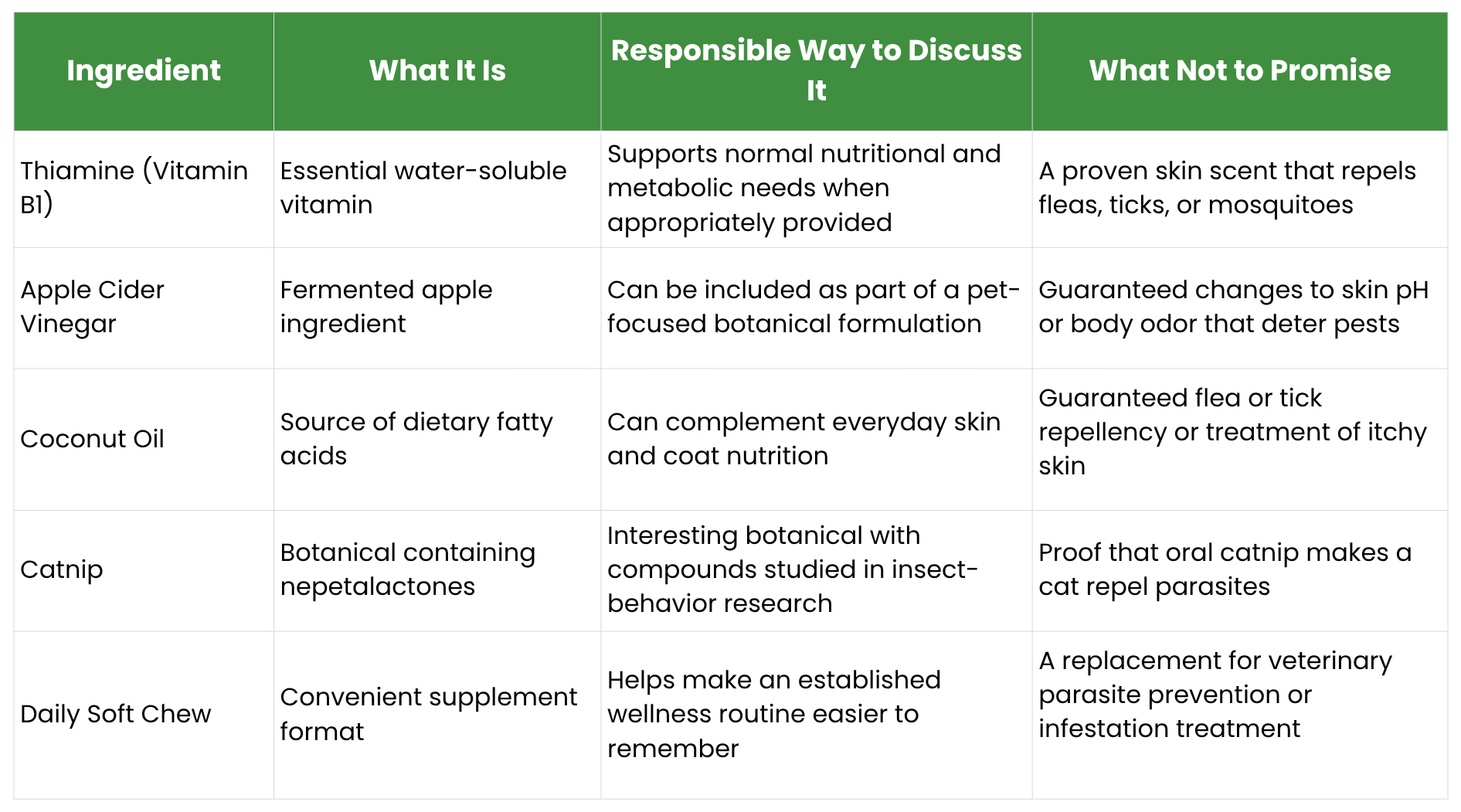
Being careful with language does not make natural wellness less appealing. In fact, it gives pet parents a clearer reason to trust what they are reading because ingredient benefits are presented without stretching them into medical or pest-control guarantees.
A More Complete Seasonal Flea & Tick Routine
A balanced seasonal routine starts with your cat’s actual lifestyle. For a strictly indoor cat, exposure may be lower than it is for a cat who visits a screened patio or lives with a dog that regularly walks outdoors, but “indoors” does not always mean zero exposure. Fleas can be carried inside by other animals, and ticks can occasionally hitch a ride on people or pets.
Regular grooming provides an easy opportunity to inspect the coat and skin, particularly around the neck, ears, belly, legs, and tail area. Vacuuming carpets and upholstery and washing pet bedding can also support household cleanliness, especially in multi-pet homes.
If you find an attached tick, visible fleas, flea dirt, significant skin irritation, or persistent scratching, contact your veterinarian rather than depending on a supplement to resolve the situation. The same applies if your cat develops lethargy, appetite changes, fever, unusual behavior, or other signs of illness.
Supplements make the most sense when they sit alongside these practical habits instead of carrying the entire burden of parasite care.
Adding Guardian’s Choice Flea & Tick Natural Defense for Cats to Daily Care
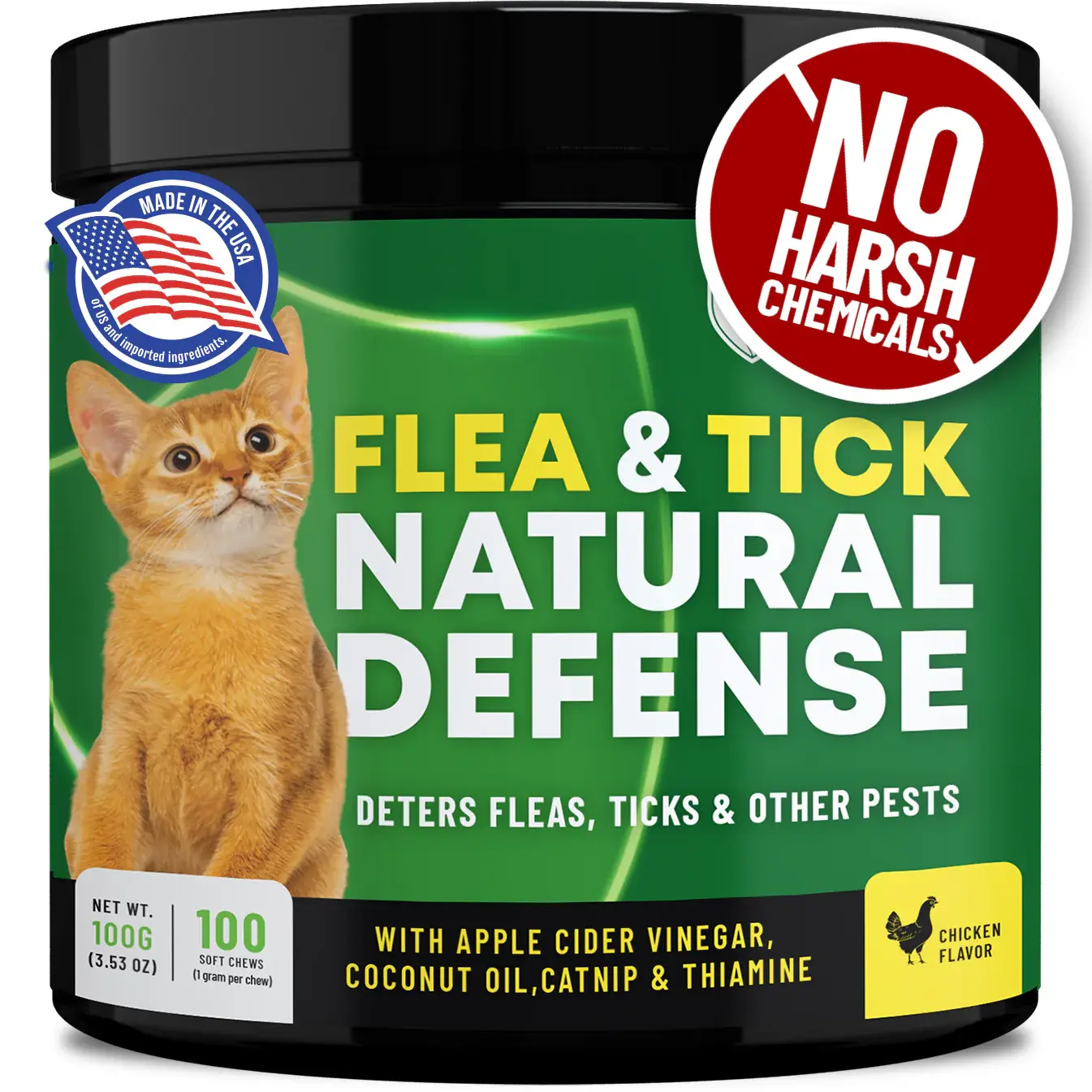
For pet parents who prefer a convenient botanical and nutritional addition to their seasonal routine, Guardian’s Choice (GCP) Flea & Tick Natural Defense for Cats offers a 100-soft-chew format designed for easy daily use. The product image highlights apple cider vinegar, coconut oil, and thiamine, along with the label message “No Harsh Chemicals.”
The best way to position GCP Flea & Tick Natural Defense is as a complementary wellness product rather than a guaranteed repellent or substitute for veterinary parasite control. That approach is consistent with Guardian’s Choice’s own brand commitment to transparency and honesty about product capabilities and limitations. The brand’s broader positioning also emphasizes quality, trustworthiness, and straightforward pet wellness education, making realistic ingredient language especially important.
Used as directed, the chew can become one simple part of an established routine that also includes coat checks, environmental cleaning, appropriate grooming, and veterinarian-guided flea and tick care. For busy pet parents, that consistency may be the most practical benefit of the format itself.
Frequently Asked Questions
-
Thiamine is an essential vitamin, but there is not strong evidence showing that oral vitamin B1 reliably creates a flea- or tick-repelling scent in cats. It should be viewed as a nutritional ingredient rather than a guaranteed internal repellent.
GCP Flea & Tick Natural Defense for Cats
GCP Flea & Tick Natural Defense for Cats is a convenient 100-soft-chew supplement formulated for pet parents who want to include nutritional and botanical ingredients in their cat’s broader seasonal wellness routine. The package highlights apple cider vinegar, coconut oil, and thiamine and emphasizes a formulation made without harsh chemicals.
-
Convenient 100-soft-chew format
-
Features thiamine (vitamin B1) as part of the formulation
-
Includes apple cider vinegar
-
Includes coconut oil
-
Designed to fit easily into an established daily pet-care routine
-
Complements grooming, coat checks, and household cleanliness
-
Offers an option for pet parents interested in botanical and nutritional ingredients
-
Label highlights “No Harsh Chemicals”
-
Intended to complement, not replace, veterinarian-guided flea and tick care
If you prefer a simple daily format and appreciate clearly identified ingredients, GCP Flea & Tick Natural Defense for Cats can be a convenient addition to your seasonal care routine. Follow the current label carefully, use it alongside appropriate environmental and veterinary care, and choose it for the consistency it can add rather than expecting a guaranteed pest-repellent effect.
Reference
Ives, A. R., & Paskewitz, S. M. (2005). Testing vitamin B as a home remedy against mosquitoes. Journal of the American Mosquito Control Association, 21(2), 213–217. https://doi.org/10.2987/8756-971X(2005)21%5B213:TVBAAH%5D2.0.CO;2
For all general inquiries, please contact us at info@guardianschoice.com
© Copyright. All rights reserved.