Natural Doesn’t Always Mean Safe: What Every Pet Owner Should Know About DIY Flea Remedies
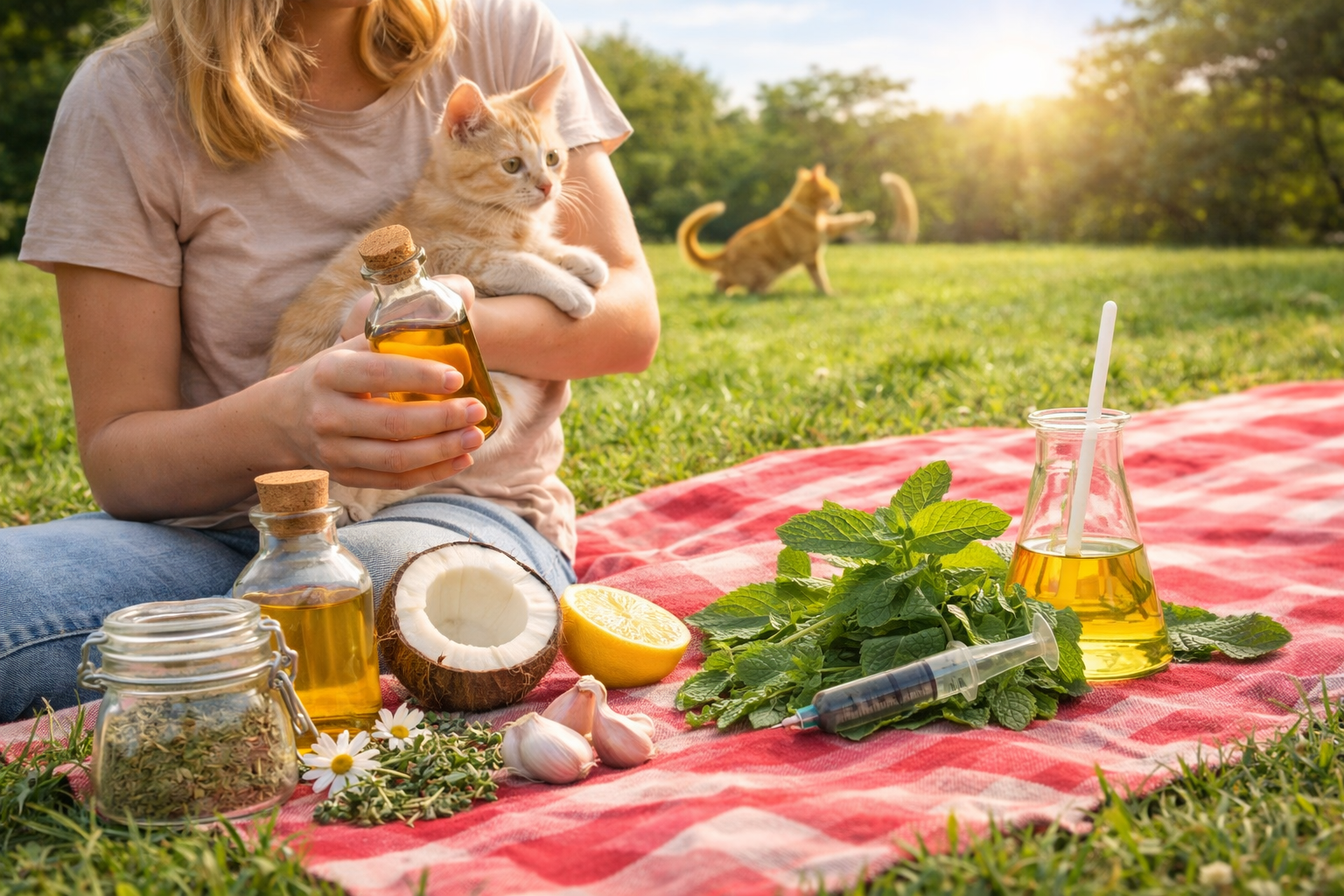
DIY “natural” flea remedies like Diatomaceous Earth (DE) and essential oils have gained popularity among pet owners looking to avoid harsh chemicals. However, many of these home-brewed solutions carry hidden risks—including inhalation hazards, skin irritation, and toxicity when improperly diluted. For pets, “natural” does not automatically mean “safe.” Understanding the difference between raw, unregulated applications and professionally formulated, lab-tested products is essential for protecting your pet’s lungs, skin, and overall health. When it comes to reliable, consistent protection, GCP Flea & Tick Natural Defense provides a safer, controlled alternative without the guesswork.
Natural vs. Chemical: A False Binary
In today’s pet care market, the conversation often becomes polarized: natural versus chemical. Pet parents understandably want to avoid harsh synthetic pesticides. The instinct to choose “natural” comes from a place of care. However, the word natural is not a safety guarantee. Poison ivy is natural. So is arsenic. What matters is formulation, dosing, and delivery.
Many DIY flea remedies rely on raw substances applied externally—powders puffed into fur or essential oils diluted in water. While these approaches aim to repel pests without synthetic compounds, they often lack proper dosing standards, safety testing, and application controls. In attempting to avoid one risk, pet owners may unintentionally introduce another.
The real comparison is not natural versus chemical. It is unregulated versus professionally formulated.
The Inhalation Hazard of Diatomaceous Earth
Diatomaceous Earth (DE) is a fine powder made from fossilized aquatic organisms. It works mechanically by damaging the exoskeleton of insects, causing them to dehydrate. On paper, that sounds simple and safe. But the reality is more nuanced.
DE is extremely fine. When applied to a pet’s coat or sprinkled in the home, it easily becomes airborne. Both humans and pets can inhale microscopic particles during application. Even food-grade DE, often marketed as “safe,” is not safe to breathe.
The issue is not toxicity in the traditional sense—it is physical irritation. The tiny particles can inflame respiratory tissue. In pets, especially small dogs, cats, and brachycephalic breeds (like Bulldogs or Persians), respiratory sensitivity is already higher. Repeated exposure may contribute to coughing, sneezing, nasal irritation, or deeper airway inflammation.
Additionally, applying DE directly to fur often leads to:
-
Dust clouds during brushing
-
Particles settling in eyes
-
Residue embedding into skin folds
-
Secondary dryness of the skin barrier
The mechanical action that dries out fleas can also dry out your pet’s skin, potentially worsening itchiness.
Essential Oils: Potent But Problematic
Essential oils are concentrated plant extracts. While some oils have insect-repelling properties, they are highly potent compounds requiring precise dilution.
The most common problem with DIY oil blends is inaccurate dosing. A few extra drops can dramatically change concentration levels. Dogs and cats metabolize oils differently than humans. Cats, in particular, lack certain liver enzymes necessary to process many essential oil compounds safely.
Common issues with improperly diluted essential oils include:
-
Contact dermatitis
-
Redness and skin inflammation
-
Chemical-like burns on sensitive areas
-
Systemic toxicity if licked from fur
-
Respiratory distress from strong vapors
Tea tree oil, peppermint oil, clove oil, and cinnamon oil are frequently cited in home remedies, yet they are also among the most sensitizing when misused. Vapors alone can irritate airways, especially in enclosed indoor spaces.
The challenge is not that essential oils are inherently bad. The problem is that professional micro-dosing and delivery systems are difficult to replicate in a home setting.
Comparing DIY vs. Lab-Tested Support
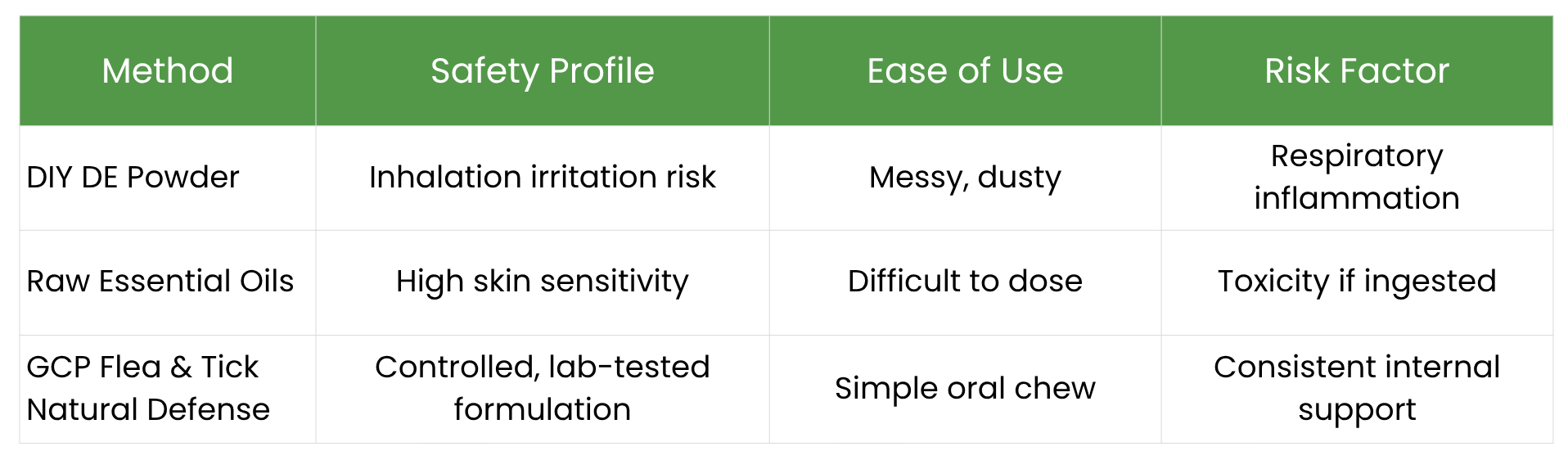
The key difference is predictability. Lab-tested products undergo formulation balancing, stability testing, and dosing calibration. DIY remedies rely on estimation.
Why External Applications Create Risk
Powders and sprays require surface contact. That means exposure to:
-
Eyes
-
Nostrils
-
Paw pads
-
Open skin areas
-
Oral ingestion through grooming
Pets groom themselves constantly. Any external substance applied to fur has a high likelihood of being licked. Even “safe” natural ingredients can cause gastrointestinal upset when ingested in concentrated amounts.
This is where internal support offers a practical advantage.
Why GCP Flea & Tick Natural Defense Is Different
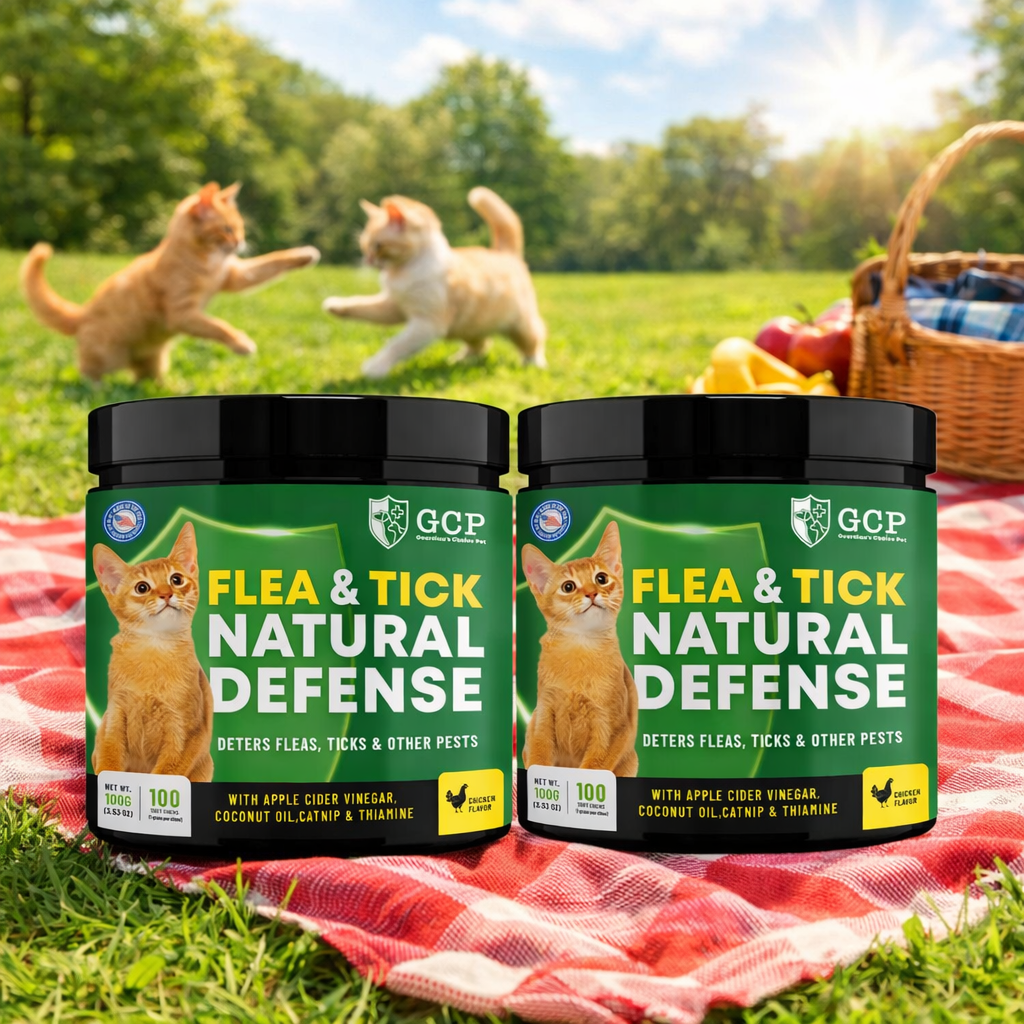
GCP Flea & Tick Natural Defense for Cats and Dogs provides a professional-grade, natural approach without exposing pets to airborne powders or concentrated oils on the skin.
Because it is delivered orally in a chew format, it eliminates:
-
Inhalation risk
-
Dust exposure
-
Skin contact irritation
-
Accidental over-application
Instead of coating the outside of your pet, it works from within to create an environment that supports natural pest deterrence. The dosing is pre-measured. The formulation is balanced. The application is clean.
For pet parents who want natural defense without the chaos of home mixtures, GCP offers consistency and safety.
The “Home-Brew” Guesswork Problem
One of the biggest hidden dangers in DIY remedies is inconsistency. No two home mixtures are identical. Environmental conditions, dilution ratios, and ingredient sourcing vary. Without laboratory oversight, potency can fluctuate significantly.
This unpredictability increases the likelihood of:
-
Underdosing (ineffective protection)
-
Overdosing (skin or systemic reactions)
-
Cross-contamination
-
Storage instability
Professional formulations eliminate these variables.
The Skin Barrier Factor
Your pet’s skin is not just a surface—it is an immune organ. Over-drying with powders or irritating with oils can disrupt the protective barrier. Once compromised, pets may experience:
-
Increased itching
-
Secondary bacterial infections
-
Yeast overgrowth
-
Hot spots
Protecting against fleas should not compromise the integrity of the skin.
Frequently Asked Questions
-
No. Even food-grade DE can irritate lungs when inhaled. Application should always avoid airborne exposure.
Wanting natural protection is smart. Choosing unregulated, airborne powders and concentrated oils is not. The goal is not simply to avoid chemicals—it is to reduce risk altogether. DIY flea remedies may appear safer on the surface, but inhalation hazards, skin irritation, and dosing inconsistency create new problems.
GCP Flea & Tick Natural Defense offers a balanced, lab-tested alternative that supports protection without exposing your pet’s lungs or skin to unnecessary stress. When it comes to your pet’s safety, natural should mean thoughtful, measured, and professionally formulated—not improvised.
For all general inquiries, please contact us at info@guardianschoice.com
© Copyright. All rights reserved.