Microbiome Management: How Probiotics Neutralize Ammonia at the Source
Ammonia-related litter box odor is often treated as a surface problem, but part of the story may begin deeper in your cat’s digestive system. When the gut microbiome is balanced, digestion, stool quality, nutrient use, and waste breakdown are better supported. Cat probiotics and prebiotics can help maintain a healthier gut environment, and GCP Cat Purrbiotics is designed to support digestive balance, immune wellness, stool quality, and everyday litter box comfort as part of a consistent routine.
Why Ammonia Odor Starts in the Gut
Every cat parent knows that litter box odor can change quickly. Sometimes the smell is mild and manageable, and other times it becomes sharp, heavy, or more noticeable than usual. While litter type, box cleaning, hydration, and diet all matter, ammonia-related odor is not only a litter box issue. It can also be connected to how the body digests protein, processes waste, and maintains balance in the gut.
Cats are obligate carnivores, which means their bodies are designed around animal-based nutrition. Protein digestion is a normal and necessary part of feline health, but when digestion is less efficient or the gut environment is unsettled, more undigested material may reach the colon. Once there, certain bacteria can ferment waste material and produce odor-related compounds. This does not mean probiotics “erase” odor or replace proper litter care, but it does explain why microbiome management can be part of a smarter cat odor support routine.
The word “neutralize” should be understood responsibly. In a wellness context, probiotics support the internal conditions that may help reduce the buildup of odor-related byproducts at the source. They do not replace veterinary care, diagnose a health issue, or guarantee an odor-free litter box. Instead, they help support digestive balance, stool quality, and gut comfort, which may contribute to a cleaner, more manageable litter box experience over time.
If litter box odor changes suddenly, becomes extremely strong, or comes with symptoms like straining, appetite loss, diarrhea, vomiting, lethargy, or changes in urination, it is important to contact a veterinarian. Odor can be influenced by normal digestion, but it can also reflect medical concerns that need professional attention.
The Microbiome’s Role in Digestive Balance
Your cat’s gut microbiome is a living ecosystem made up of bacteria and other microorganisms that interact with food, nutrients, and the immune system. When this ecosystem is balanced, it supports normal digestion and helps the body process nutrients more efficiently. When it is disrupted, pet parents may notice changes in stool quality, odor, appetite, grooming, energy, or overall comfort.
A cat’s microbiome can shift for many reasons. Food changes, stress, antibiotics, travel, heat, aging, illness, and even a disrupted routine can affect digestive rhythm. Cats are especially sensitive to sudden changes, so something as simple as a new treat, a visiting pet, or a different feeding time can sometimes show up in the litter box.
This is why cat probiotics and prebiotics are often used as part of daily digestive support. Probiotics help support beneficial bacteria in the gut, while prebiotics help nourish the beneficial bacteria already present. Together, they support the environment where digestion happens, which is why they are often discussed alongside stool quality, gut balance, skin and coat health, immune wellness, and litter box comfort.
A study on probiotic use in healthy adult cats found that probiotic supplementation influenced fecal microbial populations and some immune-related markers. This does not mean every probiotic product produces the same results, and it does not mean probiotics should be used as a treatment for disease. It does support the broader idea that the feline gut microbiome is responsive to probiotic support, which is helpful when discussing daily microbiome management.
How Probiotics and Prebiotics Support Odor Management
Ammonia-related odor is often linked to waste breakdown. When proteins are digested and waste moves through the digestive tract, the balance of microbes in the gut may influence how that waste is fermented. If the gut environment is imbalanced, odor-related compounds can become more noticeable. If the gut is better supported, stool quality and waste processing may become more consistent.
Probiotics support this process by helping maintain a healthier microbial environment. A balanced gut may help reduce excessive fermentation of undigested material, which is one reason probiotics are often discussed in connection with litter box odor support. This should not be framed as a cure for odor, but as one supportive layer in a broader routine that also includes proper hydration, high-quality food, regular litter box cleaning, and veterinary guidance when something seems off.
Prebiotics add another layer of support. Fructooligosaccharides, often called FOS, are prebiotic fibers that help nourish beneficial gut bacteria. When included with probiotics, they create a synbiotic approach, meaning the formula contains both beneficial microorganisms and the fiber that helps support them. For cat parents, this matters because gut balance is not only about adding probiotics; it is also about feeding the right internal environment consistently.
Soil-based probiotics, including Bacillus strains, are often used in pet supplements because they are known for their stability. These strains are designed to support the gut environment and can fit well into daily routines. When paired with FOS, they help create a more complete gut-support system for cats who need consistent digestive and litter box support.
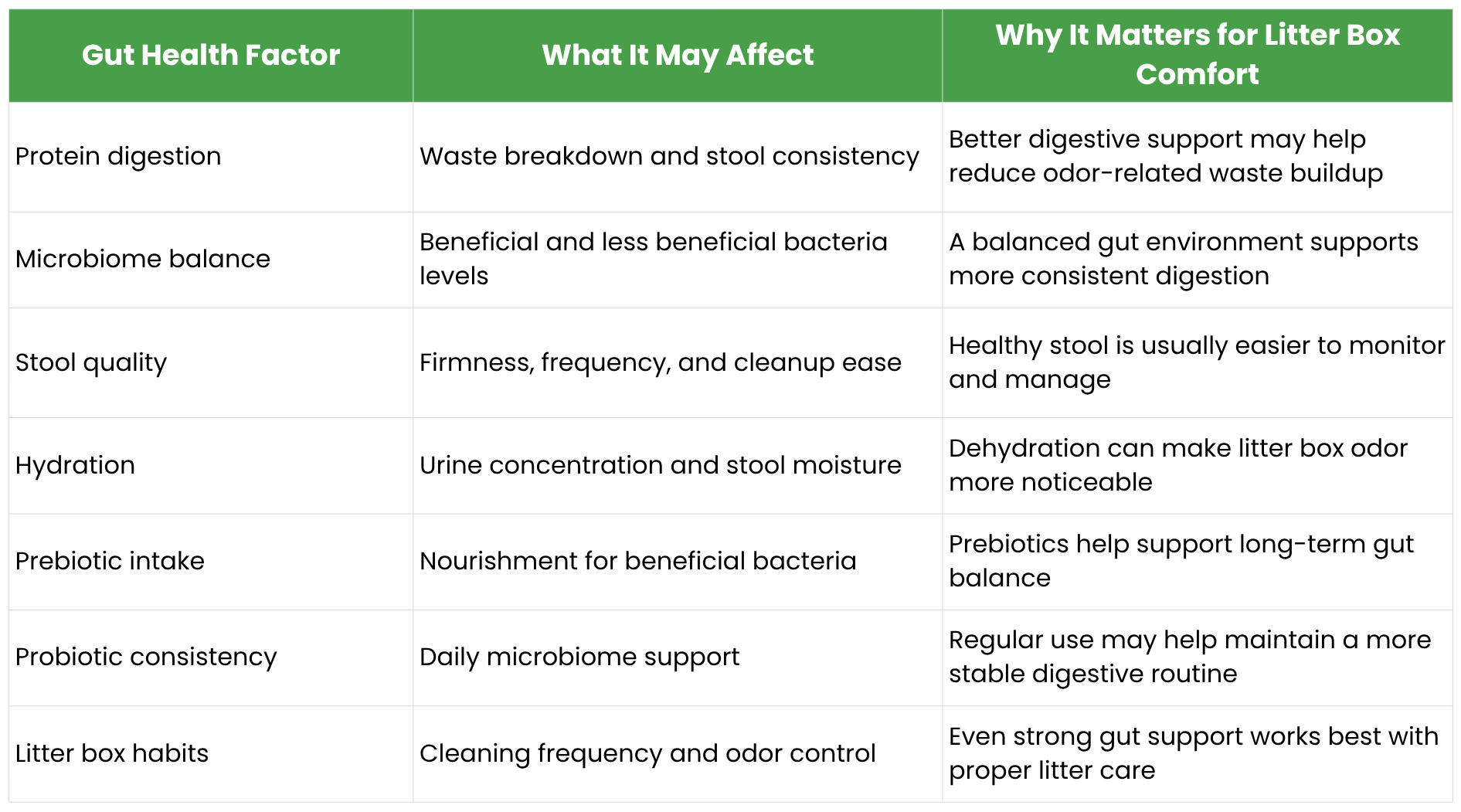
Cat Gut Health and Litter Box Odor Comparison
Building a Better Microbiome Routine for Cats
A better microbiome routine starts with consistency. Cats tend to do best when their feeding schedule, food type, water access, and environment remain predictable. Sudden changes may disrupt digestion, which can affect stool quality and litter box odor. When changes are needed, gradual transitions are usually easier on the gut than abrupt switches.
Hydration also matters. Cats can be particular about water, so offering multiple bowls, using a pet fountain, or including wet food when appropriate may help support overall comfort. Hydration affects digestion and urine concentration, both of which can influence litter box odor. If a cat is urinating more or less than usual, straining, or avoiding the litter box, that should be discussed with a veterinarian.
Litter box care still matters, even when using probiotics. Scoop regularly, clean the box as needed, and choose a litter your cat accepts. A cat who dislikes the litter box may hold urine or stool longer, avoid the box, or show stress-related behaviors, all of which can complicate the odor issue.
Daily digestive support can then become the final piece of the routine. A cat probiotic powder is often easier to use when it blends into mealtime, especially if it has a flavor cats enjoy. The best supplement is one your cat will actually take consistently, because microbiome support works best as a routine rather than a once-in-a-while fix.
Supporting Gut Balance With GCP Cat Purrbiotics
For cat parents who want to support ammonia-related litter box comfort from the inside, GCP Cat Purrbiotics fits naturally into a daily wellness routine. It is designed to support digestive balance, gut microbiome wellness, stool quality, immune support, and skin and coat health without making litter box care complicated.
GCP Cat Purrbiotics combines soil-based probiotic strains with FOS prebiotics, giving cats both probiotic support and the prebiotic nourishment beneficial bacteria need. Its chicken liver flavor helps make daily use easier, especially for picky cats who may resist new supplements. Used consistently as directed, it can help cat parents support gut balance at mealtime while continuing to manage litter box freshness through cleaning, hydration, and routine care.
This is a more thoughtful way to approach odor. Instead of only masking smells after they appear, cat parents can support the digestive environment where some odor-related compounds begin. GCP Cat Purrbiotics does not replace veterinary care or promise an odor-free home, but it gives cat parents a practical way to support the gut as part of the bigger litter box comfort routine.
Frequently Asked Questions
-
Ammonia smell can come from urine breakdown, concentrated urine, litter box cleaning habits, diet, hydration, and overall waste processing. If the smell changes suddenly or becomes very strong, it is worth speaking with a veterinarian to rule out health concerns.
Better Litter Box Comfort Starts With the Gut
Litter box odor is often treated as something to cover up, but the better long-term approach is to look at the full routine. Cleaning habits, hydration, diet, stress, and digestive balance all play a role. Because the gut microbiome helps support digestion and waste processing, it makes sense to include probiotic and prebiotic support in a thoughtful litter box comfort plan.
GCP Cat Purrbiotics helps cat parents support gut balance where part of the odor story begins. With consistent use, label-directed feeding, and good litter box care, it can become a simple daily step toward better digestive wellness, stool quality, immune support, and overall comfort.
GCP Cat Purrbiotics
GCP Cat Purrbiotics is a synbiotic probiotic powder made to support your cat’s digestive balance, gut microbiome, stool quality, immune wellness, and skin and coat health. It combines soil-based probiotic strains with FOS prebiotics and a chicken liver flavor to make daily gut support easier for both cats and cat parents.
Benefits of GCP Cat Purrbiotics:
-
Supports gut microbiome balance
-
Helps support digestive regularity
-
Supports stool quality and litter box comfort
-
Includes FOS prebiotics to nourish beneficial bacteria
-
Features soil-based probiotic strains
-
Provides 5 billion CFU per scoop when used as directed
-
Supports immune wellness as part of daily care
-
Supports skin and coat health through digestive wellness
-
Chicken liver flavor helps with picky eaters
-
Easy powder format for mealtime use
GCP Cat Purrbiotics is a smart choice for cat parents who want to support litter box comfort from the inside instead of only masking odor after it appears. Add it to your cat’s routine as directed, keep an eye on normal litter box habits, and pair it with good hydration, clean litter care, and veterinary guidance when needed.
Citation:
Marshall-Jones, Z. V., Baillon, M. L. A., Croft, J. M., & Butterwick, R. F. (2006). Effects of Lactobacillus acidophilus DSM13241 as a probiotic in healthy adult cats. American Journal of Veterinary Research, 67(6), 1005–1012. https://pubmed.ncbi.nlm.nih.gov/16740094/
For all general inquiries, please contact us at info@guardianschoice.com
© Copyright. All rights reserved.