
The May “Hatch”: Why Flea Activity Spikes for Dogs and Cats
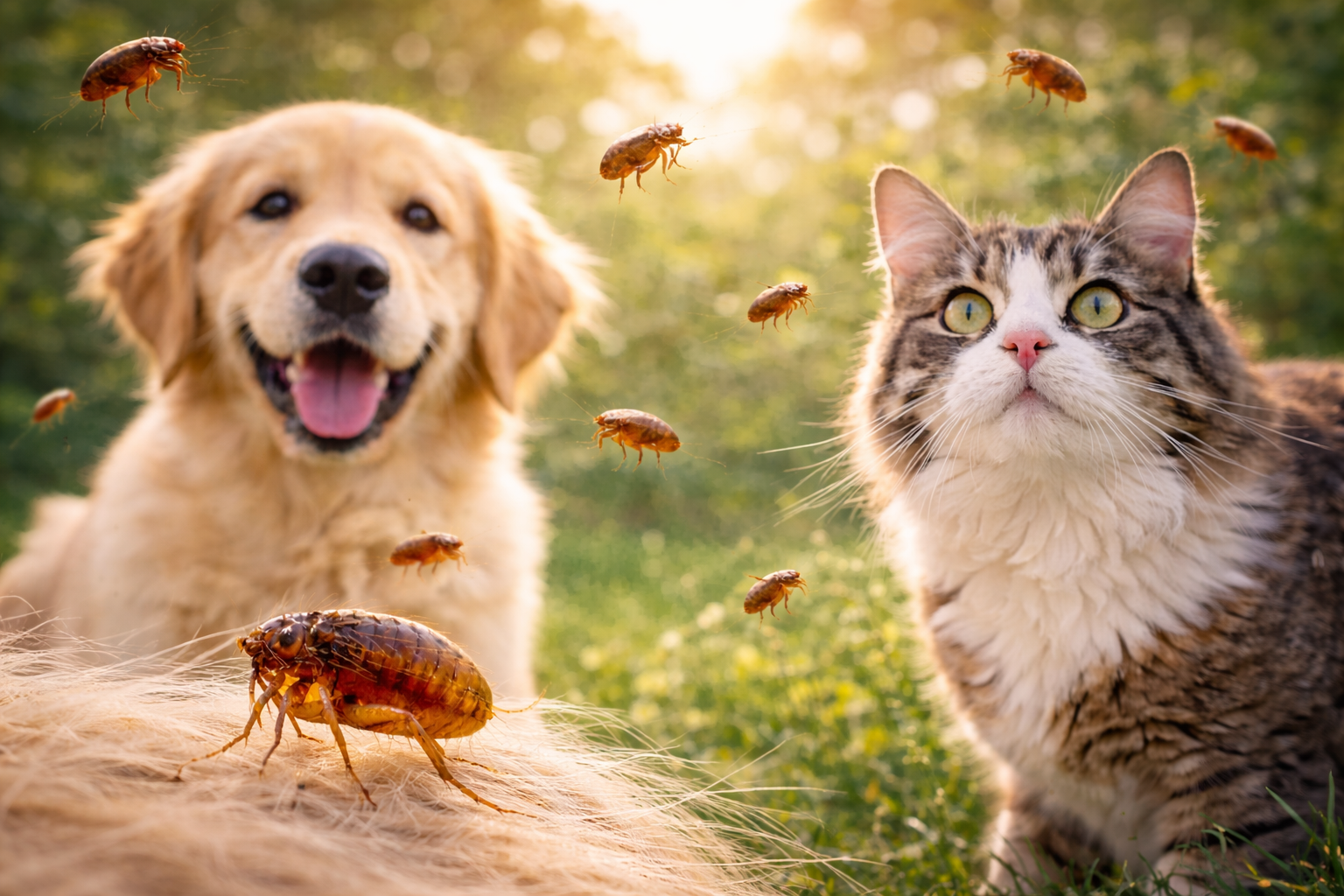
As temperatures rise in spring, dormant flea larvae begin to develop and emerge, leading to a seasonal surge often referred to as the “May Hatch.” This increase in activity can affect both dogs and cats, regardless of whether they spend time outdoors. Natural ingredients such as Thiamine (Vitamin B1), Apple Cider Vinegar, and Coconut Oil are often included in pet wellness routines to help support a less inviting environment for pests. Products like GCP Flea & Tick Natural Defense Soft Chews for Dogs and Cats are designed to complement a consistent, daily approach to seasonal pet care.
Understanding the Spring Flea Surge
Flea activity tends to rise quickly during spring due to environmental changes. During colder months, flea larvae and pupae can remain inactive in soil, shaded areas, carpets, or cracks in flooring, waiting for favorable conditions.
As temperatures increase and moisture levels rise, these dormant stages resume development. This synchronized emergence creates what many pet owners experience as a sudden spike in flea presence. While it may feel abrupt, it is part of a predictable seasonal cycle driven by climate conditions.
How Fleas Enter Your Home
Even in well-maintained homes, fleas can find their way indoors. Dogs that spend time outside may pick up fleas directly from grass, soil, or contact with other animals. Cats, even indoor ones, can be exposed through indirect pathways.
Common entry points include:
-
Shoes and clothing after being outdoors
-
Pet fur after walks or playtime
-
Shared spaces such as patios or entryways
-
Other animals that move between environments
Because of this, flea exposure is not limited to outdoor pets. It becomes a household-level consideration, especially during peak seasons.
What often goes unnoticed is how easily these transfers can happen during everyday routines. A quick walk, a visit to a park, or even sitting on outdoor furniture can create opportunities for fleas to latch on and travel indoors. Over time, repeated small exposures can build, making it important to stay mindful of how daily habits may contribute to the overall environment inside your home.
Why Both Dogs and Cats Are at Risk
Dogs are naturally more exposed due to outdoor activity, but cats are not exempt. Indoor cats may be particularly sensitive to environmental changes, making even minor exposures noticeable through behaviors like scratching or restlessness.
Dogs, on the other hand, may experience repeated exposure due to daily walks or yard time. This makes consistency in routine especially important for multi-pet households.
Recognizing that both dogs and cats share the same environment helps shift the focus from reactive care to proactive, whole-home awareness.
In households with both dogs and cats, this shared exposure becomes even more relevant. A dog that spends time outside may unknowingly introduce environmental changes that affect an indoor cat, even if the cat never leaves the house. This interconnected dynamic highlights the importance of viewing pet care as a unified routine rather than treating each pet’s exposure risk separately.
Natural Ingredients and Their Role
Many pet owners are exploring alternatives that align with a more routine-based approach to seasonal care. Certain ingredients are commonly included in these formulations.
Thiamine (Vitamin B1)
Thiamine is an essential nutrient involved in metabolic processes. It is often included in pet wellness products as part of overall nutritional support.
Apple Cider Vinegar (ACV)
Apple cider vinegar is commonly used in pet routines for skin and coat support. It is also frequently discussed in relation to maintaining an environment that may be less appealing to external pests.
Coconut Oil
Coconut oil is included for its role in supporting skin hydration and coat condition, which can be helpful during seasonal changes.
Catnip (for cats) / Anise (for dogs)
These ingredients are often included for palatability and species-specific formulation, helping make daily use more consistent.
These ingredients are not intended to replace veterinary care but are often used as part of a broader wellness routine.
Natural vs. Conventional Approaches
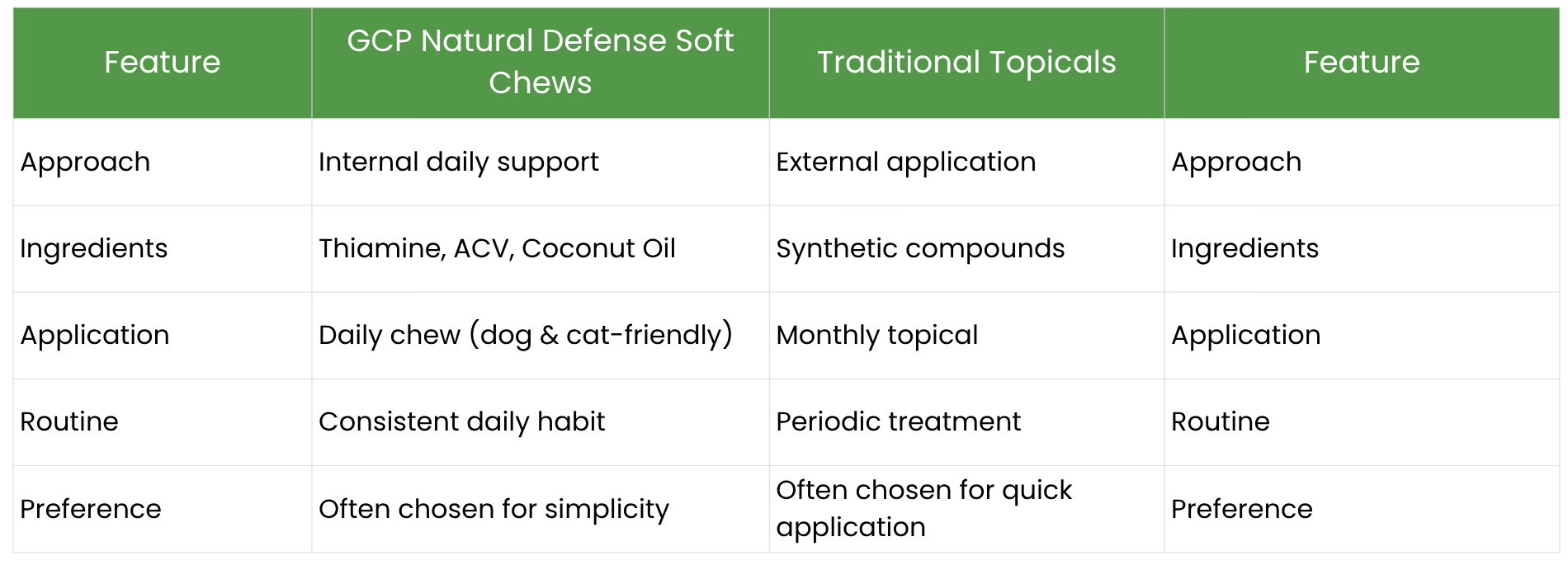
Both approaches are used widely, and many pet owners choose based on lifestyle, preferences, and their pet’s needs.
Supporting a Preventive Routine
Seasonal flea management is often most effective when approached proactively. Rather than waiting for visible signs, many routines focus on consistency.
Helpful practices include:
-
Regular cleaning of pet bedding and shared spaces
-
Routine grooming for both dogs and cats
-
Monitoring seasonal behavior changes
-
Incorporating daily nutritional support
By combining these habits, pet owners can create a more stable and manageable environment during peak flea activity.
Supporting Research
Environmental factors such as temperature and humidity play an important role in flea development and activity. Research has shown that flea populations are highly responsive to environmental conditions, with warmer and more humid climates supporting faster development and increased survival rates.
A study published in Insects discusses how environmental conditions influence flea life cycles, distribution, and activity patterns, highlighting the role of climate in shaping seasonal flea dynamics.
These findings help explain why flea activity often increases during spring and early summer months.
Frequently Asked Questions
-
Warmer temperatures and higher humidity create conditions that support flea development. This allows dormant stages to resume their life cycle more rapidly.
A Seasonal Shift in Awareness
The spring increase in flea activity is part of a natural environmental cycle, but it doesn’t have to catch you off guard. By understanding how and why this shift occurs, pet owners can take a more informed and proactive approach.
Supporting both dogs and cats with consistent routines helps create a more balanced and manageable environment throughout the season.
In many ways, seasonal changes like the May Hatch are a reminder that your pet’s environment is always evolving. Small, consistent adjustments, such as maintaining clean living spaces, staying aware of temperature shifts, and supporting daily routines, can make these transitions feel more manageable. By focusing on steady, preventative habits rather than reactive fixes, you create a more stable environment for both your dog and cat as conditions change throughout the year.
Featured Products: GCP Flea & Tick Natural Defense for Dogs & Cats
If you’re looking for a simple way to support your pets during peak flea season, GCP Flea & Tick Natural Defense Soft Chews are designed for both dogs and cats, making them ideal for multi-pet households.
For Dogs:
-
Formulated with Thiamine, Apple Cider Vinegar, Coconut Oil, and Anise
-
Chicken-flavored soft chew for easy daily use
-
Designed for consistent, routine-based support
-
No topical application required
For Cats:
-
Formulated with Thiamine, Apple Cider Vinegar, Coconut Oil, and Catnip
-
Palatable soft chew designed specifically for cats
-
Supports a daily wellness routine
-
Convenient alternative to topical treatments
Why pet owners choose GCP Natural Defense:
-
No harsh chemicals
-
Daily routine support for both dogs and cats
-
Simple, consistent approach to seasonal care
-
Designed to complement overall pet wellness habits
Incorporating both formulas into your routine allows you to support your entire household—dogs and cats alike—through the seasonal shift.
Citation:
Rust MK. Advances in the Control of Ctenocephalides felis (cat flea) on Cats and Dogs. Insects. 2017;8(4):118.
For all general inquiries, please contact us at info@guardianschoice.com
© Copyright. All rights reserved.