A VIP Guide to Keeping Your Pets Happy and Healthy This Labor Day
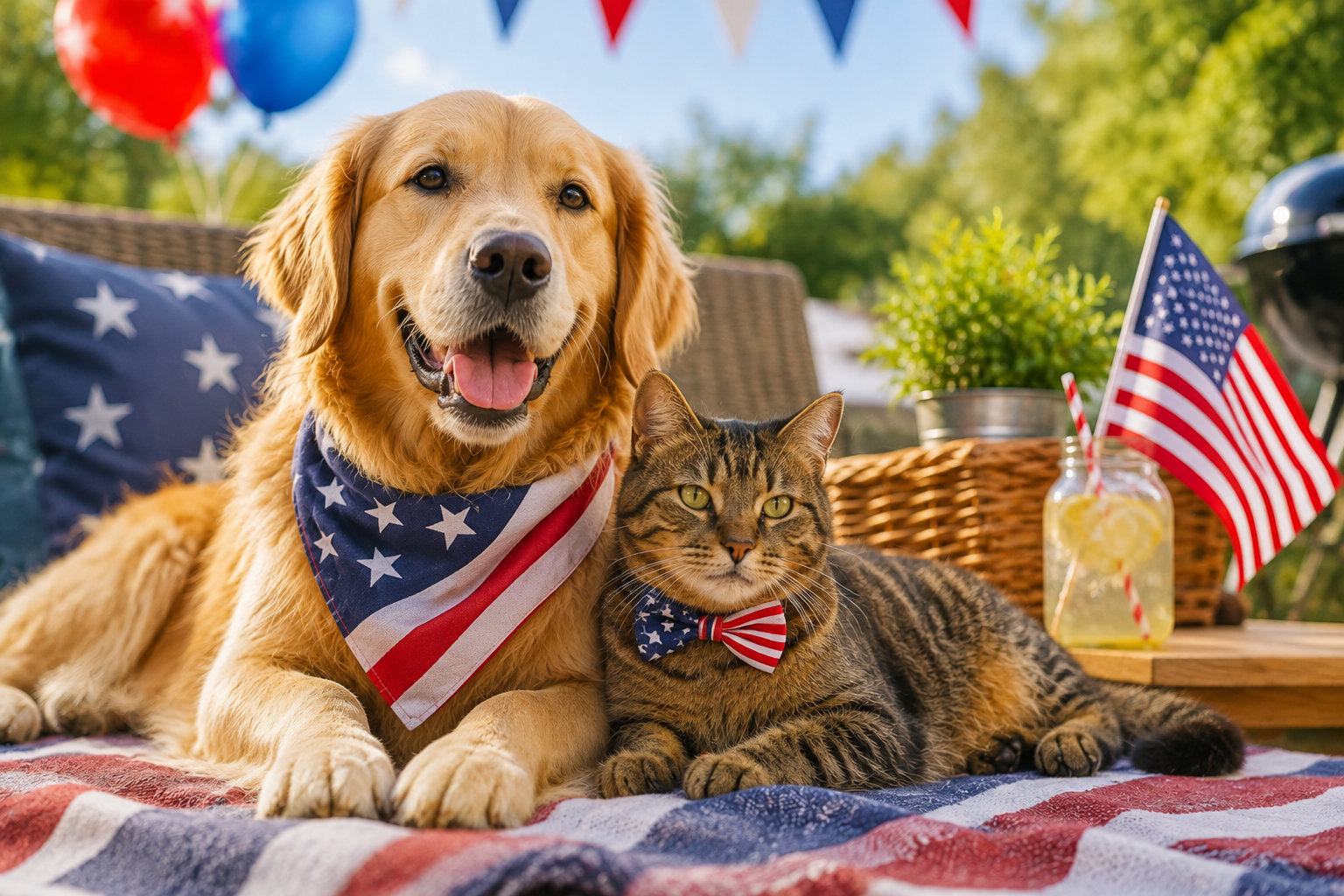
Labor Day can bring outdoor adventures, backyard meals, visiting guests, and unexpected changes to your pet’s normal schedule. A thoughtful Labor Day pet safety plan that includes familiar routines, supervised outdoor time, quiet spaces, clean water, appropriate treats, and consistent wellness care can help dogs and cats remain more comfortable while the family celebrates.
Labor Day weekend gives families a welcome opportunity to slow down, enjoy the final stretch of summer, and spend more time with the pets who make every gathering feel complete. Whether your plans include a backyard barbecue, a day at the park, a family road trip, or a quiet afternoon at home, your dog or cat will probably notice that the household feels different from an ordinary weekend.
Those changes can be exciting, but they can also introduce new sights, sounds, smells, people, foods, and routines. A dog may spend more time running through grass or greeting visitors, while a cat may prefer to watch the celebration from a quiet room. By planning ahead, pet parents can create a Labor Day pet wellness routine that allows everyone to enjoy the occasion without expecting their pets to adjust to every change at once.
Why Labor Day Celebrations Can Feel Different to Pets
People often view a long weekend as a chance to break from their normal schedule, but many pets find comfort in knowing what happens next. Regular mealtimes, walks, naps, play sessions, and bedtime routines create a familiar rhythm, so even positive changes can temporarily make the home feel unpredictable.
A lively backyard gathering may include unfamiliar voices, children running, doors opening frequently, music, food aromas, and guests who are eager to interact with the family pet. Some animals enjoy the extra attention, while others may become restless, hide, pace, vocalize, eat less than usual, or seek more reassurance from their owners. These behaviors do not always mean that something serious is wrong, but they can be signs that a pet needs more space, supervision, or familiarity.
The goal is not to keep pets away from every celebration. Instead, thoughtful Labor Day pet care gives them choices. A social dog may enjoy supervised time with guests followed by a quiet break, while a cautious cat may be happiest in a comfortable room where food, water, litter, bedding, and familiar toys are easy to reach.
Supporting Your Dog During Outdoor Adventures
Labor Day often marks one of the last big outdoor weekends of the season, making it a popular time for longer walks, park visits, camping trips, and backyard play. These experiences can be wonderful forms of enrichment, especially when they match your dog’s age, energy level, physical condition, and usual activity.
Before leaving home, consider the length of the outing, the temperature, access to shade, available drinking water, and the type of ground your dog will be walking on. Hot pavement, crowded spaces, unfamiliar trails, tall grass, and extended exercise may require more attention than a normal neighborhood walk. Bringing fresh water, a collapsible bowl, waste bags, a secure leash, identification, and any veterinarian-recommended supplies can make the trip easier to manage.
After outdoor play, take a few minutes to look over your dog’s paws, coat, ears, belly, and skin. Grass seeds, dirt, burrs, insects, and minor irritation may be easier to notice when you check promptly rather than waiting until your dog begins licking or scratching. Regular grooming and coat checks are practical parts of seasonal dog wellness, particularly when outdoor activity increases.
Flea and tick awareness may also remain relevant around Labor Day because weather, location, wildlife activity, and local conditions differ from one area to another. A veterinarian can help you understand the risks in your region and recommend an approach suited to your dog rather than relying on the calendar alone.
Helping Your Cat Feel Secure Around Holiday Guests
Cats are often deeply connected to the familiar layout, scent, and rhythm of their home. When guests arrive, furniture moves, doors open more often, and noise levels rise, even a friendly cat may decide that the celebration is better observed from a distance.
Creating a quiet retreat before the gathering begins gives your cat a place to settle without having to search for safety after the house becomes busy. Choose a room away from the main activity and include fresh water, a clean litter box, a comfortable bed, a hiding place, and a few familiar toys. Ask guests, especially children, to respect the space rather than following the cat or trying to bring them back into the party.
Changes in schedule and environment can sometimes coincide with changes in appetite, litter-box habits, or stool quality, although many different factors can contribute to these signs. One study involving a specific strain of Lactobacillus acidophilus in healthy adult cats reported changes in intestinal microbial populations and certain immune measurements, suggesting that individual probiotic strains may interact with feline digestive and immune systems. However, probiotic effects are strain-specific, and this research should not be interpreted as proof that every probiotic product will produce the same outcome or as a substitute for veterinary care.
If digestive changes continue, become severe, or appear alongside vomiting, lethargy, pain, dehydration, or refusal to eat, contact a veterinarian. Holiday timing should never delay professional guidance when a cat’s condition appears unusual or concerning.
Creating a Pet-Friendly Backyard Celebration
Backyard barbecues are one of the most familiar Labor Day traditions, but they also create more opportunities for pets to approach unattended plates, trash bags, grills, coolers, and guests who may not know the household rules. Establishing a simple plan before the gathering begins can prevent confusion later.
Ask visitors not to feed pets from the table, even when the pet appears interested. Rich foods, bones, sauces, desserts, alcoholic drinks, and unfamiliar ingredients may be inappropriate for dogs or cats, while overeating alone may cause digestive discomfort. Keep veterinarian-approved treats or the pet’s normal food available so family members have an appropriate option when they want to include the pet.
Grills, hot tools, skewers, charcoal, and food wrappers should remain out of reach, and trash should be secured as soon as possible. Gates and doors also deserve extra attention because a pet can slip outside while guests are arriving, carrying food, or moving between the house and yard.
Shade and clean water should be available throughout the day, even when the weather feels mild. Pets can become warm when they are excited, active, or surrounded by people, so provide breaks indoors and never require a pet to remain in the center of the gathering.
Labor Day Pet Comfort Checklist
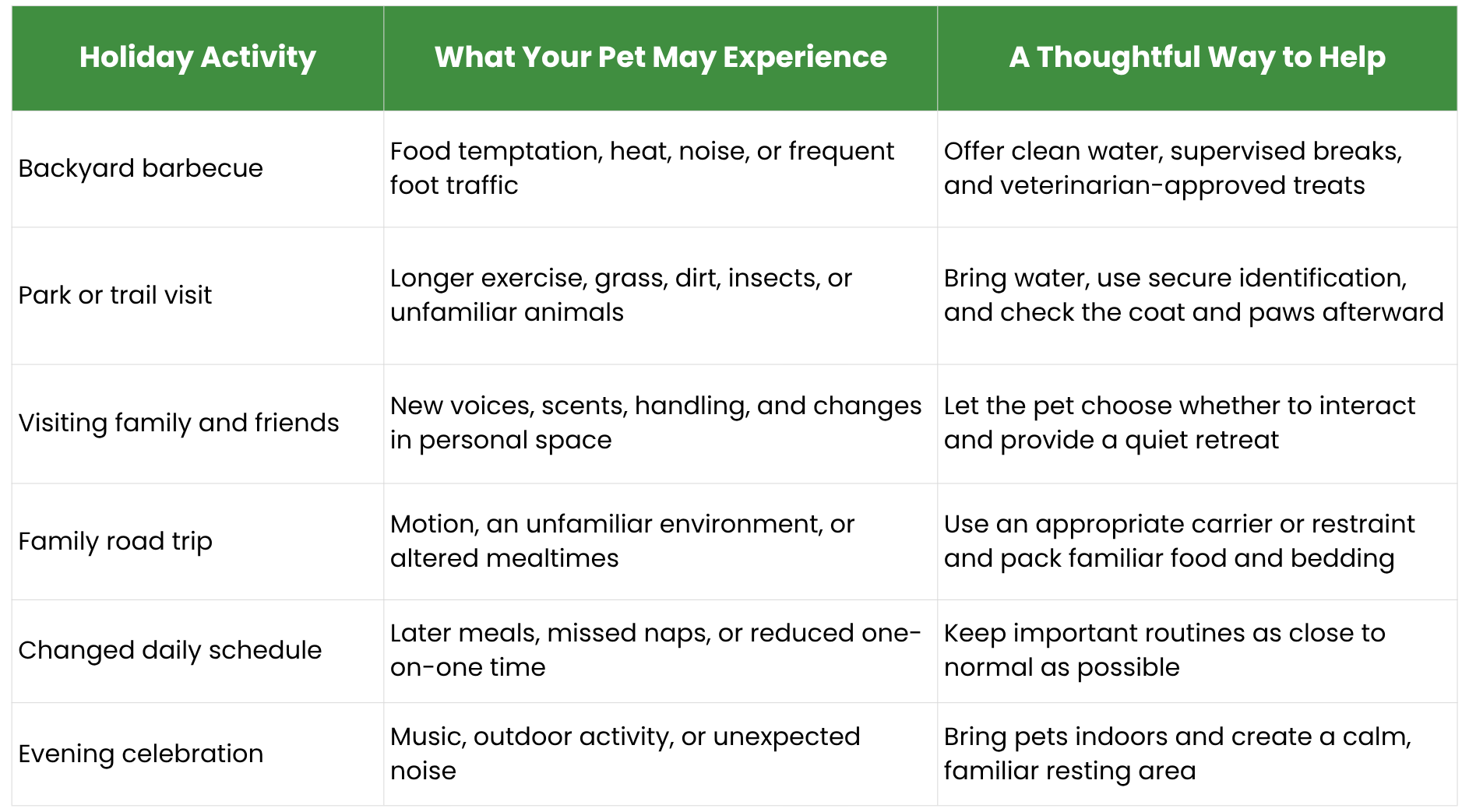
This checklist is not meant to make the weekend feel complicated. It simply helps pet parents notice the moments when a little preparation can make the celebration easier for both the animal and the people caring for them.
Keeping the Weekend Routine Familiar
Not every part of the day needs to remain exactly the same, but preserving a few familiar anchors can help your pet understand that the household is still safe and predictable. Try to keep meals close to their usual times, maintain normal bathroom breaks, and set aside a few quiet minutes for the attention your pet regularly expects.
For dogs, this may mean taking the usual morning walk before guests arrive rather than skipping it because the day is busy. For cats, it may mean keeping feeding and litter-box areas unchanged even when other rooms are rearranged for visitors. Familiar bedding, toys, bowls, and household scents can also provide reassurance in a busier environment.
Consistency is especially important for pets that already follow veterinarian-directed diets, medications, or wellness routines. Set reminders before the celebration begins so important care steps do not get overlooked during travel, cooking, or entertaining.
Complete Your Pet’s VIP Wellness Routine
Once the practical details are handled, daily wellness products can become part of the routine rather than the entire plan. Guardian’s Choice offers pet-specific options that are designed to complement thoughtful care, including GCP Flea & Tick Natural Defense for Dogs and GCP Purrbiotics – Daily Probiotics for Cats.
For dogs spending more time outside, GCP Flea & Tick Natural Defense can be incorporated into a broader seasonal routine that also includes grooming, coat checks, yard care, and veterinarian-recommended protection. It should not be described as a guaranteed way to eliminate pests or replace products prescribed by a veterinary professional.
For cats adjusting to visitors and schedule changes, GCP Purrbiotics offers a convenient daily probiotic format designed to support digestive wellness. Because probiotic benefits may depend on the strains, formulation, individual animal, and regular use, pet parents should follow the label and speak with a veterinarian about suitability.
Families caring for pets at different life stages can also explore GCP VitaPup Multivitamin Chews for Puppies, GCP OmegaPaws Chews for Dogs, GCP Breath Boost Bites for Dogs, GCP Flea & Tick Natural Defense for Cats, GCP Cat L-Lysine, and NO POO Probiotic Chews. Each product should be selected according to the pet’s species, age, weight, current diet, health history, and veterinary guidance.
Frequently Asked Questions
-
Begin preparing a few days before the gathering by setting up quiet spaces, reviewing household rules, and keeping meals and walks consistent. Supplements should be introduced only according to their labels and should not be expected to create immediate or guaranteed results.
GCP Labor Day Wellness Favorites
GCP Flea & Tick Natural Defense for Dogs and GCP Purrbiotics – Daily Probiotics for Cats offer two convenient ways to complement your household’s seasonal pet wellness routine. One is designed for dog owners thinking about outdoor and coat care, while the other provides a daily probiotic option for cat parents focusing on digestive wellness.
-
Convenient formats that can fit into an established daily schedule
-
Separate products created for the different wellness needs of dogs and cats
-
GCP Flea & Tick Natural Defense complements seasonal coat and outdoor care
-
GCP Purrbiotics complements a consistent feline digestive wellness routine
-
Easy to pair with grooming, familiar mealtimes, environmental care, and veterinary guidance
-
Part of a broader Guardian’s Choice range for puppies, adult dogs, and cats
These products may be a good fit for pet parents who value convenience, consistency, and clearly defined wellness routines. Choose the product that matches your pet’s species and individual needs, follow the label carefully, and ask your veterinarian whether it is appropriate for your pet’s current health plan.
Reference
Marshall-Jones, Z. V., Baillon, M. L. A., Croft, J. M., & Butterwick, R. F. (2006). Effects of Lactobacillus acidophilus DSM13241 as a probiotic in healthy adult cats. American Journal of Veterinary Research, 67(6), 1005–1012. https://doi.org/10.2460/ajvr.67.6.1005
For all general inquiries, please contact us at info@guardianschoice.com
© Copyright. All rights reserved.