
Caring for Kittens from Birth to Eight Weeks
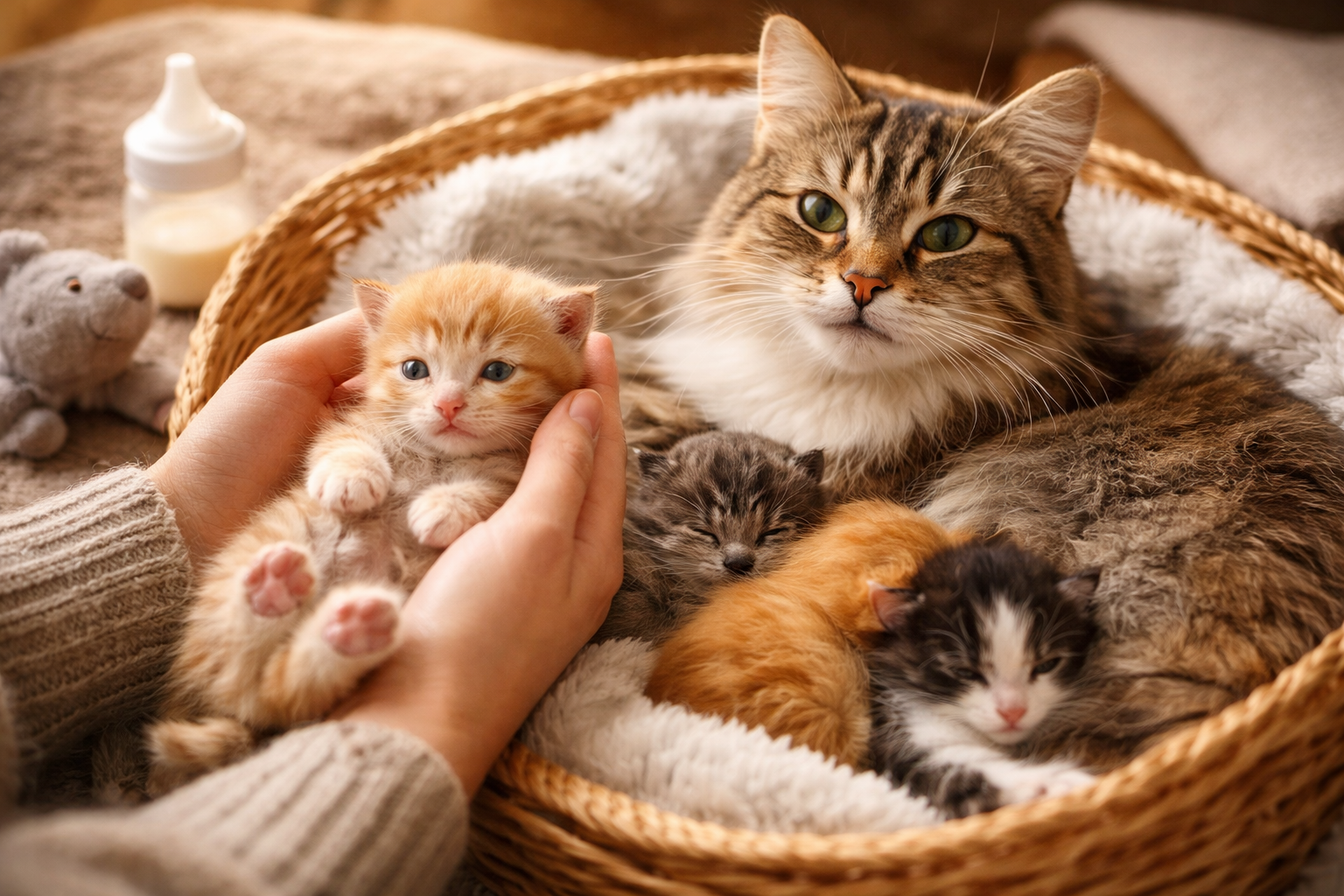
The first two months of a kitten’s life are marked by extraordinary change. From birth through eight weeks, kittens move from complete dependence to early independence, transitioning from nursing to solid food while their senses, mobility, and immune system rapidly develop. During this time, their exposure to environmental stressors increases significantly. New smells, new surfaces, human handling, and sometimes relocation to new homes all introduce microbial challenges that their young immune systems must learn to manage.
While maternal antibodies passed through colostrum offer early protection, this safeguard is temporary. As these antibodies decline, kittens enter a vulnerable window where their own immune defenses are still maturing. Supporting them during this transition is one of the most important proactive steps a caregiver can take.
This is where targeted supplementation with GCP Cat L-Lysine Advanced Immune Support becomes highly valuable, offering focused protection during a stage when kittens need stability most.
Understanding the Immunity Gap
Between weeks four and eight, kittens experience what veterinarians often refer to as the “immunity gap.” During this period, the maternal antibodies they received from their mother’s milk begin to fade, but their own adaptive immune system has not yet reached full strength. This creates a temporary vulnerability, particularly to respiratory viruses and common environmental pathogens.
Upper respiratory concerns are especially common in young kittens. Signs such as sneezing, mild congestion, watery eyes, or discharge can emerge quickly, especially in multi-cat homes, shelters, or new adoption environments. Even stress alone can weaken immune resilience during this stage.
Because L-Lysine is a pure amino acid that plays a role in immune function and viral management support, incorporating it during this window provides additional defense while the kitten’s natural immunity strengthens.
Triple-Action Immune Support with GCP Cat L-Lysine
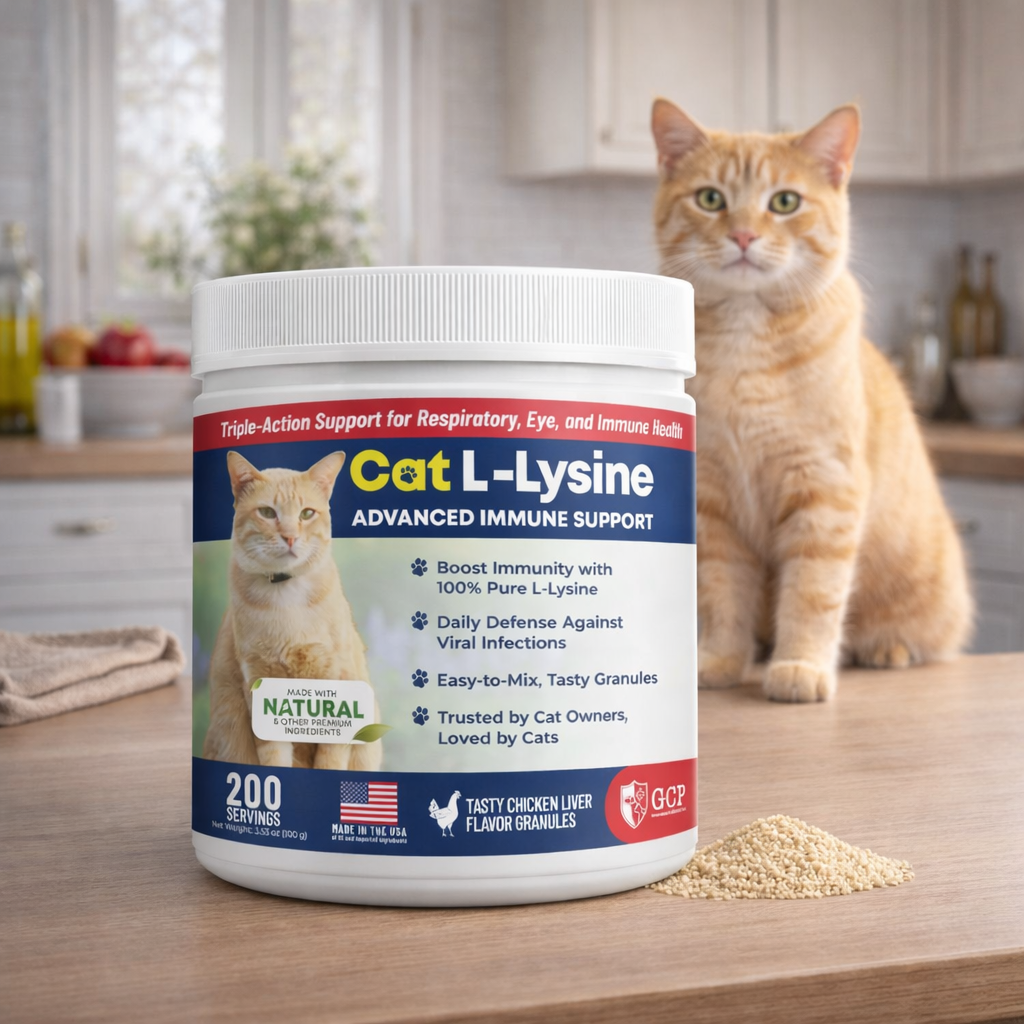
GCP Cat L-Lysine Advanced Immune Support is designed to deliver three critical benefits in one easy-to-mix formula: respiratory health, eye clarity, and daily immune defense. This triple-action approach makes it particularly well-suited for kittens navigating environmental change.
Respiratory Health Protection
Young kittens are prone to respiratory sensitivity due to their developing airways and immune systems. Congestion, sneezing, and nasal discharge are not uncommon during times of stress or environmental transition. L-Lysine supports respiratory wellness by helping manage viral replication mechanisms commonly associated with feline respiratory viruses.
When used proactively, it provides an added layer of protection during vulnerable growth phases.
Eye Health Support
Watery or runny eyes are frequently linked to respiratory challenges in kittens. GCP Cat L-Lysine supports eye clarity by helping maintain immune balance that influences ocular health. During rapid development, keeping the eyes bright and clear contributes not only to comfort but to overall wellness.
Daily Immune Defense
Beyond visible symptoms, immune resilience is foundational to healthy development. L-Lysine contributes to immune modulation, offering daily reinforcement as kittens explore new environments. Its role in supporting immune balance makes it particularly helpful during socialization, travel, adoption transitions, and vaccination periods
Essential Kitten Care & Support Timeline
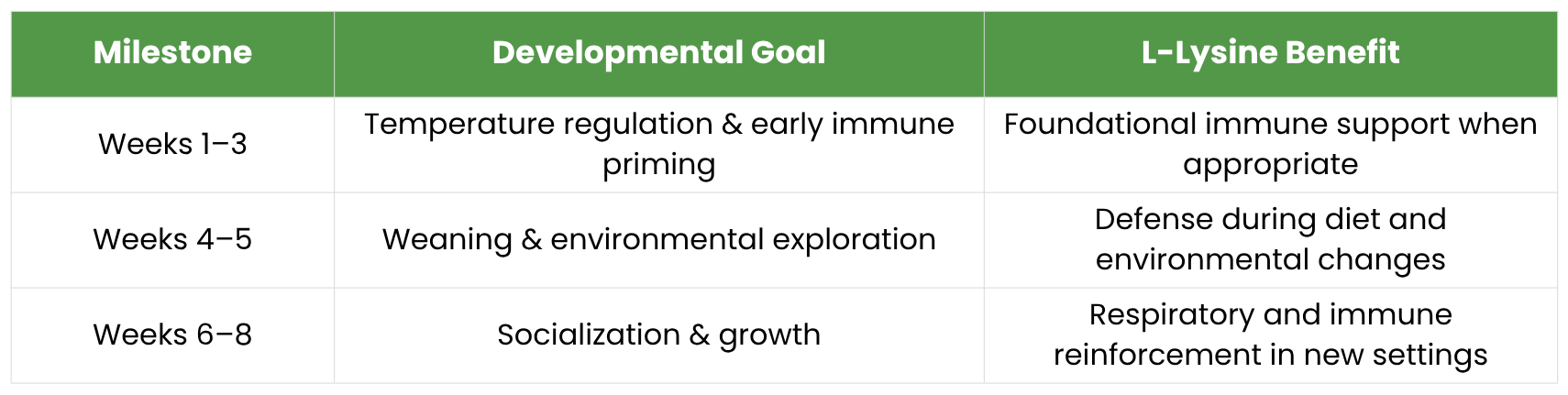
As kittens move through these stages, their exposure expands dramatically. Each milestone introduces both opportunity and stress, and immune reinforcement during these phases supports smoother transitions.
Why Choose GCP Cat L-Lysine for Your Kitten
Not all supplements are formulated with early development in mind. GCP Cat L-Lysine Advanced Immune Support stands out for several reasons:
-
100% Pure L-Lysine formulation
-
Designed for respiratory, eye, and immune health
-
Easy-to-mix granules for stress-free feeding
-
Trusted by cat owners
-
Made with natural and premium ingredients
-
200 servings per container for consistent daily use
The chicken liver flavor enhances palatability, which is especially important when working with kittens who may be picky during weaning. Consistency in supplementation supports consistent immune benefits.
In multi-cat homes or rescue environments, proactive immune reinforcement is not just helpful, it becomes strategic. Supporting kittens early helps reduce the likelihood of setbacks that can interrupt growth and socialization.
Caring for Kittens from Birth to Eight Weeks
Simple Care Checklist for Pet Parents
Essentials for All Pet Parents
Environment
✔ Keep nesting area warm (especially weeks 1–2)
✔ Use soft, dry bedding
✔ Keep space quiet and draft-free
Feeding
✔ Nurse every 2–3 hours (or bottle-feed kitten formula)
✔ Never give cow’s milk
✔ Start weaning at weeks 4–5
✔ Introduce wet kitten food gradually
Health Monitoring
✔ Weigh kittens daily
✔ Check eyes for discharge
✔ Watch for sneezing or congestion
✔ Monitor stool consistency
✔ Schedule first vet visit by 6–8 weeks
For First-Time Pet Parents
✔ Learn normal kitten milestones
✔ Keep emergency vet number saved
✔ Use low heating pad under half of nest (never direct contact)
✔ Stimulate elimination for kittens under 3 weeks (if orphaned)
✔ Watch closely during weeks 4–8 (immunity gap)
Call the vet if:
✔ Kitten won’t eat
✔ Labored breathing
✔ Severe diarrhea
✔ Lethargy
✔ No weight gain
For Current Pet Parents (Adding Kittens)
✔ Keep kittens separate at first
✔ Do scent swapping before introductions
✔ Use separate food bowls & litter boxes
✔ Wash hands between handling pets
✔ Monitor for respiratory symptoms in all cats
Key Milestones
Weeks 1–2: Warmth & nursing
Weeks 3–4: Walking & litter intro
Weeks 4–5: Weaning begins
Weeks 6–8: Socialization & first vaccines
Frequently Asked Questions
-
Yes. L-Lysine is a pure amino acid widely used to support immune and respiratory health in young cats. Proper dosing based on weight and veterinary guidance is recommended.
Final Thoughts: Strengthening the Foundation of Lifelong Health
The early weeks of life establish the foundation for long-term resilience. During the immunity gap, proactive support can make the difference between smooth development and repeated setbacks. GCP Cat L-Lysine Advanced Immune Support delivers triple-action protection tailored to the unique needs of growing kittens, supporting respiratory comfort, eye clarity, and immune balance in one easy-to-administer formula.
When immune stability is prioritized early, kittens are better positioned to grow, explore, socialize, and transition confidently into adulthood. By integrating GCP Cat L-Lysine into your kitten care routine, you are not simply addressing symptoms—you are reinforcing their foundation for lifelong health.
For all general inquiries, please contact us at info@guardianschoice.com
© Copyright. All rights reserved.