
The Ingredient Most Pet Chews Skip — And Why GCP Doesn't

Pet parents exploring natural flea and tick support often encounter ingredients such as thiamine (vitamin B1), apple cider vinegar, anise, coconut oil, and other vitamins. While these ingredients can have nutritional or formulation roles, a natural flea and tick chew should be viewed as one part of a broader pet-care routine rather than a guaranteed replacement for veterinarian-recommended parasite control.
Understanding Natural Flea & Tick Care Beyond the Label
When you share your home with a dog or cat, flea and tick season can make even an ordinary walk through the yard feel like something that requires a little more planning. Pet parents looking for natural flea and tick support, flea and tick chews for dogs, or natural flea and tick care for cats often want a routine that feels simple, gentle, and easy to maintain without losing sight of their pet’s overall well-being.
That search frequently leads to nutritional ingredients and botanicals that are familiar from everyday wellness products. Thiamine, apple cider vinegar, coconut oil, anise, niacin, vitamin B12, and vitamin E may all appear in natural-leaning pet formulas, but seeing an ingredient on a label does not automatically tell you what it can accomplish against fleas or ticks. Understanding the difference between an ingredient’s nutritional role and a proven parasite-control effect is an important part of choosing products thoughtfully.
Fleas and ticks are external parasites, which means they interact with your pet very differently from nutrients consumed through food or supplements. A complete flea and tick routine may therefore involve several layers, such as checking your pet after outdoor activities, keeping bedding and living spaces clean, monitoring the skin and coat, reducing exposure in high-risk environments, and discussing appropriate preventive options with your veterinarian.
It is also worth remembering that “natural” does not automatically mean proven, and “conventional” does not automatically mean unsuitable. The better question is whether a product fits your pet, your lifestyle, the level of parasite exposure in your area, and the recommendations of the veterinary professional who knows your pet’s individual needs.
Why Thiamine Gets So Much Attention in Natural Pet Formulas
Thiamine, also known as vitamin B1, is an essential nutrient involved in normal energy metabolism and nervous-system function. Dogs and cats require appropriate amounts of thiamine in their diets, which is one reason the ingredient can sound especially appealing when pet parents encounter it in a daily wellness chew.
Where greater care is needed is the idea that consuming thiamine automatically makes an animal unattractive to fleas, ticks, or mosquitoes. You may see explanations suggesting that vitamin B1 changes body odor or produces compounds through the skin that pests dislike, but those statements should not be treated as established facts without direct, species-specific evidence.
One useful piece of research illustrates why that distinction matters. Ives and Paskewitz tested vitamin B supplementation as an oral home remedy for mosquito repellency in humans and found no evidence that the supplementation reduced mosquito attraction. Importantly, the study involved people and mosquitoes—not dogs, cats, fleas, or ticks—so it cannot tell us whether a particular pet formula affects flea or tick activity; what it does show is why broad claims about oral vitamin B acting as a proven pest repellent should be approached carefully.
That does not make thiamine an unimportant ingredient. It simply means its established nutritional role and any claimed flea-and-tick effect should be discussed separately. For pet parents, that kind of transparency makes it easier to evaluate a formula based on what is actually present rather than relying on a dramatic promise.
Looking Beyond One Ingredient: What Else Is in a Natural-Leaning Formula?
A well-designed pet supplement rarely revolves around a single ingredient in isolation. Instead, formulators may combine nutrients, oils, flavoring ingredients, and botanicals to create a chew that fits into an everyday routine and is palatable enough for consistent use.
Apple cider vinegar, for example, is a fermented vinegar ingredient that appears in many natural-lifestyle products and pet supplements. Coconut oil provides dietary fats and can also contribute to a formula’s texture and palatability, while anise is an aromatic botanical commonly associated with distinctive flavor and scent. Vitamins B3, B12, and E are recognizable nutritional ingredients with established roles in normal physiological processes, although their presence in a formula should not automatically be translated into a claim that they prevent parasite bites or treat flea-related skin problems.
Here is a simpler way to look at several ingredients commonly discussed in this category:
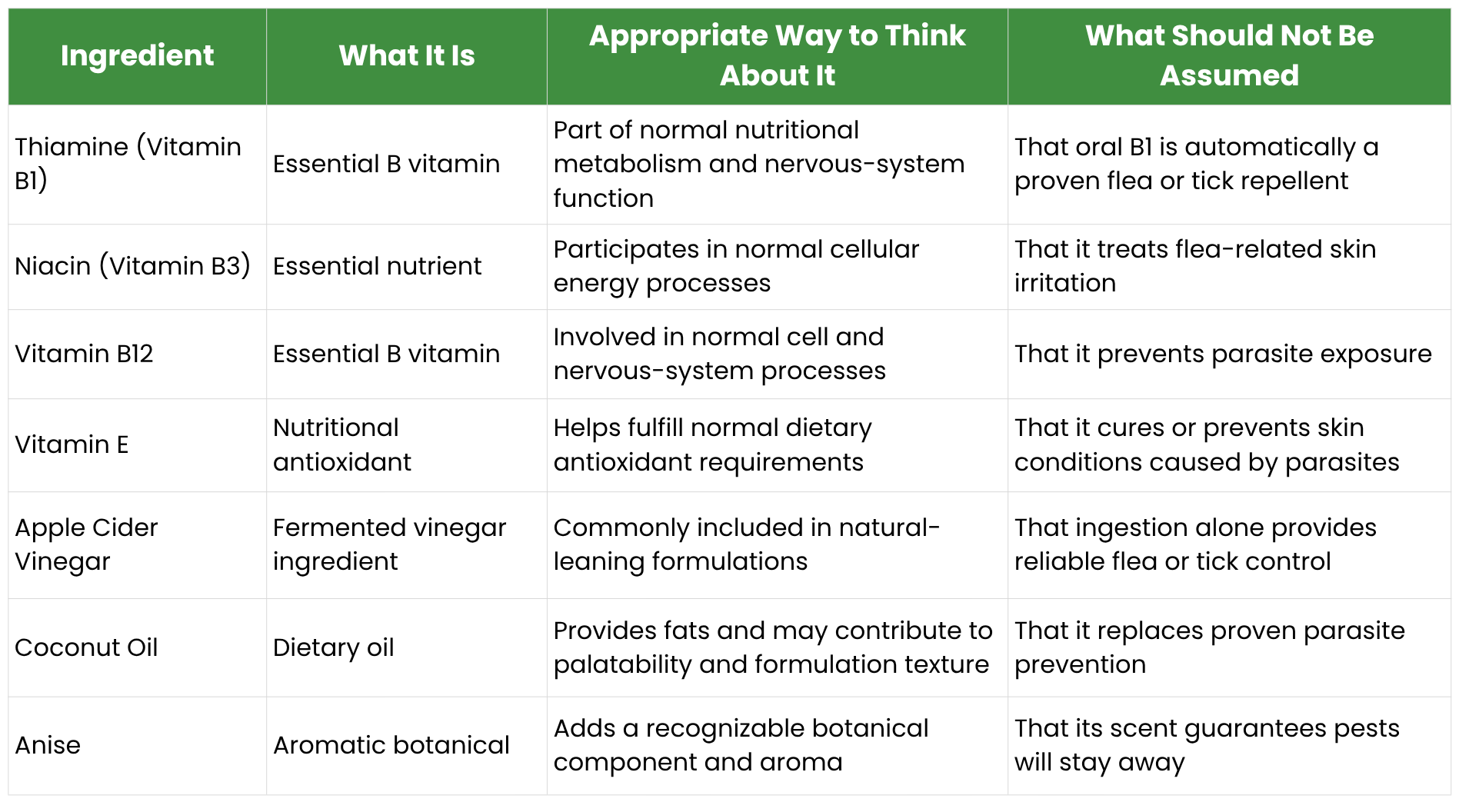
Looking at ingredients this way helps keep expectations realistic. Rather than asking whether one ingredient can “solve” flea and tick concerns, pet parents can consider how the complete product fits into an existing wellness routine and whether its label, directions, formulation, and intended use make sense for their particular pet.
Building a Thoughtful Flea & Tick Routine for Dogs and Cats
Daily habits often matter just as much as the product sitting on the shelf. After walks through tall grass, wooded trails, or other outdoor areas, give your dog a quick coat and skin check, paying attention around the ears, neck, legs, paws, belly, and tail. Cats that spend time outdoors can benefit from regular coat checks as well, especially during seasons when fleas and ticks are more active.
You may notice scratching, licking, changes in grooming behavior, visible fleas, small dark specks sometimes described as flea dirt, an attached tick, or areas of irritated skin. These observations do not confirm a specific condition on their own, but they are useful reasons to take a closer look and contact your veterinarian if something seems persistent, uncomfortable, or unusual.
Environmental care matters, too. Regularly washing pet bedding, vacuuming the areas where your pet spends time, maintaining the yard, and keeping an eye on other animals in the household can help you manage exposure as part of a broader routine. If you live in an area with significant flea or tick activity, your veterinarian can also help you determine which preventive strategy is appropriate for your pet’s age, species, health history, lifestyle, and exposure level.
This balanced approach allows natural flea and tick chews to be considered in context. Instead of expecting a chew to carry the entire responsibility for parasite management, you can think about nutrition, grooming, environmental care, outdoor habits, and veterinary guidance as parts of the same story.
A Natural-Leaning Option for Daily Pet Care
For pet parents who appreciate ingredient-forward formulas and the convenience of a chew, Guardian’s Choice (GCP) Flea & Tick Natural Defense Soft Chews offer an option designed around several of the ingredients discussed above. The product images show separate dog and cat versions featuring thiamine, apple cider vinegar, coconut oil, and anise, along with additional vitamins, in a chicken-flavored soft-chew format.
The packaging also emphasizes “No Harsh Chemicals,” which may appeal to pet parents looking for a natural-leaning addition to their regular routine. Rather than treating GCP as a reason to ignore environmental care or veterinary parasite recommendations, it makes more sense to view the chew as one convenient component of an intentional, whole-pet approach and to use the species-specific product exactly as directed.
Frequently Asked Questions
-
Current evidence does not establish oral thiamine as a proven flea or tick repellent for dogs or cats. It is best to view vitamin B1 primarily according to its nutritional role unless reliable species-specific evidence supports additional claims.
A More Informed Approach to Natural Pest Care
Choosing natural flea and tick support does not have to mean choosing between science and a more ingredient-conscious lifestyle. Pet parents can appreciate vitamins, botanicals, and familiar nutritional ingredients while still asking sensible questions about what has been demonstrated, what remains uncertain, and how a particular supplement fits alongside grooming, environmental management, regular monitoring, and veterinary care.
That kind of informed decision-making is especially important in pet wellness, where a confident-looking label can sometimes make an ingredient sound more powerful than the evidence allows. By focusing on transparency rather than exaggerated promises, you can build a routine around products you understand and make adjustments whenever your pet’s needs or level of exposure changes.
Meet GCP Flea & Tick Natural Defense
GCP Flea & Tick Natural Defense Soft Chews bring together thiamine, apple cider vinegar, coconut oil, anise, and additional vitamins in a convenient chicken-flavored format, with separate versions shown for dogs and cats. The formula is designed for pet parents who want an ingredient-forward, natural-leaning addition to their everyday pet-care routine without turning the conversation into unrealistic promises.
-
Convenient soft-chew format for incorporating the product into a regular routine
-
Features thiamine (vitamin B1) alongside additional nutritional ingredients
-
Includes apple cider vinegar, coconut oil, and anise as part of the formula
-
Dog- and cat-specific options shown in the GCP product range
-
Chicken flavor for a pet-friendly daily format
-
“No Harsh Chemicals” positioning clearly highlighted on the product packaging
-
Transparent ingredient-focused approach that makes it easier for pet parents to understand what they are giving
If you want a simple chew that complements an intentional, natural-leaning pet-care routine, GCP Flea & Tick Natural Defense gives you an ingredient-focused option worth discussing with your veterinarian. Choose the appropriate dog or cat formula, follow the label directions, and use it as one thoughtful piece of a broader plan for your pet’s everyday comfort and care.
This article is intended for educational purposes and is not a substitute for individualized veterinary advice.
Brand messaging and positioning in this article follow Guardian’s Choice guidance to communicate warmly and supportively while remaining transparent about product capabilities and limitations.
Reference
Ives, A. R., & Paskewitz, S. M. (2005). Testing vitamin B as a home remedy against mosquitoes. Journal of the American Mosquito Control Association, 21(2), 213–217. https://pubmed.ncbi.nlm.nih.gov/16033124/
For all general inquiries, please contact us at info@guardianschoice.com
© Copyright. All rights reserved.