Indoor Cat Health: Shedding, Litter Box Odor, and
Gut Balance Explained
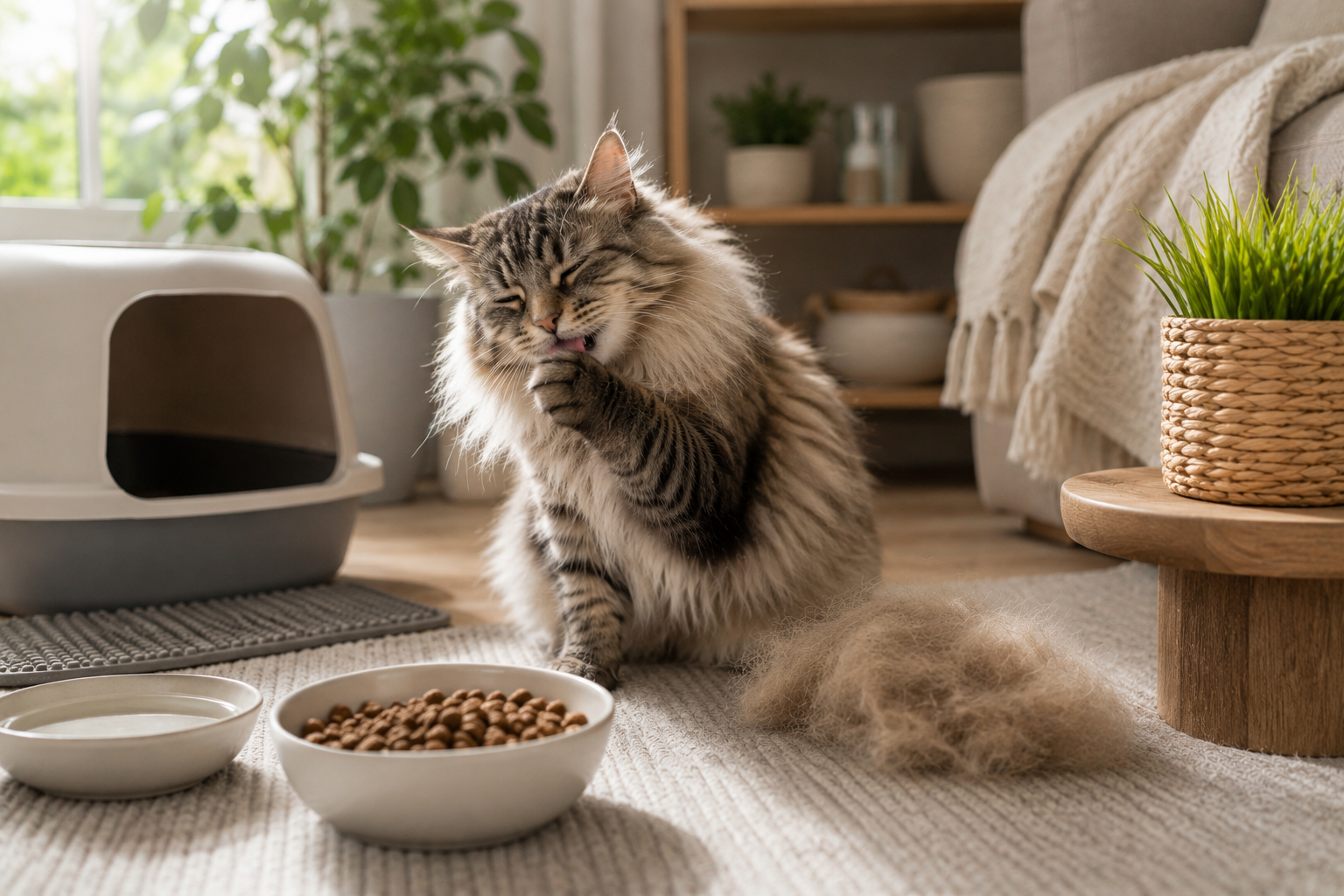
Indoor cats still experience seasonal shedding, digestive changes, and litter box odor challenges despite living in controlled environments. Gut health plays a central role in how these issues show up day to day. Supporting digestion and maintaining a consistent routine can help create a more balanced indoor experience. Small, daily habits often make the biggest difference over time.
The Indoor Cat Myth: Why Staying Inside Isn’t Always Simpler
It’s a common assumption that indoor cats are shielded from many of the challenges outdoor cats face. Without exposure to dirt, parasites, or changing weather, it seems like their environment is more predictable and easier to manage. However, indoor living comes with its own unique set of conditions that can influence your cat’s overall wellness.
Unlike outdoor cats, indoor cats are exposed to a more controlled but often less dynamic environment. Artificial lighting, limited physical activity, and consistent air circulation patterns can all affect how their bodies function over time. These factors may seem minor on their own, but together they create a different kind of lifestyle, one that can influence digestion, shedding patterns, and even odor.
Many pet owners begin to notice this through subtle signs. A litter box that smells stronger than expected, shedding that seems constant rather than seasonal, or small changes in appetite and energy can all be part of this indoor dynamic. Rather than viewing these as isolated issues, it helps to understand them as connected signals.
Research published in Animals highlights how environmental conditions influence internal responses in pets, reinforcing the idea that even controlled environments like indoor living can shape how the body adapts over time. This perspective helps shift the focus from simply managing symptoms to supporting overall balance.
The Hidden Link Between Digestion and Litter Box Odor
One of the most common concerns among indoor cat owners is litter box odor. Even with regular cleaning, high-quality litter, and proper placement, some homes still struggle with persistent smells. This often leads to frustration, as the visible effort doesn’t always match the result.
What’s less obvious is that litter box odor doesn’t start in the box—it starts in the gut. During digestion, food is broken down into nutrients and byproducts. Some of these byproducts include compounds like ammonia and sulfur-based gases, which contribute to the smell of waste.
When digestion is balanced, these compounds are typically less pronounced. However, when the microbiome—the community of bacteria in the gut—shifts, the breakdown process can change. This can lead to stronger or more noticeable odors, even if nothing else in the routine has changed.
This is why focusing only on surface-level solutions, like deodorizing litter or more frequent cleaning, may not fully address the issue. While these steps are important, they don’t influence what’s happening internally.
Instead, a more complete approach considers how digestion contributes to the overall experience. By supporting gut balance, pet owners can complement their existing routine rather than constantly adjusting it.
Why Indoor Cats Shed More Than You Expect
Shedding is another area where indoor cats often surprise their owners. Many assume that because indoor cats aren’t exposed to seasonal weather changes, they will shed less. In reality, the opposite can sometimes happen.
Indoor cats are influenced by something called “photoperiod,” which refers to the amount of light they are exposed to. In a natural environment, changing daylight hours signal when to grow or shed a coat. Indoors, artificial lighting can blur these signals, leading to more consistent shedding throughout the year.
This doesn’t mean shedding is abnormal—it’s part of your cat’s natural cycle. However, when it becomes more noticeable, it can lead to secondary concerns like hair accumulation, increased grooming, and occasional hairballs.
The key here is understanding that shedding is not just a grooming issue. It’s also connected to internal factors like nutrition and digestion. When the body is processing nutrients efficiently, it supports the systems involved in maintaining skin and coat balance.
Understanding the Gut-Skin Connection
The connection between digestion and coat condition is often overlooked, but it plays an important role in how your cat looks and feels. The nutrients absorbed through the digestive system contribute to skin health, hair growth, and overall coat quality.
When digestion is consistent, nutrient absorption tends to be more stable. This supports the natural processes that maintain a healthy coat. When digestion fluctuates, it can influence how these nutrients are utilized, which may show up in subtle changes over time.
This doesn’t mean that every instance of shedding or coat change is caused by digestion, but it does highlight why gut health is often part of the conversation. It’s one piece of a larger system that includes grooming, environment, and daily habits.
By viewing these elements together, pet owners can take a more balanced approach rather than focusing on one area alone.
To better understand how different approaches work, it helps to compare them side by side:
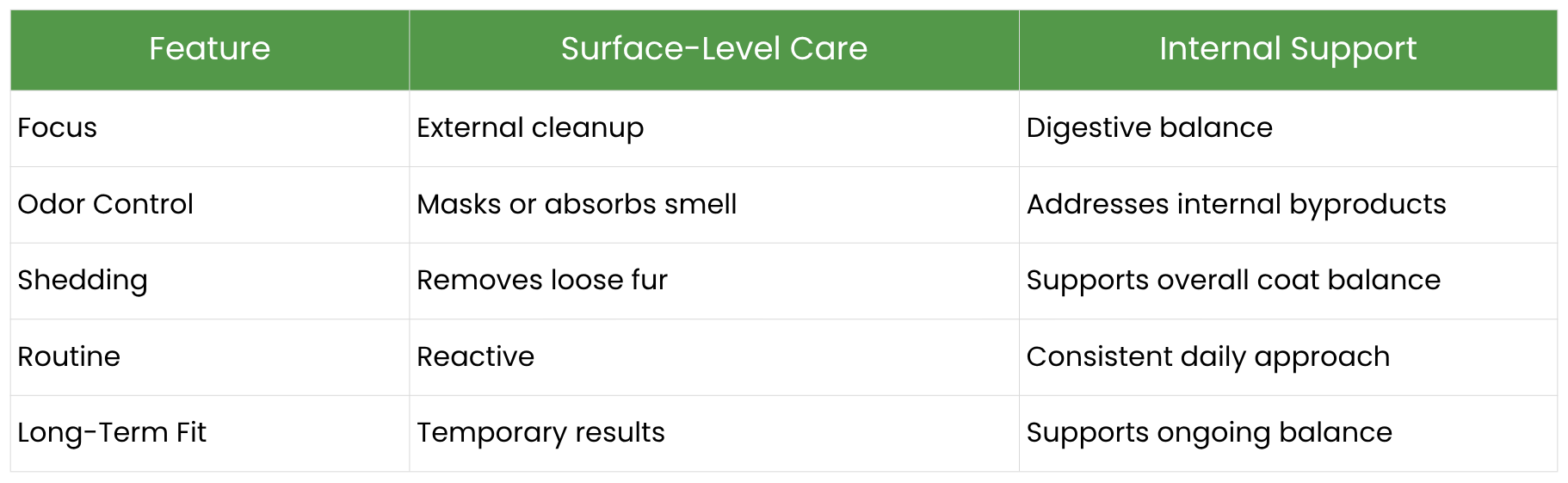
This comparison highlights an important shift in perspective. Surface-level care is still necessary, but it works best when combined with internal support rather than used on its own.
Building a Daily Routine for Indoor Cats
Creating a routine for your indoor cat doesn’t require drastic changes. In fact, the most effective routines are often built around small, consistent habits that fit naturally into your day.
Start with feeding consistency. Providing meals at the same time each day helps regulate digestion and supports predictable patterns. Hydration is equally important, especially for cats that primarily eat dry food.
Grooming should also be part of the routine. Regular brushing helps manage shedding and reduces the amount of fur your cat ingests during grooming.
Finally, consider how supportive additions—like probiotics—fit into the routine. The goal isn’t to add complexity, but to create a system that feels manageable and sustainable over time.
A Smarter Way to Support Indoor Cat Wellness
As these habits come together, many pet owners look for ways to simplify their routine while still supporting their cat’s needs. This is where GCP Purrbiotics fits naturally into the picture.
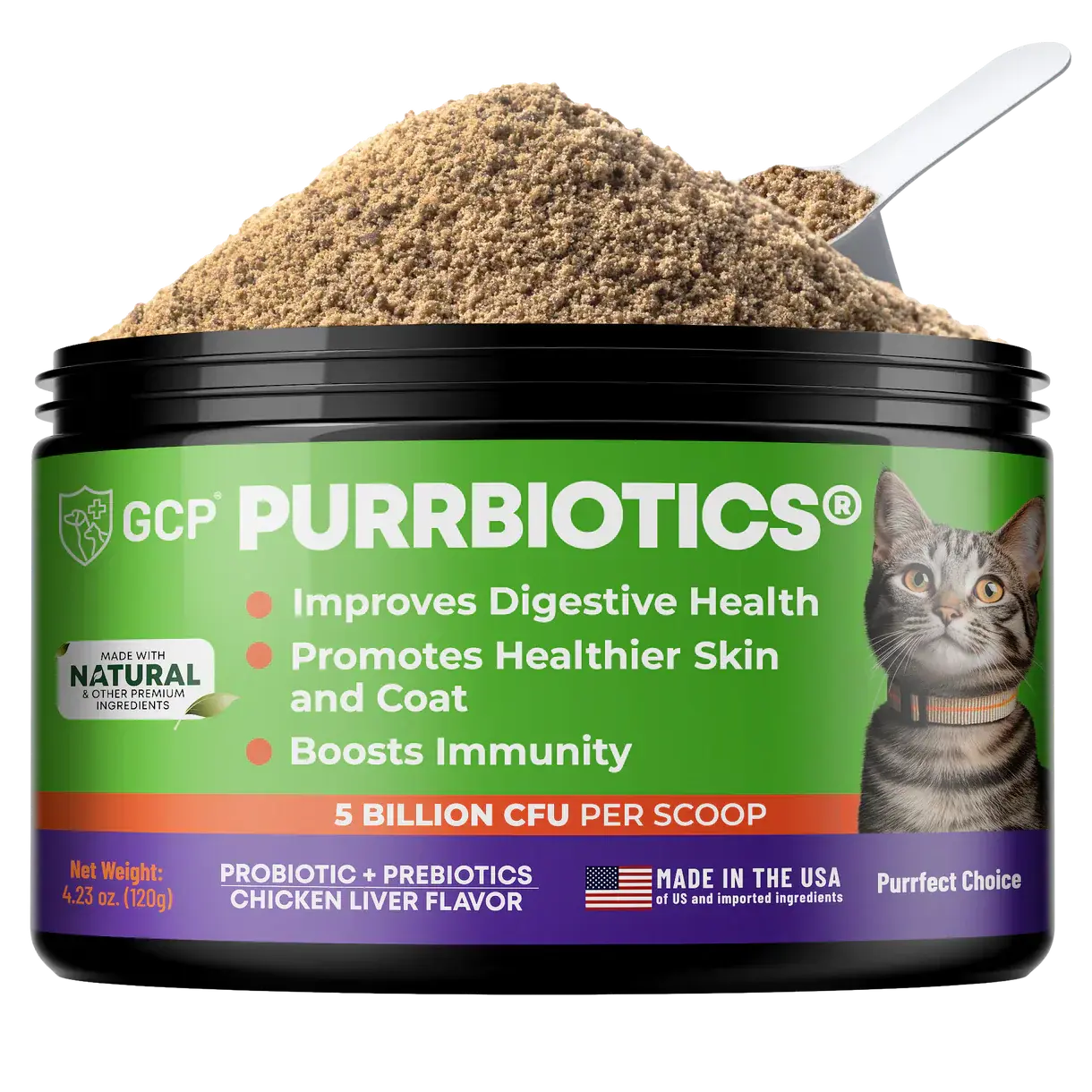
Designed as a daily probiotic supplement, Purrbiotics includes a blend of beneficial bacteria and prebiotic components that complement the gut environment. With 5 billion CFU per scoop and strains like Bacillus subtilis, Bacillus licheniformis, and Bacillus pumilus, it aligns with the idea of supporting digestive balance as part of everyday care.
The chicken liver flavor and powder format make it easy to mix into food, which is especially helpful for maintaining consistency—something that’s often challenging with picky indoor cats.
Rather than replacing grooming or litter maintenance, it works alongside these habits, contributing to a more complete and manageable routine.
FAQs About Indoor Cat Digestion and Shedding
-
Indoor cats are influenced by artificial lighting, which can disrupt natural shedding cycles. This often leads to more consistent shedding throughout the year rather than seasonal changes.
Supporting Balance in an Indoor Environment
Indoor living may seem simpler, but it introduces its own set of challenges that influence your cat’s daily experience. From shedding to litter box odor, many of these issues are connected through underlying systems like digestion and routine.
Maintaining a healthy gut microbiome is essential because it serves as the foundation for your cat's immune system and efficient nutrient absorption. Integrating a daily probiotic helps stabilize these internal systems, reducing the impact of stress and diet changes on their overall well-being. By focusing on consistency and understanding how these elements interact, pet owners can create a more balanced approach to care. Small, thoughtful adjustments often make the biggest difference over time.
GCP Purrbiotics
Finding the right balance for your cat’s health doesn't have to be a chore or a struggle at mealtime. By integrating a high-quality supplement into their established diet, you can proactively manage their digestive wellness while keeping them excited for every bowl. These targeted ingredients work together to maintain a happy gut and a resilient immune system for your feline companion.
GCP Purrbiotics Daily Probiotics for Cats
-
5 Billion CFU per scoop: Provides a potent dose of beneficial bacteria in every serving.
-
Triple-Strain Blend: Includes Bacillus subtilis, Bacillus licheniformis, and Bacillus pumilus for robust digestive support.
-
Contains Prebiotic FOS: Fuels the growth of good bacteria to maximize the effectiveness of the probiotics.
-
Chicken Liver Flavor: A savory taste that makes mixing it into wet or dry food effortless.
-
Designed for Daily Use: Formulated to be a consistent, safe part of your cat’s long-term wellness plan.
A simple addition to your routine that supports your cat’s gut balance—without adding complexity to your day.
For all general inquiries, please contact us at info@guardianschoice.com
© Copyright. All rights reserved.