
The Science of “Litter Box Bloom”: Why Summer Heat Makes Homes Smellier
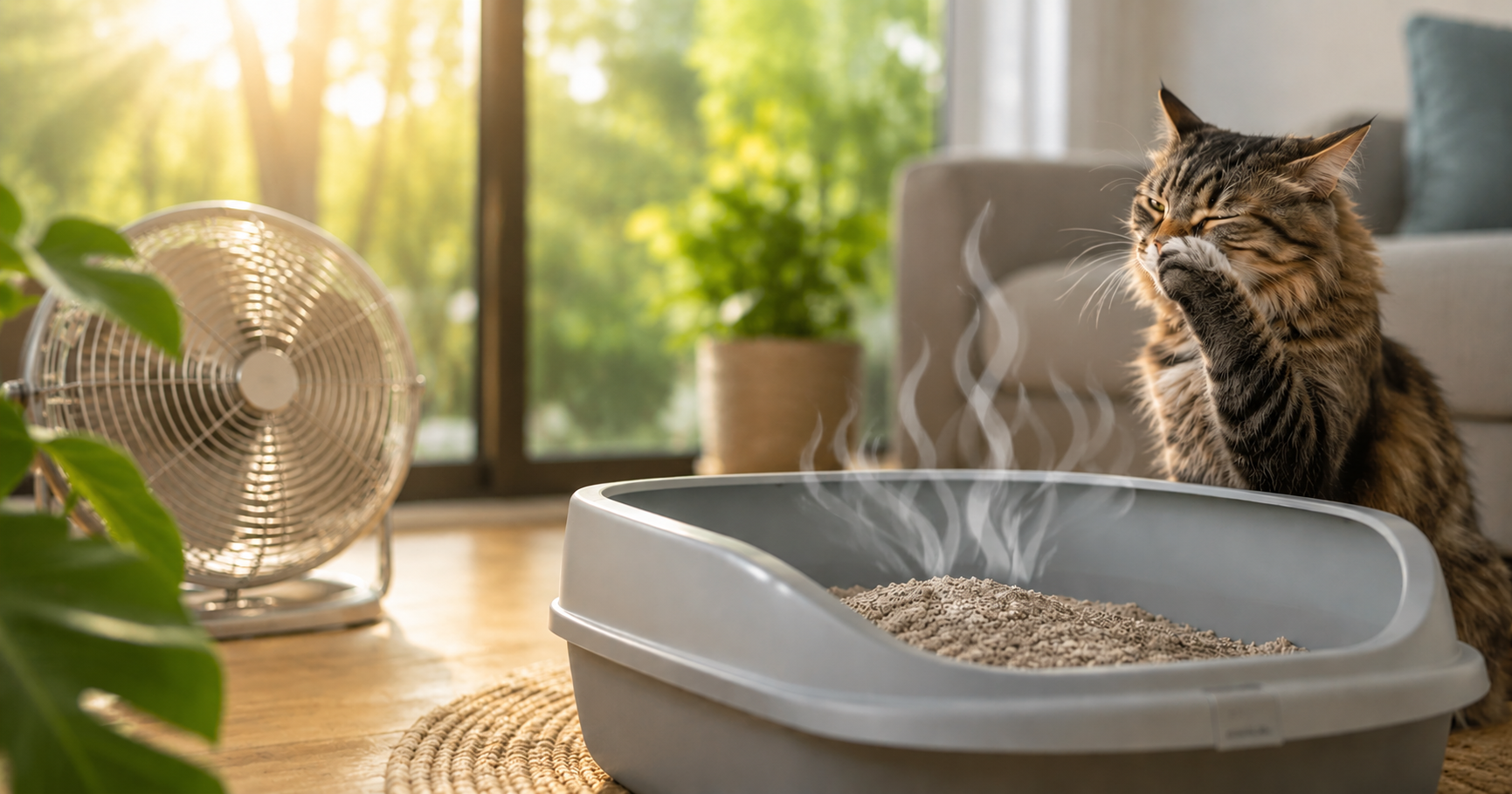
Summer heat and humidity can make litter box odor feel stronger because warmth speeds up waste breakdown, while moisture in the air can make smells linger longer in your home. Scooping, ventilation, hydration, and litter choice all matter, but cat gut health can also play a role in waste quality and odor.
What Is Litter Box Bloom?
If your home smells fresher in spring but suddenly feels harder to manage in summer, you are not imagining it. Many cat parents notice that litter box odor becomes sharper, heavier, or more persistent when temperatures rise. A box that seemed manageable with regular scooping in cooler months may start smelling stronger by midday, especially in apartments, laundry rooms, bathrooms, or any area with limited airflow.
“Litter Box Bloom” is a helpful way to describe this seasonal odor spike. It is not a formal veterinary diagnosis, but it explains a real household pattern: heat, humidity, waste, bacteria, and trapped indoor air can work together to make litter box smells more noticeable. Once summer arrives, small changes in your cat’s hydration, digestion, appetite, and litter box routine may also affect how strong the odor becomes.
Most cat parents respond first by scooping more often, switching litter, using deodorizers, or moving the box to another room. Those steps can help, but they only address part of the issue. Litter box odor does not begin when the waste hits the litter. Part of the story starts earlier, inside the digestive system, where food is broken down, nutrients are absorbed, and waste is formed.
This is why digestive health, cat probiotics, prebiotics for cats, stool quality support, litter box odor control, and microbiome balance are so closely connected. A fresher home is not only about covering odors after they appear. It is also about supporting the routine that influences waste quality before it reaches the box.
Why Summer Heat and Humidity Make Odors Feel Stronger
Warm weather changes the litter box environment quickly. Heat can speed up the breakdown of waste, while humidity can make the air feel heavier and less fresh. If the litter box is in a warm room, near a sunny window, beside a dryer, or in a poorly ventilated corner, odor may build faster than expected.
Urine odor is often linked to ammonia. When urine sits in the litter box, natural breakdown processes can release ammonia-like smells, especially when the litter is saturated or the box is not cleaned frequently enough. Stool odor can also become more noticeable in warm conditions because waste contains organic material that bacteria can break down over time.
Humidity makes the problem feel worse because moisture can hold odors in the air and reduce the crispness of a room. Even when the box is technically clean, the area around it may still feel stale if airflow is poor. This is why summer litter box odor often feels different from winter odor. It can seem thicker, more sour, and harder to clear from the room.
Your cat’s behavior may also shift in hot weather. Some cats drink less than they should, eat smaller meals, sleep more, or groom more often. These changes can affect stool quality, urine concentration, and litter box habits. If odor becomes intense suddenly or appears with symptoms like straining, diarrhea, vomiting, appetite loss, or unusual urination, a veterinarian should be contacted. Odor can be seasonal, but it can also be a clue that something else needs attention.
How Your Cat’s Gut Health Can Affect Litter Box Smell
The gut microbiome is the community of microorganisms living in your cat’s digestive tract. This internal ecosystem helps support digestion, nutrient use, stool quality, immune wellness, and overall digestive balance. When digestion is steady, waste may be more consistent and easier to manage. When the gut feels disrupted, pet parents may notice softer stool, stronger odor, irregular litter box habits, or changes in appetite.
Cats are obligate carnivores, so protein digestion is a normal part of their biology. However, when digestion is less efficient or the gut environment is out of balance, more undigested material may reach the colon. Once there, bacteria can ferment that material and contribute to stronger-smelling waste. This does not mean probiotics guarantee an odor-free home, but it does explain why supporting gut balance can be part of a thoughtful odor-control routine.
A study by Marshall-Jones and colleagues looked at probiotic supplementation in healthy adult cats and found that the probiotic used in the study influenced fecal microbial populations and some immune-related markers. That study does not prove that all probiotics reduce litter box odor, and it should not be used to claim that any supplement cures digestive problems. It does support the broader idea that the feline gut microbiome can respond to probiotic support, which is useful when discussing digestive wellness and daily litter box comfort.
Prebiotics also matter because they help nourish beneficial bacteria. A probiotic adds beneficial support, while a prebiotic helps create a more supportive environment for those bacteria. This combination is often called synbiotic support, and it can be helpful for cat parents who want a daily routine that supports digestion from more than one angle.
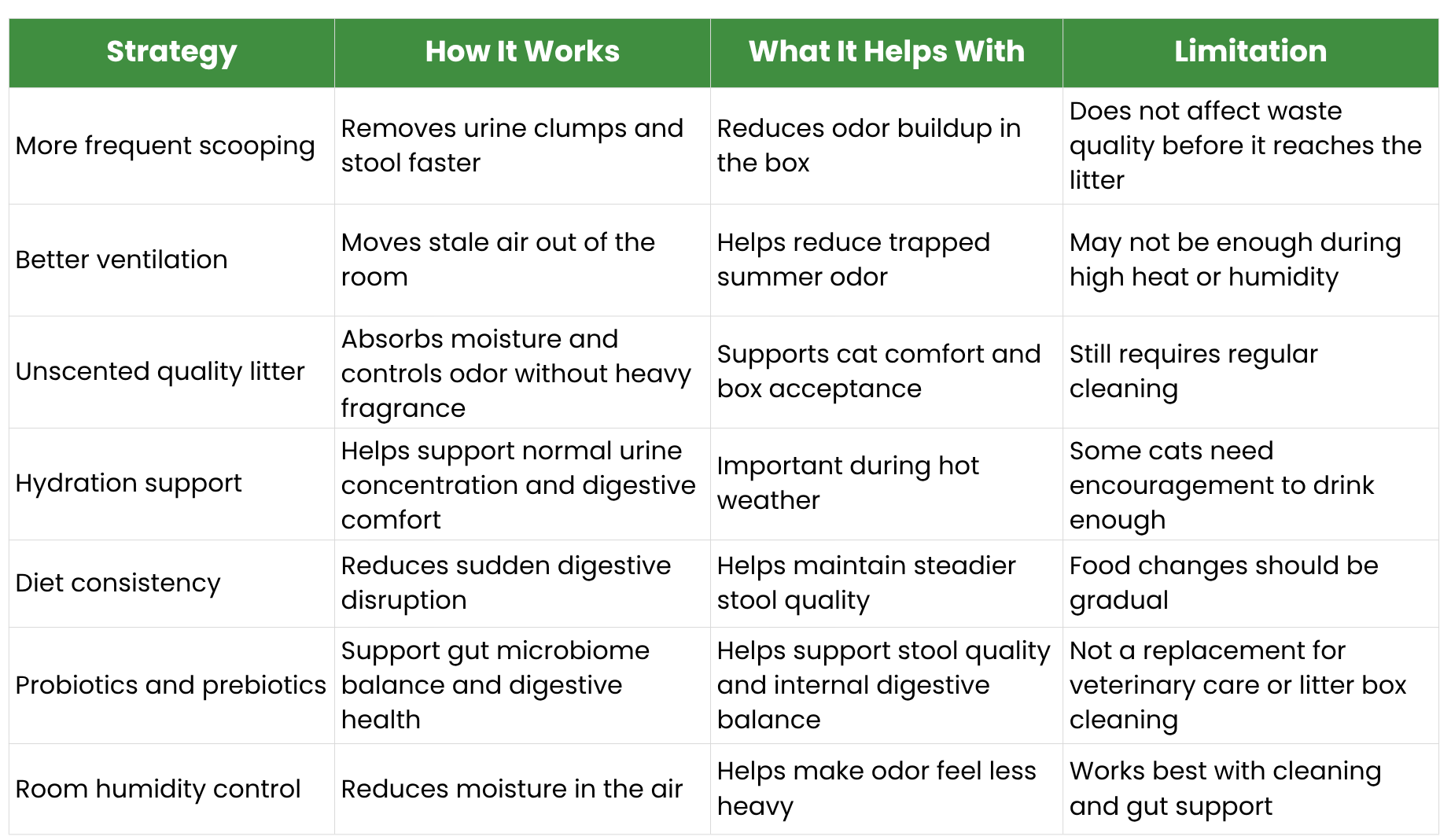
Odor Control Strategies Compared
Building a Fresher Summer Litter Box Routine
A fresher summer litter box routine starts with the basics. Scoop at least daily, and more often if your home is warm or if you have multiple cats. Wash the box regularly with a gentle, cat-safe cleaner, and avoid strong perfumes that may discourage your cat from using the box. Many cats are sensitive to scent, and a fragrance that seems pleasant to humans may feel overwhelming to them.
Placement matters, too. Keep the litter box away from direct sun, hot appliances, and rooms with poor airflow. A box in a cool, quiet, well-ventilated area is usually easier to manage and more comfortable for your cat. If the box must stay in a smaller room, consider safe airflow options or a dehumidifier to help reduce the heavy, trapped feeling that often makes odor worse.
Hydration should also be part of the plan. Offer fresh water in multiple locations and refresh bowls often. Some cats prefer fountains, wide bowls, or water placed away from food. If your cat eats wet food, that may support moisture intake, but any major diet shift should be gradual and appropriate for your cat’s needs.
Finally, watch the litter box as a wellness signal, not just a cleaning task. Stronger odor, sudden stool changes, reduced urination, straining, or skipping the box can all be signs worth noting. A clean box helps your home smell better, but it also helps you notice when your cat’s routine changes.
Supporting Odor Control From Within With GCP Purrbiotics
Once the litter box routine is in place, internal digestive support becomes the next smart layer. GCP Purrbiotics is designed for cat parents who want to support digestive health, immune wellness, and healthier skin and coat through a daily probiotic and prebiotic routine. Instead of only masking odor after it appears, this approach supports the gut environment where part of waste quality begins.
GCP Purrbiotics provides 5 billion CFU per scoop and includes probiotics plus prebiotics in a chicken liver flavor made for cats. That makes it easier to add to a daily feeding routine, especially for pet parents who want consistency without turning mealtime into a struggle. Used as directed, it can support digestive balance and stool quality as part of a complete summer litter box plan.
It is important to keep expectations responsible. GCP Purrbiotics is not a treatment for illness, not a replacement for veterinary care, and not a guarantee that litter box odor will disappear. Its role is to support digestive wellness from within while you continue to manage hydration, cleaning, litter choice, and airflow.
Frequently Asked Questions
-
Litter Box Bloom is a simple way to describe the stronger litter box odor many cat parents notice during hot, humid weather. It happens when warmth, moisture, waste breakdown, and trapped indoor air make smells feel more intense.
A Fresher Home Starts With a Better Routine
Summer litter box odor is not just a cleaning problem. Heat, humidity, airflow, hydration, diet, stool quality, and gut balance can all influence how fresh your home feels. Scooping more often helps, but the best routine looks at both sides of the issue: what happens in the box and what happens inside your cat’s digestive system.
A thoughtful summer plan includes regular cleaning, cooler box placement, better ventilation, fresh water, consistent feeding, and daily digestive support when appropriate. GCP Purrbiotics fits into this plan by supporting gut health, immune wellness, stool quality, and healthier skin and coat. For cat parents dealing with Litter Box Bloom, a fresher home may start with a more balanced microbiome.
GCP Purrbiotics
GCP Purrbiotics is a feline probiotic and prebiotic supplement made to support digestive health, immune wellness, and healthier skin and coat. With 5 billion CFU per scoop and a chicken liver flavor cats can enjoy, it is designed to fit easily into your cat’s daily feeding routine while supporting the gut from within.
Benefits of GCP Purrbiotics:
-
Supports digestive health and microbiome balance
-
Includes probiotics and prebiotics for complete gut support
-
Provides 5 billion CFU per scoop when used as directed
-
Supports stool quality and litter box comfort
-
Helps support immune wellness as part of daily care
-
Promotes healthier skin and coat through digestive wellness
-
Chicken liver flavor helps with daily palatability
-
Easy powder format for simple mealtime use
-
Fits summer routines when heat and odor become more noticeable
-
Supports a fresher-home routine without relying only on masking odors
GCP Purrbiotics is a smart daily choice for cat parents who want to support litter box freshness from the inside out. Pair it with regular scooping, fresh water, good airflow, and consistent feeding to build a summer routine that supports both your cat’s comfort and your home environment.
APA Citation: Marshall-Jones, Z. V., Baillon, M. L. A., Croft, J. M., & Butterwick, R. F. (2006). Effects of Lactobacillus acidophilus DSM13241 as a probiotic in healthy adult cats. American Journal of Veterinary Research, 67(6), 1005–1012.https://pubmed.ncbi.nlm.nih.gov/16740094/
For all general inquiries, please contact us at info@guardianschoice.com
© Copyright. All rights reserved.