How Stress Hormones Wreck Your Pet’s Gut After Fireworks
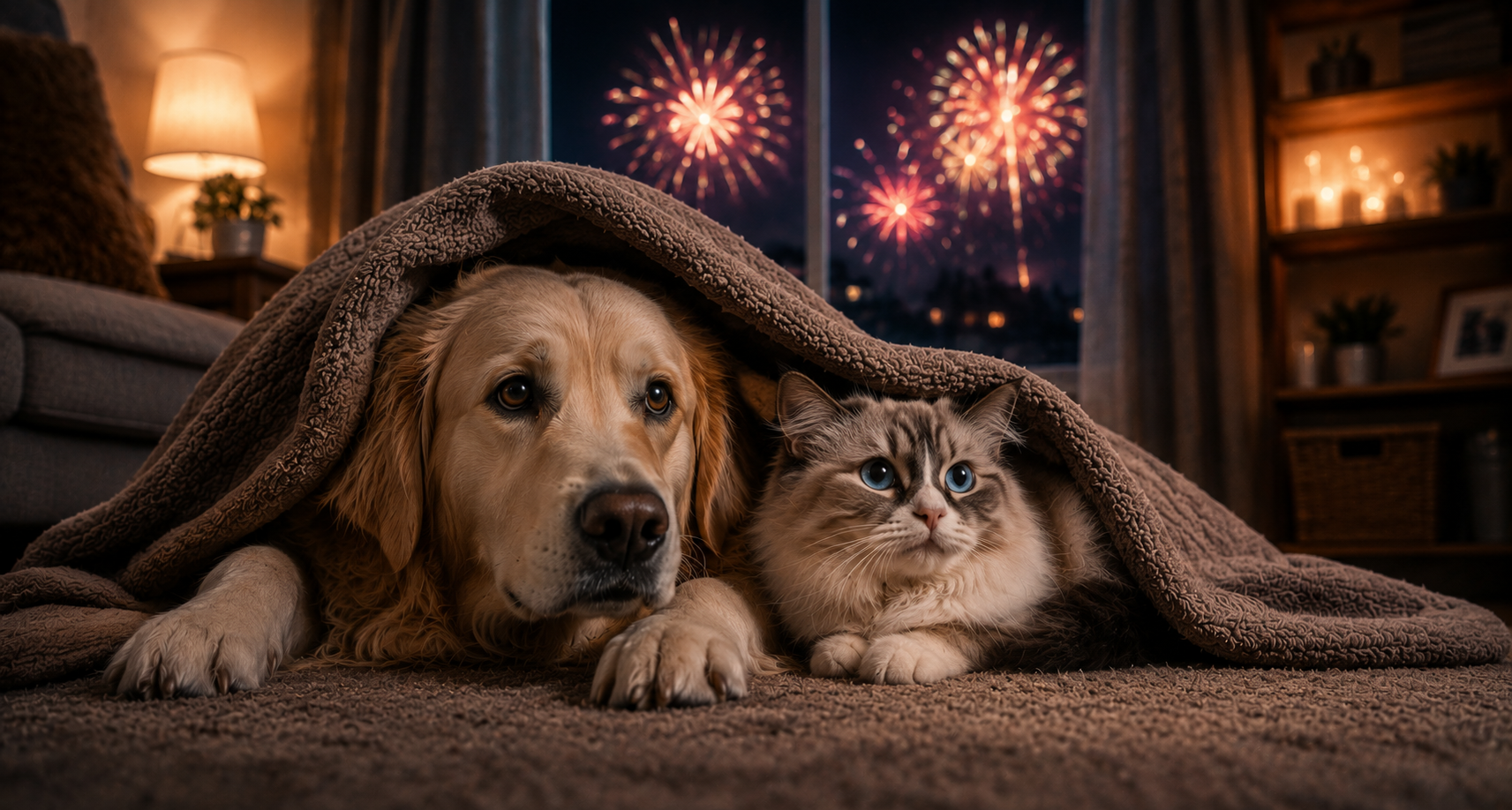
Fireworks can affect more than your pet’s behavior. Loud booms, flashing lights, and sudden vibrations may trigger a stress response that affects appetite, digestion, stool quality, and overall comfort. A calm environment, predictable routine, hydration, and daily gut health support can help your pet settle back into normal rhythm after stressful celebrations, while GCP pet wellness supplements can fit into a gentle routine for digestive support, immune wellness, fresh breath, and everyday comfort.
Why Fireworks Affect More Than Your Pet’s Mood
Most pet parents recognize the visible signs of firework stress right away. A dog may pant, pace, bark, tremble, cling, hide, or refuse to go outside. A cat may disappear under the bed, flatten their ears, skip a meal, or avoid the usual parts of the house. These signs are easy to connect to fear, but what many pet parents do not realize is that the body is also responding internally.
When pets feel threatened by sudden noise, the body moves into a stress response. This is the same basic survival system that helps animals react quickly to danger. Heart rate may rise, muscles may tense, breathing may change, and digestion may become less of a priority for the moment. That shift is useful in a true emergency, but fireworks are different because the “danger” can continue for hours, repeat over several nights, or happen without warning.
This is where digestive health becomes part of the fireworks conversation. Stress can influence appetite, gut movement, hydration habits, stool quality, and the balance of the gut microbiome. Some pets seem fine once the noise stops, but others show tummy changes the next day or even a couple of days later. A dog may have loose stool after a loud holiday night. A cat may eat less, groom more, or have a litter box routine that looks different from normal.
A study by Stella, Lord, and Buffington found that unusual external events were associated with increased sickness behaviors in cats, including changes that can look like reduced appetite or digestive upset. This does not mean every pet will become sick after fireworks, and it does not mean a supplement can prevent stress. It does support a practical idea many pet parents already notice: changes in the environment can affect how pets feel and behave physically.
How Stress Can Show Up in the Gut
The gut is sensitive to routine. Pets often do best when meals, walks, sleep, litter box access, water, and household energy feel predictable. Fireworks interrupt that sense of safety. Even if your pet is indoors, the sound and vibration can feel intense, especially because dogs and cats hear differently from people and may notice frequencies or distant sounds that we tune out.
When stress rises, digestion may slow down, speed up, or become irregular. Some pets lose interest in food because their body is focused on staying alert. Others may eat quickly after the stress passes, which can lead to stomach discomfort. Some dogs may need to go outside more urgently, while some cats may avoid the litter box if the route to it feels exposed or noisy.
The gut microbiome can also be affected by stress. The microbiome is the community of bacteria and other microorganisms living in the digestive tract. A balanced gut environment supports digestion, stool quality, nutrient use, and immune wellness. When a pet is stressed, changes in appetite, hydration, movement, and gut rhythm may influence that balance.
It is important to keep this conversation realistic. Stress-related digestive changes can happen, but diarrhea, vomiting, appetite loss, constipation, and lethargy can also have medical causes. If symptoms are severe, repeated, or paired with pain, blood, dehydration, collapse, or refusal to eat, veterinary care is the right next step.
The Gut-Brain Connection in Dogs and Cats
The gut and brain communicate constantly. Pet parents do not need to understand every scientific detail to see the pattern in daily life. When a pet is nervous, their stomach may act differently. When digestion feels off, their mood and comfort may change too. This two-way relationship is often called the gut-brain connection.
For dogs, the gut-brain connection may show up after stressful events as loose stool, gas, changes in appetite, clinginess, or restlessness. For cats, it may appear as hiding, reduced appetite, litter box changes, grooming changes, or a sensitive stomach. These signs are not always dramatic, which is why pet parents should pay attention to small changes after fireworks, travel, guests, boarding, thunderstorms, or other stressful events.
The gut also has a strong connection to immune wellness. A large part of everyday immune activity is linked to the digestive tract, which is one reason digestive support and immune support are often discussed together. A pet’s gut does not work in isolation. It is connected to nutrient absorption, stool quality, skin and coat condition, breath and odor, and overall daily comfort.
This is why a thoughtful post-fireworks routine should not only focus on calming the room. Quiet spaces matter, but recovery also includes food, water, digestion, sleep, and the return to normal habits. Helping your pet feel safe is the first step. Helping the body return to its usual rhythm is the next.
Firework Stress and Digestive Changes: What to Watch For
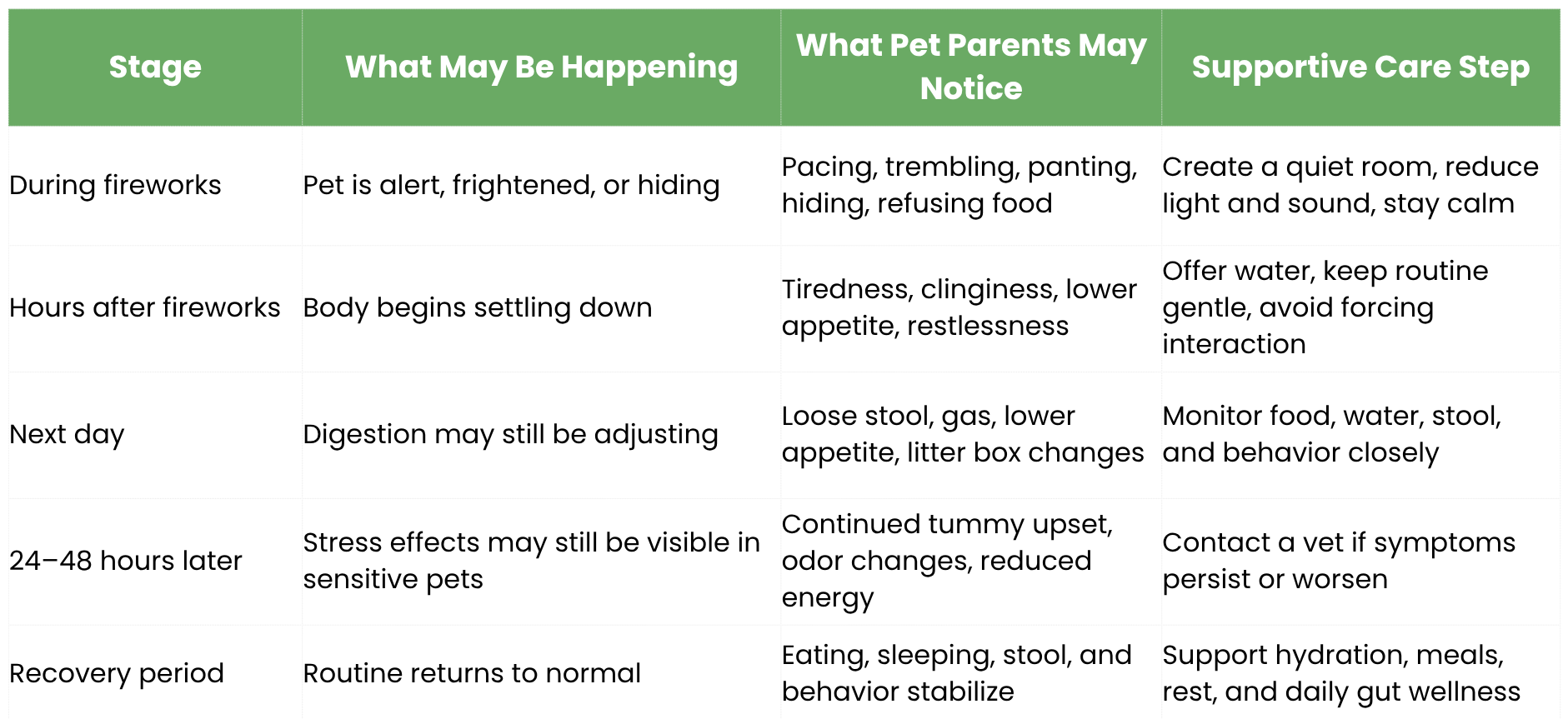
After a noisy night, watch your pet without hovering too much. Many pets need time and space to settle. A dog may sleep more the next day. A cat may remain hidden for a while before returning to normal. Mild changes can happen, but certain patterns deserve attention.
For dogs, watch for loose stool, repeated diarrhea, vomiting, refusal to eat, excessive panting after the noise has stopped, pacing, or sudden accidents indoors. Some dogs may also drink less during stressful events because they are too alert or afraid to move around normally. If your dog is already sensitive, elderly, medicated, or has a history of digestive concerns, even small changes may be worth discussing with your veterinarian.
For cats, watch the food bowl and litter box. A cat who skips meals can become a concern more quickly than some pet parents expect. If your cat refuses food, hides for an unusually long time, vomits repeatedly, has diarrhea, strains in the litter box, or produces little to no urine, call your veterinarian. Cats often hide discomfort, so litter box and appetite changes should be taken seriously.
Pets may also show breath or odor changes if digestion is unsettled. This does not mean bad breath is always a gut issue. Dental health, diet, hydration, and oral hygiene matter too. But gut comfort can be part of the bigger freshness routine, especially for dogs who experience odor changes after stress or dietary disruption.
Stress Response vs. Digestive Signs
How to Help Your Pet Recover After Fireworks
Start with the environment. Give your pet a quiet, familiar space where they can retreat. For dogs, this may be a crate, bedroom, or cozy corner with familiar bedding. For cats, it may be a closet, under-bed space, cat tree, or quiet room with food, water, and litter nearby. Do not force them out of hiding unless there is a safety concern. For many pets, control over their hiding spot is part of feeling safe again.
Keep meals simple. Avoid introducing new foods, rich treats, or table scraps right after fireworks, because the gut may already be sensitive. Offer normal food at the usual time, but do not panic if your pet eats a little less for one meal. If appetite loss continues, contact your veterinarian.
Hydration is important too. Stress can change drinking habits, and some pets may avoid bowls if they are placed in noisy or busy areas. Keep water available in quiet locations. For cats, consider placing an extra bowl near their hiding space if they are reluctant to come out.
Return to routine gently. Walk dogs at calm times, avoid overstimulating play right after a stressful night, and give cats space to re-enter the household rhythm on their own. The goal is to make normal life feel predictable again.
Daily digestive support can also be part of the recovery routine. Probiotics, prebiotics, gut-friendly ingredients, and species-appropriate wellness products can help support digestive balance, stool quality, and immune wellness when used consistently as directed.
Supporting Gut Wellness With GCP Pet Supplements
Once the fireworks have passed and your pet is ready to return to normal, GCP products can help support the daily wellness routine that keeps digestion and comfort on track. For cats, GCP Purrbiotics offers probiotic and prebiotic support for digestive health, immune wellness, and healthier skin and coat. Its chicken liver flavor and powder format make it easy to mix into meals, which is helpful for cats who prefer simple, familiar feeding routines.
For dogs, GCP Breath Boost Bites support fresh breath, odor control, and healthy gut function in a tasty chicken-flavored treat format. After stressful events, many dog parents pay closer attention to breath, digestion, and stool quality, and a daily gut-friendly bite can fit naturally into the routine. GCP VitaPup Multivitamin Chews can also support everyday baseline wellness for dogs, including immune, digestive, coat, brain, and heart support.
The best approach is not to wait until a stressful night causes a visible change. A steady routine before, during, and after seasonal events can help pet parents feel more prepared. GCP supplements should be used as directed and should not replace veterinary care, but they can be part of a warm, practical plan for helping pets recover from stressful celebrations.
Frequently Asked Questions
-
Fireworks can trigger a stress response that affects appetite, gut movement, and digestive comfort. Some pets may show loose stool, gas, nausea, or reduced appetite after the noise because their body has been in a heightened state of alert.
Conclusion: Calm Starts With the Whole Routine
Fireworks may seem like a short event to humans, but for pets, the effects can last longer than the noise itself. Stress can affect how they eat, drink, sleep, move, and digest. That is why a strong recovery plan should include both emotional comfort and physical support.
A quiet space, steady meals, hydration, gentle routine, and daily digestive support can all help your pet return to normal after a stressful celebration. GCP pet wellness products fit into that bigger picture by supporting gut health, immune wellness, fresh breath, and daily vitality in a simple, pet-friendly way.
Product Feature: GCP Digestive and Daily Wellness Support
GCP offers pet wellness products that help dog and cat parents support daily routines before and after stressful events like fireworks. These products are not anxiety treatments or medical cures, but they can support the digestive, immune, and freshness routines that help pets feel more balanced in everyday life.
Benefits of GCP Purrbiotics for Cats:
-
Supports digestive health and gut microbiome balance
-
Includes probiotics and prebiotics for daily gut support
-
Supports immune wellness as part of feline care
-
Promotes healthier skin and coat through digestive wellness
-
Chicken liver flavor helps make daily use easier
-
Powder format mixes easily with food
Benefits of GCP Breath Boost Bites for Dogs:
-
Supports fresh breath and odor control
-
Helps support healthy gut function
-
Includes chlorophyll, parsley, and Champex
-
Chicken flavor makes daily use enjoyable
-
Treat format fits easily into dog routines
-
Supports freshness alongside dental care and healthy digestion
Benefits of GCP VitaPup Multivitamin Chews for Dogs:
-
Helps support digestion, heart, brain, coat, and overall vitality
-
Easy chew format for consistent use
-
Fits active dogs and busy seasonal routines
-
Helps build a steady wellness foundation
GCP products make it easier to support pets with routines that feel simple, warm, and consistent. Choose the product that matches your pet’s species and needs, use it as directed, and pair it with calm spaces, hydration, familiar meals, and veterinary care when symptoms are unusual or persistent.
Citation:
Stella, J. L., Lord, L. K., & Buffington, C. A. T. (2011). Sickness behaviors in response to unusual external events in healthy cats and cats with feline interstitial cystitis. Journal of the American Veterinary Medical Association, 238(1), 67–73. https://pubmed.ncbi.nlm.nih.gov/21194324/
For all general inquiries, please contact us at info@guardianschoice.com
© Copyright. All rights reserved.