
Heatstroke vs. Gut Stasis: The Surprising Link Between Temperature and Tummy
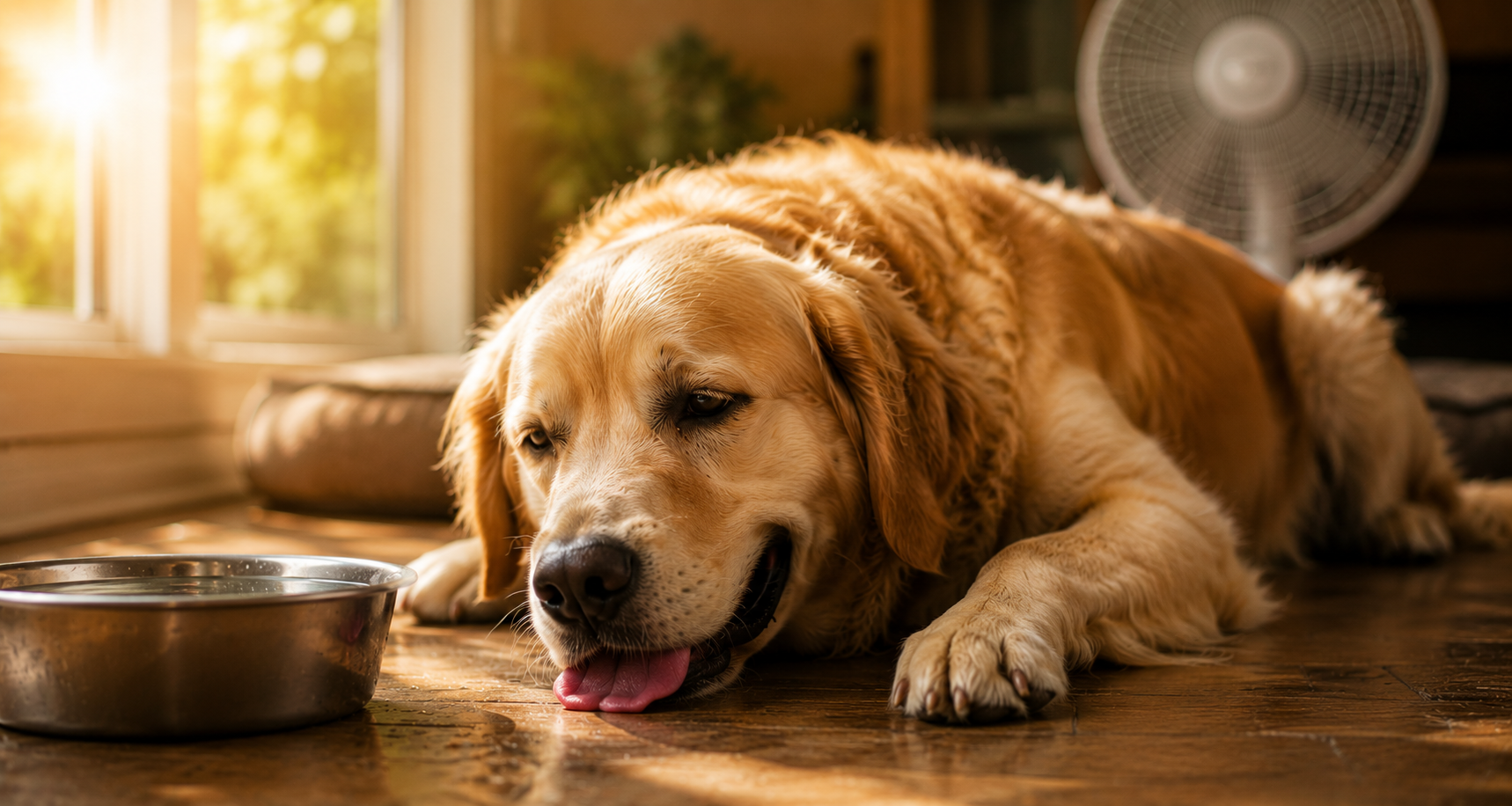
When temperatures rise, your cat’s comfort can be affected in more ways than one. Heat may influence hydration, appetite, stress levels, grooming habits, and digestive rhythm, which is why summer cat care should include both cooling support and gut health support. GCP Purrbiotics is designed to support digestive health, immune wellness, healthier skin and coat, and daily microbiome balance with probiotics, prebiotics, and a chicken liver flavor cats can enjoy.
Why Summer Heat Can Affect More Than Your Cat’s Temperature
Summer heat is usually discussed in terms of overheating, panting, warm rooms, and access to fresh water, but a cat’s digestive system can also be affected by the season. Cats are creatures of routine, and hot weather often changes the way they eat, drink, sleep, groom, and move around the home. A cat who usually finishes breakfast may nibble slowly during a heat wave. A playful cat may become less active and spend more time in cool corners. A mildly uncomfortable cat may groom more, hide more, or show subtle litter box changes before a pet parent realizes something is off.
This is why summer cat care should not only focus on temperature control. A cooler home matters, but so does cat gut health, hydration, appetite, stool quality, and microbiome support. The digestive tract depends on steady fluid intake, regular eating patterns, normal movement, and a balanced internal environment. When heat disrupts those basics, the gut may become less predictable.
The phrase “gut stasis” is often used to describe digestive slowdown, but in cats, pet parents should be careful not to treat it as a casual label for every tummy change. Refusing food, producing fewer stools, hiding, or appearing uncomfortable can have many possible causes. Some may be minor, while others need urgent veterinary care. What matters most is recognizing that summer heat can create conditions where appetite and digestion deserve closer attention.
A thoughtful summer routine includes shaded resting spots, cool surfaces, fresh water, regular litter box checks, gentle grooming, and digestive support when appropriate. When those steps work together, cat parents are not just reacting to discomfort; they are helping maintain a steadier foundation during a season that can easily disrupt the body.
Heatstroke vs. Digestive Slowdown: What Cat Parents Should Understand
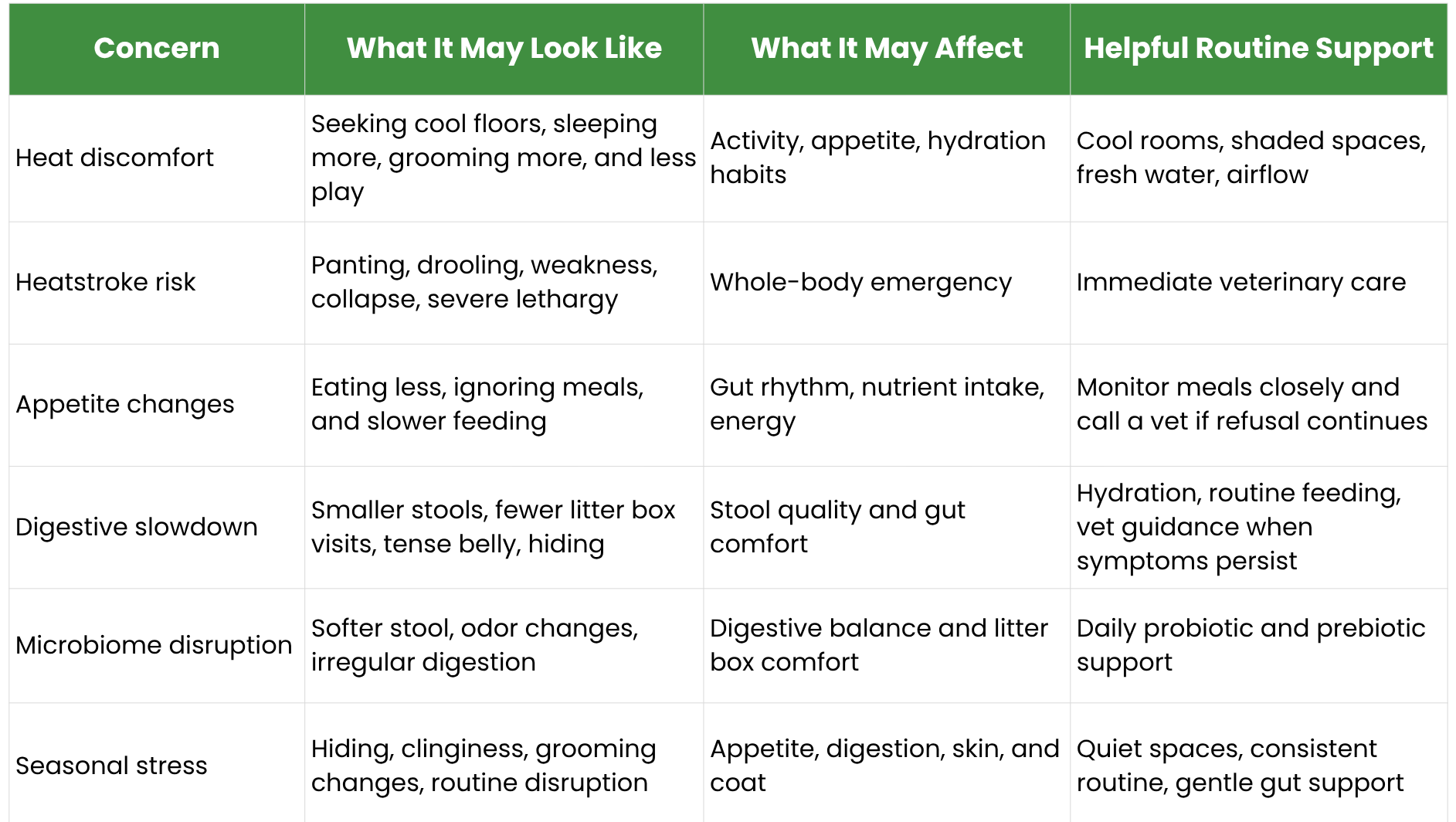
Heatstroke is a serious emergency that can happen when a cat’s body temperature rises to unsafe levels, and the body cannot cool itself effectively. Signs may include heavy panting, drooling, weakness, very warm body temperature, red or pale gums, vomiting, collapse, or severe lethargy. If heatstroke is suspected, a veterinarian or emergency clinic should be contacted immediately. Supplements, home routines, or waiting to “see if it passes” are not appropriate for a true overheating emergency.
Digestive slowdown is different, but it can still be concerning. A cat affected by heat may eat less, drink less than needed, become less active, or produce smaller and less frequent stools. The digestive system relies on hydration and regular movement of food through the gut. When food intake drops and fluid balance shifts, stool may become harder, motility may feel less steady, and the litter box may look different from normal.
The important connection is that heat stress can affect the whole body. When a cat is uncomfortable, the body naturally prioritizes cooling, rest, and survival. Eating may become less appealing, and a cat that skips meals can quickly become a concern. Cats should not go long without food, especially if they are overweight, medically fragile, elderly, or already dealing with health issues. Prolonged appetite loss can raise the risk of serious complications, so a cat who refuses food should be taken seriously.
A controlled study in healthy adult cats using a probiotic strain different from the one in GCP Purrbiotics found that probiotic supplementation influenced fecal microbial populations and some immune-related markers. This does not prove that probiotics prevent heat-related digestive problems, and it does not mean every probiotic works the same way. It does support the broader point that the feline microbiome can respond to probiotic support, which is one reason daily gut care may be helpful during seasons when routines are under pressure.
How Dehydration, Appetite Changes, and Stress Affect the Gut
The gut is highly sensitive to hydration. When a cat drinks less or loses moisture through heat-related stress, stool can become drier and harder to pass. Some cats naturally drink very little, especially if they eat dry food, so summer heat can make hydration habits more important. Adding extra water bowls, using a pet fountain, or offering wet food when appropriate may help support overall fluid intake, but sudden changes should still be made thoughtfully.
Appetite changes also matter. The gut microbiome depends on regular nutrient flow, and when a cat eats less, the digestive rhythm can shift. A skipped meal may not be alarming by itself, but repeated refusal, sudden pickiness, vomiting, or hiding should prompt closer attention. Cat parents should monitor whether the cat is eating enough, drinking normally, and using the litter box consistently.
Stress adds another layer. Heat waves often come with closed windows, air conditioner noise, summer travel, visitors, fireworks, changed schedules, and less predictable household activity. Cats may respond by hiding, grooming more, eating less, or avoiding normal routines. Because the gut and stress response are connected, a stressful season may show up in the litter box or in the way a cat behaves around meals.
This is where prebiotics and probiotics fit into a responsible routine. Probiotics support beneficial bacteria in the digestive tract, while prebiotics help nourish the gut environment. They are not emergency tools and should not be used to delay veterinary care, but they can be part of a daily wellness plan for digestive balance, stool quality, immune support, and skin and coat health.
Temperature vs. Tummy: Quick Comparison
How to Build a Summer Gut Health Routine for Cats
A summer gut health routine should be simple, steady, and realistic. Start with the environment. Keep your cat’s resting areas cool, especially rooms with direct sunlight. Close curtains during the hottest part of the day, offer shaded spots, and make sure your cat is not trapped in a warm room. Some cats prefer tile floors, sinks, or breezy areas when the weather is hot, so allow safe access to cooler spaces.
Next, focus on hydration. Place water bowls in more than one area of the home and refresh them often. Cats can be picky about bowl location, bowl material, and water freshness, so small adjustments can make a difference. If your cat eats wet food, that may also support moisture intake, but any major diet change should be gradual.
Monitor meals and litter box patterns. The goal is not to panic over every small change, but to know what is normal for your cat. A cat who usually eats eagerly and suddenly refuses meals during a hot spell deserves attention. A cat who has fewer stools, strains, hides, or seems uncomfortable should not be brushed off as simply “being hot.”
Finally, support the microbiome consistently. Daily probiotics and prebiotics can be a practical part of warm-weather care because they support digestive balance before the litter box becomes a concern. Consistency matters more than occasional use, especially during periods when heat, stress, and appetite changes may overlap.
Supporting Your Cat’s Gut With GCP Purrbiotics
As summer routines shift, GCP Purrbiotics fits naturally into the part of cat care that happens from the inside out. Once the home is cooler, water is available, and your cat’s routine is being monitored, digestive support becomes a smart daily layer. GCP Purrbiotics is designed for cats and supports digestive health, immune wellness, healthier skin and coat, and gut balance with probiotics and prebiotics.
The product in the image highlights 5 billion CFU per scoop, probiotic and prebiotic support, and a chicken liver flavor. That combination makes it especially helpful for cat parents who want digestive support that feels easy to add to mealtime. The goal is not to claim that GCP Purrbiotics prevents heatstroke, treats gut stasis, or replaces veterinary care. Its role is to help support the digestive microbiome as part of a broader summer wellness routine.
For cat parents, that distinction matters. You still keep your cat cool, watch its appetite, monitor litter box activity, and contact your vet when symptoms are concerning. GCP Purrbiotics becomes the daily support step that helps maintain digestive balance while you manage the rest of the summer environment.
Frequently Asked Questions
-
Yes, hot weather may affect appetite, hydration, activity, and stress levels, all of which can influence digestion. If your cat stops eating, hides, vomits, or has major litter box changes, contact your veterinarian.
A Cooler Cat Starts With a Smarter Routine
Summer heat can affect more than your cat’s comfort level. It can influence drinking habits, appetite, stool quality, activity, stress, and the gut microbiome. While heatstroke is an emergency that requires immediate veterinary care, milder heat-related routine changes can still affect the digestive system in ways cat parents should watch closely.
A smart summer plan supports both the outside and the inside. Keep the home cool, offer fresh water, maintain familiar feeding patterns, watch the litter box, and support the gut with a consistent probiotic and prebiotic routine. GCP Purrbiotics fits into that plan as a daily digestive health supplement designed to support gut balance, immune wellness, and healthier skin and coat during the season when cats may need extra routine support.
GCP Purrbiotics
GCP Purrbiotics is a feline probiotic and prebiotic supplement designed to support digestive health, immune wellness, and healthier skin and coat. With 5 billion CFU per scoop and a chicken liver flavor, it is made to fit easily into your cat’s daily mealtime routine without adding stress to feeding.
Benefits of GCP Purrbiotics:
-
Supports digestive health and gut microbiome balance
-
Includes probiotics and prebiotics for a more complete gut routine
-
Provides 5 billion CFU per scoop when used as directed
-
Supports immune wellness as part of daily care
-
Promotes healthier skin and coat through digestive wellness
-
Chicken liver flavor helps with daily palatability
-
Easy powder format for mealtime use
-
Fits warm-weather routines when appetite, hydration, and digestion need closer attention
-
Helpful for cat parents focused on stool quality and litter box comfort
-
Made for cats and designed for simple, consistent use
GCP Purrbiotics is a strong choice for cat parents who want to support their cat’s digestive foundation before summer stress affects the routine. Add it to your cat’s meals as directed, keep your home cool, monitor appetite and litter box habits, and contact your veterinarian when symptoms are unusual, severe, or persistent.
Citation:
Marshall-Jones, Z. V., Baillon, M. L. A., Croft, J. M., & Butterwick, R. F. (2006). Effects of Lactobacillus acidophilus DSM13241 as a probiotic in healthy adult cats. American Journal of Veterinary Research, 67(6), 1005–1012. https://pubmed.ncbi.nlm.nih.gov/16740094/
For all general inquiries, please contact us at info@guardianschoice.com
© Copyright. All rights reserved.