
The Dish Soap Debate: Why “Home Brew” Flea Remedies Are a Risky Gamble
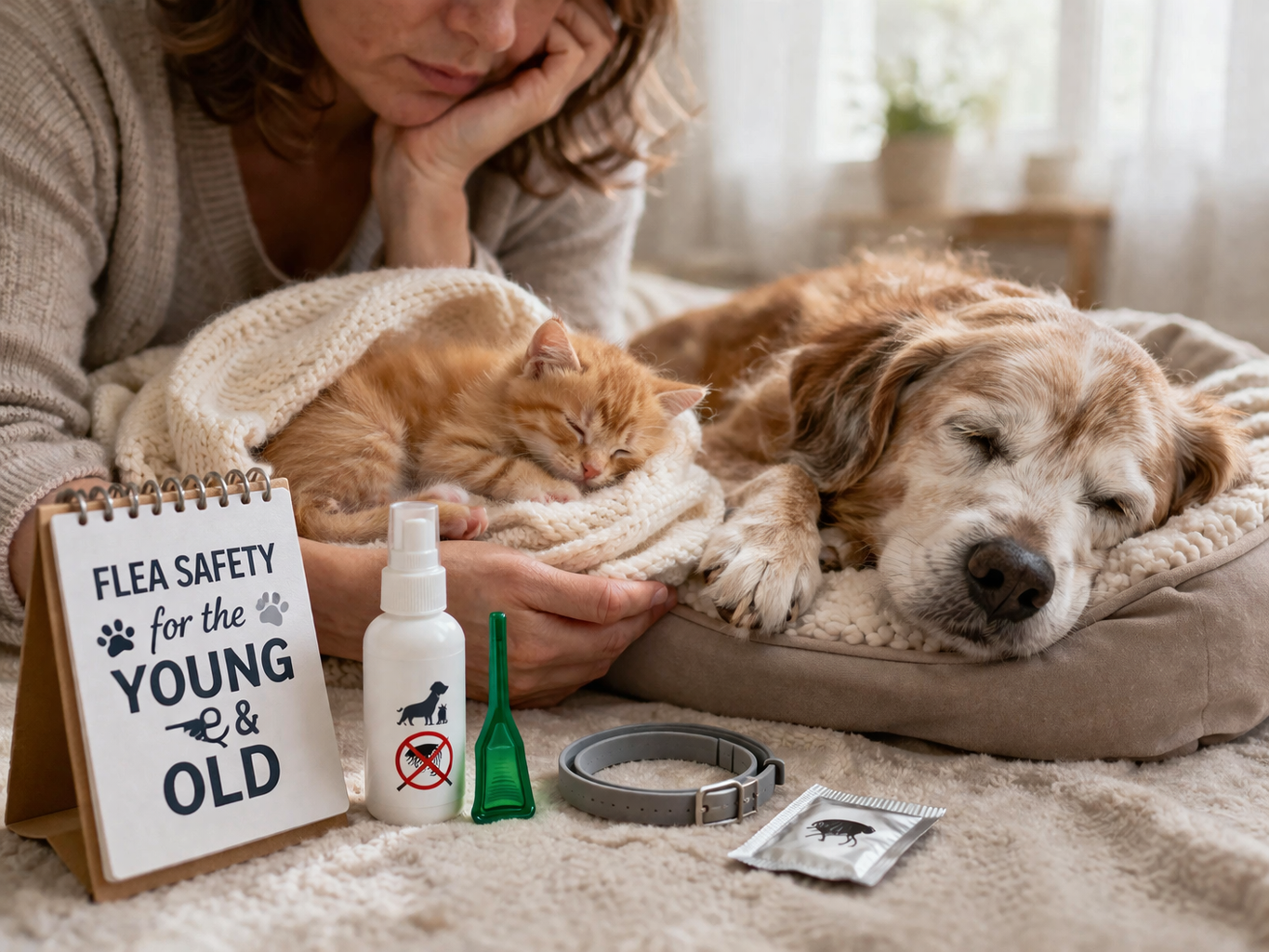
Flea prevention is not one-size-fits-all—especially when it comes to kittens and senior dogs. Young animals have developing metabolic systems, while older pets often have declining liver and kidney efficiency. Many conventional flea treatments rely on neurotoxic pesticides that require precise weight-based dosing, leaving little room for error in fragile pets. For kittens and seniors, even minor dosage miscalculations can increase the risk of lethargy, tremors, or more serious neurological reactions. A gentler, plant-based internal defense approach works with your pet’s biology rather than overwhelming it, offering support without placing additional strain on vulnerable systems.
Why Age Matters in Pest Control
A 2-pound kitten and a 90-pound adult dog do not process substances the same way. Neither does a 14-year-old Golden Retriever with slowing kidney function compared to a healthy three-year-old Labrador. Age dramatically influences how a pet metabolizes, distributes, and eliminates compounds introduced into the body.
Kittens are still developing their detoxification systems. The liver enzymes responsible for breaking down chemicals are immature. Kidney filtration is not yet fully optimized. Their nervous systems are also more sensitive, which means substances that mildly affect an adult may have amplified effects in a young animal.
Senior dogs, on the other hand, often experience the opposite challenge. Over time, organ efficiency naturally declines. The liver may metabolize compounds more slowly. Kidney filtration may be reduced. Many seniors are also taking medications for arthritis, heart conditions, thyroid imbalances, or pain management. Each additional chemical introduced into the system increases metabolic workload.
When flea control relies on potent neurotoxins, that margin for safety becomes narrower in both of these life stages.
The Neurotoxin Concern
Most traditional topical flea treatments function by targeting the nervous system of insects. They contain compounds designed to disrupt neurological signaling in parasites, leading to paralysis and death. While these products are formulated to be safe when used exactly as directed, they are still pesticides. They are designed to interfere with nerve transmission.
In healthy adult animals, these compounds are typically processed and cleared without noticeable side effects. However, in kittens and seniors, the risk profile changes. If metabolism is slower or dosing is slightly miscalculated, adverse reactions may include:
-
Lethargy
-
Tremors
-
Muscle twitching
-
Excessive drooling
-
Disorientation
-
Seizures in rare but documented cases
Even when severe reactions do not occur, some pet owners report their animals acting “off” after application—less energetic, less social, or slightly withdrawn.
For fragile life stages, the question becomes not just “Does it kill fleas?” but “How much strain does this place on my pet’s system?”
The Razor-Thin Dosage Margin
Chemical flea topicals require exact weight-based dosing. A pet that falls between weight categories can be difficult to dose precisely. Applying too much increases systemic absorption risk. Applying too little reduces effectiveness and may encourage resistance.
For kittens whose weight can change weekly and senior dogs whose body composition shifts due to muscle loss, precise dosing becomes more complicated. A few pounds can make a meaningful difference.
Additionally, topical products are absorbed through the skin. Grooming behavior may increase ingestion risk, particularly in cats who lick themselves or housemates after application.
The margin for error is simply smaller in young and aging pets.
Chemical Interactions in Senior Pets
Many senior dogs are on long-term medications. Anti-inflammatory drugs, heart medications, seizure management drugs, and thyroid support all require liver metabolism. Introducing additional chemical compounds increases metabolic demand and may heighten concern about interactions.
While veterinary-approved flea medications are tested for safety, the combination of multiple medications plus age-related organ decline often leads cautious pet parents to seek gentler alternatives.
The goal shifts from aggressive eradication to balanced prevention.
A Biological Approach: Working With the System
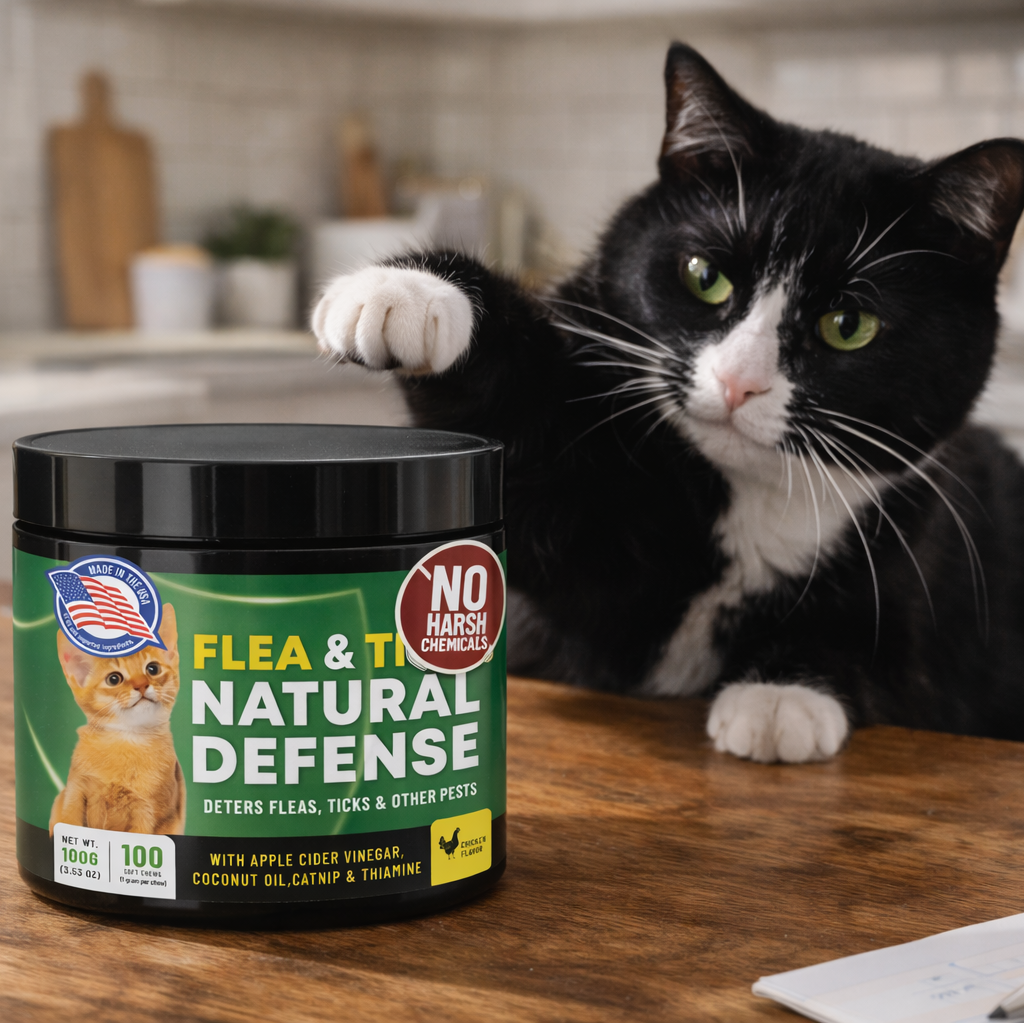
Instead of relying on external pesticides that target the parasite’s nervous system, plant-based internal defense methods support the pet’s natural resilience. These approaches use botanical compounds and essential oils in carefully formulated, measured amounts that are ingested rather than applied topically.
The advantage of an internal defense chew includes:
-
Controlled dosing
-
No greasy residue
-
No airborne exposure
-
No skin saturation
-
Reduced risk of inhalation
-
No transfer to children or furniture
By supporting the body’s natural scent and internal balance, plant-based chews create an environment that is less attractive to pests, without overwhelming the nervous system.
Comparison: Chemical vs. Natural Defense

The key difference is intensity. One approach overwhelms the parasite’s nervous system. The other supports the host’s natural defenses.
Why Internal Defense Reduces Stress
Application of topical chemicals can be stressful for pets. The smell, sensation, and temporary isolation period after application can cause anxiety, especially in older animals sensitive to routine disruption. Chews, by contrast, are treated like rewards. They are integrated into daily feeding routines without drama.
Stress reduction matters. Chronic stress impacts immune function and skin integrity. A calm prevention routine supports overall wellness.
When to Reconsider Current Protection
If you’ve noticed your kitten acting lethargic after flea drops or your senior dog appearing disoriented, hesitant, or unusually quiet following application, it may be time to evaluate the intensity of their protection plan. Not every reaction is dramatic. Subtle behavioral shifts can be early indicators that a product may be too harsh for that life stage.
Gentler options exist.
Frequently Asked Questions
-
Most kittens can begin gentle botanical support once they are weaned and consistently eating solid food. Always consult your veterinarian for individualized guidance.
Young and aging pets live in what can best be described as the fragile phase. Their systems are either developing or gradually slowing. Introducing potent neurotoxins into that equation narrows the safety margin. Flea prevention should protect—not overwhelm.
Choosing a plant-based internal defense strategy allows you to support pest deterrence without placing additional strain on sensitive metabolic systems. When it comes to kittens and senior dogs, gentleness is not weakness—it is wisdom.
For all general inquiries, please contact us at info@guardianschoice.com
© Copyright. All rights reserved.