
The Final Word on Fleas: An End-to-End Eradication Strategy

The cycle is familiar to too many pet owners. Your dog starts scratching. You apply a treatment. Things improve briefly. Two weeks later, the scratching resumes. You vacuum frantically, maybe even set off a flea bomb, and hope for the best. Relief comes and goes, but the problem never fully disappears. The reason is simple: most people are fighting only 5% of the infestation. The other 95% is quietly developing in your environment.
Fleas are not just a pet problem. They are an ecosystem problem. To eliminate them permanently, you must attack every stage of their life cycle simultaneously.
Understanding the Enemy: Why Fleas Keep Coming Back
Fleas progress through four life stages: egg, larva, pupa, and adult. Only the adult fleas live on your pet, feeding on blood and causing irritation. The eggs fall off into carpets, bedding, furniture seams, and floor cracks. Larvae hatch and burrow deep into fibers, feeding on organic debris and flea dirt. Pupae then encase themselves in protective cocoons that can survive for weeks or even months, waiting for vibration and warmth to signal a host nearby.
By the time you notice scratching, eggs have likely already dispersed throughout your home. Killing adult fleas without addressing eggs and larvae is like trimming weeds without removing the roots. The visible symptoms subside temporarily, but the life cycle continues beneath the surface.
The Three-Front Eradication Strategy
To truly win, you need coordinated action targeting:
-
The Pet
-
The Home Interior
-
The Outdoor Environment
Each front plays a specific role in breaking the reproductive cycle.
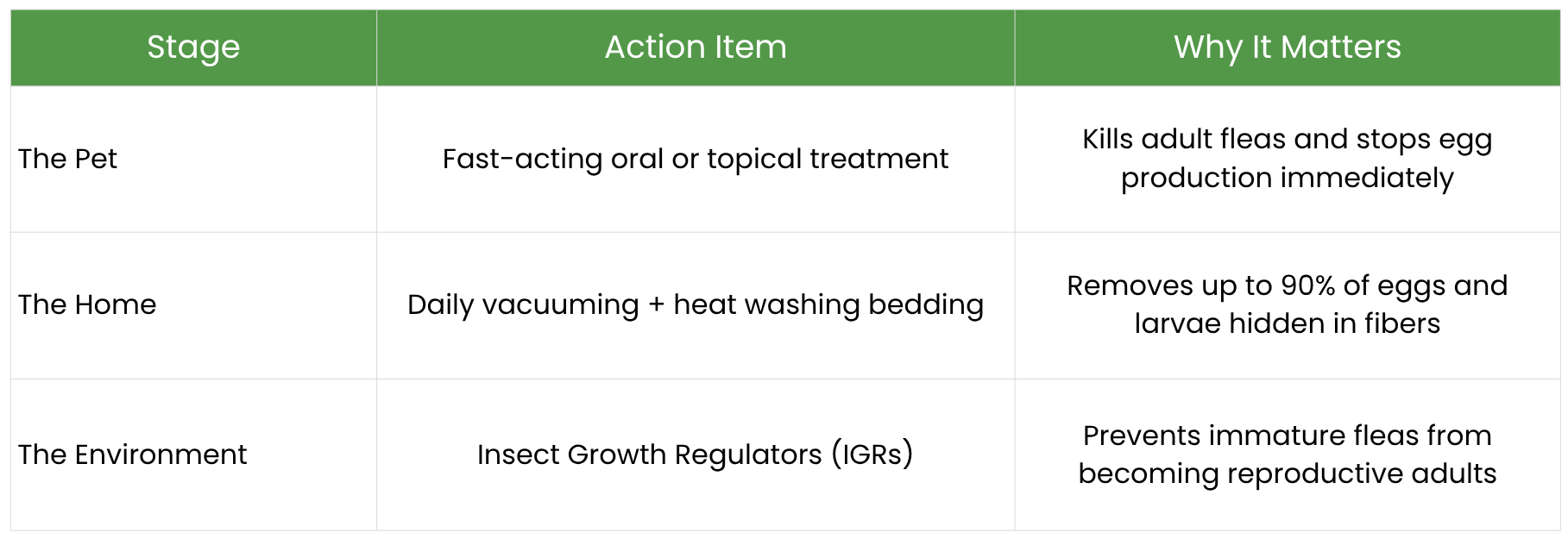
Stage 1: The Pet — Stop the Biters Immediately
Your first priority is eliminating adult fleas feeding on your pet. These are the fleas causing discomfort, inflammation, and egg production. Fast-acting oral or topical treatments are designed to kill adult fleas quickly, often within hours. This stops egg-laying and relieves itching.
Why this matters: If adult fleas remain alive, they continue laying dozens of eggs per day. Immediate treatment cuts off reproduction at the source and reduces further environmental contamination. However, this step alone will not eliminate the infestation.
Stage 2: The Home — Remove the Hidden Majority
While adult fleas are on the pet, eggs and larvae are embedded in your home. Daily vacuuming is not just cleaning—it is a mechanical disruption strategy. Vacuuming removes up to 90% of eggs and larvae from carpets and upholstery when done consistently. It also stimulates pupae to hatch, which is beneficial because emerging adults are easier to eliminate when treatments are active.
Heat washing pet bedding, blankets, and soft surfaces in hot water destroys eggs and larvae that would otherwise mature unnoticed. Focus especially on areas where your pet rests most often, such as beds, couch cushions, and rugs.
Why this matters: Without environmental management, newly hatched fleas will continue reinfesting your pet even after successful treatment. Addressing the home dramatically reduces the next generation.
Stage 3: The Environment — Interrupt Development
Insect Growth Regulators (IGRs) are often overlooked but critical. IGRs prevent flea larvae and pupae from maturing into reproductive adults. They do not kill adult fleas instantly, but they stop the pipeline of future infestations.
Applying an IGR treatment indoors or in the yard (where appropriate) ensures that even if some eggs remain, they cannot complete their life cycle.
Why this matters: Flea pupae are resilient. They can survive many surface treatments and emerge weeks later. IGRs act as a long-term safeguard against resurgence.
Why Most Infestations Persist
Many owners stop once the scratching improves. But improvement does not mean elimination. It often means the adult population temporarily dropped while eggs remain viable. Within 2–4 weeks, new adults emerge and the cycle resumes.
Another common mistake is sporadic cleaning. Vacuuming once is insufficient. Eggs hatch continuously, so daily mechanical disruption is necessary for at least several weeks. Consistency is more important than intensity.
Timeline: How Long Does True Eradication Take?
Eradication Operates on Biology, Not Convenience
When it comes to flea infestations, one of the biggest misconceptions is expecting immediate resolution. Many pet owners assume that once they apply a treatment and the scratching slows down, the problem is solved. In reality, true eradication operates on a biological clock—not a convenience schedule.
Complete flea eradication typically takes a minimum of three months, and that timeline isn’t arbitrary. It reflects the full life cycle of fleas already present in your home at the time you begin treatment.
Fleas develop in four stages: egg, larva, pupa, and adult. While adult fleas on your pet are visible and vulnerable, the other stages are hidden and significantly more resilient. Eggs scattered throughout carpets, bedding, baseboards, and upholstery can hatch over a span of days to weeks. Larvae burrow deep into fibers and avoid light, making them difficult to reach. Pupae encase themselves in protective cocoons that are highly resistant to environmental stress and many chemical treatments.
The Pupal Stage: The Hidden Delay
The pupal stage is the real reason eradication takes time.
Pupae can remain dormant for weeks—and sometimes even months—waiting for signals such as vibration, warmth, or carbon dioxide that indicate a host is nearby. This means that even after you’ve eliminated adult fleas and cleaned thoroughly, new adults can continue emerging from cocoons that were already present before you began treatment.
What often happens is this: you treat your pet, vacuum diligently for a week or two, and the scratching subsides. Things look better. Then suddenly, you see fleas again.
This doesn’t necessarily mean the treatment failed. It often means the final wave of pupae has hatched.
Because pupae are so well-protected, most eradication strategies rely on allowing them to hatch while ongoing treatment eliminates newly emerged adults before they can reproduce. This is why consistency over time matters more than intensity over a short burst.
Why Short-Term Success Often Leads to Relapse
Think of eradication not as a single event, but as a controlled cycle-out process. You are essentially waiting for every existing egg and cocoon in your home to complete its development so it can be neutralized before laying more eggs.
Cutting treatment short—even if things appear calm—gives surviving fleas the opportunity to restart the reproductive chain.
Stopping at four or six weeks often feels successful in the moment, but it frequently results in a resurgence weeks later. That resurgence can feel frustrating and confusing, especially if you believed the issue was resolved.
In most relapse cases, the problem was never fully eliminated. It was simply paused.
Why Three Months Is the Strategic Window
Maintaining treatment for a full three months ensures that:
-
All dormant pupae have had time to hatch
-
Newly emerged adults are eliminated before laying eggs
-
Environmental egg reservoirs are depleted
-
The life cycle is fully interrupted
This three-month benchmark isn’t about overkill—it’s about covering the longest developmental stage in the flea life cycle. When you align your intervention with that timeline, you shift from reactive control to strategic eradication.
Patience, in this case, is not passive. It is disciplined follow-through.
Frequently Asked Questions
Are Flea Bombs Enough?
Aerosol “flea bombs” may kill exposed adults but often fail to penetrate deep into carpets where larvae hide. They also do little against pupae protected in cocoons. Over-reliance on foggers can create a false sense of security.
End-to-end eradication requires layered tactics, not one-time solutions.
The Psychological Toll of Ongoing Infestations
Persistent flea problems cause more than itching. Pets may experience sleep disruption, anxiety, and inflammation. Owners often feel frustration, guilt, and financial stress from repeated treatments. Breaking the cycle permanently restores not just comfort but peace of mind.
-
You are likely seeing newly emerged adults hatching from eggs in your carpets or upholstery. This does not mean treatment failed; it means environmental stages are still completing their cycle.
Fleas are not eliminated with guesswork, half-measures, or one-time sprays. They are removed with consistency and the right tools. Treating the itch may calm the scratching for a moment, but it does nothing to stop the reproductive engine behind the infestation. Real control starts with breaking the life cycle at its source.
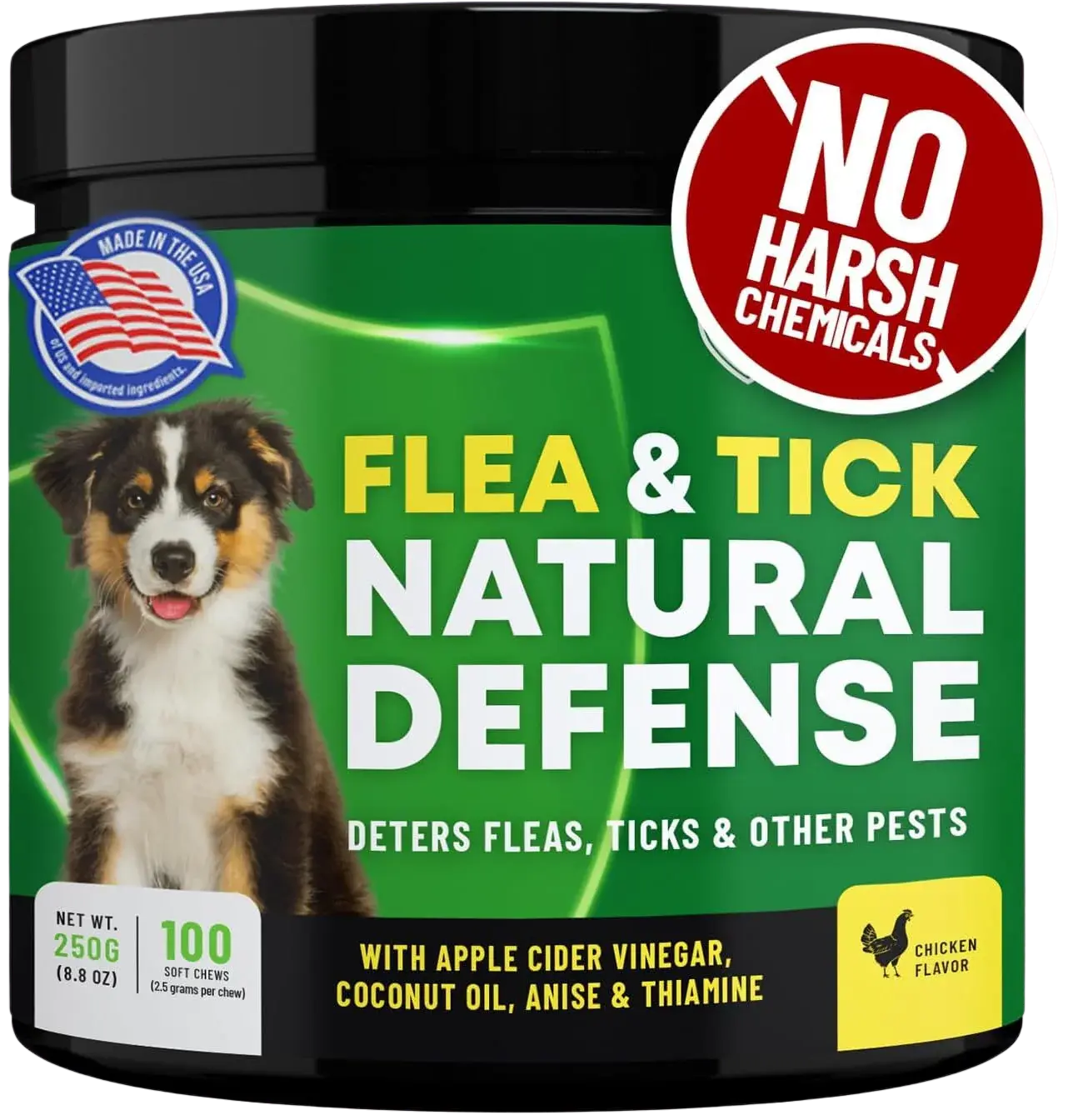
That’s where Guardian’s Choice Flea & Tick Defense for Dogs and Cats becomes the foundation of your strategy. Instead of reacting every time you see scratching, Guardian’s Choice helps create ongoing protection that targets active pests while supporting your pet’s skin barrier and overall resilience. When used consistently as part of a coordinated plan—including environmental cleaning and follow-through—you dramatically reduce the chance of reinfestation.
An end-to-end approach means protecting the pet while managing the environment. Guardian’s Choice Flea & Tick Defense stops the “biters” from continuing the cycle, giving you control instead of constantly playing catch-up. When adult fleas can’t feed and reproduce, eggs stop falling into your carpets. When reproduction stops, the population collapses.
The goal isn’t temporary relief. The goal is permanent interruption.
Stop chasing outbreaks. Start preventing them. With Guardian’s Choice protecting both cats and dogs, you’re not just treating symptoms—you’re shutting down the ecosystem that allows fleas to survive in the first place.
For all general inquiries, please contact us at info@guardianschoice.com
© Copyright. All rights reserved.