
Why Pet Parents are Rethinking the Flea Collars

Flea and tick collars are popular because they are convenient, but more pet parents are now paying attention to products that stay in contact with their dog or cat’s skin every day. Some collars use synthetic pesticide ingredients, so it is worth understanding how skin-contact pest care fits into a broader wellness routine. GCP Flea & Tick Natural Defense offers a no-harsh-chemical option for pet parents who want natural flea and tick support as part of daily care, without positioning it as a cure, treatment, or replacement for veterinarian-recommended guidance.
Why Pet Parents Are Rethinking Flea Collars
Flea and tick season can make even the most careful pet parent feel anxious, especially when a dog starts scratching after a walk or a cat begins grooming more than usual. For years, flea and tick collars have been a common choice because they are simple, familiar, and easy to use. You place the collar around the pet’s neck, follow the label directions, and trust that it is helping with pest exposure. That convenience is one reason collars remain popular, but convenience is no longer the only thing pet parents consider when choosing flea and tick support, natural flea prevention alternatives, or a no-harsh-chemical pet care routine.
Today, many dog and cat owners are asking more thoughtful questions about what touches their pets’ skin. They are reading labels more closely, comparing external flea products, looking into natural flea and tick support, and trying to understand how pest care affects daily comfort. This does not mean every flea collar is unsafe or that every pet will react poorly to one. It simply means pet parents want a more complete picture before relying on a product that sits near the skin and coat for long periods of time.
The neck area can also be sensitive for some pets. Collars may rub, collect moisture, or sit against skin that is already irritated from scratching, grooming, outdoor allergens, or previous flea bites. When redness, hair thinning, rubbing, scabbing, or constant scratching appears around the collar area, it is worth pausing and checking in with a veterinarian. Those signs can have several causes, and responsible care starts with understanding what is actually happening rather than immediately adding another product.
This is where the conversation begins to shift from “What can I put on my pet?” to “What routine supports my pet best?” Flea and tick care often works better when pet parents think about the full environment: the pet’s coat, bedding, grooming schedule, outdoor exposure, and household cleaning habits. A collar may be one tool, but it is not the only factor in a pet’s comfort during flea and tick season.
What Skin Contact Means in Flea and Tick Care
Your pet’s skin is not just a surface that holds fur. It is part of the body’s protective system, helping manage moisture, respond to irritation, and act as a barrier between the pet and the outside world. Because of this, any product that stays close to the skin deserves careful attention, especially for pets with sensitive skin, senior pets, puppies, kittens, smaller breeds, or pets with existing health concerns.
Many conventional flea and tick collars are designed to release active ingredients over time. Depending on the product, these ingredients may stay near the collar area, spread across the coat, or interact with the skin surface. This design is part of how many collars are intended to work, but it also explains why some pet parents prefer not to rely only on external skin-contact pest products. Their concern is not always about immediate reactions; sometimes it is about reducing unnecessary exposure wherever possible.
One scientific paper often discussed in relation to pesticide exposure is a review on pyrethroid neurotoxicity and cumulative risk assessment. Pyrethroids are a class of synthetic insecticides used in different pest-control settings, and the review explains why exposure level, ingredient type, and risk assessment matter. This study does not prove that every flea collar causes harm, and it should not be used to make broad fear-based claims. Instead, it supports a more reasonable point: pet parents are right to read labels carefully, follow directions, and ask veterinarians about products that remain in close contact with their pet’s skin.
It is also important to avoid assuming that scratching automatically means a collar is causing the issue. Pets scratch for many reasons, including fleas, ticks, dry skin, seasonal allergies, food sensitivities, grooming products, hot spots, anxiety, and skin infections. If a pet is scratching heavily, has open sores, smells unusual, loses hair, or seems uncomfortable, a veterinarian should evaluate the symptoms. A natural routine can support everyday care, but it should not delay medical attention when a pet is clearly distressed.
Why a Layered Routine Matters More Than One Product
Flea and tick care is rarely just one decision. Even a well-chosen product may not do enough if the home environment is ignored, because fleas can exist in different life stages away from the pet. Eggs, larvae, and pupae may be found in carpets, bedding, furniture, shaded outdoor areas, and places where pets sleep or rest often. This is why a pet may continue scratching even after a collar, topical, or other pest-care product has been used.
A layered routine looks at the pet and the environment together. It may include regular coat checks, washing pet bedding, vacuuming floors and furniture, grooming the coat, checking the neck and belly areas, and speaking with a veterinarian about the right level of flea and tick protection for the pet’s lifestyle. A dog that hikes, swims, or visits dog parks may need a different routine from a mostly indoor cat. A multi-pet household may need a different plan from a single-pet apartment. The goal is not to make pest care complicated; the goal is to make it more consistent and better matched to real life.
Pet parents also need to be cautious about combining products. Using a collar with a topical, spray, shampoo, or supplement without checking the label or asking a veterinarian can create confusion and, in some cases, may not be appropriate. More is not automatically better. Safer routines usually come from using products as directed, monitoring the pet’s response, and getting professional guidance when symptoms continue.
This is also where “natural flea and tick support” becomes meaningful. For many families, natural support is not about rejecting veterinary care. It is about building a daily routine that feels cleaner, simpler, and more aligned with how they already care for their pets. They still want to protect their dogs and cats from pests, but they also want to avoid unnecessary harsh-feeling steps when possible.
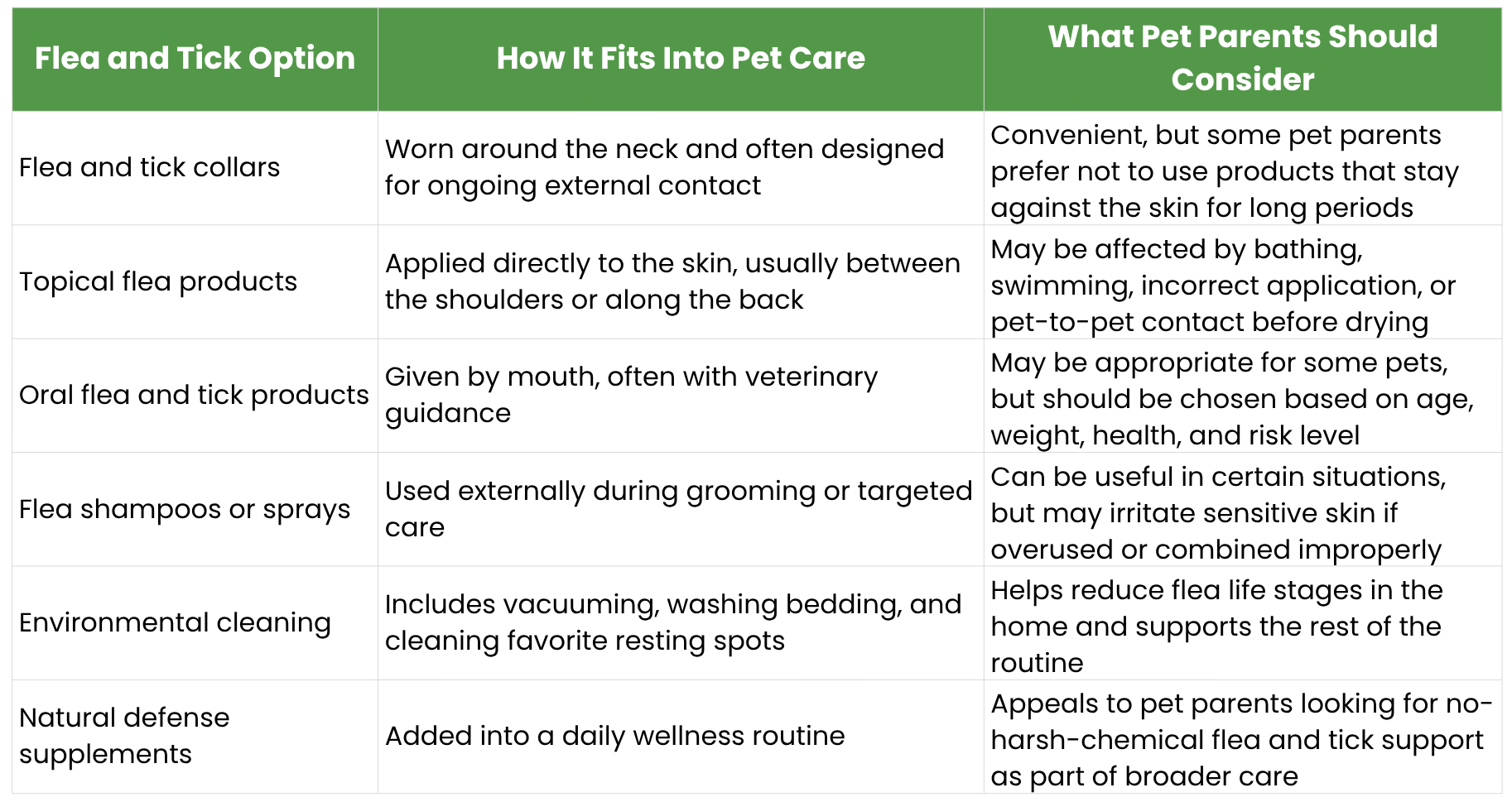
Comparing Flea and Tick Support Options
A More Natural-Feeling Way to Support the Routine
As pet parents become more label-aware, many are looking for flea and tick support that fits into a calmer daily rhythm. They still want to be responsible during flea and tick season, but they may not want every step of the routine to depend on external skin-contact products. This is where GCP Flea & Tick Natural Defense can be introduced naturally as part of the story.
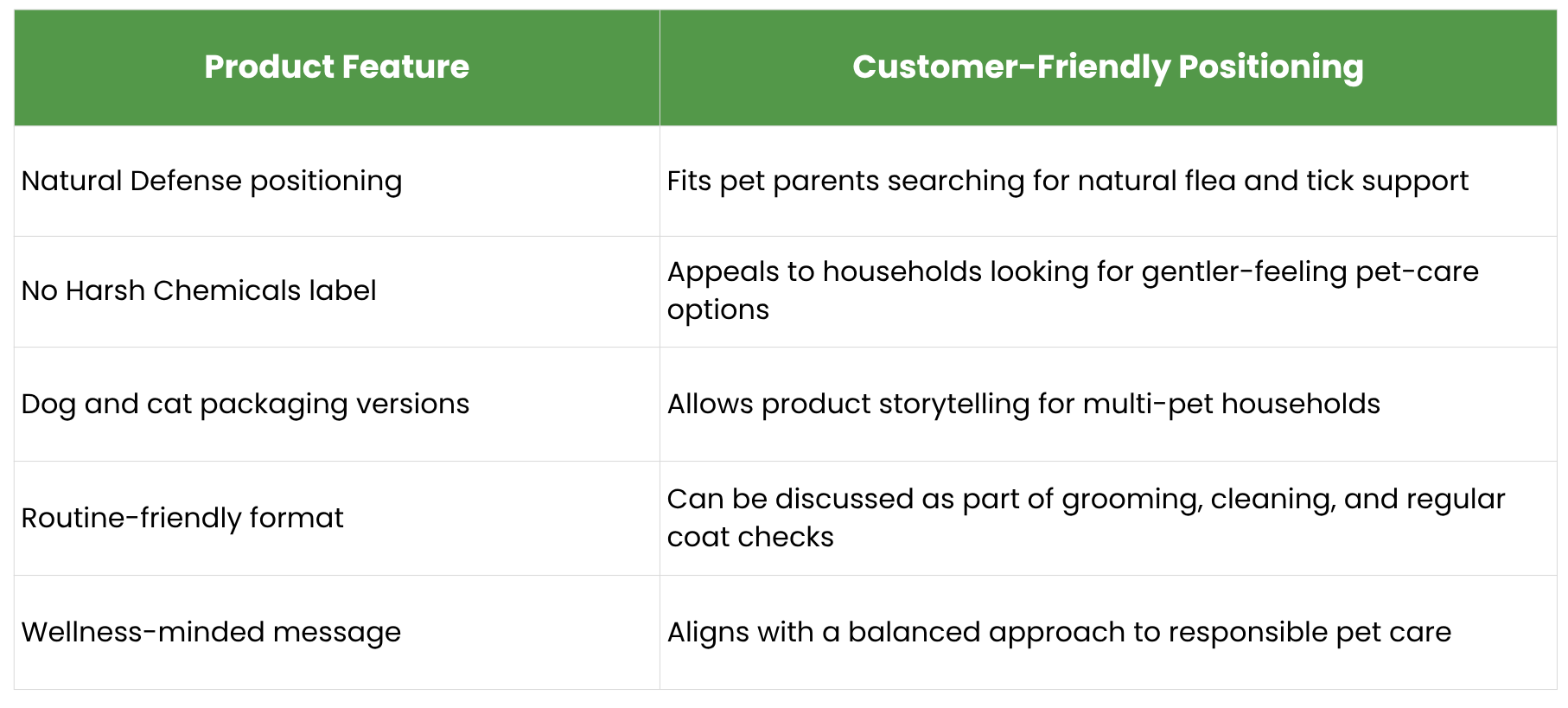
GCP Flea & Tick Natural Defense is designed for dogs and cats and is positioned for pet parents who prefer a no-harsh-chemical approach. It belongs in a broader care routine that may include regular grooming, clean bedding, coat checks, home cleaning, and veterinarian-guided pest prevention when needed. The product should not be described as a cure for flea-related skin issues, a treatment for infestation, or a guaranteed replacement for veterinary recommendations. Its strongest and most responsible role is as a routine-friendly natural support option for households that want a more thoughtful way to care for their pets.
The benefit of this approach is that it matches how real pet parents make decisions. They may start by noticing scratching, then check the collar area, then wonder whether a gentler option exists. A product like GCP Flea & Tick Natural Defense gives them a way to add natural-positioned support without making the conversation fear-based. It also aligns with the idea that pest care is not only about what is worn around the neck; it is about the entire daily environment surrounding the pet.
For best use, pet parents should always follow the label directions and speak with a veterinarian if their pet is pregnant, very young, elderly, medicated, sensitive, or already showing symptoms such as severe itching, sores, swelling, or hair loss. Responsible product storytelling builds trust, and trust matters in pet wellness.
Frequently Asked Questions
-
Not all flea collars are the same, and not every pet will have a negative reaction to a collar. However, because collars remain close to the skin, pet parents should monitor the neck area for redness, rubbing, hair loss, scabbing, or repeated scratching.
Thoughtful Flea and Tick Care Starts With the Full Picture
Flea and tick care should not be driven by panic or one-size-fits-all advice. Collars, topicals, oral products, grooming, cleaning, and natural support options all have different roles, and the best routine depends on the pet’s lifestyle, health, and sensitivity. What matters most is that pet parents stay observant, read labels carefully, avoid unsafe product combinations, and ask a veterinarian when symptoms look serious or persistent.
For pet parents who are rethinking constant skin-contact pest products, a more natural-feeling routine can be a welcome shift. GCP Flea & Tick Natural Defense fits into that conversation as a no-harsh-chemical support option for dogs and cats. It is not a cure, treatment, or guarantee, but it can be part of a consistent daily care routine that also includes grooming, clean bedding, regular coat checks, and responsible veterinary guidance when needed.
GCP Flea & Tick Natural Defense
GCP Flea & Tick Natural Defense is made for pet parents who want natural-positioned flea and tick support for dogs and cats. With its “No Harsh Chemicals” message and routine-friendly format, it is a strong fit for households that want to care for their pets in a more thoughtful, wellness-minded way.
Use GCP Flea & Tick Natural Defense only as directed on the label. Speak with your veterinarian before use if your pet is pregnant, nursing, very young, elderly, medicated, medically complex, or showing ongoing signs of skin irritation.
Citation:
Soderlund, D. M., et al. “Mechanisms of pyrethroid neurotoxicity: implications for cumulative risk assessment.” Toxicology, 2002. https://pubmed.ncbi.nlm.nih.gov/11812616/
For all general inquiries, please contact us at info@guardianschoice.com
© Copyright. All rights reserved.