Navigating the Fall Shift: Routine Adjustments for a Multi-Pet Household
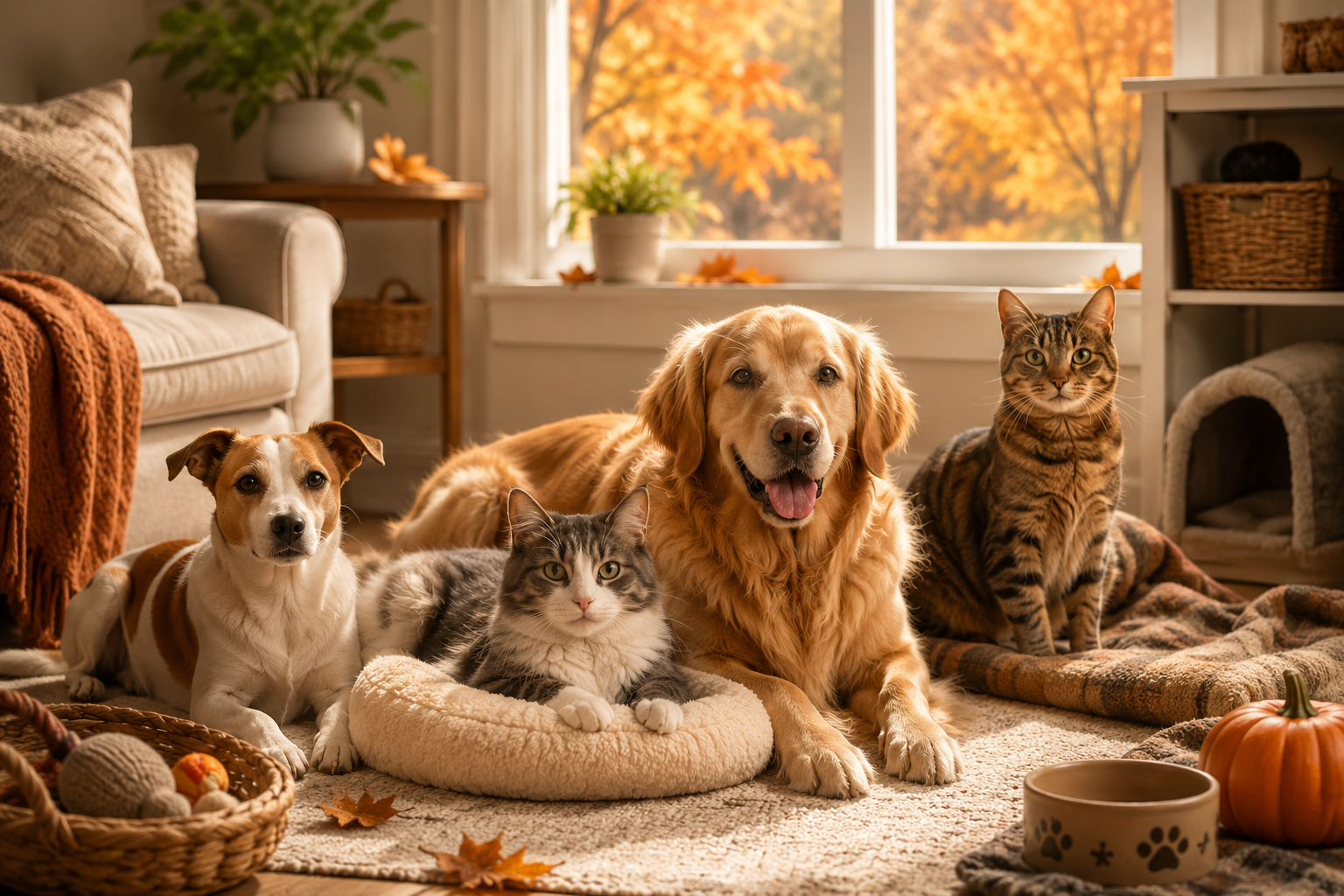
Autumn can change walking times, daylight exposure, indoor activity, grooming needs, and even the rhythm of meals in a busy multi-pet home. Gradual schedule changes, age-appropriate exercise, regular brushing, indoor enrichment, consistent nutrition, and individual attention can help make the seasonal transition feel more familiar for every pet in the household.
Fall has a way of changing the household before you even realize it. Morning light arrives later, evening walks suddenly happen in the dark, jackets appear by the door, and the pets who spent long summer evenings outside may now be circling the living room looking for something to do before dinner. When you care for several animals, even a small seasonal change can ripple through the entire routine.
That is why a fall routine for a multi-pet household works best when it is adjusted gradually rather than completely reinvented. Dogs and cats tend to appreciate predictability, and familiar meal times, walking cues, play sessions, grooming habits, and sleeping arrangements can provide some stability while daylight and temperatures continue to change.
For multi-dog households in particular, autumn can also bring practical challenges such as seasonal shedding, muddy paws, darker walking conditions, shorter outdoor sessions, and different energy levels between pets. One dog may love the cooler weather and suddenly want longer walks, while an older companion may prefer a slower pace and a warm bed.
The goal is not to make every pet follow an identical fall schedule. A good seasonal routine gives the household enough structure to stay organized while leaving room for the individual needs of each animal.
Why Autumn Can Feel Different in a Multi-Pet Home
Seasonal changes affect more than temperature. The amount of daylight changes, people return to school or more structured work schedules, outdoor activity may move to different times of day, and the household itself can become busier as the holidays approach.
Pets quickly learn patterns associated with those routines. The sound of a leash coming off the hook may mean an evening walk, the kitchen lights coming on may mean breakfast, and a particular person returning home may signal playtime. When those cues suddenly happen an hour earlier or later, some pets adjust without much notice while others seem confused or begin asking for dinner well ahead of schedule.
In multi-pet households, those reactions can spread. One dog pacing near the food area may encourage everyone else to join in, while a high-energy dog asking to play can interrupt an older pet who would rather rest.
Rather than trying to keep summer habits exactly the same, identify the routines that matter most and preserve their general order. Your walks may move earlier, but they can still happen before dinner. Meals may shift gradually around Daylight Saving Time, but the same feeding sequence can stay familiar. Indoor enrichment can replace some outdoor time without eliminating the evening activity your pets already expect.
That balance between familiarity and flexibility is what makes seasonal care easier.
Adjust Walks Without Letting Activity Disappear
One of the first things to change in autumn is often the walking schedule. Summer evenings can provide several hours of usable daylight after work, while fall can make the same walk suddenly feel much later and darker.
If your schedule allows, shift longer walks toward late afternoon or earlier evening. Morning walks can also move slightly later when temperatures become cooler and sunrise occurs later, especially for senior dogs or pets that seem more comfortable after they have had time to wake up and move around.
When walks need to happen after dark, visibility becomes part of the routine. Reflective harnesses, collars, leashes, or lights can help make dogs easier to see, while a flashlight can make uneven sidewalks, fallen branches, and other seasonal obstacles easier for you to notice.
The amount of exercise should still match the individual dog. A young, active dog may enjoy longer outings when the weather becomes cooler, while an older dog may do better with shorter, more frequent walks. Trying to make the entire pack move at the same speed can sometimes leave one pet under-stimulated and another exhausted.
If practical, occasionally separate walks according to ability. A short neighborhood loop with an older dog followed by an additional walk with the younger dogs can be more comfortable than expecting every pet to complete the same route.
Ease Into Daylight Saving Time and Feeding Changes
Dogs and cats do not understand why the clock suddenly says 6 a.m. when their internal routine still expects breakfast. They simply know that food usually appears after a familiar sequence of household events.
This is why the end of Daylight Saving Time can create some impressively persistent early-morning reminders in multi-pet homes.
Instead of shifting meals by a full hour overnight, you can gradually move feeding times by roughly 10 to 15 minutes over several days if your schedule allows. For example, a 7 a.m. breakfast can move to 7:10, then 7:20, and so on until the new schedule is established.
There is nothing magical about a specific number of minutes, so adjust at a pace that works for your household. Pets taking medication with food or following medically prescribed meal schedules should stay on the plan recommended by their veterinarian.
Consistency around portion size matters too. Some dogs may seem more interested in food as outdoor activity, temperature, or family routines change, but seasonal begging does not automatically mean calorie requirements have increased.
If your pets become less active as evenings get shorter while food and treat intake increase, weight can gradually creep up. Keeping portions measured and treats accounted for makes it easier to maintain a consistent nutritional routine.
Fall Shedding Calls for More Consistent Coat Care
Autumn often puts the vacuum cleaner to work.
Many dogs experience seasonal changes in their coat, although exactly how much they shed depends on breed, coat type, genetics, indoor environment, health, and exposure to natural light. Double-coated dogs can make seasonal shedding especially obvious, while other breeds may change very little.
In a multi-dog household, the easiest strategy is usually to make grooming routine rather than waiting until loose fur seems to cover every surface. A few minutes of brushing several times a week—or more often when appropriate for the coat type—can be easier than a long grooming session once the shedding has become heavy.
Use grooming as a wellness check too. Running your hands through the coat gives you an opportunity to notice redness, flakes, unusual lumps, thinning areas, sensitivity, or excessive licking that may otherwise be hidden beneath thick fur.
Not every coat change is seasonal. Persistent itching, bald patches, sores, strong odor, or major changes in coat quality deserve veterinary attention rather than being attributed automatically to autumn.
Diet also belongs in the coat-care conversation. Essential fatty acids are part of normal canine nutrition, but coat quality depends on the whole diet, health status, grooming routine, environment, and individual dog rather than one nutrient alone.
Bring More Enrichment Indoors as Evenings Get Darker
When outdoor time decreases, indoor enrichment becomes especially useful. This does not have to mean turning the living room into an obstacle course or buying a new toy every week.
Five or ten minutes of focused activity can be surprisingly valuable.
Food puzzles, scent games, short training sessions, hide-and-seek, tug, appropriate chew items, and supervised enrichment toys can provide mental engagement without requiring hours of exercise. Rotating familiar toys can also make old items feel new again instead of leaving everything available all the time.
Multi-pet households may need separate enrichment sessions occasionally. One dog may solve a puzzle immediately and steal everyone else’s food, while another needs more time and space to work it out. Giving pets individual opportunities prevents the fastest or most confident animal from controlling every activity.
Indoor play should also reflect age and mobility. A senior dog may enjoy a simple scent-search game more than repeated jumping or sharp turns, while a young dog may benefit from a short training session that combines movement and thinking.
The goal is not simply to make dogs tired. Enrichment gives them appropriate things to investigate, solve, and interact with during evenings that may otherwise feel much quieter than summer.
Keep Nutrition Consistent Before Adding Anything New
Seasonal transitions often inspire pet parents to reevaluate supplements, especially when shedding becomes more noticeable or older dogs appear slower during colder weather. Before adding anything, start with the foundation: a complete and balanced diet appropriate for each dog’s life stage and health needs.
Omega-3 fatty acids are one area commonly discussed in canine nutrition. EPA and DHA, which are marine-source omega-3 fatty acids, have been studied in several areas of canine health.
For example, Roush and colleagues evaluated dogs with osteoarthritis that were fed a therapeutic diet containing increased omega-3 fatty acids. The study reported improvements in objective weight-bearing measurements in the dogs receiving the study diet, which is relevant to ongoing interest in omega-3 nutrition and canine mobility.
That study should be interpreted carefully. It involved dogs already diagnosed with osteoarthritis and a specific therapeutic diet, not a general seasonal supplement and not the products featured later in this article. It therefore cannot be used to promise that every omega-3 supplement will improve mobility, reduce stiffness, or produce a particular result.
Multivitamins deserve the same thoughtful approach. Dogs eating complete commercial diets already receive essential vitamins and minerals through their food, so additional supplementation is not automatically necessary for every animal.
In a multi-pet household, life stage becomes especially important. Puppies, healthy adults, seniors, and dogs with medical conditions may all have different nutritional priorities, which is why the same supplement does not necessarily belong in every bowl.
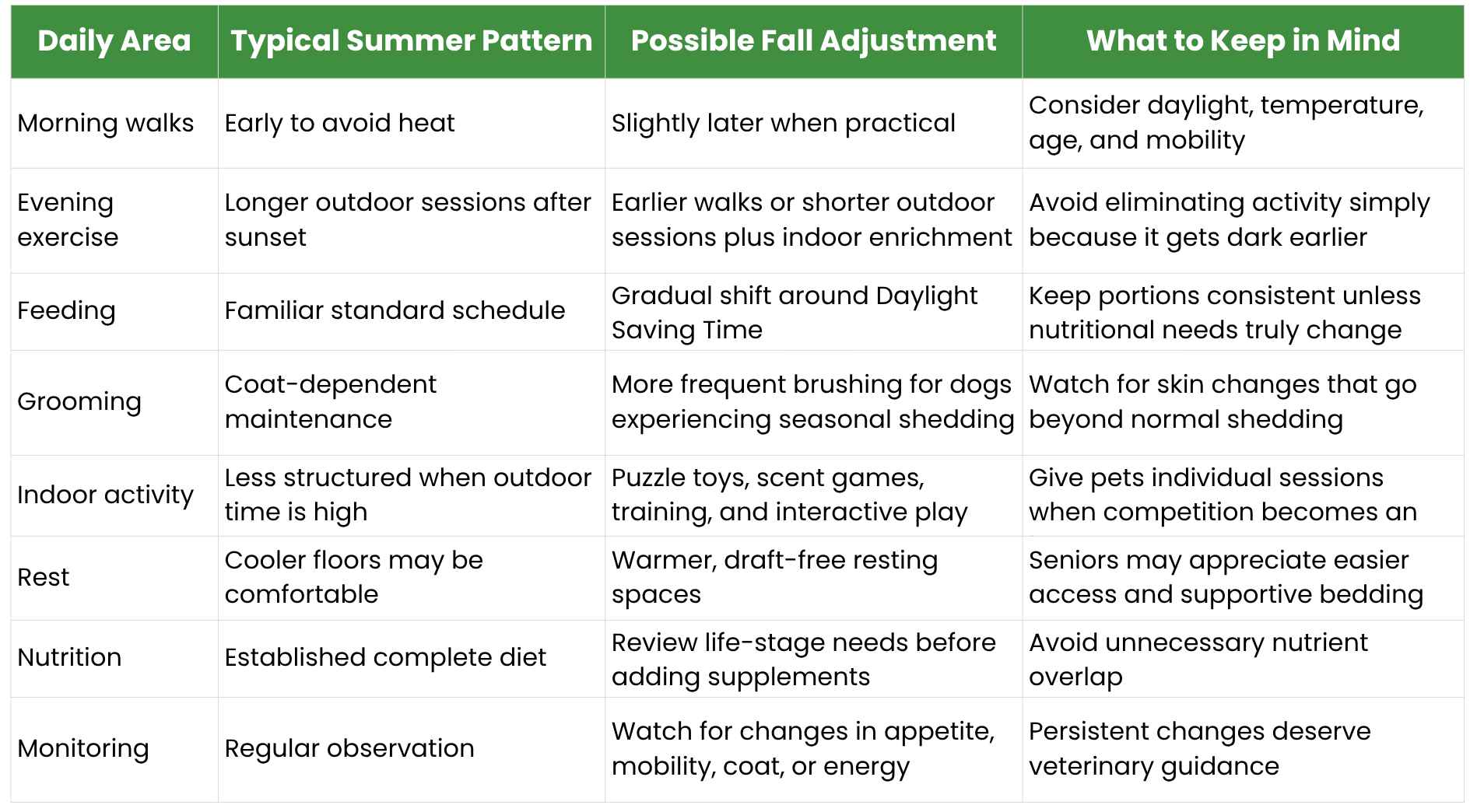
Summer vs. Fall: Multi-Pet Routine Adjustments at a Glance
Watch Each Pet Individually, Even When the Household Shares a Routine
A multi-pet routine should be organized at the household level but monitored at the individual level. Dogs living together can have dramatically different responses to the same seasonal change.
Your younger dog may become more energetic when cooler temperatures arrive, while an older dog may hesitate to leave a warm bed in the morning. One pet may shed heavily, while another barely changes coat. One may maintain the same appetite all year, while another becomes much more food-focused as activity changes.
Keeping an eye on those differences can prevent a convenient household routine from becoming too rigid.
Senior dogs deserve particular attention if you notice new stiffness, difficulty standing, reluctance to use stairs, limping, or a significant drop in activity. Likewise, sudden appetite changes, unexplained weight loss or gain, persistent skin irritation, or unusual fatigue should not be written off as “just the weather.”
Fall care works best when you use the season as a reminder to observe—not as an automatic explanation for every change.
Bringing Guardian’s Choice Into Your Dogs’ Fall Wellness Routine
Once walking schedules, enrichment, grooming, complete nutrition, and veterinary care are in place, Guardian’s Choice (GCP) offers nutritional products that can be incorporated into an established canine wellness routine when they are appropriate for the individual dog.
GCP OMEGAPaws Krill Omega-3 can provide a convenient way to add marine-source omega-3 nutrition for pet parents who have decided that additional omega-3 supplementation fits their dog’s diet. It is best positioned as nutritional support that complements a balanced diet, grooming, age-appropriate movement, and veterinary care rather than as a treatment for seasonal shedding, stiffness, arthritis, or skin conditions.
GCP VitaPup Multivitamin Chews can be considered for dogs within the life stage and serving guidance specified on the current product label. Because multivitamins can overlap with nutrients already supplied through complete dog food, pet parents should review the entire diet rather than assuming every dog in a multi-pet household needs the same additional supplementation.
For households using both products, the simplest approach is to attach each supplement to a familiar meal and keep individual serving directions organized. This makes the routine easier to maintain without turning seasonal wellness into a complicated series of steps.
Frequently Asked Questions
-
You can gradually shift meals by about 10 to 15 minutes over several days if your pets are sensitive to schedule changes. Dogs taking medication with meals or following a veterinary feeding plan should remain on the timing recommended for their individual needs.
A Smooth Fall Transition Comes Down to Familiar Habits
Managing autumn in a multi-pet household does not require rebuilding every routine. In most homes, the transition is easier when you keep the familiar structure of the day and simply adjust the timing, environment, and activities around it.
Walks can move earlier without disappearing. Feeding schedules can change gradually instead of overnight. Grooming can become a little more frequent, indoor play can fill darker evenings, and each pet can still receive the level of exercise, rest, and attention that fits their individual needs.
Nutrition deserves the same balanced approach. A complete diet remains the foundation, while supplements can be added thoughtfully when they serve a clear purpose and fit the pet’s life stage, overall diet, and veterinary recommendations.
Most importantly, remember that a shared household does not mean identical pets. Autumn may make one dog eager to spend hours outside and another perfectly content to curl up somewhere warm. Paying attention to those differences is what turns a household schedule into a genuinely supportive wellness routine.
Give Every Pet a Little Extra Support This Fall
A multi-pet household often means caring for pets at different life stages with different nutritional priorities. Guardian’s Choice (GCP) Cat L-Lysine, GCP VitaPup Multivitamin Chews, and GCP OMEGAPaws Krill Omega-3 give pet parents three convenient, pet-specific ways to complement an established fall wellness routine while keeping balanced nutrition, daily activity, grooming, and veterinary care at the center.
-
GCP Cat L-Lysine – 200 Servings: Provides supplemental L-lysine in an easy-to-add feline formula for cat parents who want to include targeted amino-acid nutrition in their cat’s daily routine.
-
Designed With Cats in Mind: The feline-specific format makes it simple to keep your cat’s nutritional routine separate from the products used for the dogs in your household.
-
GCP VitaPup Multivitamin Chews – 90 Soft Chews: A puppy-focused multivitamin option designed to complement an appropriate, complete puppy diet when additional supplementation fits your pup’s individual needs.
-
Easy Daily Puppy Wellness: The soft-chew format can be paired with a familiar mealtime, helping busy pet parents keep a growing puppy’s routine organized and consistent.
-
GCP OMEGAPaws Krill Omega-3 – 90 Tasty Soft Chews: Provides marine-source omega-3 nutrition in a convenient dog-friendly chew that can complement everyday skin, coat, and mobility wellness.
-
A Practical Choice for Adult and Senior Dog Routines: OMEGAPaws can fit alongside regular grooming, appropriate exercise, weight management, and a complete diet as part of thoughtful year-round care.
-
Three Products, Three Different Priorities: Instead of giving every pet the same supplement, GCP makes it easier to choose nutritional support according to species, life stage, and the specific routine you are building.
-
Convenient Formats for Busy Multi-Pet Homes: With 200 servings of Cat L-Lysine and 90 soft chews each for VitaPup and OMEGAPaws, these products can be incorporated into familiar feeding schedules without making seasonal care unnecessarily complicated.
If your fall routine includes a cat, a growing puppy, and an adult or senior dog, these three GCP products make it easier to personalize nutritional support instead of taking a one-size-fits-all approach. Choose the products that genuinely fit each pet’s diet and life stage, follow the current label directions, and let GCP complement the everyday habits that already matter most—good nutrition, movement, grooming, consistency, and attentive care.
Reference
Roush, J. K., Dodd, C. E., Fritsch, D. A., Allen, T. A., Jewell, D. E., Schoenherr, W. D., Richardson, D. C., Leventhal, P. S., & Hahn, K. A. (2010). Multicenter veterinary practice assessment of the effects of omega-3 fatty acids on osteoarthritis in dogs. Journal of the American Veterinary Medical Association, 236(1), 59–66. https://doi.org/10.2460/javma.236.1.59
For all general inquiries, please contact us at info@guardianschoice.com
© Copyright. All rights reserved.