
Fall Flea & Tick Resurgence: Bugs Don’t Quit When It Cools Down
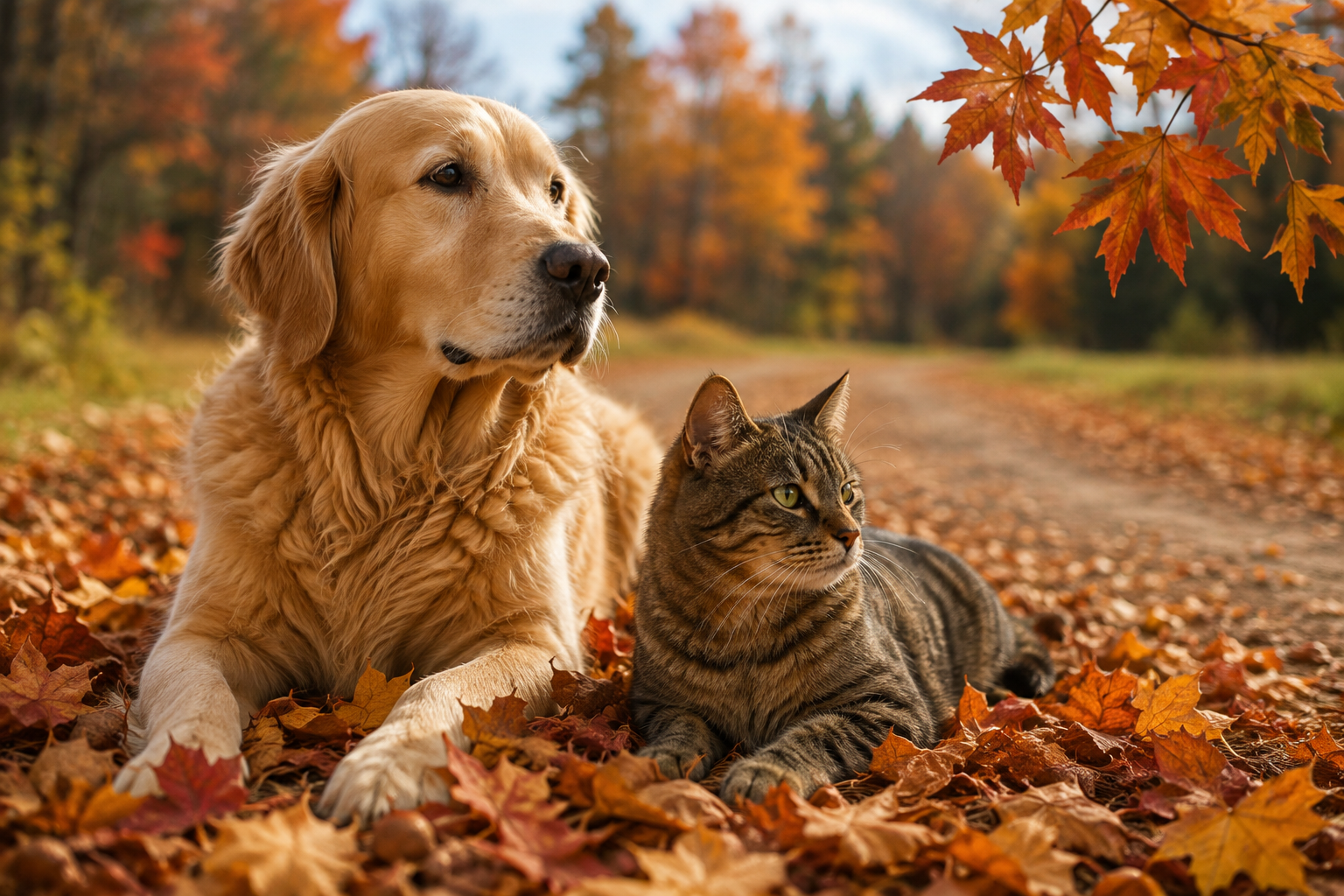
Fleas and ticks do not always disappear when summer ends. Mild autumn days, sheltered outdoor areas, indoor warmth, wildlife activity, and changing pet routines can keep these pests relevant into fall, which is why consistent, year-round flea and tick care may be more practical than relying on the calendar alone.
As temperatures cool, many pet owners naturally relax their summer routines. Walks feel crisper, the backyard seems quieter, and it is easy to assume that fall flea and tick season ends as soon as sweaters come out. Seasonal change, however, is rarely that simple. Fleas and ticks respond to temperature, humidity, shelter, available hosts, and local conditions, so a cold morning does not necessarily mean every pest has disappeared.
For families thinking about fleas and ticks in cold weather, the useful question is not whether summer is over, but what conditions still exist around the pet. Mild afternoons, damp leaf litter, visiting animals, and warm indoor spaces can keep pests relevant, so steady habits are more useful than seasonal assumptions.
Why the Summer-Only Myth Persists
The summer-only idea is understandable. People notice more insects during warmer months, pets spend more time outdoors, and activity increases across parks, trails, gardens, and backyards. When cooler air arrives, visible insect activity often drops, creating the impression that the concern has ended.
Fleas and ticks do not all behave the same way or follow one universal calendar. Their activity can vary by species, life stage, region, weather pattern, and access to protected spaces. Some become less active during sustained cold, while others may remain active during milder periods or survive in sheltered environments until conditions improve.
Autumn temperatures can swing widely, with chilly mornings followed by warm afternoons and shaded areas staying moist. One field study on adult blacklegged ticks found that ambient air temperature was associated with their activity, supporting the idea that suitable cool-season conditions can still allow movement. The finding does not apply equally to every tick species, but it shows why “summer only” is too simple.
What Cooler Weather Actually Changes
Cooler weather may slow pest development and reduce activity, but slower is not the same as gone. Fleas can remain in warm indoor spaces, especially where pets rest or sleep, while ticks may be protected beneath leaf litter, brush, woodpiles, ground cover, or other places that hold moisture.
Fall also creates small pockets of different conditions. A sunny fence line may be warmer than the surrounding air, while damp leaves can provide insulation close to the ground. Garages, porches, sheds, pet bedding, and entryways may stay warmer than exposed outdoor areas, and those differences can matter.
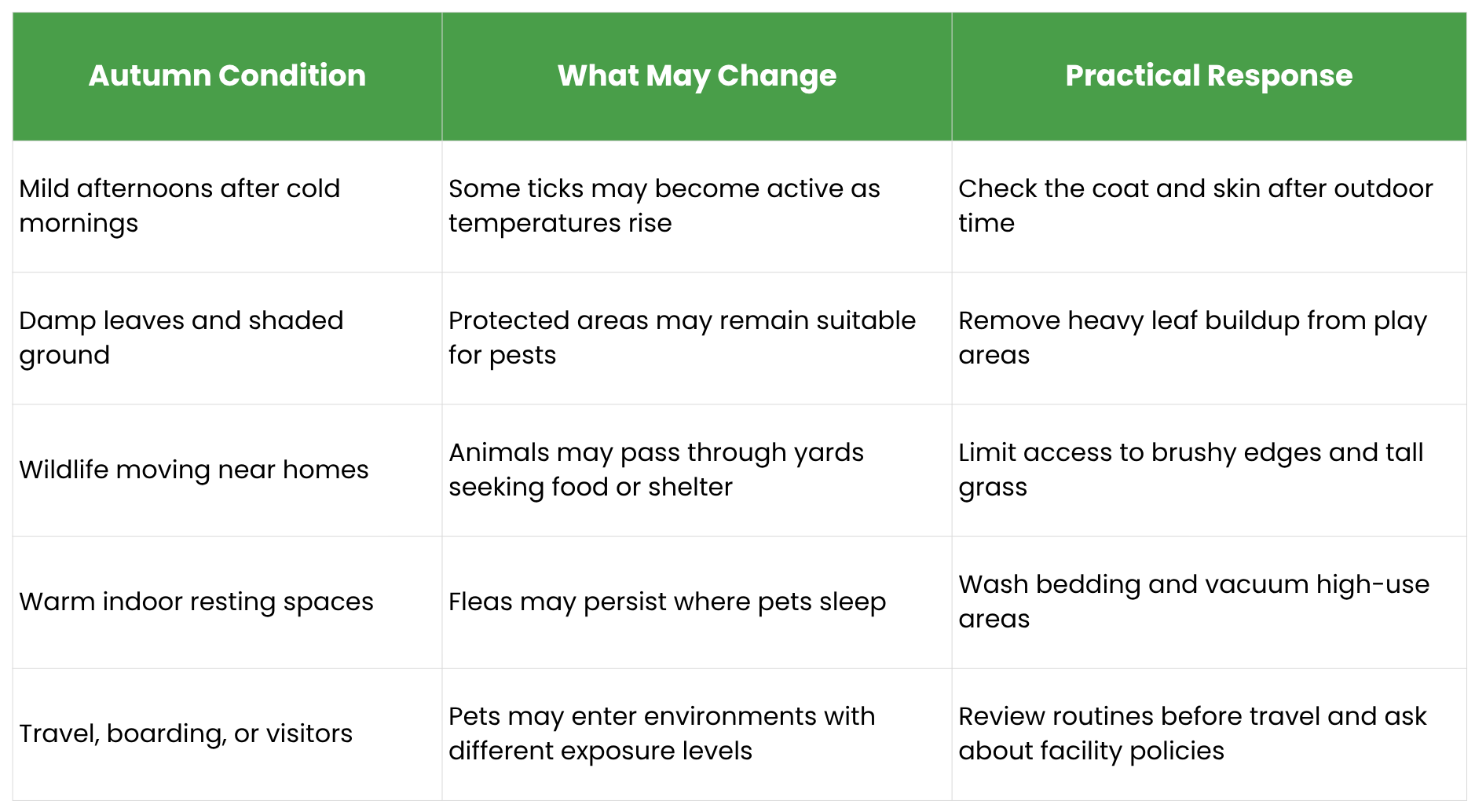
Fall changes the setting rather than creating a universal finish line. Pets that visit wooded trails, shared yards, boarding facilities, or multi-pet homes may face different conditions, so lifestyle matters more than a single date.
Fall Habits That May Increase Exposure
Autumn brings longer walks, hikes, camping trips, and more time in the yard. These activities may bring pets closer to tall grass, brush, leaf litter, wildlife paths, and shared outdoor spaces, so enjoy the season with greater awareness.
After outdoor time, gently check around the ears, under the collar, between the toes, beneath the front legs, around the tail, and along the belly. Long-haired pets may need a slower check because small changes are harder to see beneath the coat. Indoor care matters too, including vacuuming resting areas, washing bedding according to fabric instructions, and cleaning carriers after travel.
Scratching does not automatically mean fleas, and the absence of scratching does not prove that pests are not present. Skin discomfort can have many causes, including dryness, allergies, grooming products, or other health concerns, so persistent or painful symptoms should be evaluated by a veterinarian.
Building a Consistent Autumn Care Routine
A useful fall routine does not need to feel complicated. Check your pet after outdoor activity, maintain clean bedding and resting areas, manage grass and leaf buildup, and follow the flea and tick guidance provided by your veterinarian. Consistency becomes easier when each step is tied to something familiar, such as checking the coat before removing the leash or washing bedding on the same day each week.
Review product labels carefully, especially in homes with both dogs and cats. Ingredients and directions suitable for one species may not be appropriate for another, while age, weight, health history, medications, and sensitivities can influence individual suitability.
Supplements and wellness products may complement daily care, but they should not be treated as cures, guaranteed preventives, or replacements for veterinary advice. That distinction keeps the routine realistic, responsible, and centered on the pet’s individual needs.
A Simple Addition to Seasonal Pet Care
Once home and outdoor habits are in place, some pet owners prefer adding a simple daily product that fits naturally into feeding time. GCP Flea & Tick Natural Defense is available in separate dog and cat formulas and is designed as a convenient chewable addition to a broader pet wellness routine.
The dog formula comes in chicken flavor and includes apple cider vinegar, coconut oil, thiamine, and anise. The cat formula comes in tuna and salmon flavors and includes apple cider vinegar, coconut oil, thiamine, and catnip. Rather than viewing the product as a stand-alone answer, owners can make it one part of an approach that also includes environmental care, regular checks, label awareness, and veterinary guidance.
Frequently Asked Questions
-
No, one cold day does not necessarily remove every flea or tick, especially when warmer afternoons or protected spaces remain. Activity varies by pest, region, weather, and access to indoor or sheltered environments.
Consistency Matters More Than the Calendar
Autumn should be a season of comfortable walks, fresh air, and time together, not unnecessary worry. Cooler weather may reduce pest activity without creating an immediate, universal ending, so staying observant is more useful than assuming the season has solved the issue.
By checking your pet, maintaining the home environment, watching local conditions, and seeking veterinary guidance when needed, you can build a routine that feels calm and manageable. The calendar may change quickly, but thoughtful pet care remains steady and centered on the individual animal.
GCP Flea & Tick Natural Defense
GCP Flea & Tick Natural Defense offers dog- and cat-specific chewable formulas that can be added to a consistent seasonal wellness routine. Each formula combines a convenient format with pet-friendly flavors and clearly identified ingredients, helping owners maintain a simple daily habit.
-
Separate formulas for dogs and cats
-
Chicken flavor for dogs and tuna-and-salmon flavors for cats
-
Formulated with apple cider vinegar, coconut oil, and thiamine
-
Includes anise in the dog formula and catnip in the cat formula
-
Easy-to-use chewable format for routine support
For pet owners who value consistency, transparency, and an easy addition to everyday care, GCP Flea & Tick Natural Defense offers a practical option to discuss with a veterinarian. Pair it with regular coat checks, clean bedding, outdoor maintenance, and label-directed use for a responsible approach to fall pet wellness.
Reference
Duffy, D. C., & Campbell, S. R. (1994). Ambient air temperature as a predictor of activity of adult Ixodes scapularis (Acari: Ixodidae). Journal of Medical Entomology, 31(1), 178–180. https://doi.org/10.1093/jmedent/31.1.178
For all general inquiries, please contact us at info@guardianschoice.com
© Copyright. All rights reserved.