
Fall Equinox: How Shorter Days May Affect Your Pet’s Sleep and Appetite
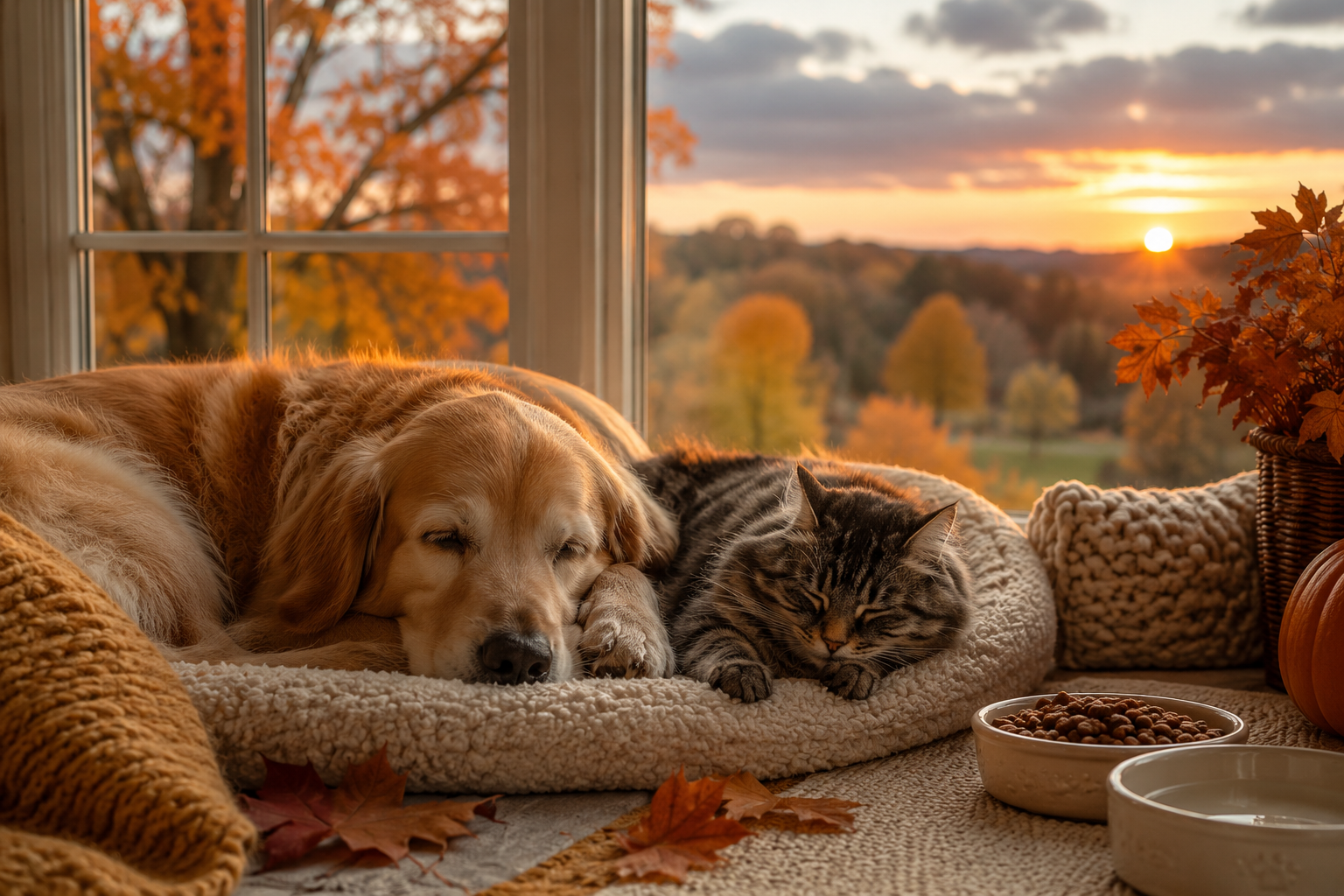
The fall equinox marks a gradual shift toward shorter days, longer nights, cooler weather, and new household routines, all of which may influence how active, sleepy, or food-focused a dog or cat appears. Keeping feeding times, exercise, daylight exposure, sleep spaces, and overall nutrition consistent can help pet parents separate normal seasonal adjustments from changes that deserve a closer look.
You may notice it before you ever check the calendar. The morning walk begins in softer light, the sun disappears before dinner, your cat discovers the warmest blanket in the house, and your dog seems ready to settle down earlier than they did in July. For many pet parents, these small changes raise the same question every autumn: do shorter days really affect pet sleep and appetite?
The answer is not as simple as saying that the fall equinox suddenly switches your pet into “winter mode.” Daylight changes gradually throughout the season, and dogs and cats are influenced by more than sunlight alone. Household schedules, temperature, exercise, feeding habits, indoor lighting, age, breed, health, and individual temperament can all shape what you notice from September into the colder months.
Still, fall pet sleep patterns, seasonal appetite changes in dogs and cats, shorter-day pet routines, and autumn pet wellness are worth paying attention to. Rather than assuming every sleepy afternoon or extra request for dinner is caused by the season, it helps to watch how your pet’s whole routine changes as daylight becomes shorter.
What the Fall Equinox Really Changes for Pets
The fall equinox is best viewed as a calendar marker for a gradual seasonal transition. Around this time of year, daylight hours continue getting shorter, evenings arrive earlier, temperatures begin to shift, and many families change their daily schedules as school, work, travel, and holiday preparation pick up.
Pets notice those environmental changes even when they do not understand the season itself. A dog that once enjoyed a bright 7 p.m. walk may suddenly be heading outside after sunset, while a cat that spent long summer evenings watching birds through an open window may find the house darker and quieter much earlier.
Light is one of several environmental cues involved in circadian timing, the internal daily rhythm that helps organize periods of activity and rest. However, it would be too strong to say that shorter autumn days automatically cause every pet to produce dramatically more melatonin and sleep longer, because real household animals are exposed to artificial lighting, changing schedules, human activity, and many other cues.
Instead, look at the bigger pattern. If your pet begins resting earlier at the same time that evening walks become shorter, outdoor play decreases, and your household settles down sooner, several factors may be working together.
That is why maintaining a familiar routine can be so helpful during seasonal transitions. Regular mealtimes, predictable exercise, daytime activity, and consistent bedtime habits give your pet familiar anchors even when the world outside looks very different.
Why Your Dog or Cat May Seem Sleepier in Autumn
A little extra lounging in fall does not automatically mean something is wrong. Cooler weather often changes how families spend their days, and pets may simply have fewer long outdoor sessions, less late-evening activity, or more inviting warm places to nap.
Cats already sleep for significant portions of the day, and their activity tends to come in cycles rather than matching a human work schedule. As sunny windows shift and the home gets quieter earlier in the evening, you may notice your cat choosing longer or differently timed resting periods.
Dogs can show seasonal routine changes too. A dog that spent summer evenings walking, playing in the yard, or accompanying the family outdoors may be considerably less active once daylight ends earlier. If those extra activities disappear without being replaced, the dog may naturally spend more of the evening resting.
Age matters as well. Senior pets often rest more than younger animals, while puppies and kittens may move between intense bursts of activity and deep sleep. A seasonal change can make those normal tendencies more noticeable, but it should not be used to explain away a dramatic change.
If your dog or cat is sleeping more but wakes normally, eats and drinks as usual, interacts with the family, and still shows interest in preferred activities, it may simply be worth monitoring. If the change looks more like lethargy—difficulty waking, weakness, withdrawal, reduced appetite, unwillingness to play, or a major drop in normal activity—contact your veterinarian rather than assuming autumn is responsible.
Seasonal Appetite Changes Are Worth Watching
Pet parents sometimes notice that begging becomes more persistent as the weather cools. It is tempting to explain this as an instinct to “bulk up for winter,” but domestic dogs and cats live in environments very different from their wild ancestors, and not every pet needs more calories just because the temperature outside has fallen.
There is some evidence that seasonal food intake can vary in domestic cats. In one study, Serisier and colleagues followed cats over time and found seasonal differences in voluntary food intake, with intake generally higher during colder periods and lower during warmer periods in the cats studied.
That finding is interesting, but it does not mean every cat will follow the same pattern, that daylight is the only cause, or that pet parents should automatically increase portions in autumn. The study involved a specific population under particular conditions, so the safest takeaway is simply that seasonal appetite variation can happen and is worth monitoring.
Dogs may also appear hungrier when routines change. A shorter evening walk, more time spent indoors with the family, increased treat opportunities, or boredom can all make food seem more interesting without representing a true increase in nutritional requirements.
Before increasing portions, look at body condition, activity level, current diet, treats, age, and veterinary recommendations. If physical activity decreases while calorie intake rises, gradual weight gain can follow, and extra weight may create additional challenges for mobility and overall wellness.
A measuring cup or kitchen scale can make feeding more consistent during the season. It also helps to keep treats in the daily calorie picture rather than thinking of them as separate from meals.
Keep Activity Consistent as Daylight Gets Shorter
When darkness arrives before the workday ends, exercise is often one of the first routines to change. A long evening walk becomes a quick trip around the block, backyard play gets shorter, and outdoor adventures may move entirely to the weekend.
Rather than giving up on the routine, shift it.
If possible, move a longer walk to the morning, lunchtime, or earlier afternoon when there is more daylight. For cats, create indoor activity opportunities with wand toys, climbing areas, puzzle feeders, or short interactive play sessions that fit naturally around meals.
The goal is not to exhaust your pet. It is to preserve age-appropriate activity and mental engagement as the season changes.
Older dogs may appreciate shorter, more frequent walks rather than one long outing in colder weather. Puppies may still need plenty of movement but should have appropriate rest between activities, while indoor cats may respond well to several brief play sessions rather than one extended period.
This is also a useful time to pay attention to the difference between “less active because the schedule changed” and “less active because movement seems uncomfortable.” Hesitation on stairs, stiffness after rest, reluctance to jump, limping, or repeated difficulty getting up deserve veterinary attention rather than being dismissed as a normal part of fall.
Do Not Overlook Skin, Coat, Comfort, and Indoor Routine
Autumn changes the indoor environment too. Heating systems begin running, windows stay closed more often, and dogs and cats may spend longer periods in climate-controlled spaces. Depending on your home, those changes can alter humidity and the way skin and coat feel.
Regular grooming can help you keep track of what is normal. Brushing gives you a chance to notice excessive flakes, redness, thinning fur, new lumps, irritation, or changes in coat texture before they become easy to overlook.
A complete, balanced diet remains the foundation for skin, coat, immune, and general wellness. Nutrients such as essential fatty acids play normal structural and metabolic roles in the body, but supplements should be used to complement appropriate nutrition rather than to treat unexplained itching, joint pain, respiratory symptoms, or other medical concerns.
Cats spending more time indoors may also have different routines around shared spaces, litter boxes, food bowls, and household activity. Keeping those basics predictable can be particularly helpful when other seasonal changes—guests, travel, holiday decorations, or schedule disruptions—begin appearing at the same time.
Think of fall wellness as creating stability around change. You cannot make the days longer, but you can keep meals, movement, sleep spaces, grooming, and everyday attention familiar.
Fall Pet Habits at a Glance
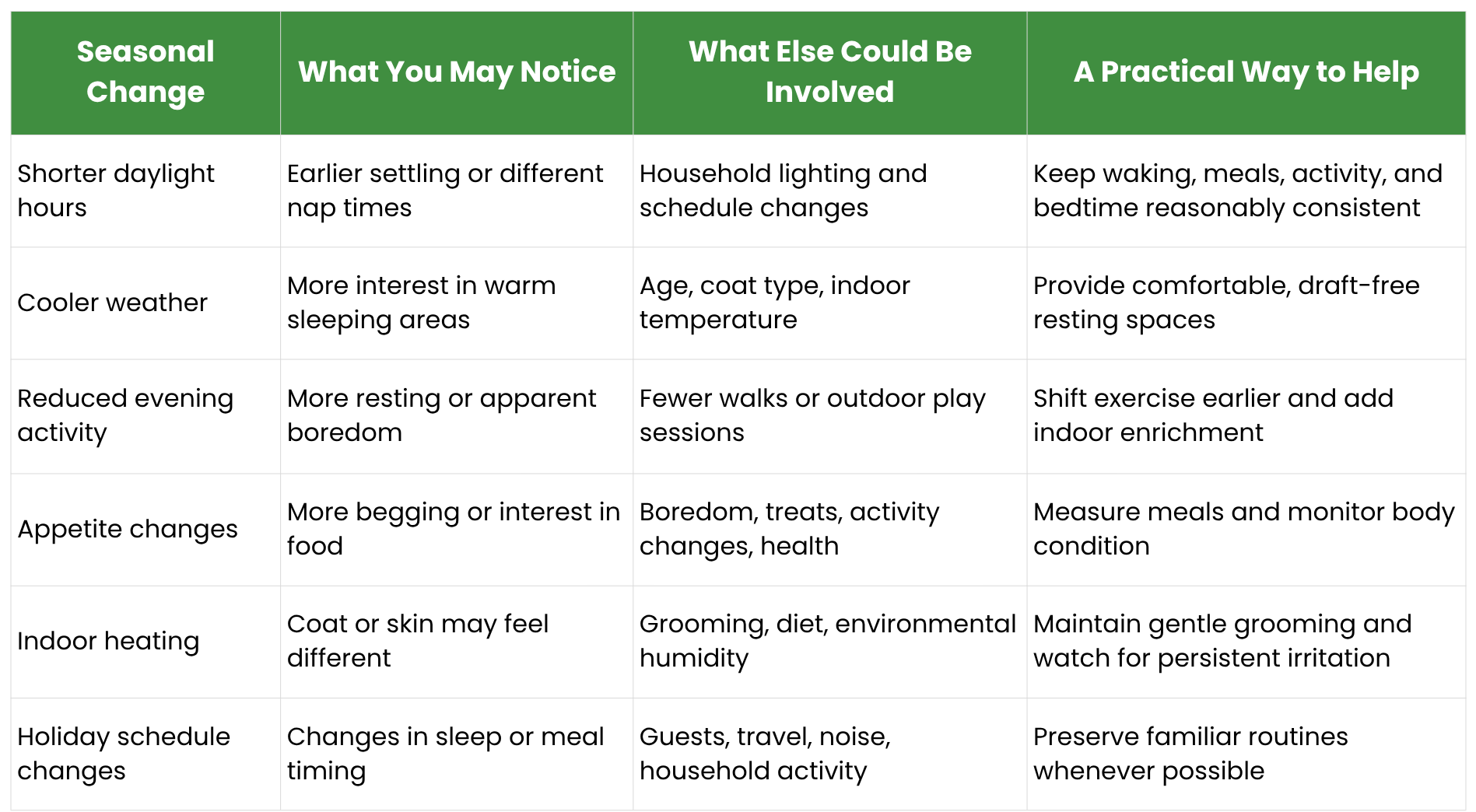
The pattern matters more than any single day. A sleepy Sunday after a long Saturday outing is different from a pet who becomes progressively withdrawn for a week, just as asking for an extra snack is different from suddenly seeming ravenously hungry all the time.
When a Seasonal Change May Be More Than Seasonal
One of the easiest mistakes during autumn is attributing every behavior change to the shorter days. A seasonal explanation can feel reassuring, but changes in sleep and appetite are also common signs of many health conditions.
Contact your veterinarian if your pet becomes unusually difficult to wake, stops enjoying normal activities, eats significantly more or less than usual, loses or gains weight unexpectedly, begins drinking or urinating much more, vomits repeatedly, develops diarrhea, appears painful, or shows major personality changes.
For senior pets, subtle changes deserve particular attention. A dog who seems “sleepier because it is dark” may actually be avoiding movement because getting up has become uncomfortable, while a cat spending more time alone may be experiencing something unrelated to the season.
Keeping simple notes can help. Record meals, appetite, activity, sleep patterns, weight changes, and anything else that seems unusual for a week or two, then share those observations with your veterinarian if the pattern continues.
Seasonal awareness is most useful when it encourages closer observation rather than providing an automatic explanation.
Supporting Autumn Wellness With Guardian’s Choice
Once your pet’s core routine is working well, Guardian’s Choice (GCP) supplements can offer convenient nutritional additions tailored to different needs during the seasonal transition. For dogs, GCP OMEGAPaws Premium Krill Omega-3 can complement everyday skin, coat, and joint nutrition, while GCP Cat L-Lysine Advanced Immune Support provides supplemental L-lysine for cat parents who want to incorporate the amino acid into an established feline wellness routine.
For dogs spending less time outside as temperatures fall, an omega-3 supplement can be paired with balanced nutrition, grooming, comfortable exercise, and weight management rather than treated as a remedy for stiffness or skin problems. GCP OMEGAPaws provides a convenient way to add marine-source fatty acids to an existing routine when additional supplementation is appropriate for the individual dog.
For cats, GCP Cat L-Lysine offers a species-specific option that can fit alongside complete nutrition, hydration, predictable routines, and regular veterinary care. L-lysine should not be presented as preventing seasonal illness or curing respiratory symptoms, and sneezing, eye discharge, appetite changes, or breathing concerns should always be evaluated appropriately.
In both cases, the purpose is supportive nutrition rather than a promise that a supplement will prevent the natural changes that come with the season. Follow the current label and discuss supplementation with your veterinarian when your pet takes medication, eats a therapeutic diet, or has an existing health condition.
Frequently Asked Questions
-
Shorter days may coincide with changes in activity, household schedules, temperature, and daily light exposure, which can make your pet’s resting pattern look different. If increased sleep comes with weakness, appetite loss, withdrawal, or difficulty waking, contact your veterinarian.
Help Their Routine Change Gently With the Season
The fall equinox does not flip a biological switch overnight. It marks a gradual change in daylight, temperature, household activity, and daily habits, and pets may respond to that larger seasonal picture in their own individual ways.
Some dogs may settle down earlier because their evening walks have shortened, while cats may spend longer stretches curled up in warm places once windows close and the house becomes quieter. Appetite may change for some pets as well, but those changes are best monitored rather than automatically encouraged with larger meals.
A comfortable autumn routine comes back to the basics: predictable feeding, appropriate portions, age-appropriate activity, daylight and enrichment when practical, clean water, comfortable rest, grooming, and attentive observation. When those foundations are steady, thoughtfully selected nutritional supplements can fit into the routine without being expected to do the work of an entire wellness plan.
Most importantly, trust what you know about your individual pet. Seasonal changes can be normal, but when something feels notably different from their usual personality, appetite, energy, or mobility, checking in with your veterinarian is always more useful than simply waiting for spring.
Seasonal Support With GCP OMEGAPaws and GCP Cat L-Lysine
GCP OMEGAPaws Premium Krill Omega-3 and GCP Cat L-Lysine Advanced Immune Support provide species-specific nutritional options for pet parents who want to complement their dog’s or cat’s established autumn wellness routine. Both are best used alongside complete nutrition, consistent activity, hydration, grooming, and veterinary guidance rather than as treatments for seasonal changes or medical symptoms.
-
GCP OMEGAPaws Premium Krill Omega-3: Provides marine-source omega-3 fatty acids as supplemental canine nutrition
-
Can complement everyday skin and coat nutrition
-
Can fit within a broader joint and mobility wellness routine
-
Easy to connect with a consistent daily feeding schedule
-
GCP Cat L-Lysine Advanced Immune Support: Provides supplemental L-lysine for cats
-
Offers a species-specific option for an established feline wellness routine
-
Easy to incorporate alongside consistent nutrition and everyday care according to label directions
-
Both products provide a convenient way to keep seasonal nutritional support organized
-
Intended to complement—not replace—complete diets, veterinary evaluation, or prescribed treatment
For pet parents already paying closer attention to sleep, appetite, movement, grooming, and daily routines as autumn arrives, these GCP supplements can provide convenient nutritional additions tailored to dogs and cats. Choose the product appropriate for your pet, follow the current label carefully, and use supplementation as one thoughtful part of a steady seasonal wellness plan.
Reference
Serisier, S., Feugier, A., Delmotte, S., Biourge, V., & German, A. J. (2014). Seasonal variation in the voluntary food intake of domesticated cats (Felis catus). PLOS ONE, 9(4), e96071. https://doi.org/10.1371/journal.pone.0096071
For all general inquiries, please contact us at info@guardianschoice.com
© Copyright. All rights reserved.