The 3 PM Slump: Why Dogs Get Sleepy After Lunch—and When to Pay Attention
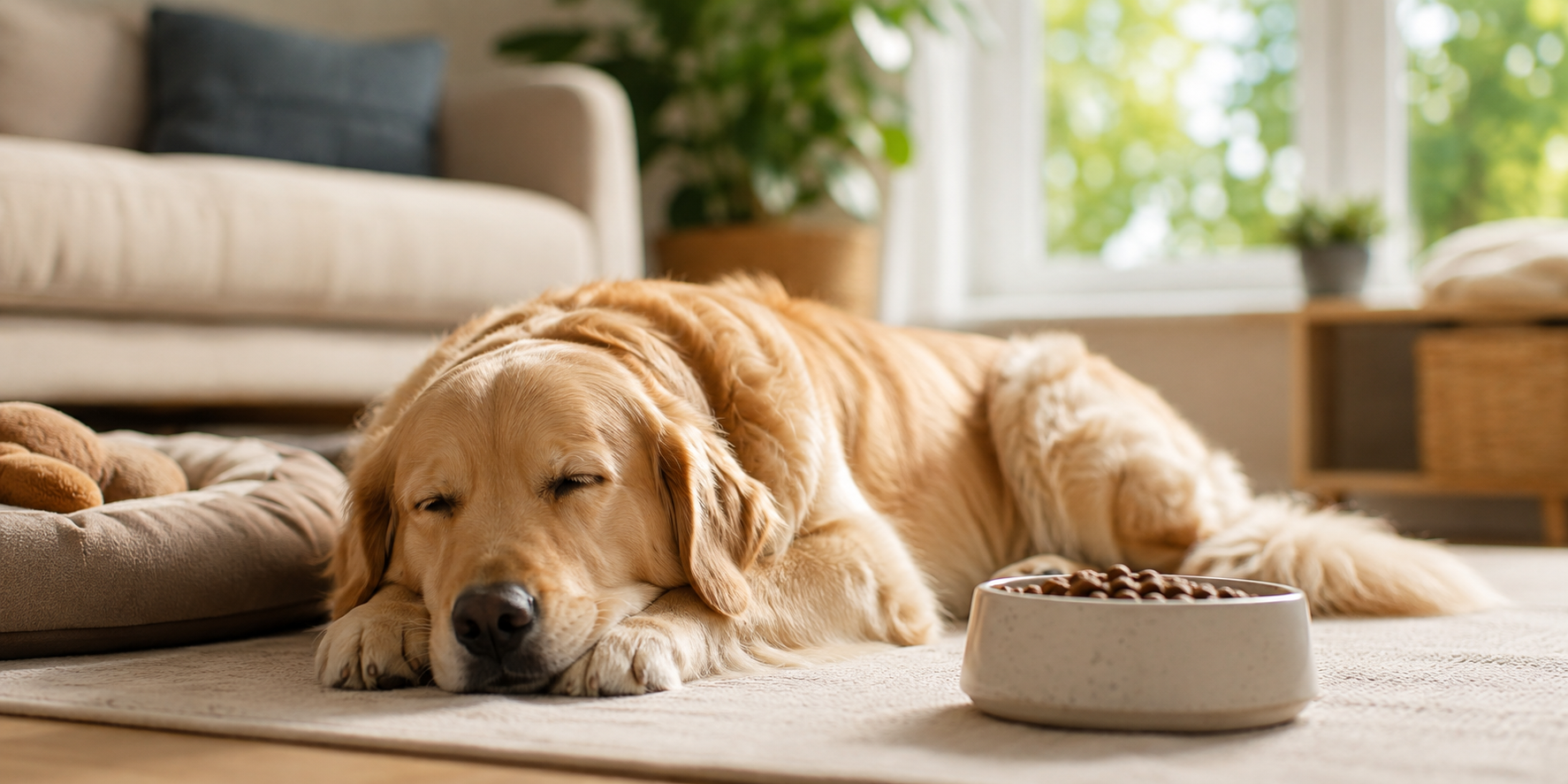
An afternoon nap is often perfectly normal for dogs because canine sleep is spread across multiple rest periods throughout the day. What matters most is how your dog acts when awake: a dog who wakes easily, eats normally, moves comfortably, and remains interested in familiar activities is very different from one who seems weak, unusually difficult to rouse, stiff, painful, or uninterested in normal life.
There is something almost comical about how quickly some dogs switch from “ready for anything” to completely asleep by mid-afternoon. One minute they are following you into the kitchen, hoping lunch somehow involves them, and the next they are curled into a ball on the sofa with one paw over their nose as though they have worked a twelve-hour shift.
For pet parents, the familiar dog afternoon slump, dog sleepy after eating, canine sleep patterns, post-nap stiffness, and dog joint mobility questions often show up together. Is the nap simply part of your dog’s normal rhythm, or is extra sleepiness telling you something deserves a closer look?
The important thing is not to judge your dog by the clock alone. There is no special medical significance to 3:00 PM, and dogs do not necessarily experience a human-style “food coma” because blood has suddenly been diverted away from the brain. Dogs naturally sleep and rest several times throughout a 24-hour period, and an afternoon nap may fit perfectly into that pattern.
The more useful question is: What does your dog look like before, during, and after the nap?
Why an Afternoon Nap Can Be Completely Normal
Dogs spend a substantial portion of the day resting, but their sleep is not organized exactly like ours. Humans often consolidate most sleep into one long nighttime period, while dogs tend to divide rest into several shorter episodes across both day and night.
That means an afternoon nap is not unusual simply because your dog already slept overnight.
Daily routine also shapes when dogs settle. A morning walk, breakfast, household activity, play, training, and social interaction may all be followed naturally by a quieter period later in the day. If the house becomes calmer after lunch, your dog may simply take advantage of the opportunity.
Age influences this pattern too. Puppies may sleep frequently because growth, learning, and bursts of activity are demanding. Senior dogs may also spend more time resting, although a sudden increase from their established pattern should still be noticed rather than dismissed as “just aging.”
Breed, health, exercise level, environment, and personality matter as well. A highly active young working dog may have a different daily rhythm from an older companion dog who is happiest alternating between short walks and long naps.
The best baseline is therefore your own dog.
If your dog has always taken a long afternoon snooze, wakes readily for dinner, and becomes enthusiastic the moment the leash appears, that nap is usually much less concerning than a new pattern of sleeping through activities they normally love.
Is Lunch Really What Makes Your Dog Sleepy?
It is easy to connect the dots: dog eats, dog lies down, therefore lunch caused sleepiness.
Sometimes the meal may be part of the routine that signals it is time to settle, but the biological explanation is not as simple as “blood shifts to the stomach and makes the brain sleepy.” That popular description is repeated often in human wellness discussions, yet it oversimplifies how digestion and sleepiness work and should not automatically be applied to dogs.
A meal does trigger digestive and metabolic processes, of course, and many animals become quieter after eating. But dogs may also nap after lunch because the timing overlaps with a normal rest period, the household becomes less active, or they have already used more energy earlier in the day.
Meal size may influence how comfortable a dog feels after eating. A large meal can leave a dog less interested in immediate activity, while smaller meals may fit differently into the daily schedule.
This is also why rest after eating can be sensible without claiming that sleep itself “improves digestion.” For certain dogs—especially large, deep-chested breeds that may be at greater risk for gastric dilatation-volvulus, commonly called bloat—pet parents often avoid vigorous activity immediately around large meals and follow their veterinarian’s advice about feeding and exercise schedules.
A relaxed nap is one thing. Sudden weakness, collapse, marked abdominal distention, repeated unproductive retching, or obvious distress after eating is something entirely different and requires urgent veterinary attention.
Dogs Do Not Sleep Like Humans Do
Because dogs rest in multiple episodes, judging their wellness by total hours alone can be difficult. You may see online rules claiming every adult dog sleeps exactly 12 to 14 hours and every senior sleeps a particular amount, but real dogs vary considerably.
A better approach is to consider sleep quality, pattern, and behavior while awake.
Does your dog settle comfortably? Do they change position normally? Do they wake when something interesting happens? Once awake, do they appear alert and engaged? Does their overall energy still match their age and normal routine?
Research has shown that dogs have recognizable sleep architecture that can be measured with non-invasive polysomnography, a method that records brain and physiological activity during sleep. Work by Kis and colleagues helped demonstrate measurable canine sleep stages and provides scientific context for understanding that sleep in dogs is a structured biological process rather than simply inactivity.
That research does not establish a universal “correct” afternoon nap duration or prove that 3 PM is a canine circadian sleep window. Its value here is more modest: dogs genuinely cycle through organized sleep states, and daytime sleep can be part of normal canine physiology.
This makes individual patterns especially important.
If your dog takes two hours of afternoon sleep and wakes bright, interested, and comfortable, the length alone is less meaningful than a sudden change from their own usual behavior.
Normal Rest vs. Unusual Fatigue: What to Watch For
Pet parents often use “sleepy,” “tired,” and “lethargic” interchangeably, but they are not quite the same thing.
A sleepy dog generally chooses to rest and can still respond normally when something worth waking for happens. Mention a walk, open the treat cupboard, or knock gently on the door, and the dog becomes appropriately alert.
Lethargy is broader. A lethargic dog may show reduced interest in activities, move less than usual, seem weak, resist getting up, interact less, or remain unusually subdued even when awake.
One isolated sleepy afternoon is rarely enough to tell you much. Instead, look for combinations of changes.
A dog who sleeps more and stops eating deserves more attention than a dog who naps after lunch but finishes dinner eagerly. A dog who wakes slowly and limps may need a mobility assessment rather than a discussion about sleep.
Temperature matters too. Fever, infection, pain, gastrointestinal illness, medication effects, endocrine conditions, anemia, cardiovascular problems, and many other health issues can change energy levels.
That is why “my dog is sleeping more” becomes most useful when paired with observations about appetite, drinking, elimination, movement, breathing, behavior, and duration.
Why Post-Nap Stiffness Deserves Its Own Attention
Sometimes the nap itself is not what worries pet parents. It is what happens when the dog gets up.
An older dog may stretch longer, take several cautious steps, or hesitate before fully standing after a long rest. Mild age-related changes may become more noticeable over time, but persistent stiffness should not automatically be normalized simply because a dog is senior.
Osteoarthritis, previous injuries, muscle weakness, spinal issues, paw problems, and other conditions can change the way a dog rises and moves.
Watch for patterns such as difficulty standing after rest, hesitation before using stairs, reluctance to jump into the car, shortened strides, limping, repeated shifting of weight, or slower recovery after exercise.
Video can help. Dogs sometimes behave differently in a veterinary clinic because adrenaline or unfamiliar surroundings temporarily change how they move. A short recording of your dog standing after an afternoon nap may give your veterinarian useful information.
Do not assume that stiffness means your dog simply needs a supplement. Nutritional support may have a place in an established mobility routine, but the first priority is understanding what is causing the change.
How to Support a Healthy Afternoon Routine
A balanced afternoon routine begins long before nap time.
Give your dog appropriate activity earlier in the day based on age, health, breed, and ability. That may include a walk, gentle training, sniffing opportunities, play, or another form of engagement.
After lunch or another meal, allow the household to settle naturally rather than trying to keep your dog constantly stimulated. Dogs need quiet time too, and a comfortable bed in a familiar location can make rest easier.
When your dog wakes, give them a moment to stretch before immediately rushing them outside or asking them to jump into the car. Senior dogs in particular may appreciate a slower transition from lying down to activity.
Maintain a healthy body condition as well. Excess body weight adds mechanical load to joints and can make everyday movement harder, so portion control, appropriate activity, and veterinary guidance around body condition are important parts of long-term mobility care.
Hydration and complete nutrition remain the foundation. Supplements should be layered onto that foundation only when they have a clear purpose.
A Quick Guide to Afternoon Sleepiness in Dogs
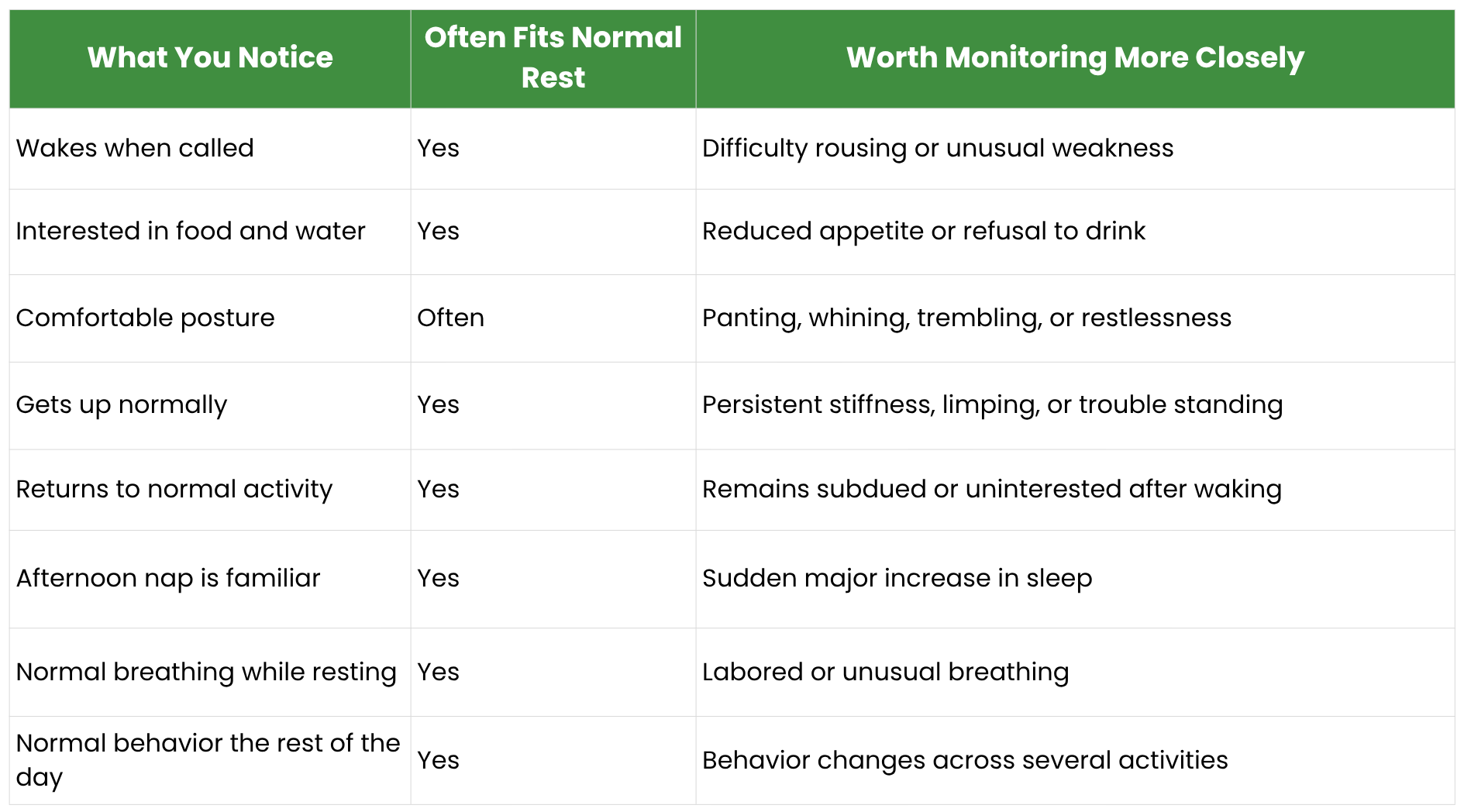
The key word is change. A dog who has always loved afternoon naps is different from one who suddenly begins sleeping through walks, meals, or family interaction.
When Sleepiness Should Lead to a Veterinary Check-In
Contact your veterinarian when sleepiness becomes part of a larger change in your dog’s normal behavior.
That includes persistent loss of appetite, increased thirst, vomiting, diarrhea, coughing, breathing changes, limping, difficulty standing, weakness, unusual vocalization, pain, significant weight change, or a sudden decline in interest in normal activities.
Urgent care may be needed for collapse, severe weakness, trouble breathing, repeated unproductive retching with abdominal enlargement, suspected poisoning, seizures, or inability to stand.
Senior dogs deserve particular attention because subtle changes can be easy to write off as aging. “Slowing down” is an observation, not a diagnosis.
The most useful thing you can bring to a veterinary appointment is context. When did the change begin? Is it worse after rest? Does your dog still become excited for favorite activities? Has appetite changed? Do you see limping?
Those details can turn a vague concern about “being sleepy” into a clearer picture.
Adding GCP OMEGAPaws to a Thoughtful Mobility and Wellness Routine
Once complete nutrition, healthy body condition, age-appropriate activity, comfortable rest, and veterinary care are in place, Guardian’s Choice (GCP) OMEGAPaws Premium Krill Omega-3 Soft Chews can be considered as a convenient nutritional addition to your dog’s everyday wellness routine.
OMEGAPaws provides marine-source omega-3 nutrition in a soft-chew format, making it easy to connect supplementation with an established meal or daily routine. Omega-3 fatty acids such as EPA and DHA are widely discussed in canine nutrition, particularly in conversations around skin, coat, and mobility wellness, but the finished supplement should not be presented as a treatment for lethargy, arthritis, post-nap stiffness, or another medical condition.
Its role in this story is intentionally supportive rather than curative. If your dog is already receiving appropriate exercise, balanced nutrition, weight management, and professional care, GCP OMEGAPaws can provide another nutritional step for pet parents who want to include marine omega-3s in that broader routine.
The soft-chew format also makes daily use easy for households that prefer a treat-like option rather than liquids or capsules.
Frequently Asked Questions
-
Adult dogs often sleep and rest for substantial portions of a 24-hour day, but the exact amount varies with age, breed, activity, health, and environment. Pay more attention to changes from your dog’s usual pattern and how alert and engaged they are when awake than to one universal number.
Support Everyday Movement With GCP OMEGAPaws Premium Krill Omega-3
GCP OMEGAPaws Premium Krill Omega-3 Soft Chews offer a convenient way to include marine-source omega-3 nutrition in an established canine wellness routine. The soft-chew format can fit naturally alongside complete nutrition, regular movement, grooming, healthy weight management, and veterinarian-guided mobility care without being positioned as a treatment for fatigue or joint disease.
-
Provides marine-source omega-3 nutritional support
-
Features omega-3 fatty acids including EPA and DHA
-
Convenient soft-chew format for dogs
-
Easy to pair with an established daily feeding routine
-
Can complement everyday skin and coat nutrition
-
Can fit within a broader joint and mobility wellness routine
-
Suitable for pet parents who prefer a chew over liquid supplementation
-
Works best alongside healthy body condition and age-appropriate activity
-
Should be used according to current label directions
-
Intended to complement—not replace—veterinary evaluation or treatment for persistent stiffness, pain, or lethargy

If you are building a thoughtful routine around your dog’s daily movement, nutrition, rest, and long-term wellness, GCP OMEGAPaws provides an easy way to add marine omega-3s without making care unnecessarily complicated. Follow the current label, consider your dog’s full diet and medications, and keep any meaningful changes in energy or mobility on your veterinarian’s radar.
Reference
Kis, A., Szakadát, S., Kovács, E., Gácsi, M., Simor, P., Gombos, F., Topál, J., & Bódizs, R. (2014). Development of a non-invasive polysomnography technique for dogs (Canis familiaris). Physiology & Behavior, 130, 149–156. https://doi.org/10.1016/j.physbeh.2014.04.004
For all general inquiries, please contact us at info@guardianschoice.com
© Copyright. All rights reserved.