
“Why Is My Dog Suddenly Itchy?” A Fall Dry Skin vs. Flea Bite Decoder

Fall itching can have several possible causes, including drier indoor air, seasonal allergies, fleas, other parasites, skin infections, or changes in grooming and environment. Looking closely at your dog’s skin and coat can provide useful clues, but persistent or intense itching should be evaluated rather than automatically blamed on dry weather or fleas.
Autumn brings plenty of things dogs love: cooler walks, crunchy leaves, longer evenings at home, and relief from the hottest days of summer. Unfortunately, it can also bring a familiar question for pet parents: Why is my dog suddenly so itchy?
You may notice scratching behind the ears, nibbling near the tail, paw licking after a walk, extra rubbing against furniture, or more loose flakes in the coat. Because fall dry skin in dogs, flea bites, seasonal dog itching, and natural flea and tick care for dogs can all enter the conversation at the same time of year, it is easy to assume there must be one simple explanation.
Usually, there is not.
The location of the itch, appearance of the skin, environmental conditions, grooming habits, parasite exposure, allergies, and overall health can all help build a clearer picture. Dry skin and fleas can sometimes create different patterns, but those patterns overlap enough that they should be treated as clues rather than a home diagnosis.
That distinction matters because scratching is a symptom, not a condition by itself. Supporting your dog comfortably through fall starts with figuring out what may be driving the itch instead of simply trying to make the scratching disappear.
Why Dogs May Seem Itchier When Fall Arrives
Fall changes your dog’s environment in several ways at once. Outdoor humidity can shift, heating systems begin running indoors, walks may happen through dry grass or fallen leaves, and seasonal allergens can remain present even as temperatures drop.
For some dogs, the indoor environment becomes noticeably drier once heating begins. Skin that is already sensitive may appear flakier, and a thickening seasonal coat can make loose skin cells more noticeable during brushing. Bathing too frequently or using products that are not suited for canine skin can also contribute to dryness.
At the same time, cooler weather does not create an immediate end to flea concerns.
Flea activity varies with climate, temperature, humidity, wildlife, and the environment around a home. Fleas may also persist indoors because heated living spaces provide conditions very different from those outside.
A review by Rust (2017) describes the biology and household ecology of the cat flea, the species commonly associated with both cats and dogs, and emphasizes that much of the flea life cycle occurs in the environment rather than solely on the animal. That does not mean every itchy dog in fall has fleas, but it helps explain why simply waiting for cold weather is not a reliable flea-management strategy.
The important takeaway is to look rather than assume.
What Fall Dry Skin May Look Like
Dry skin can show up in several subtle ways. You might notice fine white flakes after brushing, a coat that appears duller than usual, or increased scratching without obvious insects, bumps, or wounds.
The itching may appear relatively widespread instead of being concentrated in one specific area, although there is no universal pattern. Some dogs may lick their paws or rub their sides simply because the skin feels irritated, while others show very little scratching despite visible flakes.
Indoor heating can be one contributing factor, but the weather should not receive all the blame. Nutrition, bathing frequency, shampoo choice, allergies, parasites, infection, hormonal conditions, and other health concerns can also influence skin and coat quality.
This is especially important when the skin looks more than simply dry.
Redness, odor, greasy areas, sores, crusting, hair loss, repeated ear problems, or persistent licking are reasons to look deeper. A dog who scratches intensely enough to damage the skin may develop secondary problems regardless of what triggered the original itch.
Instead of applying several oils, sprays, or home remedies at once, begin by examining the coat carefully and thinking about anything that recently changed. A new shampoo, different food, more frequent baths, a recent grooming visit, a new walking route, or the start of indoor heating may all be useful details if a veterinarian needs to evaluate the problem.
What Flea-Related Itching May Look Like
Fleas can be surprisingly difficult to spot, particularly on dogs with thick or dark coats. Seeing no adult fleas during a quick glance does not necessarily rule them out.
Some dogs may show irritation around the lower back, tail base, abdomen, inner thighs, or other areas they can easily chew or scratch. You may see small crusts, reddened areas, thinning fur from repeated chewing, or dark specks within the coat.
Those dark specks may be what pet parents commonly call flea dirt, which consists largely of digested blood passed by feeding fleas. It often resembles dark pepper scattered close to the skin.
However, itch location alone cannot diagnose fleas. Allergies and other skin conditions can create overlapping patterns, and dogs can have more than one issue at the same time.
Some dogs are also highly sensitive to flea bites and may become very itchy even when relatively few fleas are found. That is another reason a careful coat examination and appropriate veterinary parasite plan are more useful than waiting until you see several insects moving through the fur.
If you find obvious fleas, an attached parasite, or repeated evidence that suggests flea activity, the next step should involve effective parasite management rather than relying solely on grooming or a nutritional supplement.
Dry Skin vs. Fleas: A Quick Comparison
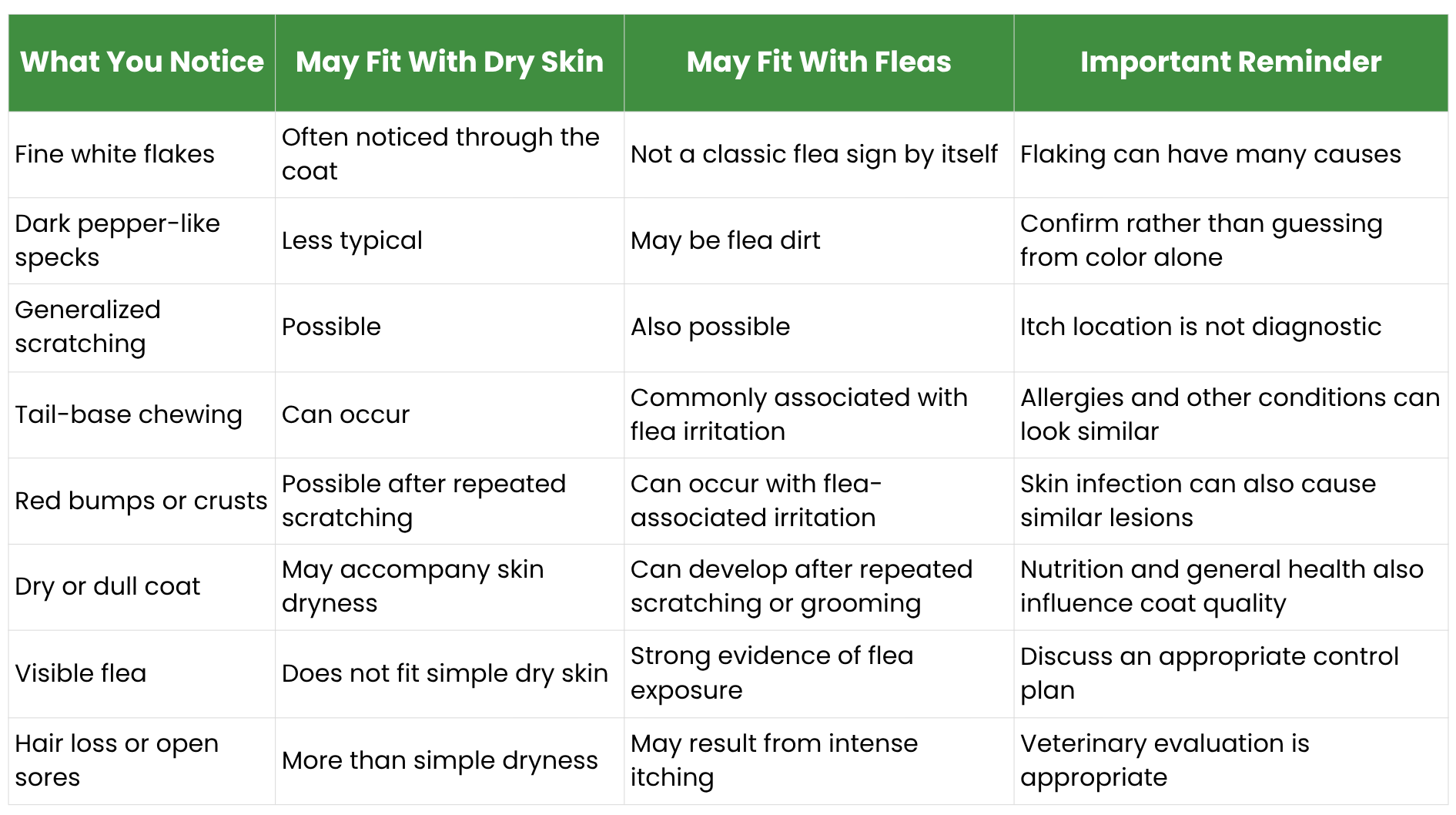
The table works best as a decoder, not a diagnostic test. If several signs overlap or your dog remains uncomfortable, a professional examination can save a lot of trial and error.
How to Check Your Dog’s Coat at Home
A regular coat check is one of the simplest habits you can add to your fall routine.
Choose an area with good lighting and slowly part the fur around the neck, shoulders, lower back, tail base, belly, and inner legs. Look at the skin rather than just the top of the coat, noting flakes, redness, scabs, thinning hair, unusual odor, or dark debris.
A flea comb can make the inspection easier, especially around the tail base and hindquarters.
If you collect dark specks, place them on a damp white paper towel or piece of white tissue. Flea dirt may release a reddish-brown color as the dried blood becomes wet, although home testing is not perfect and other debris can sometimes be confusing.
Use the check as an opportunity to examine the rest of your dog as well. Look between the toes, around the ears, and beneath the collar or harness where irritation can sometimes be hidden.
Regular inspection also gives you something incredibly useful: familiarity. When you know what your dog’s normal skin and coat look like, subtle changes become much easier to recognize.
Do Not Forget Other Causes of Fall Itching
Dry skin and fleas may be two common possibilities, but they are far from the only reasons dogs scratch.
Environmental allergies can continue into fall depending on where you live. Grass, weeds, pollen, mold, dust, and other environmental factors may contribute to itching in sensitive dogs, while more time spent indoors can change exposure to dust and household allergens.
Mites, bacterial or yeast skin infections, food-related reactions, contact irritation, and ear problems can also create scratching or licking. A painful paw or joint can sometimes even cause repeated licking that looks like a skin problem from a distance.
That is why persistent paw licking should not automatically be labeled anxiety or allergies, and repeated ear scratching should not simply be treated as dry skin.
Watch the bigger picture. If your dog is scratching occasionally but otherwise comfortable, observation and gentle skin-and-coat care may be reasonable. If the itching is frequent enough to interrupt sleep, causes wounds or hair loss, or is accompanied by odor, swelling, discharge, lethargy, or appetite changes, veterinary evaluation becomes much more important.
The goal is not to turn every scratch into a medical emergency. It is to recognize when “seasonal itchiness” has become something more.
Building a More Comfortable Fall Skin and Coat Routine
Once you have checked for signs that require professional attention, focus on the everyday habits that support normal skin and coat wellness.
Brush your dog regularly using tools suited to their coat type. This removes loose fur and provides repeated opportunities to examine the skin without relying on excessive bathing.
When bathing is necessary, use a product intended for dogs and follow appropriate frequency for your individual pet. Human shampoos and heavily fragranced products may not be suitable for canine skin.
Keep bedding clean and vacuum the areas where your dog spends substantial time, particularly when flea exposure is a concern. Environmental care matters because fleas have life stages that occur away from the pet.
Nutrition also belongs in the bigger picture. A complete and balanced diet supplies the nutrients needed for normal skin and coat maintenance, while additional supplements should be chosen for a clear reason instead of being expected to solve unexplained itching.
Finally, continue veterinarian-recommended flea and tick management according to your dog’s lifestyle and region. Cooler weather can change exposure, but it should not automatically be interpreted as proof that seasonal parasites have disappeared.
Adding GCP Flea & Tick Natural Defense to Seasonal Care
Once coat checks, grooming, environmental care, complete nutrition, and appropriate parasite management are established, Guardian’s Choice (GCP) Flea & Tick Natural Defense for Dogs can be considered as a convenient botanical and nutritional addition to your dog’s fall wellness routine.
The product comes in a 100-soft-chew format, and its packaging highlights apple cider vinegar, coconut oil, anise, and thiamine. Rather than presenting those ingredients as a proven treatment for fleas or a guaranteed way to change a dog’s scent so parasites stay away, GCP is better positioned as an easy daily wellness product for pet parents who prefer that ingredient profile alongside a broader seasonal care plan.
The soft-chew format can be paired with a regular meal, making it simple to incorporate into an established routine. For regular users, Subscribe & Save, where currently available, can also make replenishment easier, helping keep the next supply on hand without turning an empty tub into another last-minute order.
Most importantly, GCP Flea & Tick Natural Defense should complement—not replace—proven veterinary flea control, environmental management, or treatment of an active infestation. That distinction allows pet parents to choose a naturally positioned daily product while still responding appropriately when a real parasite problem appears.
Frequently Asked Questions
-
Yes, flea activity can continue during fall depending on climate and environmental conditions, and flea life stages may also persist inside heated homes. Keep checking your dog and follow the parasite-management plan recommended for your location and lifestyle.
Add GCP Flea & Tick Natural Defense to Your Fall Wellness Routine
GCP Flea & Tick Natural Defense for Dogs offers a convenient soft-chew option for pet parents who want botanical and nutritional ingredients to complement their broader seasonal routine. With 100 soft chews per tub and a formula highlighting apple cider vinegar, coconut oil, anise, and thiamine, it is easy to pair with familiar feeding habits while regular grooming, coat checks, environmental care, and veterinarian-guided flea management remain the foundation.
-
100 soft chews per tub
-
Formulated specifically for dogs
-
Packaging highlights apple cider vinegar
-
Includes coconut oil
-
Features anise and thiamine
-
Convenient soft-chew format for a familiar daily routine
-
Fits naturally alongside regular brushing and skin-and-coat checks
-
Can complement broader seasonal flea and tick awareness
-
Easy to keep with your dog’s regular feeding supplies
-
Subscribe & Save, where available, can help established users avoid last-minute reordering
-
Recurring delivery can make it easier to keep the product on hand throughout the season
-
Intended to complement rather than replace veterinarian-recommended flea and tick prevention or treatment
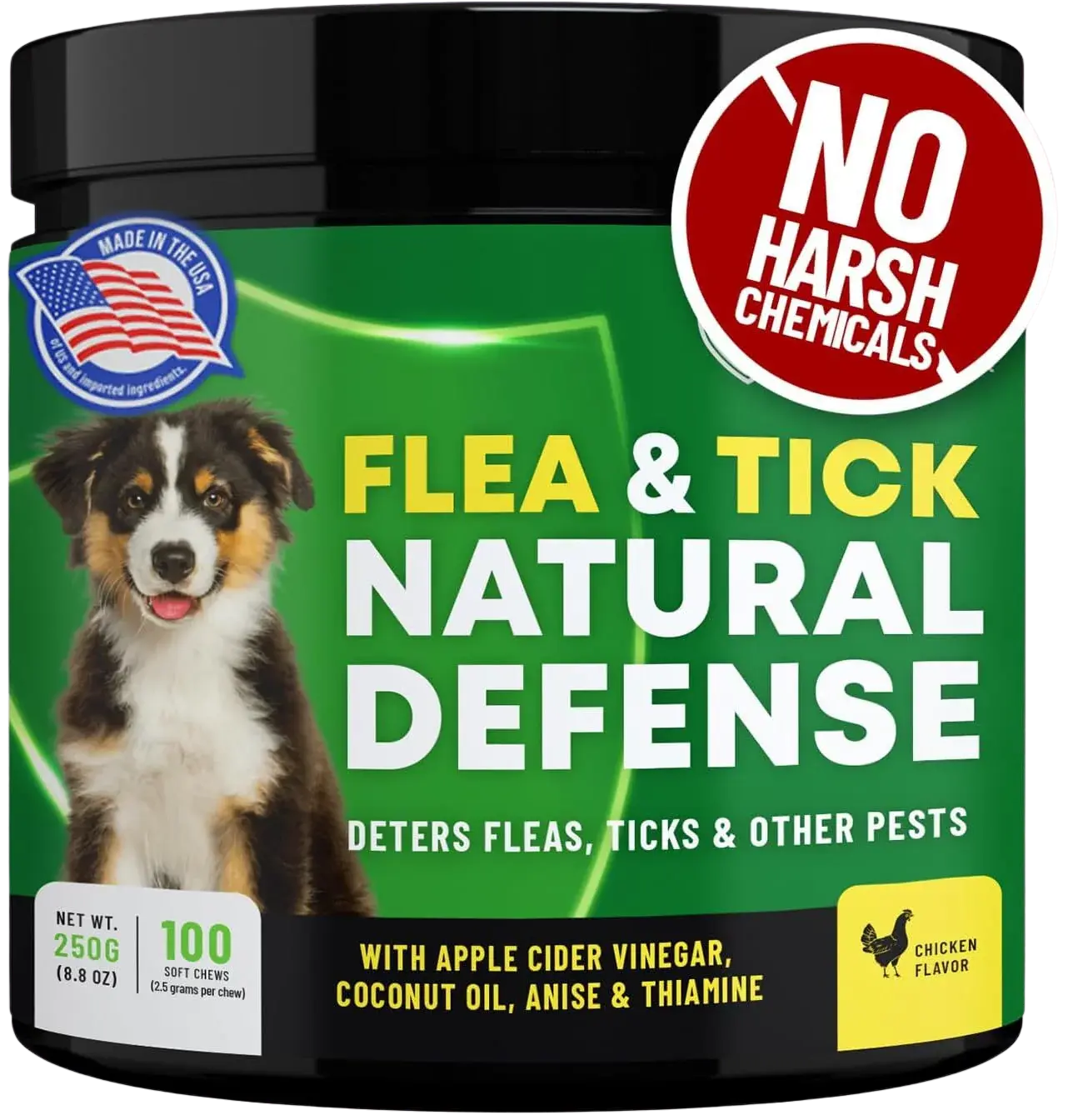
If GCP Flea & Tick Natural Defense already fits the type of daily wellness routine you want for your dog, its soft-chew format makes seasonal care straightforward without adding another complicated step. Follow the current product label, consider Subscribe & Save if you prefer predictable replenishment, and keep the product as one supportive piece of a larger fall plan built around observation, grooming, a clean environment, and appropriate veterinary parasite care.
Reference
Rust, M. K. (2017). The biology and ecology of cat fleas and advancements in their pest management: A review. Insects, 8(4), 118. https://doi.org/10.3390/insects8040118
For all general inquiries, please contact us at info@guardianschoice.com
© Copyright. All rights reserved.