Dog Bad Breath Causes: Gut Health, Halitosis, and Natural Ways to Support Fresh Breath
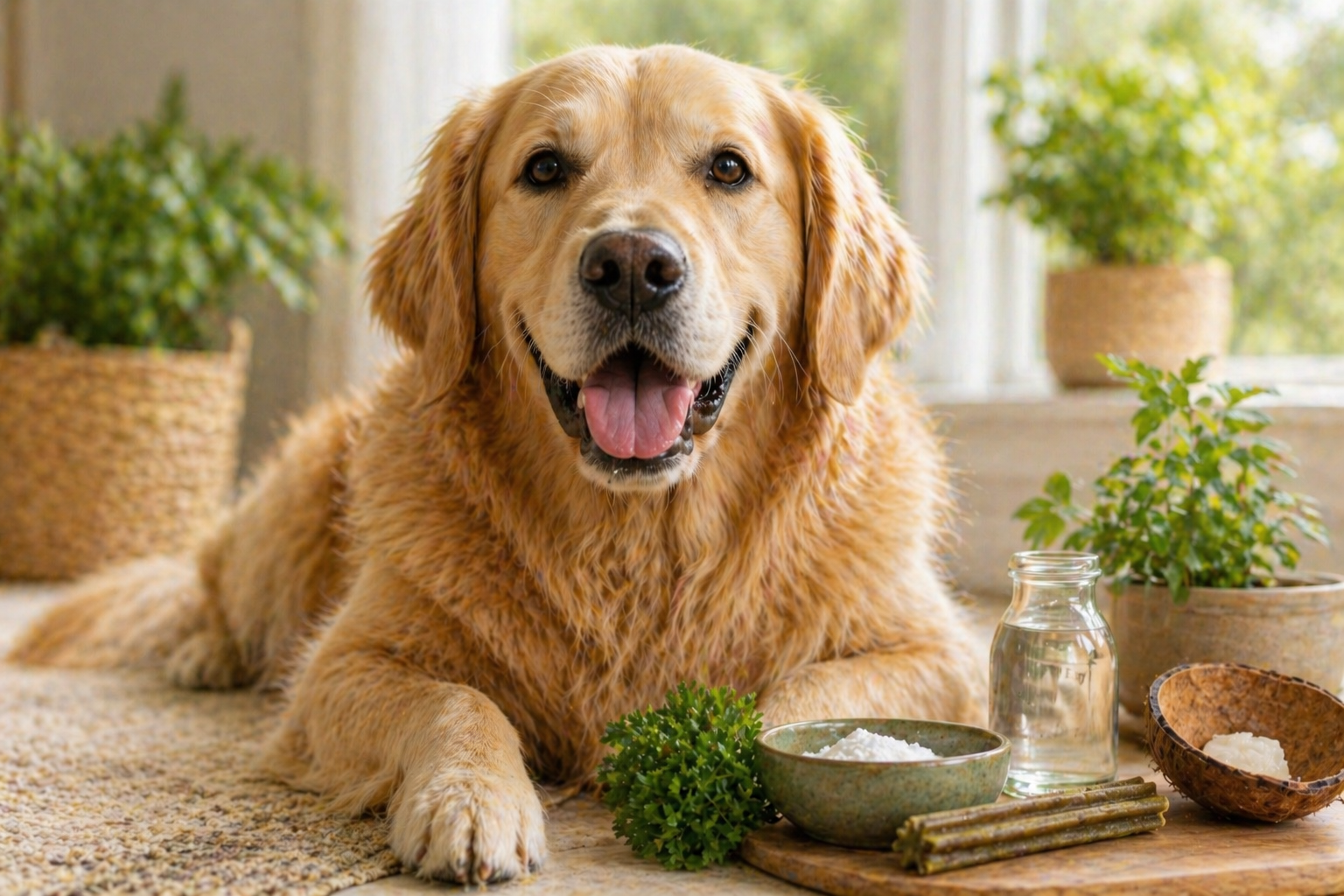
Dog bad breath is often linked to both oral and digestive balance. Supporting gut health alongside daily hygiene can help maintain fresher breath and overall comfort. Rather than focusing on surface-level odor alone, a more complete approach considers what’s happening internally as well. Small, consistent habits can make a noticeable difference in how your dog feels day to day.
Understanding Dog Breath as a Health Indicator
Dog breath is often brushed off as something normal, even expected. However, when the odor becomes noticeably strong, sour, or lingering, it can signal changes happening inside the body. In pet wellness, this condition is commonly referred to as halitosis, and it is often viewed as an early indicator of imbalance rather than a standalone issue.
Breath reflects what’s happening both in the mouth and deeper within the digestive system. While occasional odor can be influenced by diet or temporary factors, persistent bad breath tends to point toward a pattern rather than a one-time occurrence. This is why many pet owners are beginning to look beyond surface-level fixes and consider how internal systems contribute to what they’re noticing.
The body works as an interconnected system. Changes in digestion, oral bacteria, or even routine can influence how breath smells over time. Research published in Animals (Rossi et al., 2024) highlights how internal systems in pets respond to environmental and behavioral changes, reinforcing the idea that these signals—like breath—are often part of a broader internal picture rather than isolated issues.
Understanding breath as a signal rather than just a nuisance allows for a more thoughtful and consistent approach to pet care.
The Gut-Breath Connection in Dogs
While many assume that bad breath begins and ends in the mouth, a significant portion of odor can originate in the digestive tract. The gut is home to a complex microbiome that plays a role in breaking down food and managing internal balance. When this environment shifts, it can influence how byproducts are produced and processed.
These byproducts, including certain gases, can travel upward and contribute to breath odor. This is why some dogs may still have noticeable breath even with regular dental care. The source, in these cases, may not be limited to the teeth or gums but connected to digestive processes happening internally.
This connection doesn’t mean that every instance of bad breath is caused by the gut, but it highlights why digestion is often part of the conversation. Instead of focusing on one area alone, a more complete approach considers both oral and digestive factors together.
Over time, supporting gut balance may contribute to a more stable internal environment, which can influence everyday experiences like breath, comfort, and even appetite patterns.
Surface vs Internal Causes of Halitosis
To better understand how to approach bad breath, it helps to distinguish between surface-level and internal contributors. Both play a role, but they function differently and often require different forms of support.
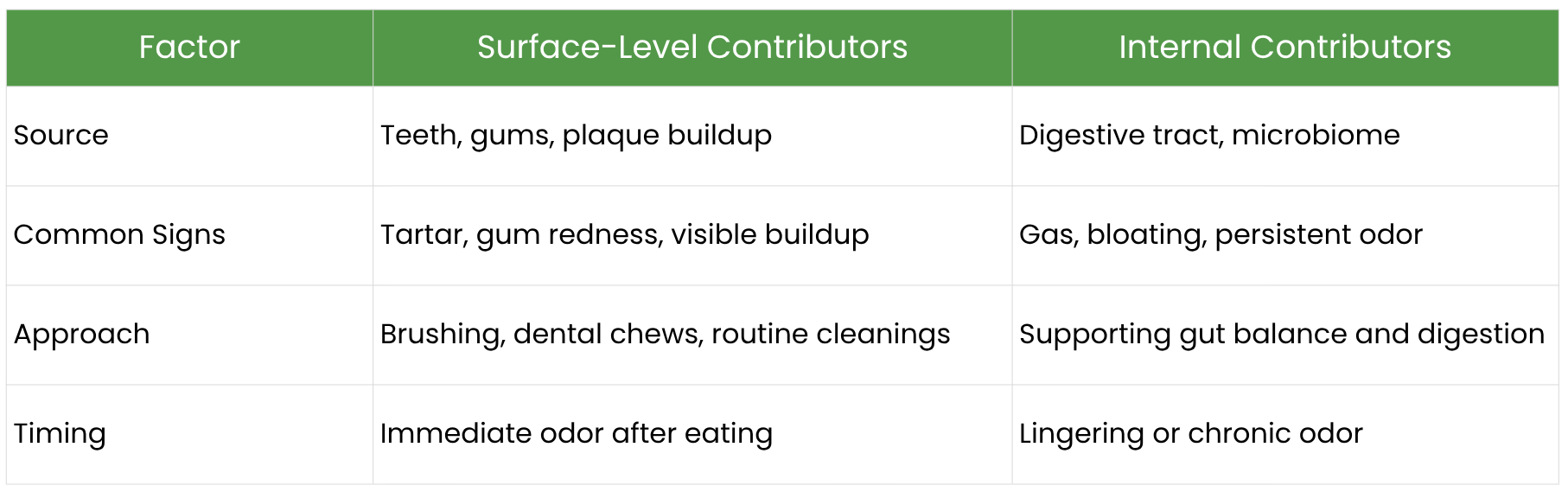
Surface-level concerns are often easier to identify. They may include visible tartar, changes in gum color, or odor that appears shortly after meals. Internal contributors, on the other hand, are less visible but can be more persistent. These may include recurring odor that doesn’t fully resolve with brushing alone.
Recognizing the difference between these two layers allows pet owners to approach the issue more comprehensively, rather than relying on a single method.
A Daily Approach to Supporting Breath and Digestion
Consistency plays a key role in managing both oral and digestive balance. Instead of relying on occasional interventions, many pet owners are turning toward simple daily habits that support internal and external systems together.
Hydration is a foundational element. Adequate water intake supports digestion and helps maintain overall balance in the body. Feeding routines also matter, as consistent meal timing allows the digestive system to operate more predictably.
Oral hygiene remains important as well. Brushing and dental care help manage surface-level contributors, while daily nutrition supports what’s happening internally. When these habits are combined, they create a more complete routine that addresses multiple aspects of breath at once.
The goal isn’t to eliminate every instance of odor but to support the systems that influence it over time. This approach aligns with how many modern pet care strategies are evolving—toward balance, consistency, and long-term support.
A Smarter Way to Support Fresh Breath Daily
As these habits become part of a routine, many pet owners look for ways to simplify their approach without losing consistency. This is where thoughtfully formulated products can fit naturally into daily care.
GCP Breath Boost Bites are designed to complement this routine by focusing on both breath and digestive balance. With ingredients such as chlorophyll, parsley, Champex® (mushroom extract), spirulina, and yucca schidigera, the formulation aligns with a gut-first perspective on managing everyday odor concerns .
Rather than replacing brushing or regular care, these bites are intended to work alongside existing habits. The goal is to support internal balance while also addressing the external experience of breath in a way that feels easy to maintain daily.
FAQs About Dog Bad Breath and Gut Health
-
Bad breath can be influenced by both oral and digestive factors. While plaque buildup is a common contributor, internal processes like digestion can also play a role in how odor develops over time.
Conclusion: Looking Beyond the Surface of Dog Breath
Dog breath is more than just a minor inconvenience—it’s often a signal that reflects both oral and digestive balance. By looking beyond the surface and considering how internal systems contribute, pet owners can take a more thoughtful and consistent approach to care.
Supporting hydration, maintaining oral hygiene, and considering digestive balance together creates a more complete system. Over time, these small, consistent efforts can help maintain a more comfortable and balanced daily experience for your dog.
Daily Breath & Gut Support for Dogs
GCP Breath Boost Bites
-
Includes chlorophyll, parsley, Champex®, spirulina, and yucca schidigera
-
Designed to support fresh breath, odor control, and gut balance
-
70 chicken-flavored chews for daily use
-
Easy to incorporate into your dog’s routine
A simple way to support both internal balance and everyday freshness—without overcomplicating your routine.
References
Rossi, M., Bianchi, L., Conti, F., & De Santis, R. (2024). Seasonal variations in grooming behavior and dermatological responses in domestic cats. Animals, 14(5), 1234. https://pmc.ncbi.nlm.nih.gov/articles/PMC11898201/
For all general inquiries, please contact us at info@guardianschoice.com
© Copyright. All rights reserved.