
The Science of Silence: Do Cats Truly Recognize Their Names?
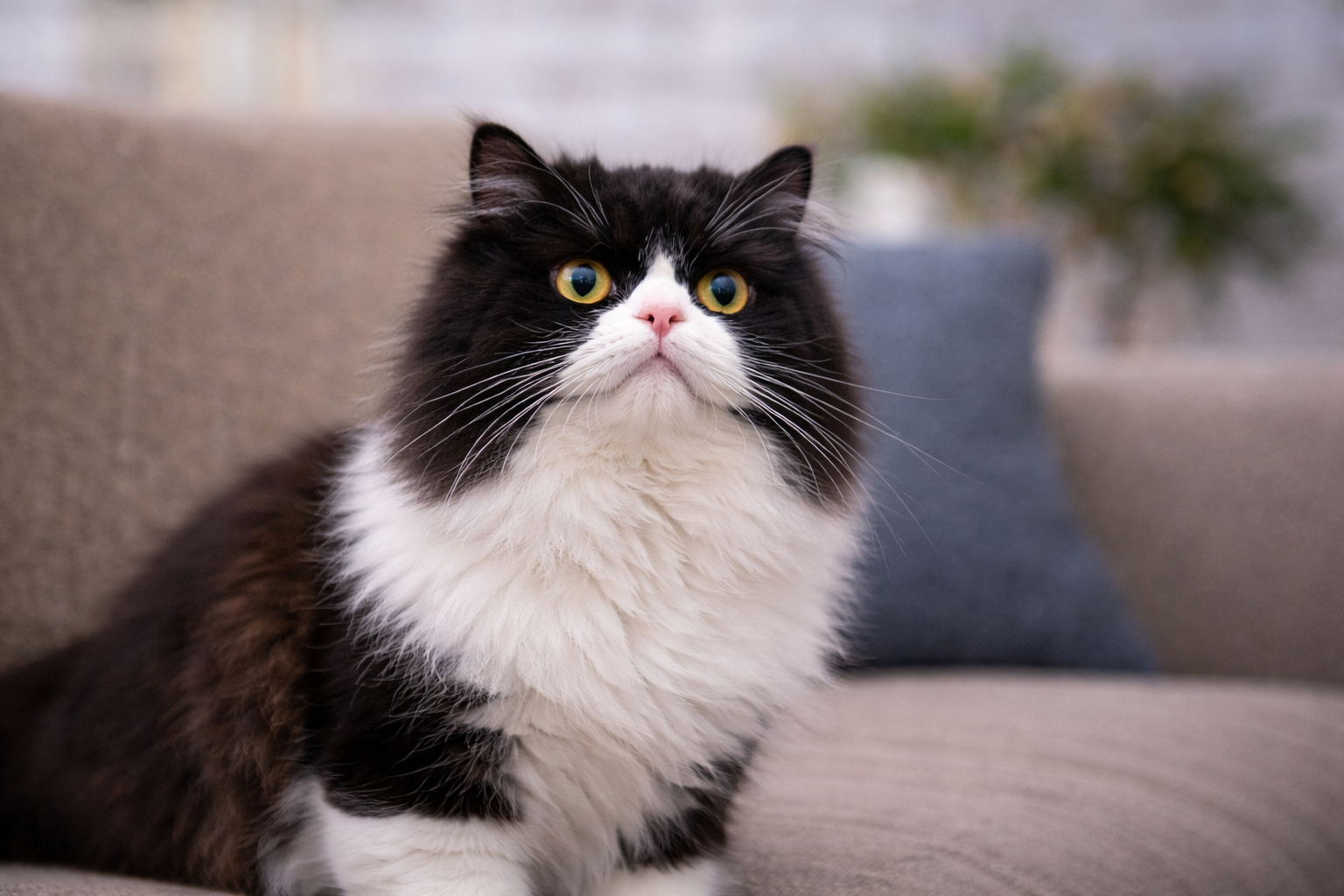
Cats are capable of recognizing their own names, even when spoken by unfamiliar voices. However, their response is often subtle or selective rather than obvious. This behavior reflects how cats process information, relying on context and learned associations rather than automatic obedience. By combining consistent routines with supportive daily care, pet parents can better understand how their cats communicate and respond.
Do Cats Actually Know Their Names
If you have ever called your cat and received no response, you are not alone. It is one of the most common experiences among cat owners. The assumption is often that cats either do not understand or simply choose to ignore.
Research suggests it is closer to the second.
Cats are capable of distinguishing their names from other words. They process familiar sounds and can differentiate them from unrelated language. This ability is not based on language comprehension in the human sense, but rather on pattern recognition.
Over time, cats associate certain sounds with outcomes. Their name becomes one of those sounds. Whether they respond depends on what they expect to happen next.
Why Cats Choose Not to Respond
Unlike dogs, cats were not bred for tasks that required constant human direction. Their evolutionary path was different. They developed as independent hunters, which shaped how they interpret signals.
When you call your cat’s name, they register the sound. But instead of reacting immediately, they evaluate it.
-
Is there a reward involved?
-
Is this relevant to me right now?
-
Does this require action?
If the answer is unclear, they may choose not to respond.
This selective response is often mistaken for indifference. In reality, it reflects how cats prioritize information.
The Science Behind Feline Name Recognition
A well-known study from Sophia University explored how cats respond to human speech. Researchers used a method called habituation-dishabituation, where cats were exposed to repeated words followed by a new one.
When their name was introduced, cats showed subtle but measurable reactions such as ear movement or head orientation.
This suggests that cats can distinguish their name from other similar sounds.
Further research available through the National Center for Biotechnology Information (NCBI) supports the idea that animals process human vocal cues by combining auditory recognition with learned context.
These findings do not suggest that cats respond like dogs. Instead, they highlight that recognition and response are separate processes.
What Your Cat Is Really Doing When You Call Them
When you say your cat’s name, several things happen internally.
First, they recognize the sound as familiar. Then, they assess the situation. Finally, they decide whether responding is worth the effort.
This decision-making process happens quickly, often within seconds. The result may look like “ignoring,” but it is actually a form of evaluation.
Common subtle responses include:
-
A slight ear twitch
-
A brief pause in movement
-
A glance in your direction
-
A tail flick
These small reactions are easy to miss, but they indicate that your cat has heard and processed the sound.
The Role of Cognitive Health and Routine
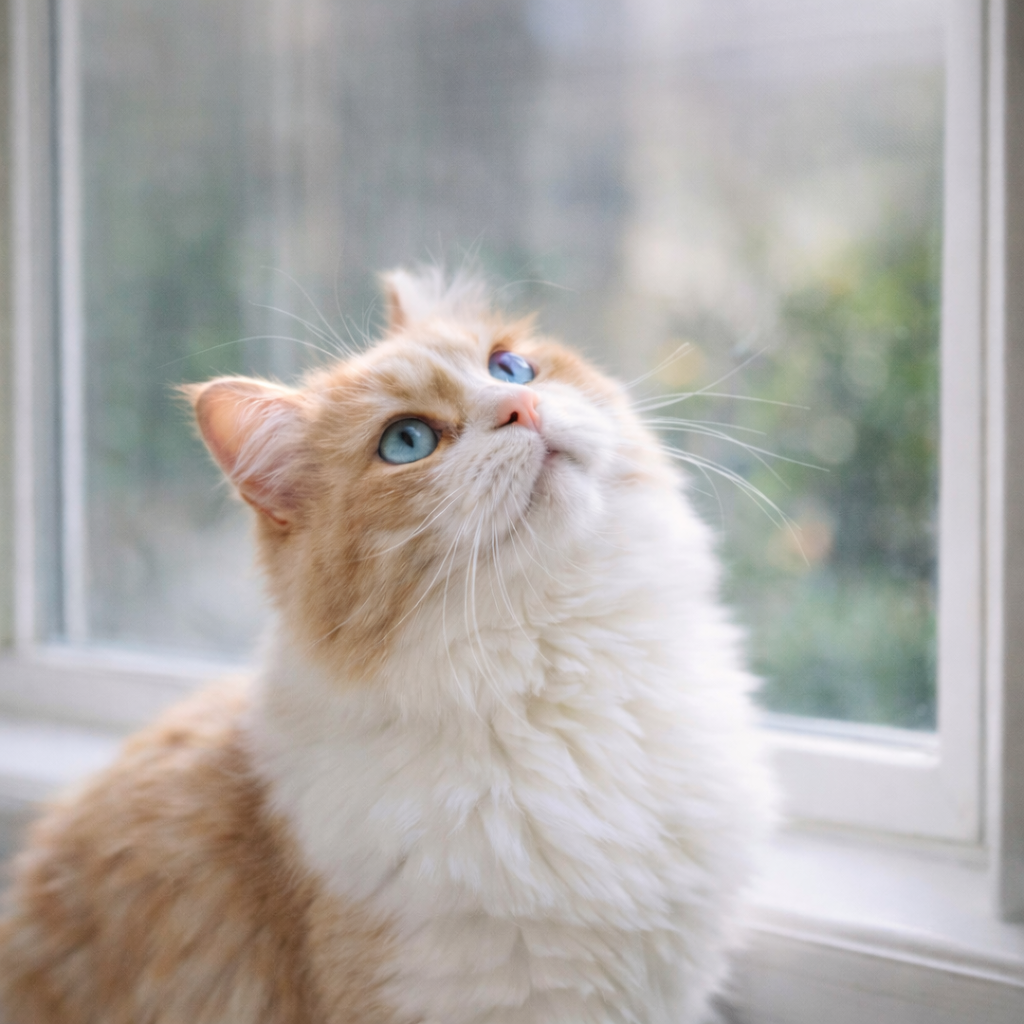
Recognition relies on consistent exposure. When a cat hears their name regularly in meaningful contexts, the association becomes stronger.
Routine plays a major role in this process.
For example:
-
Calling their name before feeding
-
Using the same tone during interaction
-
Pairing their name with positive experiences
Over time, these patterns reinforce recognition and response.
Research referenced by the American Veterinary Medical Association (AVMA) highlights that consistent routines support behavioral predictability in pets, including how they respond to cues and interactions.
While this does not guarantee immediate responses, it supports the development of clearer communication patterns.
Where GCP Fits Into Your Cat’s Daily Routine
Consistency is easier to maintain when daily care fits naturally into your routine. This includes feeding, interaction, and simple habits that happen at the same time each day.
GCP products are designed to integrate into these routines:
-
GCP Purrbiotics Can be mixed into meals, making it part of feeding time where name association often occurs
-
GCP Cat L-Lysine Easily included in daily routines without adding complexity
-
GCP Flea & Tick Natural Defense for Cats Fits into regular care habits, complementing grooming and hygiene routines
Rather than introducing new steps, these products support the structure you are already building.
Feline Name Recognition at a Glance
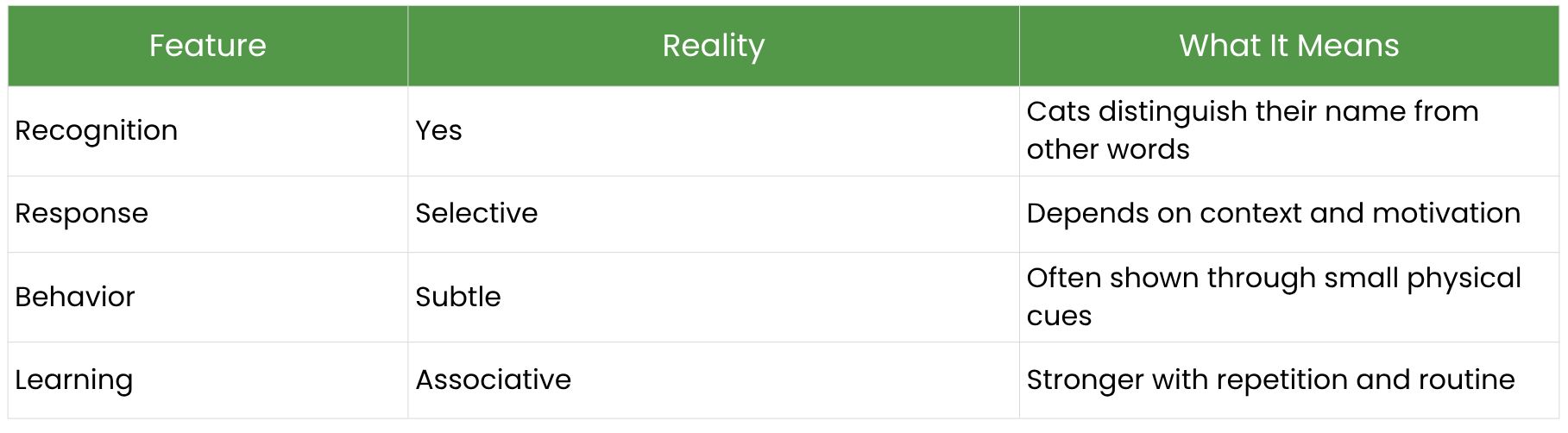
This table highlights a key point: recognition does not always equal response.
Product Feature Section
Consistency becomes sustainable when daily care is simple and repeatable. GCP products are designed with this in mind.
-
Easy-to-use formats (powders and soft chews)
-
Can be integrated into feeding routines
-
No complicated preparation required
-
Suitable for multi-cat households
-
Designed for daily use without disruption
By aligning with existing habits, these products support the structure that helps reinforce communication patterns over time.
Frequently Asked Questions
-
Yes, cats can recognize repeated sounds associated with specific outcomes. Over time, they may learn to associate certain words with feeding, play, or interaction. This is based on repetition rather than language understanding.
A Different Way to Understand “Ignoring”
What looks like silence is often a form of processing.
Cats recognize more than they show. Their responses are simply more selective, shaped by context, routine, and learned associations.
By building consistent habits and supporting daily routines with products like GCP Purrbiotics, Cat L-Lysine, and Flea & Tick Natural Defense for Cats, you create a structure that reinforces communication over time.
Because when your cat hears their name, they are listening. They are just deciding what to do next.
For all general inquiries, please contact us at info@guardianschoice.com
© Copyright. All rights reserved.