
The Dish Soap Debate: Why “Home Brew” Flea Remedies Are a Risky Gamble
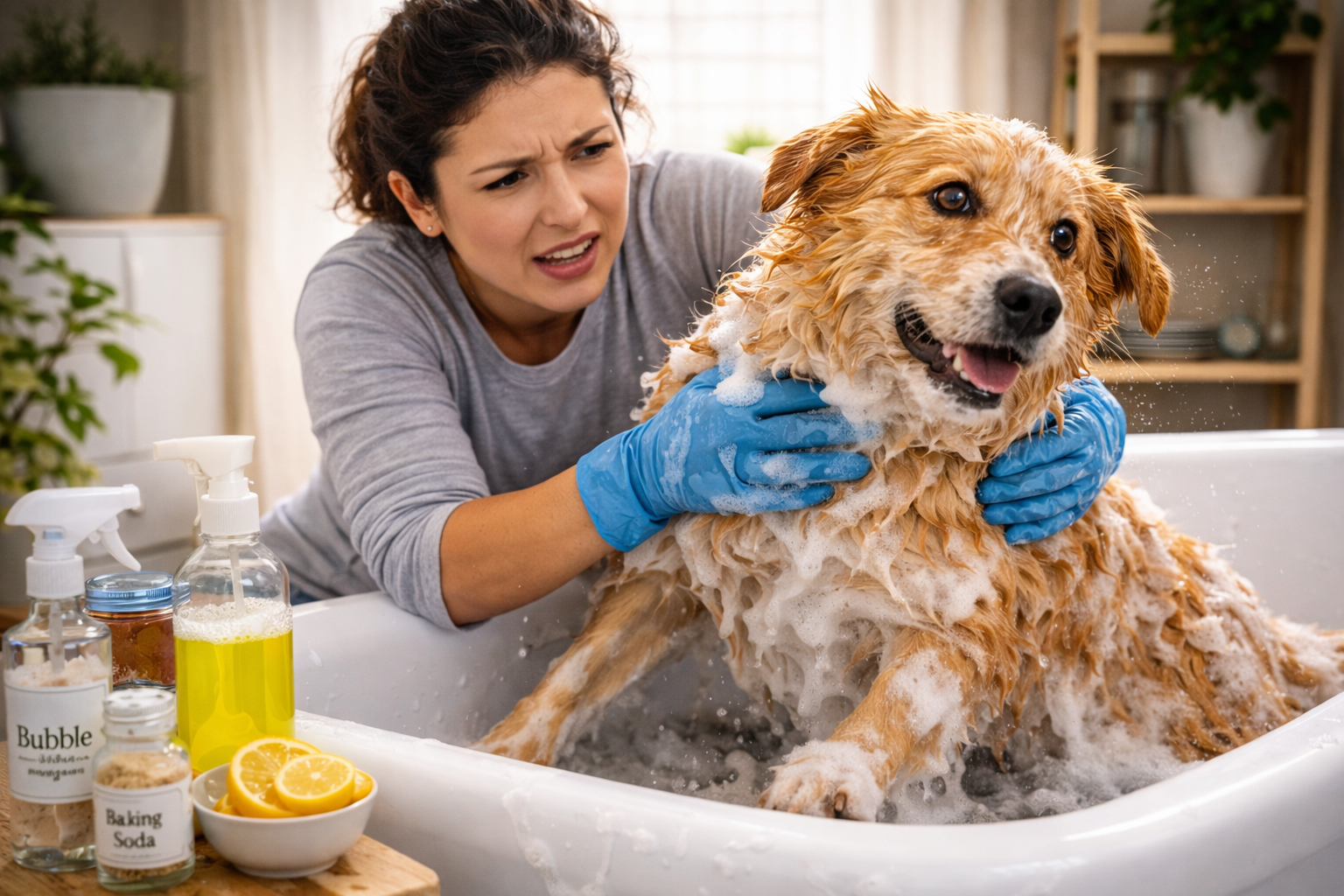
Dish soap can kill adult fleas on contact, but it does nothing to eliminate eggs, larvae, or pupae hiding in your home. It also strips the natural protective oils from a kitten’s delicate skin, weakening the barrier that protects against irritation and infection. A true flea solution requires breaking the life cycle and strengthening your pet’s resilience—not relying on a short-term bath that offers zero lasting protection.
Social media is filled with well-meaning advice for new pet parents. Among the most popular suggestions for flea control is the “blue dish soap bath.” It’s framed as safe, cheap, and effective. And to be fair, it does work—temporarily. Dish soap breaks down the surface tension of water and disrupts the waxy coating on adult fleas, causing them to drown. You may see visible results in the tub, which creates the illusion that the problem is solved.
But fleas are not a surface problem. They are a biological cycle. And that cycle does not end in your sink.
The Short-Term Illusion
The biggest issue with the dish soap method is that it addresses only one stage of a multi-stage infestation. Adult fleas make up roughly 5% of the total flea population in an environment. The other 95% exists as eggs, larvae, and pupae in carpets, bedding, upholstery, cracks in flooring, and even car seats.
When you bathe a kitten in dish soap, you may eliminate the adult fleas currently on their body. However, the moment that kitten is dry and placed back into the environment, newly hatched fleas can jump back on. Within days, you may find yourself repeating the bath. What feels like a solution becomes a cycle of reaction.
This is the persistence problem. Dish soap offers no residual protection. It has no preventative effect. It does not disrupt egg development. It does not penetrate pupal casings. It does not change the environment. It only removes visible adults in that moment.
The Biology of the Flea Life Cycle
To understand why dish soap falls short, it helps to understand how fleas reproduce. A single female flea can lay up to 50 eggs per day. Those eggs fall off the host into the environment. Within a week, they hatch into larvae. Larvae avoid light and burrow into fibers, feeding on organic debris and flea dirt. They then spin protective cocoons and become pupae.
Pupae can remain dormant for weeks or even months, waiting for vibration, warmth, and carbon dioxide to signal that a host is nearby. This means that even if you eliminate every adult flea today, more can emerge tomorrow.
A bath does not interrupt this process. It merely buys you a short window.
Skin Barrier Disruption: The Hidden Cost
Kittens have extremely sensitive skin. Their epidermal barrier is thinner than that of adult cats. They produce less protective sebum, the natural oil layer that helps maintain hydration and defend against pathogens.
Dish soap is designed to cut grease. That is its function. When used on a kitten’s skin, it removes not only dirt and fleas but also essential oils. Repeated bathing can lead to dryness, flaking, irritation, and microscopic cracks in the skin barrier.
When the barrier is compromised, several problems can follow:
-
Increased itching
-
Heightened sensitivity to flea saliva
-
Higher risk of bacterial infection
-
Greater likelihood of developing Flea Allergy Dermatitis (FAD)
Ironically, the attempt to remove fleas may make the kitten more reactive to future bites.
The Stress Factor
Bathing is inherently stressful for many cats. For kittens, repeated forced baths can elevate stress hormones. Stress impacts immune function and skin healing. A stressed kitten may groom excessively after a bath, increasing the risk of skin trauma and secondary infection.
Prevention strategies should reduce stress—not amplify it.
The Difference Between Reaction and Strategy
The dish soap bath is a reaction. It is a response to visible fleas. What it lacks is strategy. True flea management requires a coordinated plan that includes:
-
Environmental control
-
Preventative defense
-
Skin barrier support
-
Immune resilience
Without addressing all four components, the cycle continues.
Why Proactive Defense Matters
A proactive defense approach focuses on preventing fleas from establishing themselves in the first place. Rather than repeatedly stripping the skin with soap, preventative measures create conditions that are less hospitable to pests while supporting the pet’s overall resilience.
Preventative support may include:
-
Regular environmental cleaning
-
Vacuuming to remove eggs and larvae
-
Washing bedding in hot water
-
Using safe, consistent internal support options
-
Strengthening immune response to reduce inflammation from bites
When prevention replaces reaction, the need for emergency baths decreases dramatically.
The Role of Immune Support
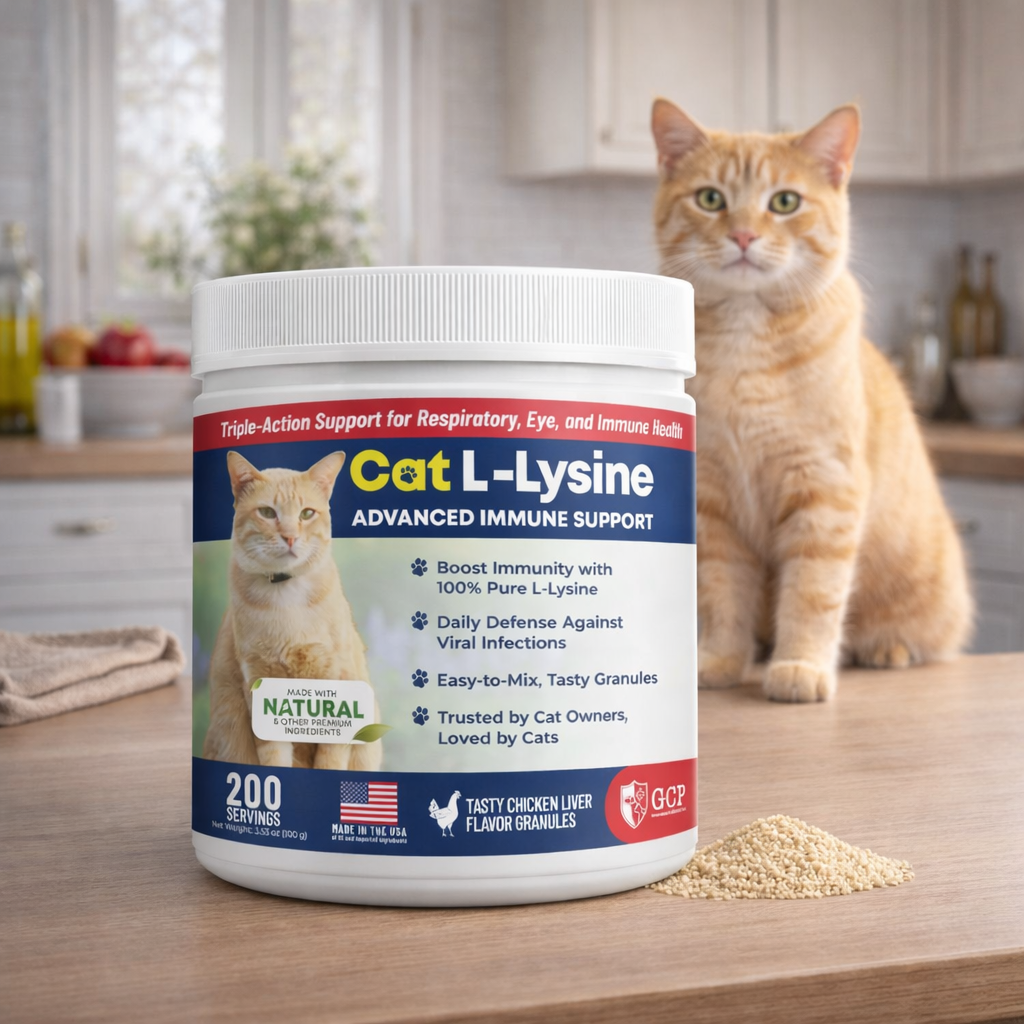
While L-Lysine is not a pesticide and does not kill fleas, it plays a supportive role in maintaining immune health—particularly in kittens whose systems are still developing. Flea bites can create inflammation and stress. Secondary infections are more likely when immunity is compromised.
Supporting immune function helps kittens recover more quickly from minor skin irritation and reduces the likelihood that small issues escalate into major dermatological problems.
A strong immune system does not eliminate fleas. But it reduces vulnerability to complications.
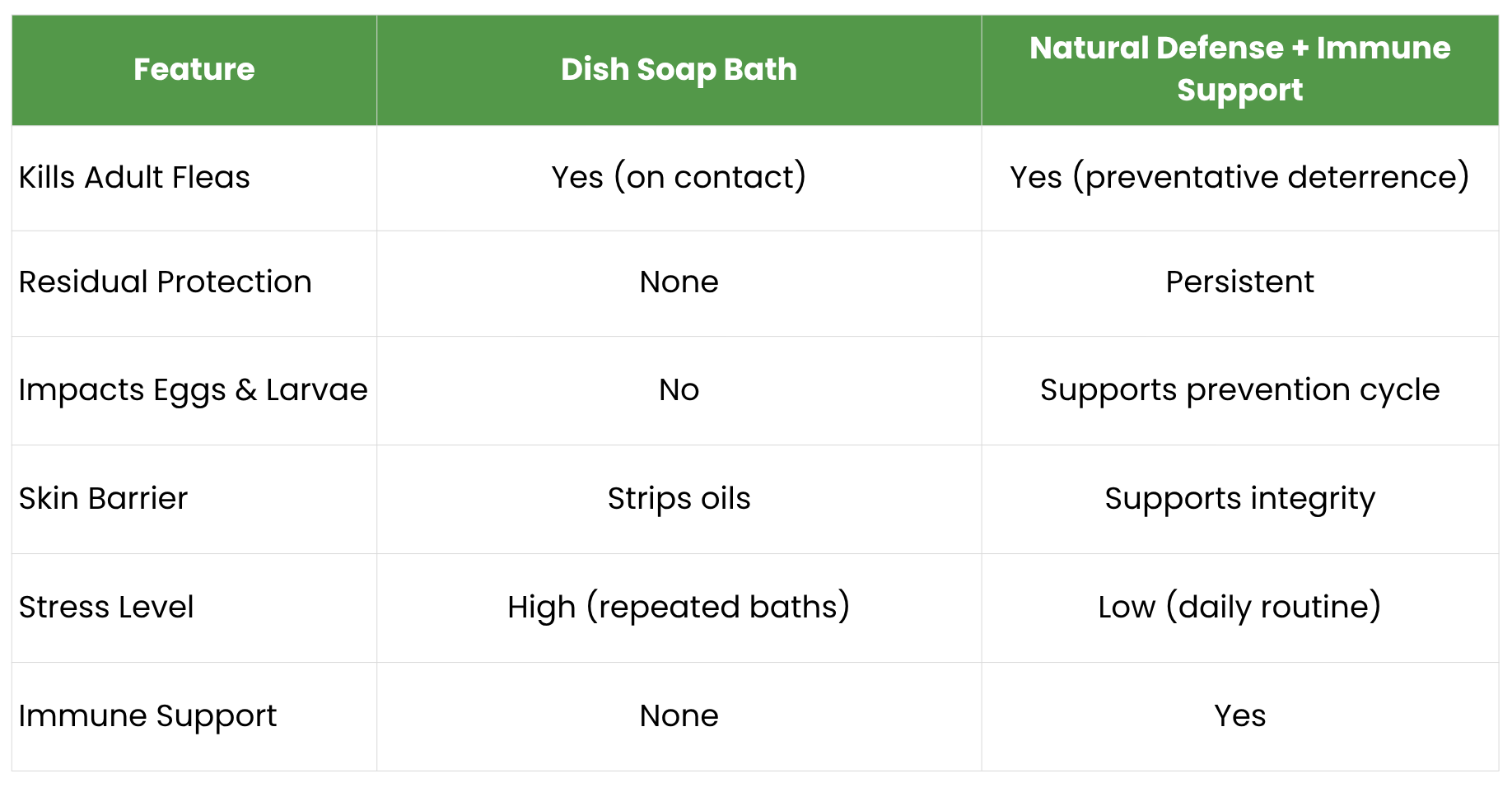
The difference lies in sustainability. One method removes fleas temporarily. The other builds resistance to reinfestation.
When Is Dish Soap Appropriate?
In rare emergency situations—such as rescuing a heavily infested stray kitten when no other products are immediately available—a single dish soap bath may be used cautiously. Even then, it should be followed by proper veterinary guidance and a comprehensive prevention plan.
As a long-term strategy, however, it is too harsh and too incomplete.
The Environmental Factor
Many pet parents overlook the environment. Vacuuming daily during an active infestation can remove up to 90% of eggs and larvae from fibers. Washing bedding in hot water disrupts development. Without environmental management, even the most effective on-pet treatment will fail.
The flea problem is not on your kitten. It is in your home.
Frequently Asked Questions
-
No. It only affects adult fleas currently on the pet. Eggs have protective casings that soap does not penetrate.
The “blue dish soap bath” may look effective in the moment, but it is a short-term fix to a long-term biological problem. Fleas are persistent because their life cycle is persistent. Repeated bathing strips your kitten’s natural defenses without preventing reinfestation. The solution is not harsher soap or more frequent baths. It is strategic prevention—addressing the environment, supporting skin integrity, and strengthening immune resilience. Flea control should protect your pet, not compromise their barrier in the process.
For all general inquiries, please contact us at info@guardianschoice.com
© Copyright. All rights reserved.