
How Cooler Weather Affects Cat and Dog Metabolism
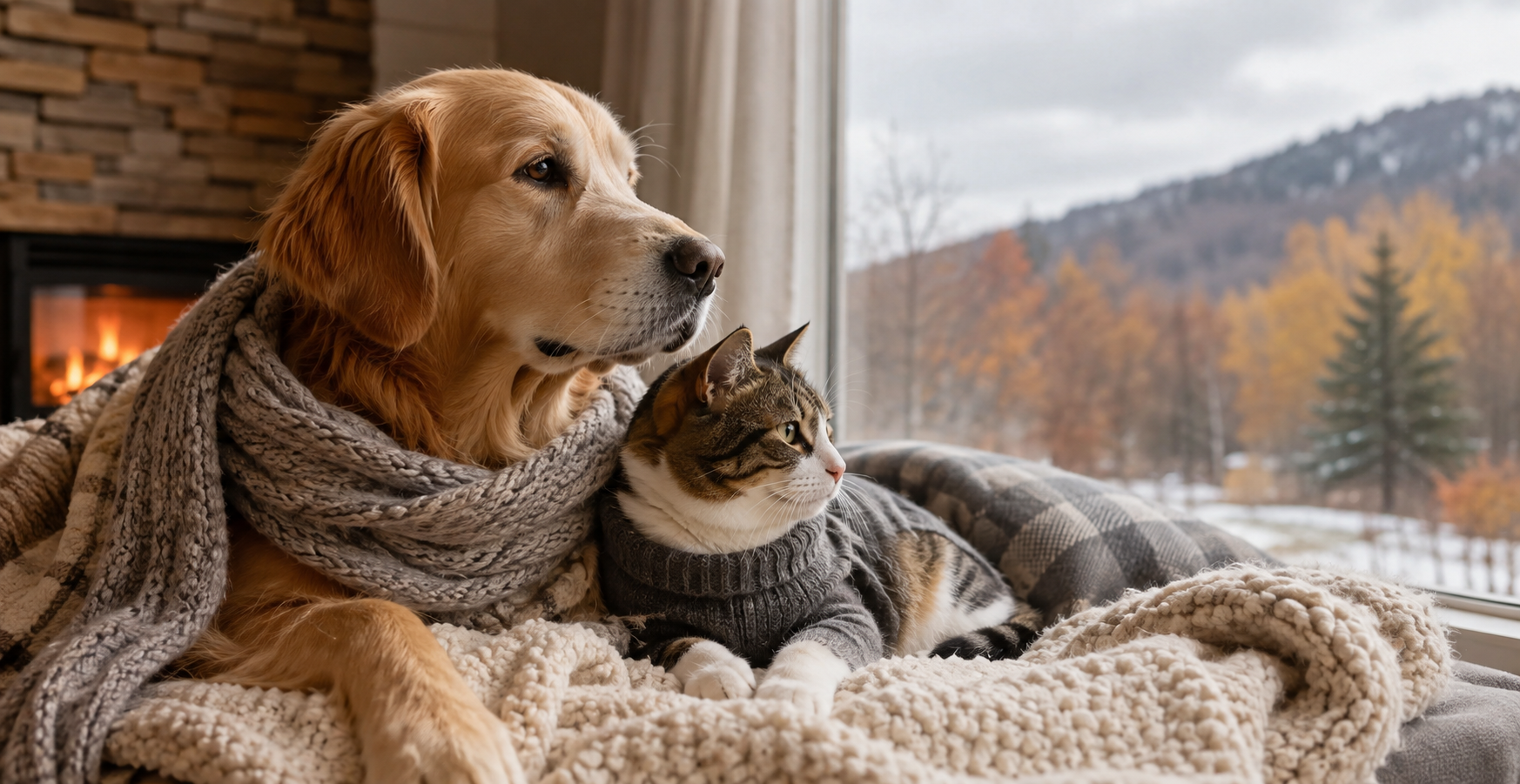
Cooler temperatures and shorter days may change how much some cats and dogs move, eat, sleep, or spend time outdoors, but seasonal calorie needs are highly individual. Rather than automatically feeding more or less in winter, monitor body condition, activity, appetite, skin and coat changes, and life stage, then adjust nutrition with veterinary guidance when needed.
As autumn gives way to colder mornings and longer evenings, pets often change right along with the household. Cats may spend more time curled up near a sunny window or warm blanket, while dogs who once enjoyed long evening walks may suddenly prefer a quicker trip outside before heading back to the couch. These changes can make pet parents wonder whether colder weather actually changes cat and dog metabolism, appetite, calorie needs, or daily energy levels.
The answer is more nuanced than saying every pet “slows down” in winter. A pet’s energy requirements depend on several factors, including body size, age, breed, coat type, health status, activity level, reproductive status, diet, and how much time they actually spend in cold conditions. An indoor cat living in a climate-controlled apartment has a very different winter experience from a working dog outdoors for several hours a day.
That is why winter nutrition for dogs and cats, seasonal pet metabolism, cold-weather calorie needs, and healthy winter weight management are best approached individually. Rather than changing food portions simply because the temperature dropped, look at how your pet’s lifestyle has changed and let those observations guide the conversation.
Why Cooler Weather Does Not Affect Every Pet the Same Way
When people talk about metabolism, they are usually referring to the processes the body uses to maintain life and convert nutrients into usable energy. Part of that energy supports basic functions such as breathing and circulation, while another portion supports movement, digestion, temperature regulation, growth, and other everyday activities.
Cold weather can increase the energy required for temperature regulation when an animal is exposed to genuinely cold conditions for long periods. However, many companion animals spend most of their lives indoors, where heating systems keep environmental temperatures relatively stable.
For those pets, the bigger seasonal change may be activity rather than temperature itself.
A dog that normally walks for an hour after dinner may receive only twenty minutes of outdoor activity once daylight disappears earlier or sidewalks become icy. A cat that used to spend supervised time on a patio may stay indoors more often during winter and spend additional hours sleeping.
If food intake stays exactly the same while activity drops substantially, body weight can gradually increase. On the other hand, an active dog spending extended periods outdoors in cold conditions may have a different energy requirement.
That is why the season should be treated as a cue to observe rather than an automatic instruction to change the food bowl.
Cats: Appetite, Activity, and the Indoor Winter Routine
Cats can be particularly interesting during seasonal transitions because many spend nearly all their time inside while still experiencing changes in daylight, household activity, and daily routines.
Some cats may appear hungrier during cooler periods. In one study, Serisier and colleagues followed domesticated cats and found seasonal variation in voluntary food intake, with intake tending to be higher during colder months and lower during warmer months in the population studied.
That finding is useful because it shows that seasonal eating patterns can occur, but it does not mean every cat needs larger winter meals. The study involved a particular group of cats under specific conditions, and factors such as indoor environment, individual activity, body condition, diet, and age still matter.
Indoor cats may also become less active when windows stay closed, patio time disappears, or family routines change. Longer naps are not automatically evidence of a slower metabolic rate; they may simply reflect fewer opportunities for movement or changes in the household schedule.
Rather than increasing portions because your cat seems more interested in food, monitor body condition and actual weight trends. Puzzle feeders, short interactive play sessions, climbing areas, and daily enrichment can also help keep the winter routine engaging without turning every request for attention into an extra snack.
A sudden major increase or decrease in appetite deserves a different response. Significant changes in eating, drinking, weight, energy, vomiting, or litter box habits should be discussed with a veterinarian rather than attributed to winter.
Dogs: Outdoor Exposure Can Change the Energy Equation
Dogs have an even wider range of winter lifestyles.
A small companion dog living in a heated home and taking shorter walks may need less total energy than during an active summer. A healthy working dog, sled dog, farm dog, or other dog spending substantial time outdoors in cold environments may require more energy because physical activity and temperature regulation place greater demands on the body.
Most family dogs fall somewhere between those extremes.
If your dog normally spends an hour at the park but winter weather reduces that to brief neighborhood walks, pay attention to body condition rather than automatically serving the same amount of food plus extra seasonal treats. Indoor games, sniffing activities, training sessions, and appropriately sized walks can help maintain activity when outdoor conditions are less inviting.
Cold-weather clothing may also help certain dogs stay comfortable outside, particularly smaller dogs, short-coated breeds, seniors, and animals with less natural insulation. A coat does not change metabolism directly, but comfort can influence whether a dog remains willing to walk and move normally.
Older dogs deserve additional observation because stiffness or mobility changes may become more noticeable when the household becomes less active or surfaces are cold and slippery. New limping, persistent difficulty standing, reluctance to use stairs, or significant changes in movement should be evaluated rather than assumed to be a normal winter response.
Why Body Condition Matters More Than the Season Alone
One of the most useful tools for deciding whether your pet’s nutrition needs adjustment is not the weather forecast—it is body condition.
Body condition scoring helps evaluate whether a pet is carrying too little, appropriate, or excessive body fat. Your veterinarian can show you what an ideal body condition looks and feels like for your individual dog or cat.
For many healthy pets, you should be able to feel the ribs without pressing through a thick layer of fat while still seeing an appropriate body shape when viewed from above and from the side. Breed and coat type can make visual assessment difficult, so using your hands is often just as helpful as looking.
Weighing your pet periodically can also reveal gradual seasonal changes that are hard to notice day to day.
If an indoor pet becomes noticeably less active during winter and steadily gains weight, reducing treats, adjusting portions, or increasing appropriate activity may be worth discussing with your veterinarian. If an active outdoor animal begins losing weight despite eating normally, their calorie needs may deserve reevaluation.
The point is not to chase a perfect number every week. It is to notice trends early enough that small adjustments remain small.
Skin, Coat, and Comfort During Colder Months
Winter does not only affect activity. Heated indoor air, colder outdoor conditions, grooming changes, diet, parasites, allergies, and overall health can all influence how a dog or cat’s skin and coat look and feel.
Some pets may develop more visible flakes, static in the coat, or changes in grooming patterns during colder months. Regular brushing can help remove loose fur while giving you an opportunity to look for redness, thinning areas, sores, lumps, irritation, or excessive licking.
Nutrition plays an important role in normal skin and coat health. Essential fatty acids are part of that nutritional picture, and marine-source omega-3 fatty acids such as EPA and DHA are commonly included in canine wellness routines.
Still, an omega-3 supplement should not be described as a cure for dry skin, allergies, excessive shedding, or another medical condition. Persistent itching, bald patches, recurrent ear problems, sores, or significant coat changes deserve proper evaluation because seasonal dryness is only one possible explanation.
Hydration matters too. Keep fresh water readily available even when pets seem less thirsty in colder weather, and continue feeding a complete diet appropriate for species and life stage.
Winter wellness works best when skin, coat, weight, movement, appetite, and environment are viewed together rather than as unrelated concerns.
Puppies Have Different Nutritional Priorities
Puppies add another layer to the seasonal nutrition conversation because they are growing regardless of what the thermometer says.
A young dog’s nutritional needs are primarily driven by growth, breed size, developmental stage, body condition, and activity—not by the assumption that winter requires extra vitamins or calories.
A complete puppy food formulated for growth remains the foundation. These diets are designed to provide essential nutrients in appropriate proportions, which means additional supplementation should be considered carefully instead of assuming that “more nutrients” automatically support better development.
This is especially important with minerals and vitamins that are already present in complete puppy diets. Adding products without reviewing the overall diet can create unnecessary overlap.
For puppies who spend more time indoors during bad weather, enrichment becomes particularly valuable. Training games, appropriate food puzzles, safe chew items, short play sessions, and regular age-appropriate walks can help keep both mind and body engaged.
If a multivitamin is being considered, look at what the puppy already receives and choose the product because it has a clear role—not simply because the season has changed.
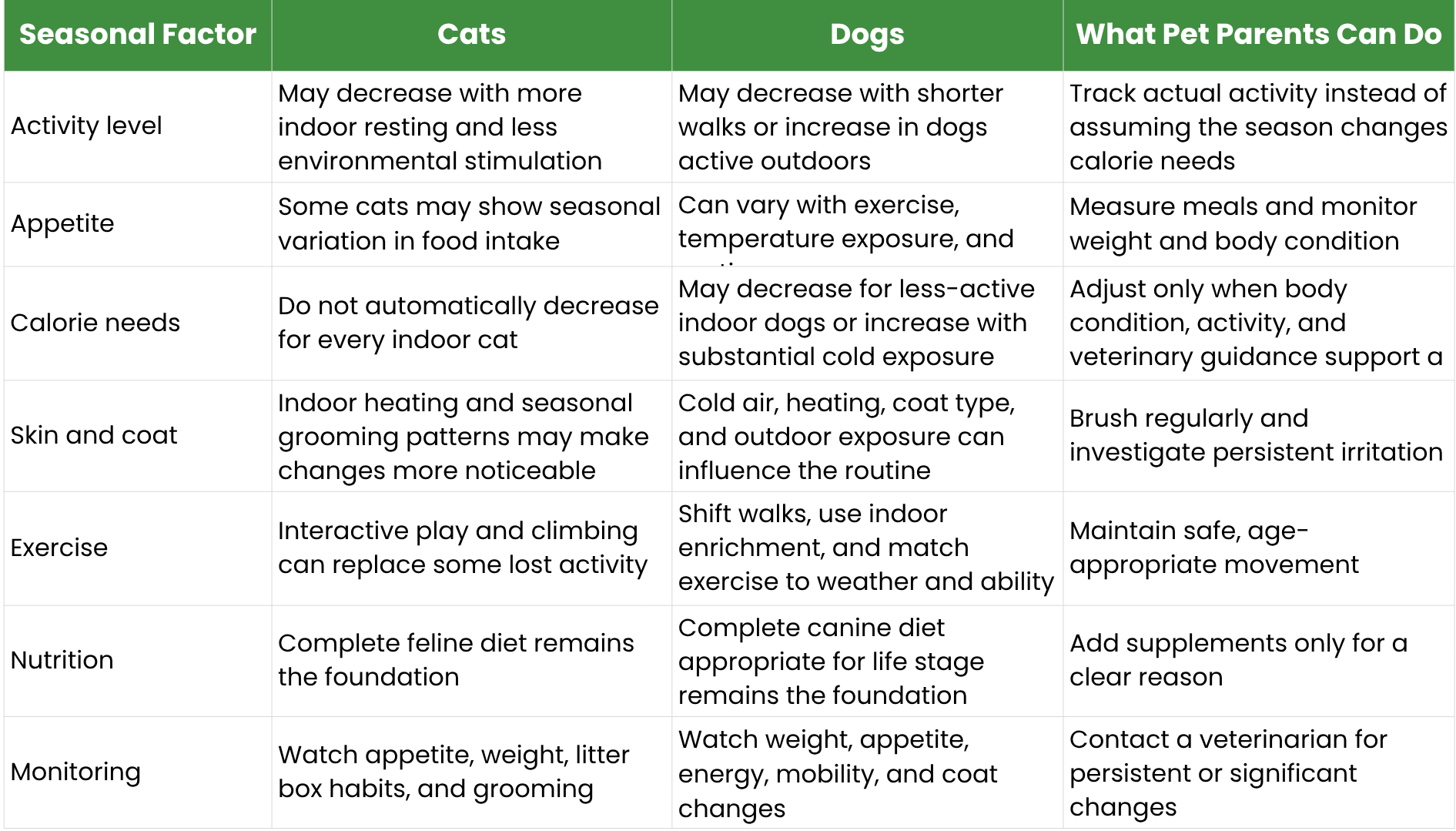
Cat vs. Dog Cold-Weather Wellness at a Glance
Simple Ways to Adjust a Fall and Winter Pet Routine
Cold-weather care does not require rewriting the entire household schedule. Often, a few practical adjustments are enough.
Keep feeding times reasonably consistent and measure portions rather than estimating them by eye. Seasonal treats can add up quickly, especially during holidays, so include them in the overall daily intake instead of thinking of them as calorie-free extras.
Move exercise to warmer or brighter parts of the day when possible. Dogs may enjoy a midday walk instead of a dark evening outing, while cats can benefit from short interactive play sessions when the household settles indoors.
Create warm, comfortable resting areas without making movement optional all day. Senior pets in particular may appreciate supportive beds, rugs on slippery floors, and easier access to favorite spaces.
Keep grooming regular so you notice coat and skin changes. Continue parasite awareness according to your region and veterinarian’s recommendations because seasonal risk varies by climate.
Finally, resist the temptation to make several nutritional changes at once. If your pet’s weight, appetite, or activity changes significantly, reviewing the complete diet and daily calories is more useful than immediately adding multiple supplements.
Adding Guardian’s Choice Nutrition to Your Dog’s Cold-Weather Routine
Once complete nutrition, activity, body condition, grooming, and veterinary care are in place, Guardian’s Choice (GCP) offers two dog-focused products that can fit naturally into a thoughtful fall and winter routine: GCP OMEGAPaws Krill Omega-3 and GCP VitaPup Multivitamin Chews for Puppies.
GCP OMEGAPaws Krill Omega-3 comes in a 90-soft-chew format and provides marine-source omega-3 nutrition. For pet parents who have determined that supplemental omega-3s fit their dog’s overall diet, it can complement everyday skin, coat, and mobility-focused nutritional care without being positioned as a treatment for dry skin, arthritis, stiffness, or other medical concerns.
GCP VitaPup Multivitamin Chews for Puppies also comes in a convenient 90-soft-chew format and provides a puppy-specific supplemental option. Because growing puppies already receive essential nutrients from complete puppy food, VitaPup is best considered after reviewing the full diet rather than as something every puppy automatically needs during winter.
Both products are easy to pair with a familiar meal, which can make an established supplement routine simpler to remember. For regular users, Subscribe & Save or recurring delivery options, when available, can also help keep familiar GCP products on hand without another last-minute reorder, adding convenience rather than changing how the supplement itself works.
Frequently Asked Questions
-
Not automatically, because winter calorie needs depend on activity level, body condition, age, health, coat, and actual exposure to cold. Monitor weight and activity, and discuss meaningful portion changes with your veterinarian rather than adjusting meals based only on the season.
Let Your Pet—not the Calendar—Guide Seasonal Care
Cooler weather can change how pets live their day, but it does not create one universal winter metabolism for every dog and cat. Some pets become less active, some maintain nearly the same routine, and others—particularly dogs spending significant time outdoors—may have very different energy demands.
That is why observation remains one of the most useful tools a pet parent has. Watch appetite, body condition, weight, movement, coat, sleep patterns, and enthusiasm for normal activities, then look at how the household routine has changed alongside the season.
A cat spending more time asleep indoors does not automatically need less food. A dog walking outside in chilly weather does not automatically need more. The full picture matters more than the temperature alone.
Nutrition should follow that same individualized approach. Complete and balanced food provides the foundation, while targeted supplements can be considered when they fill a clearly defined role in the pet’s routine.
Keeping fall and winter wellness simple makes it easier to stay consistent. Maintain appropriate portions, keep pets moving, provide enrichment and comfortable rest, groom regularly, monitor gradual changes, and ask for veterinary guidance when something moves beyond a normal seasonal adjustment.
Keep Winter Wellness Simple With GCP OMEGAPaws and VitaPup
GCP OMEGAPaws Krill Omega-3 and GCP VitaPup Multivitamin Chews for Puppies provide two convenient dog-specific nutritional options for pet parents building a more intentional cold-weather routine. OMEGAPaws focuses on supplemental marine omega-3 nutrition, while VitaPup offers a puppy-focused multivitamin format for households where additional supplementation is appropriate.
-
GCP OMEGAPaws Krill Omega-3: 90 tasty soft chews
-
Provides marine-source omega-3 nutritional support
-
Can complement an everyday skin and coat wellness routine
-
Can fit into broader mobility and joint-focused nutritional care
-
Easy to pair with an established feeding schedule
-
GCP VitaPup Multivitamin Chews for Puppies: 90 soft chews
-
Puppy-specific supplemental nutrition in a convenient daily format
-
Designed to complement an appropriate complete puppy diet when additional supplementation makes sense
-
Easy to include in an established puppy wellness routine
-
Subscribe & Save or recurring delivery, where available, can make replenishment easier for established users
-
Scheduled orders can reduce last-minute reordering and help keep familiar products on hand
-
Products should be selected according to life stage, complete diet, and individual nutritional needs
-
Supplements are intended to complement—not replace—complete nutrition or appropriate veterinary care
For dog parents who have already determined that OMEGAPaws or VitaPup fits their pet’s nutritional routine, keeping the correct product stocked can make everyday care easier through the colder months. Choose the formula that matches your dog’s life stage and needs, follow the current label, and consider Subscribe & Save when available if you prefer predictable replenishment without another item on your monthly to-do list.
Reference
Serisier, S., Feugier, A., Delmotte, S., Biourge, V., & German, A. J. (2014). Seasonal variation in the voluntary food intake of domesticated cats (Felis catus). PLOS ONE, 9(4), e96071. https://doi.org/10.1371/journal.pone.0096071
For all general inquiries, please contact us at info@guardianschoice.com
© Copyright. All rights reserved.