
The Great Debate: Cats, Dogs, or a Full House?

Choosing between a cat, a dog, or both depends on your lifestyle, space, and daily routine. Dogs require structure, exercise, and regular interaction, making them ideal for active households. Cats are more independent and adapt well to smaller spaces or busier schedules. A multi-pet home can be highly rewarding, but it requires careful introductions, clear boundaries, and consistent attention to shared health and wellness.
The Dynamics of Choice
Whether you proudly identify as a “dog person,” a “cat person,” or simply someone who loves animals in all forms, bringing a pet into your home is not a small decision—it’s a lifestyle shift. Pets reshape schedules, influence travel plans, affect household budgets, and even alter how your living space is organized. They also bring structure, joy, emotional connection, and in many cases, a deeper sense of purpose.
The real question isn’t which animal is “better.” It’s which dynamic fits your life right now—and whether you are prepared for the long-term commitment that comes with it. Dogs and cats express companionship differently. One offers enthusiastic engagement and predictable routines. The other offers steady presence and self-directed independence. And when both coexist under one roof, the environment itself must evolve to support harmony.
Understanding these differences ahead of time prevents frustration later and allows you to design a home environment where both you and your pets thrive.
The Dog Life: Structured, Social, and Energetic
Living with a dog means living with rhythm. Walk times, feeding schedules, training sessions, playtime, grooming appointments, and social outings become woven into your daily calendar. For many people, this structure is a benefit rather than a burden. Dogs encourage outdoor activity, consistent exercise, and social interaction. They are often described as loyal, intuitive, and deeply attached to their families.
However, dogs require more hands-on engagement than cats. Training is not optional—it’s foundational. Without consistent boundaries and reinforcement, behavioral challenges can develop quickly. Exercise is equally essential, and this varies significantly by breed. A working breed or high-energy dog will need far more mental and physical stimulation than a smaller companion breed.
Space is another factor to consider. While not all dogs require a yard, access to safe outdoor areas for walks and play is crucial. Apartment living is possible, but only if you are committed to regular outings and enrichment activities.
Health considerations for dogs also tend to center around mobility and joint integrity, particularly in medium to large breeds. Joint and hip support becomes increasingly important as dogs age, especially for active breeds or those predisposed to orthopedic issues. Preventative care—rather than reactive treatment—is often the key to maintaining a long, active life.

Dogs thrive in environments where they feel included. If you enjoy structured routines, physical activity, and constant companionship, the dog life can feel deeply fulfilling.

The Cat Life: Independent, Adaptable, and Subtly Affectionate
Cats operate on a different wavelength. They are often described as independent, but that word doesn’t fully capture their depth. Cats form strong emotional bonds, yet they tend to engage on their own terms. For individuals with demanding work schedules, smaller living spaces, or a preference for quieter evenings at home, cats can be ideal companions.
Unlike dogs, cats do not require daily outdoor walks. Many live happily indoors when provided with proper enrichment, including scratching posts, vertical climbing spaces, and interactive toys. In fact, vertical space is often more important to a cat than square footage. Shelves, cat trees, and window perches allow them to feel secure and stimulated without needing a yard.
Cats are also generally lower maintenance in terms of training. Litter box use is instinctual, and while behavioral issues can arise, they are often environment-related rather than obedience-related. Providing consistent feeding schedules, clean litter boxes, and stimulating surroundings goes a long way in maintaining feline harmony.
Health considerations for cats frequently center around digestive balance, coat quality, and urinary health. Because many indoor cats lead less physically active lives than dogs, diet plays a particularly important role in weight management and overall vitality. Omega-3 fatty acids often support coat health and skin integrity, while probiotics can assist with digestive balance and immune support.
Cats may not greet you at the door with explosive enthusiasm, but they offer a steady, calming presence that many owners find grounding and deeply comforting.
The Hybrid Home: When Cats and Dogs Share the Space
For some households, choosing between a cat and a dog simply isn’t realistic. The appeal of a multi-pet home is undeniable: diverse personalities, dynamic interactions, and double the companionship. However, blending species requires intention.
The first consideration is introduction. Proper, gradual introductions help prevent long-term stress and territorial conflict. Safe zones are critical. Cats benefit from elevated escape routes and private resting areas where dogs cannot intrude. Dogs need consistent reinforcement to respect boundaries and avoid chasing behaviors.
Energy management becomes an ongoing responsibility in multi-pet households. Dogs often want to engage and play more frequently, while cats may prefer observation and selective interaction. Understanding and honoring these differences prevents resentment and anxiety between animals.

Nutrition and wellness are equally important. Stress impacts immune function in both species, and shared living environments can increase exposure to parasites or seasonal allergens. Supporting immune balance, digestive stability, and joint health through high-quality nutrition and supplementation can help maintain equilibrium. Omega-3 fatty acids may support cognitive and joint health in dogs while also benefiting coat quality in cats. Probiotics can assist both species in maintaining healthy digestion, particularly during transitions such as moving homes, adding new pets, or shifting diets.
The multi-pet household is rewarding, but it demands attentiveness. When done thoughtfully, it becomes a balanced ecosystem where each animal has space, support, and structure.
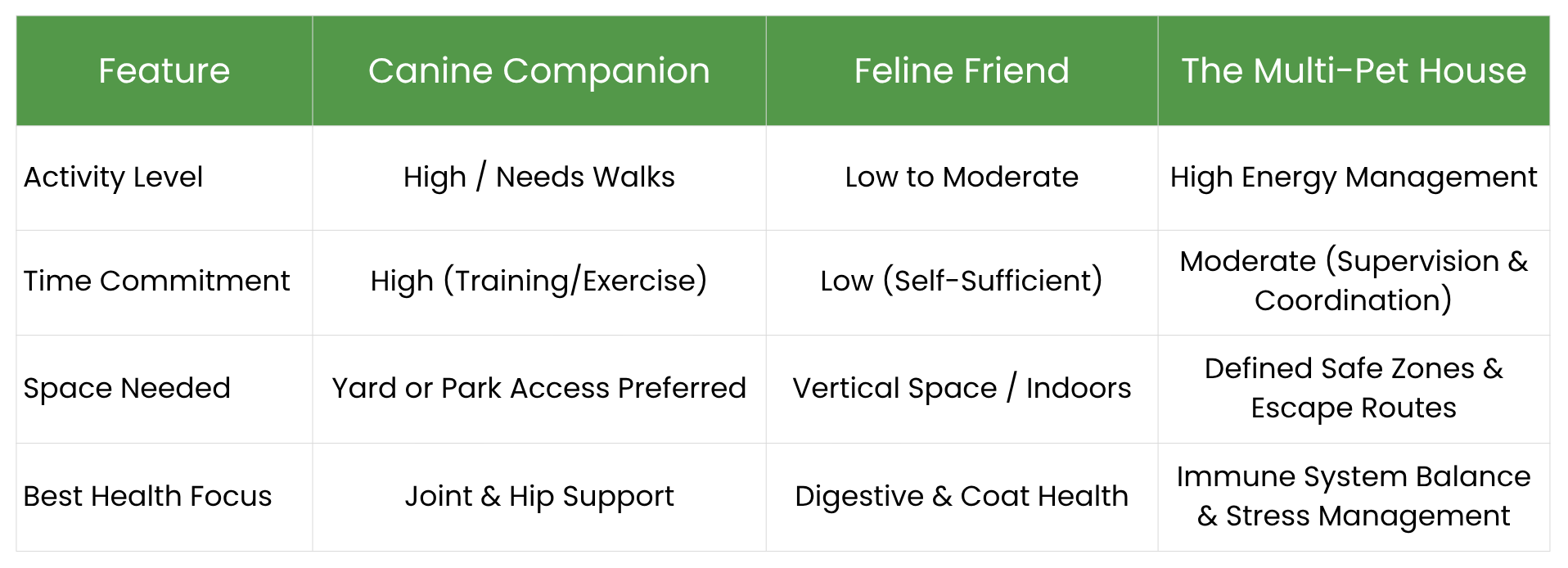
Comparison at a Glance
Frequently Asked Questions
-
Most dogs can adapt to living with cats, especially if introduced properly at a young age. However, breeds with strong prey drives may require more intensive training and supervision. Early socialization significantly increases the likelihood of long-term harmony.
Making the Right Choice for Your Home
Ultimately, the decision between a cat, a dog, or both comes down to alignment. Alignment between your energy and theirs. Alignment between your space and their needs. Alignment between your daily routine and their natural rhythms.
Dogs ask for structure but give exuberant loyalty. Cats ask for respect but offer steady companionship. A multi-pet home asks for intention but rewards you with dynamic interaction and layered affection.
There is no universally correct answer—only the choice that integrates seamlessly into your life. When approached thoughtfully, with proactive health support and environmental awareness, any of these paths can lead to a deeply fulfilling companionship.
The real debate isn’t cats versus dogs. It’s about designing a home where every member—human and animal alike—can thrive.
Why Guardian’s Choice (GCP) Makes a Difference in Every Pet Household
No matter which path you choose—dog, cat, or a full house—the foundation of a healthy home is proactive wellness. Nutrition, immune support, joint care, and digestive balance all play a critical role in preventing small issues from becoming bigger concerns. That’s where Guardian’s Choice (GCP) fits seamlessly into your daily routine.
For active dogs, GCP Flea & Tick Natural Defense Soft Chews provide plant-powered protection without harsh chemicals, supporting year-round deterrence in a way that aligns with a wellness-focused lifestyle. Dogs that spend time outdoors benefit from consistent internal support, especially during warmer months when parasite exposure increases. Pairing preventative defense with proper joint and immune support helps maintain mobility and vitality at every life stage.
For growing puppies, GCP VitaPup Multivitamin Chews are formulated to support brain development, heart health, digestion, and immune strength. Early-life nutrition builds the foundation for long-term resilience, especially in high-energy breeds that require balanced micronutrients for optimal growth.
For cats, GCP offers targeted solutions that reflect feline-specific needs. The Flea & Tick Natural Defense for Cats provides gentle deterrence formulated for sensitive systems. GCP Purrbiotics deliver daily probiotic support to promote digestive health and stronger immunity, while GCP Cat L-Lysine supports respiratory health and immune defense—particularly beneficial in multi-cat or multi-pet environments where stress can impact wellness.
In a multi-pet household, immune balance and digestive stability are essential because stress, seasonal changes, and environmental exposure affect each species differently. Consistent supplementation helps bridge nutritional gaps and supports overall harmony within the home.
Guardian’s Choice isn’t just about products—it’s about building a preventive care routine rooted in transparency, quality ingredients, and daily consistency. Whether you’re managing a high-energy dog, an independent cat, or a blended household, GCP helps you support every member of your pet family with confidence.
For all general inquiries, please contact us at info@guardianschoice.com
© Copyright. All rights reserved.