
Cat Napping: How Much Sleep Is Too Much for Your Cat?
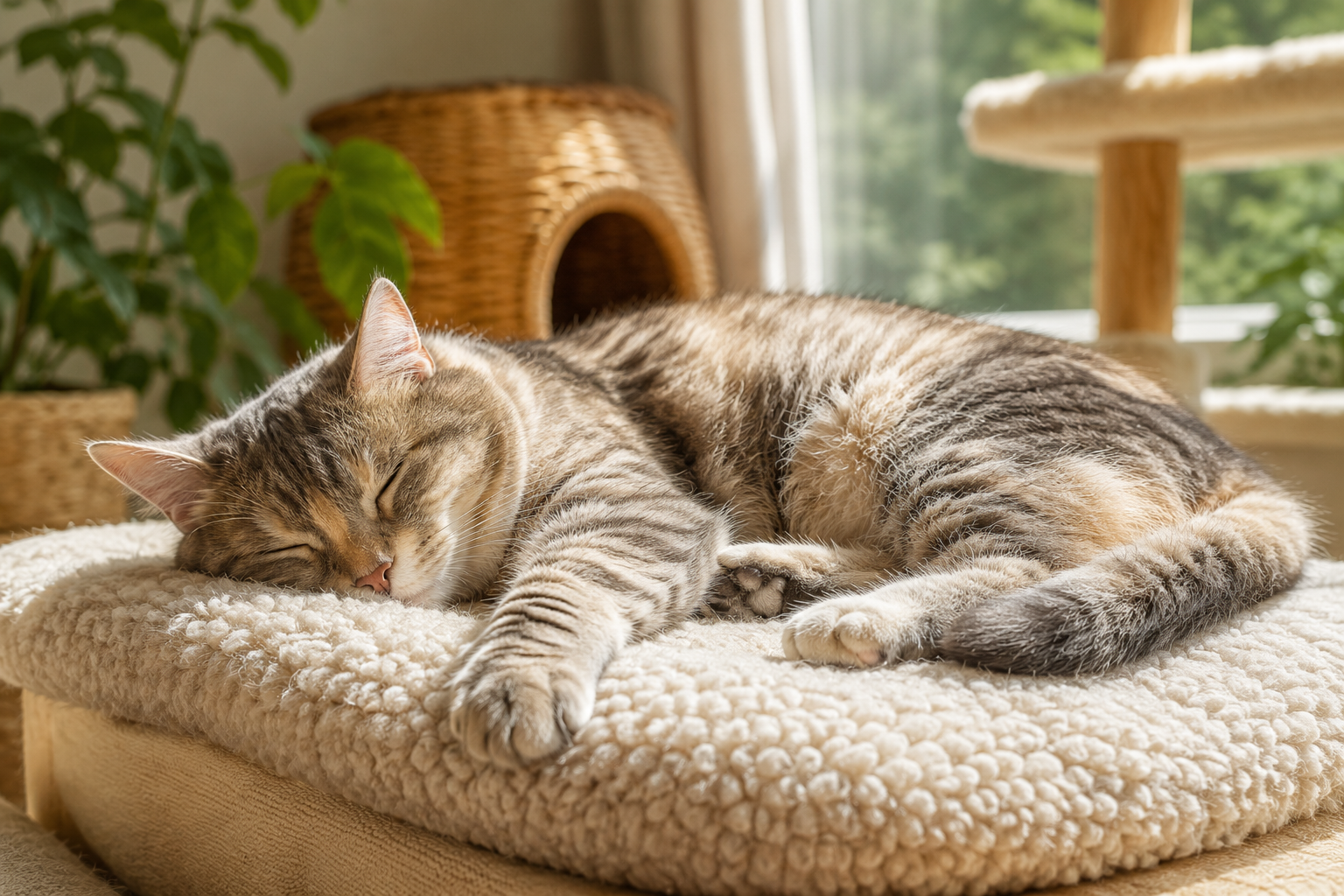
Cats are natural nappers, and long rest periods are often a normal part of feline life. Many adult cats sleep or rest for much of the day, while kittens and senior cats may need even more downtime. What matters most is not only the number of hours your cat sleeps, but whether their normal routine suddenly changes. If your cat is sleeping much more than usual, hiding, eating less, grooming less, or showing changes in eye comfort or respiratory wellness, it may be time to pay closer attention. GCP Cat L-Lysine supports normal immune function, respiratory wellness, eye comfort, and overall feline health as part of a steady daily routine.
Why Cats Sleep So Much in the First Place
Cats and naps are almost impossible to separate. One moment your cat is chasing a toy, watching birds from the window, or asking for food. The next moment, they are curled into a perfect circle on the couch, stretched across a sunbeam, or tucked into a box that is clearly too small for them. For many cat parents, the question eventually comes up: “Is my cat sleeping too much, or is this just normal cat behavior?”
The answer depends on your cat. Cats naturally spend a large part of the day resting. Their sleep habits are shaped by biology, age, personality, environment, and routine. Many cats are most active around dawn and dusk, which is why your cat may suddenly become energetic when the house is quiet, then sleep through the middle of the day like they have a very important appointment with the blanket.
A lot of feline rest is also light sleep. Your cat may look deeply asleep, but their ears may still move when they hear a sound. Their body may be relaxed, but they may still be aware enough to notice the treat bag, your footsteps, or the sound of a cabinet opening. This light dozing is part of what people often call a “cat nap.”
A study in the Journal of Veterinary Behavior looked at daily activity patterns in domestic cats living in different housing conditions. The study supports something many cat parents already notice at home: a cat’s daily activity rhythm can be influenced by environment, routine, and how they live. This does not mean every cat follows the same schedule, but it reminds us that sleep and activity should be understood in context.
So instead of worrying about every long nap, the better approach is to learn your cat’s normal rhythm. Once you know what is normal for your cat, it becomes easier to spot meaningful changes.
What Normal Cat Sleep Can Look Like by Life Stage
A kitten’s sleep routine is not the same as an adult cat’s routine. A senior cat’s routine is not the same as a playful young cat’s routine either. Age matters because each life stage has different energy needs, growth needs, and recovery needs.
Kittens often sleep for long stretches because their bodies are growing quickly. They may play hard, crash suddenly, then wake up ready for another round of chaos. This cycle can repeat several times a day. For kittens, sleep supports growth, development, and recovery from bursts of play.
Adult cats often settle into a more predictable rhythm. They may sleep through quiet parts of the day, become active around feeding times, and enjoy short play sessions in the morning or evening. Adult cats may still nap for many hours, but their pattern is often easier to recognize once the household routine is steady.
Senior cats may sleep more than they did when they were younger. They may prefer warmer resting spots, softer bedding, and quieter areas of the home. Longer naps can be normal for older cats, but sudden changes should still be watched carefully. A senior cat who suddenly sleeps far more, stops grooming, loses interest in meals, or avoids normal interaction should be checked by a veterinarian.
The key is comparison. Do not compare your cat’s sleep routine to another cat online. Compare your cat today to your cat last week, last month, and during their usual healthy routine.
When Extra Napping May Deserve a Closer Look
Extra sleep is not automatically a problem, but changes in routine can be important. Cat parents should pay attention when sleep changes come with other signs, especially if the change feels sudden or unusual for that cat.
For example, if your normally social cat starts hiding under the bed all day, that is worth noticing. If your playful cat stops responding to toys, that is worth noticing too. If your cat is sleeping more and also eating less, drinking differently, grooming less, or using the litter box differently, it is best to contact your veterinarian.
Eye and respiratory changes also deserve attention. Watery-looking eyes, visible discomfort around the eyes, sneezing, noisy breathing, or changes in normal breathing comfort should not be ignored. These signs can have different causes, and only a veterinarian can help determine what is going on.
It is also helpful to look at the full environment. Did you recently move furniture? Change litter? Bring home another pet? Host visitors? Change your cat’s food? Open windows more often? Travel? Start a new work schedule? Cats can be sensitive to household changes, and some cats respond by resting more, hiding more, or changing their activity pattern.
This does not mean cat parents should panic. It simply means sleep is one part of a bigger picture. A cat who naps a lot but still eats well, grooms normally, plays, uses the litter box, and interacts as usual may simply be enjoying a very cat-like day. A cat whose whole routine has changed deserves a closer look.
Cat Sleep and Wellness Routine Guide
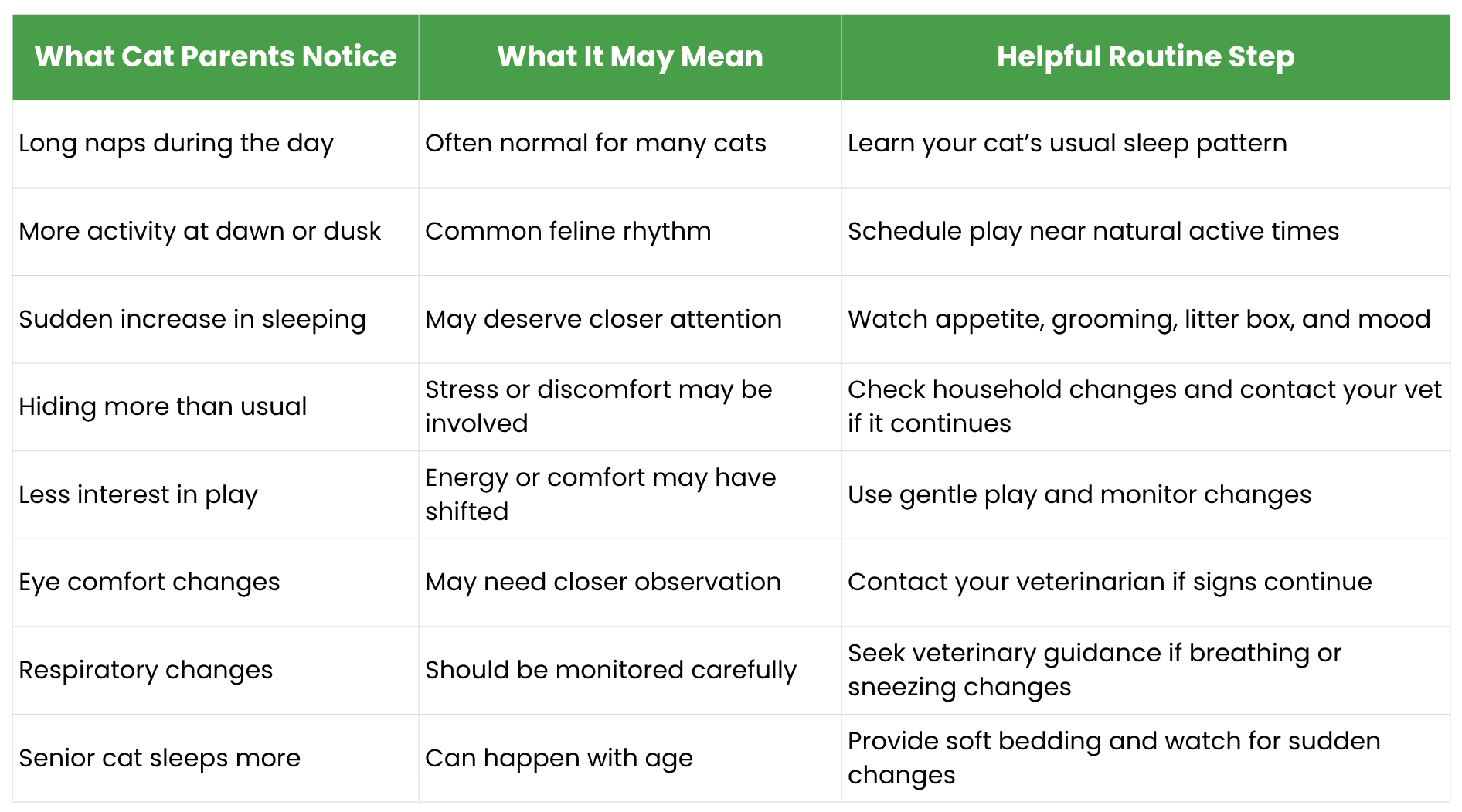
This guide is not meant to diagnose your cat. It is meant to help you observe patterns. Cats often communicate through small changes, and pet parents are usually the first to notice when something feels different.
How to Support a Healthy Daily Routine for Your Cat
The best way to understand your cat’s sleep is to support the rest of their day. A healthy routine gives you a clearer picture of what is normal and what may be changing.
Start with consistent meals. Cats often feel more secure when feeding times are predictable. If you need to change food, transition slowly unless your veterinarian gives different instructions. Sudden food changes may affect digestion, appetite, and routine.
Next, create active moments during your cat’s natural waking times. Short play sessions in the morning and evening can help your cat use energy in a healthy way. Wand toys, treat puzzles, climbing spaces, scratchers, and window perches can all make daily life more engaging.
Resting spaces matter too. Cats like to choose where they sleep, but you can make those areas more comfortable. Offer soft bedding, quiet corners, warm spots, and safe elevated areas where your cat can relax without being bothered.
Grooming is another helpful habit. Brushing your cat gives you a chance to notice changes in coat, skin, body comfort, or mood. It also supports coat care, especially during seasonal shedding.
Finally, support your cat from the inside with daily wellness habits. Fresh water, steady nutrition, regular veterinary care, and targeted immune and respiratory support can all help build a routine that feels simple and manageable.
Daily Immune and Respiratory Support With GCP Cat L-Lysine
This is where GCP Cat L-Lysine fits naturally into your cat’s daily wellness routine. If your cat’s long naps make you pay closer attention to their energy, eye comfort, respiratory wellness, and immune routine, L-Lysine support can be one simple step to consider.
GCP Cat L-Lysine is designed to support normal immune function, respiratory wellness, eye comfort, and overall feline health. It is easy to add to a daily routine, which matters because cat wellness works best when it is consistent. Instead of waiting until your cat’s routine feels off, daily support can be part of the care you already provide through meals, fresh water, grooming, play, and observation.
It is important to keep expectations realistic. GCP Cat L-Lysine is not a treatment for lethargy, respiratory illness, eye conditions, or any medical problem. If your cat is sleeping much more than usual or showing concerning signs, your veterinarian should be the first call.
But as part of everyday feline wellness, L-Lysine support can help pet parents feel more proactive. It fits especially well for cats who need immune and respiratory wellness support as part of a long-term routine.
Frequently Asked Questions
-
Many adult cats sleep or rest for a large part of the day, and kittens or senior cats may sleep even more. What matters most is your cat’s personal baseline and whether their sleep routine suddenly changes.
GCP Cat L-Lysine
GCP Cat L-Lysine is a daily feline wellness supplement designed to support normal immune function, respiratory wellness, eye comfort, and overall feline health. It fits easily into a consistent routine, making it a practical option for cat parents who want daily support without making care complicated.
Benefits:
-
Supports normal immune function
-
Supports respiratory wellness
-
Helps support overall feline health
-
Supports eye comfort as part of daily wellness
-
Easy-to-serve formula
-
Fits into consistent daily routines
-
Helpful for year-round feline wellness support
-
200 servings per jar

If your cat’s naps have made you think more about their daily routine, GCP Cat L-Lysine can help support the wellness areas cat parents often watch closely. Add it as directed, and pair it with steady meals, fresh water, gentle play, grooming, clean resting spaces, and veterinary guidance when needed.
Citation: Piccione, G., Marafioti, S., Giannetto, C., Panzera, M., & Fazio, F. (2013). Daily rhythm of total activity pattern in domestic cats (Felis silvestris catus) maintained in two different housing conditions. Journal of Veterinary Behavior, 8(4), 189–194. https://doi.org/10.1016/j.jveb.2012.09.004
For all general inquiries, please contact us at info@guardianschoice.com
© Copyright. All rights reserved.